
Planting
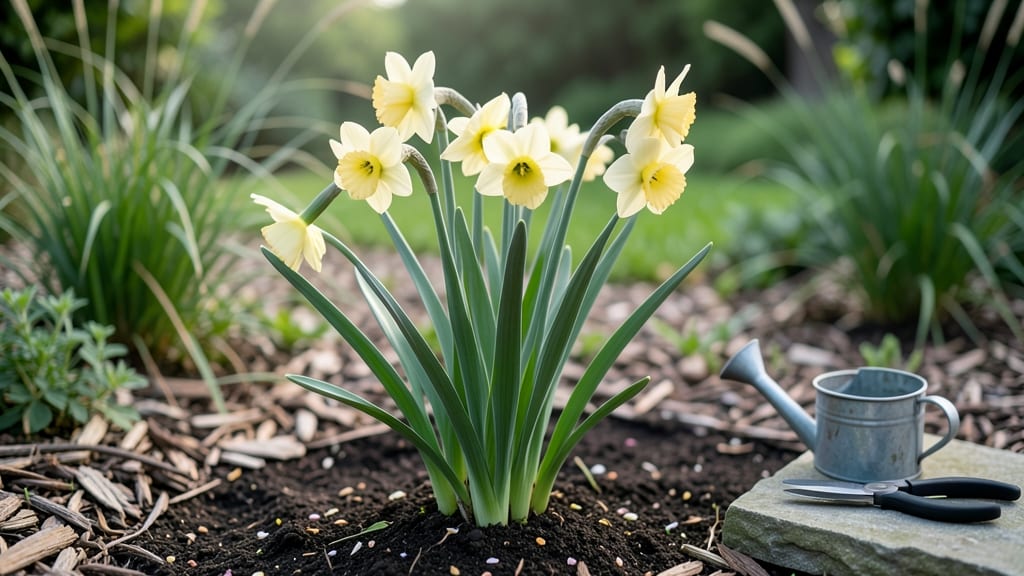
Bunch-flowered daffodils (Narcissus tazetta) transform early spring with their clusters of fragrant blooms that smell like sunshine and honey. 🌱 I’ve grown them for years, and they’re the easiest daffodils to naturalize—just plant once, and they’ll multiply for decades.
The secret lies in their hardiness and adaptability, thriving even in spots where other bulbs struggle.
These daffodils love well-draining soil and full sun to partial shade, making them perfect for borders, woodland edges, or even containers. Unlike their showy cousins, they demand minimal pruning—just snip off faded blooms to redirect energy into next year’s flowers.
With proper care, you’ll enjoy their intoxicating scent and cheerful yellow blooms for weeks.
What makes them special is their resilience: they handle drought better than most spring bulbs and resist deer and squirrels. Once established, they’ll naturalize into lush drifts, creating a carpet of early color that brightens even the dreariest spring days.
The key is patience—give them a few seasons to settle in, and they’ll reward you with effortless beauty.
Whether you’re a beginner or a seasoned gardener, bunch-flowered daffodils are a foolproof choice for early-season interest. They’re perfect for small gardens, large landscapes, or even cutting arrangements. Let’s get those bulbs in the ground and enjoy the show!
📚 In This Guide
- What you need
- Instructions
- Tips and common mistakes
- Wrapping up and next steps
What you need
- ● Daffodil bulbs: 5–10 bunch-flowered daffodil bulbs (choose healthy, firm bulbs, ideally size 10–12 cm or larger).
- ● Well-draining soil: A mix of garden soil, compost (50%), and perlite/sand (20%) for aeration.
- ● Planting site: A sunny spot (6+ hours of sunlight daily) with partial shade in hot climates.
- ○ Bone meal fertilizer (optional but recommended): 1–2 tbsp per planting hole for nutrient boost.
- ● Garden trowel or bulb planter for easy digging.
- ● Measuring tape or ruler (to plant bulbs at 6–8 inches deep).
- ● Mulch (straw or shredded leaves) to protect bulbs in winter.
- ● Watering can or hose with gentle spray (avoid soaking the soil).
- ○ Garden gloves (optional, for comfort while handling soil).
Step-by-Step instructions for planting and caring for bunch flowered daffodils
Here's how to coax those vibrant spring blooms from your bulbs with confidence.
🌱 Step 1: Select and Prepare the Planting Site
Bunch flowered daffodils thrive in well-draining soil with full sun to partial shade (at least 6 hours of direct sunlight daily). Choose a location that receives morning sun and afternoon shade in hotter climates—this prevents bulb desiccation while ensuring robust flowering. Test your soil's drainage by digging a 6-inch hole and filling it with water; if it drains within 2 hours, your site is suitable.
Amend heavy clay soil with 2-3 inches of compost or sand to improve aeration. Avoid low-lying areas where water pools, as daffodils rot easily in soggy conditions. If your soil is acidic (pH below 6.5), work in 1 cup of garden lime per 10 square feet to raise the pH to the ideal 6.5-7.0 range. I always test my soil before planting—it's the difference between thriving blooms and struggling bulbs.
🪴 Step 2: Plant Bulbs at the Right Depth and Spacing
Plant bunch flowered daffodil bulbs in fall, 6-8 weeks before the first frost (typically October-November in most climates). Dig holes 3 times deeper than the bulb's height—for standard bunch flowered daffodils (about 2 inches tall), aim for 6-inch deep holes. This depth ensures the bulb's base sits 4-6 inches below the soil surface, protecting it from freezing and rodents.
Space bulbs 4-6 inches apart in rows 8-12 inches apart to allow airflow and prevent fungal diseases. I like to plant in clusters of 5-7 bulbs for a natural, drift-like appearance. After placing each bulb with its pointy end up, backfill with the original soil (no compost or fertilizer at planting—this can encourage premature sprouting). Gently firm the soil around the bulbs to eliminate air pockets, then water deeply to settle everything.
☀️ Step 3: Provide Winter Care and Spring Maintenance
Once planted, daffodils require minimal care until spring. A 2-3 inch layer of mulch (like shredded leaves or straw) protects bulbs from extreme temperature fluctuations and keeps soil moist during winter. Remove the mulch in early spring (when shoots emerge) to prevent rot as temperatures rise. Avoid heavy mulch in wet climates—it can smother emerging shoots.
When green shoots appear (usually February-March, depending on your climate), stop watering entirely until flowers bloom. This mimics their natural dormancy period and prevents bulb rot. Once buds form, water deeply once a week to encourage strong stems. Fertilize lightly with a balanced 10-10-10 formula (about ½ teaspoon per bulb) when foliage reaches 6 inches tall, but avoid high-nitrogen fertilizers—they promote leaf growth at the expense of blooms.
✂️ Step 4: Deadhead and Prepare for Next Year’s Blooms
After flowering, never cut back the foliage—leave it until it yellows and withers naturally. This process allows the bulb to photosynthesize and store energy for next year’s blooms. I mark spent daffodil clusters with small flags to remind myself not to trim too soon. Once foliage turns completely brown (usually 6-8 weeks after flowering), you can cut it back to 2 inches above the ground and remove it from the bed.
In late summer (August-September), apply a low-nitrogen fertilizer (like 5-10-10) to replenish nutrients. This timing ensures bulbs have energy to flower vigorously the following spring. If your daffodils multiply over time, divide congested clumps in early fall by digging up bulbs, separating offsets, and replanting them immediately. Bunch flowered daffodils are particularly hardy and will naturalize beautifully with proper care.
Tips & tricks for perfect bunch flowered daffodil planting
Here's what nobody tells you about getting those early spring blooms right the first time.
Soil Drainage Test: The 2-hour drainage test in Step 1 is non-negotiable—waterlogged soil is the #1 killer of daffodil bulbs. If your hole drains slower than 2 hours, add a 2-inch layer of coarse sand or perlite to the bottom before planting. I've seen bulbs rot in as little as 48 hours when planted in poorly draining soil, so don't skip this step. For clay-heavy soils, mix in 2-3 inches of compost right where you'll plant, but avoid adding it to the planting hole itself.
Planting Depth Visual: When digging your 6-inch deep holes in Step 2, use a garden stake as a depth marker. The bulb's base should sit at 4-6 inches below soil level—this protects it from frost heave and rodent damage. I always plant with the pointy end up (it's impossible to get wrong) and make sure the neck of the bulb stays above the soil line. For smaller bulbs, you can plant them slightly shallower (3-4 inches deep) since they're more frost-tolerant.
Mulch Strategy: That 2-3 inch mulch layer in Step 3 works wonders, but timing matters. Apply it right after planting in fall, then add another 1-inch layer after the first hard frost for extra insulation. In mild winter climates, you can skip the second layer entirely. The key is removing mulch in early spring when shoots emerge—never leave it on past this point, or you risk smothering tender new growth. I use straw mulch because it breaks down cleanly and won't compact like leaves.
Fertilizer Timing: The ½ teaspoon of 10-10-10 fertilizer in Step 3 should be applied when foliage reaches 6 inches tall, but here's the secret: split that dose into two applications. Give half when foliage hits 6 inches, then apply the remaining half when buds form. This two-step approach prevents over-fertilization while still giving your bulbs the nutrients they need. Avoid any fertilizer with more than 10% nitrogen—it'll make your plants grow leaves instead of flowers.
Pro Tips for Bunch Flowered Daffodil
- Here's what nobody tells you about getting those early spring blooms right the first time.
- Soil Drainage Test: The 2-hour drainage test in Step 1 is non-negotiable—waterlogged soil is the #1 killer of daffodi...
- Planting Depth Visual: When digging your 6-inch deep holes in Step 2, use a garden stake as a depth marker. The bulb'...
Frequently asked questions
Got questions about growing bunch flowered daffodils?
You’re not alone! Here are some of the most common queries—plus straightforward answers to help you cultivate these cheerful blooms with confidence.
When is the best time to plant bunch flowered daffodils?
Plant them in fall (6–8 weeks before the first frost) for early spring blooms. Aim for soil temps between 40–50°F (4–10°C). This timing ensures roots establish before winter, giving you vibrant flowers by late winter or early spring. Pro tip: Use a bulb planter or dibber for precision—no guessing!
How deep should I plant bunch flowered daffodil bulbs?
Dig holes 6–8 inches deep (about 3x the bulb’s height). Plant with the pointed end up, spacing bulbs 4–6 inches apart in clusters. This depth protects them from frost and rodents while allowing room for foliage growth. Bonus: Add a 1-inch layer of gravel at the bottom to improve drainage!
Why aren’t my bunch flowered daffodils blooming?
Common culprits include:
- Insufficient sunlight: They need full sun (6+ hours/day).
- Overcrowding: Divide bulbs every 3–5 years if flowers shrink.
- Poor soil: Amend with compost for nutrients.
- No chilling period: They require winter dormancy—plant in fall!
Give them 1–2 years to establish before expecting blooms.
Can I grow bunch flowered daffodils in containers?
Use deep pots (12+ inches) with drainage holes. Plant 3–5 bulbs per container for a full look. Opt for well-draining mix (like cactus/succulent blend) and overwinter pots in a cool, dark place (e.g., garage). Spring tip: Fertilize lightly when shoots emerge!
How do I protect bunch flowered daffodils from squirrels or deer?
Try these low-effort tricks:
- Wrap bulbs in chicken wire before planting.
- Apply hot pepper spray (mild for pets!).
- Plant near daffodil companions like fritillaries or alliums (pests dislike their scent).
- Use repellent plants like lavender or marigolds nearby.
Bulbs are toxic to critters, but hungry pests may still dig—act early!
Wrapping up and next steps
Growing bunch-flowered daffodils is a rewarding way to welcome early spring with vibrant blooms and minimal fuss!
Their hardiness, pest resistance, and stunning clusters make them a must-have for any garden—whether you’re a seasoned green thumb or just starting out. 🌱 With the right soil, sunlight, and a little patience, you’ll enjoy years of cheerful color with almost no upkeep.
Ready to transform your garden? Start by selecting your favorite varieties and plant them this fall—your future spring blooms will thank you! 🌸