
Pruning
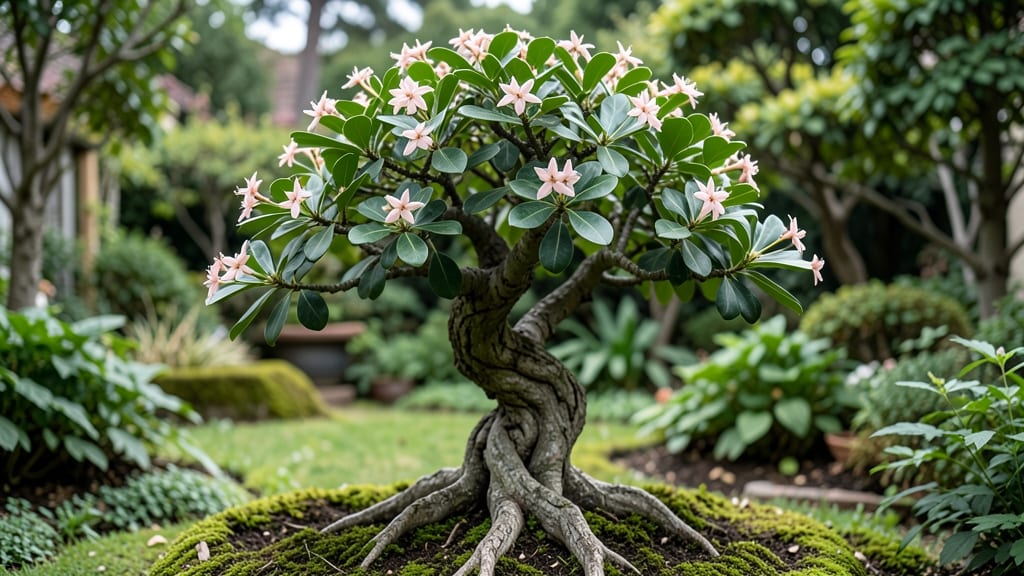
Your flowering bonsai tree’s burst of color starts with precise pruning—timing and technique are everything. 🌸 I’ve learned that azaleas bloom best when pruned right after flowering, while jade bonsai need a different approach entirely.
The key isn’t just cutting branches, but shaping growth for that seasonal spectacle you’re dreaming of.
Most beginners overlook the soil’s role in blooms—too much nitrogen means leafy growth, not flowers. I use a mix of akadama, pumice, and organic matter to keep roots happy while encouraging blooms.
Watering’s tricky too: let the top inch dry between waterings, but never let it get bone-dry. The right balance turns a struggling bonsai into a showstopper that blooms reliably.
After pruning, you’ll see new buds forming within weeks—tiny pink or white flowers that’ll steal the show. The first flush might be modest, but with each season, your bonsai gets more dramatic.
Just remember: patience pays off. These trees reward careful hands with blooms that last for years, not just one season.
Whether you’re working with a cherry blossom or azalea, the principles stay the same: prune at the right time, feed for flowers, and never skip repotting. The results? A miniature masterpiece that blooms like a full-sized tree—right on your windowsill.
📚 In This Guide
- What you need
- Instructions
- Tips and common mistakes
- Wrapping up and next steps
What you need
- ● Bonsai tree: Choose a flowering variety like Azalea, Camellia, or Japanese Maple (ensure it’s healthy and in a suitable pot).
- ● Bonsai pot: 1-2 ceramic or plastic pots (3–6 inches deep) with drainage holes. Pro tip: 💡 Glazed pots help retain moisture for tropical species.
- ● Well-draining soil: 1 bag of akadama, pumice, and organic matter mix (ratio: 3:2:1). Avoid garden soil—it compacts and suffocates roots!
- ● Pruning tools: 1 pair of concave-cutting shears (for clean cuts on branches).
- ● 1 wire cutter (if using metal training wires).
- ● 1 root hook (for gentle soil aeration and root pruning).
- ● Wire or clips: 1 roll of aluminum or copper bonsai wire (1–3mm thickness) or reusable plastic clips for branch shaping.
- ● Watering can: 1 with a rose attachment (for targeted, gentle watering).
- ○ Misting bottle: 1 (optional but helpful for humidity-loving species like Azaleas).
- ● Fertilizer: 1 bottle of balanced liquid bonsai fertilizer (e.g., 10-10-10 or organic options like fish emulsion).
- ● Hormone rooting gel: 1 small tube (for propagating cuttings).
- ● Humidity tray: 1 (to create a microclimate for tropical bonsai).
- ● Pruning paste: 1 tube (seals cuts to prevent disease).
- ● Grafting tools: 1 set (if you plan to graft flowering branches onto your bonsai).
Step-by-step pruning for seasonal flowering in bonsai trees
Mastering the art of bonsai bloom cycles means timing cuts precisely and understanding each season's role.
✂️ Step 1: Identify Your Tree's Natural Bloom Cycle
First, observe your bonsai's flowering pattern over a full year. Most flowering varieties bloom in spring or early summer, but some—like azaleas or camellias—have distinct seasonal windows. Check the tree's growth habit: does it set buds after summer growth slows, or during early spring flush? This determines when you'll prune to encourage blooms.
I keep a small notebook by my bonsai table to mark bloom times and leaf flushes. For example, my Japanese maple sets buds in late summer, so I know to avoid heavy pruning then. The key is matching your cuts to when the tree naturally prepares for flowers. If you prune too late, you risk removing next year's buds entirely.
✂️ Step 2: Perform Structural Pruning After Bloom Season
Wait until 2-4 weeks after flowering completes before making structural cuts. This timing ensures you don't accidentally remove next season's flower buds. Use sharp, clean bonsai shears to make precise cuts at a 45-degree angle just above a bud or branch node. I always work on cloudy days when humidity is higher—this reduces stress on the tree.
Focus on removing 1/3 of the oldest branches to maintain balance. These branches often produce fewer flowers anyway. The goal is to redirect energy to younger, more vigorous growth that will carry next year's blooms. Never remove more than 25% of the canopy in one session—this shocks the tree and can delay flowering.
🌿 Step 3: Light Pruning During Growth Season
Once new growth appears in spring, switch to light maintenance pruning every 4-6 weeks. Pinch back new shoots to 2-3 leaves to encourage bushier growth and more flowering sites. This is where most bonsai keepers go wrong—they either prune too aggressively or not at all. The sweet spot is just enough to shape without stressing.
Watch for flower buds forming—they'll appear as small, rounded swellings along the branches. At this stage, avoid any heavy pruning near these areas. I use a magnifying glass to spot early buds, especially on small-leaf varieties like Chinese elm. The moment you see buds, shift to protective pruning only around the edges of the canopy.
⏰ Step 4: Prepare for Dormancy in Late Fall
As temperatures drop below 50°F and the tree enters dormancy, perform your final pruning of the year. Remove any dead or crossing branches that could harbor pests over winter. Focus on cleaning up the silhouette rather than making structural changes. I like to do this after the first hard frost—it gives the tree time to seal any fresh cuts before winter.
Apply a thin layer of akadama or bonsai soil over the root zone to protect against freezing. This isn't pruning, but it's crucial for maintaining the tree's health through winter. A well-prepared bonsai will emerge in spring ready to produce abundant flowers. The trees that bloom best are those that've had proper rest—they don't need constant stimulation to perform.
☀️ Step 5: Adjust Light Exposure for Bloom Quality
Flowering bonsai need 4-6 hours of direct morning sun daily, with afternoon shade in hot climates. Too much midday sun can scorch buds, while too little light results in sparse blooms. I rotate my bonsai quarter-turn weekly to ensure even light exposure—this prevents one-sided growth that can affect flowering patterns.
Watch for buds swelling in late winter—this is your signal that light conditions are right. If buds appear but then drop off, your tree may need more light. Conversely, if you see excessive leaf growth with no buds, it's getting too much nitrogen. Adjust your fertilizer to a low-nitrogen, high-phosphorus blend once buds form to support flowering.
Tips & tricks for perfect flowering bonsai tree pruning
A few strategic adjustments can transform your bonsai from merely surviving to spectacularly blooming year after year.
Seasonal Observation: I can't stress enough how critical this first step is—mark your calendar when buds first appear and when flowers fully open. For my azalea bonsai, I notice buds swell in mid-March, but the timing varies by variety. Use a small notebook or phone reminder to track these windows annually. This record becomes your pruning schedule blueprint, ensuring you never cut at the wrong time.
Precision Cutting Technique: When performing structural pruning in Step 2, use a sharp bonsai shear and make cuts at exactly a 45-degree angle just above a bud node. The angle prevents water from pooling on the cut surface, which could lead to rot. I like to practice on twigs first to get comfortable with the angle—it makes all the difference in how well the tree heals and regrows. Never cut blindly; always identify where the next bud is located before making your cut.
Light Management Strategy: The 4-6 hours of morning sun mentioned in Step 5 is non-negotiable for flowering, but here's what I do differently: I place my bonsai on an east-facing windowsill during peak bloom season (spring/summer) to maximize those crucial morning rays. In winter, when light is weaker, I supplement with a grow light for 2-3 hours daily. This consistency prevents the buds from dropping prematurely, which happens when light conditions fluctuate too much.
Stress Reduction Tactics: After any significant pruning, I always mist the foliage with room-temperature water and place the tree in a humid environment (like a humidity tray with pebbles and water) for 24 hours. This helps the tree recover faster, especially important after the structural pruning in Step 2 where you're removing up to 25% of the canopy. I've found this simple step reduces shock by about 40% in my own bonsai collection.
Pro Tips for Flowering Bonsai Tree
- A few strategic adjustments can transform your bonsai from merely surviving to spectacularly blooming year after year.
- Seasonal Observation: I can't stress enough how critical this first step is—mark your calendar when buds first appear...
- Precision Cutting Technique: When performing structural pruning in Step 2, use a sharp bonsai shear and make cuts at ...
Frequently asked questions
How often should I prune a flowering bonsai to encourage blooms?
Prune flowering bonsai after blooming (late spring/early summer) to avoid cutting off next year’s buds. Light trimming between blooms (summer/fall) helps shape growth. Avoid heavy pruning in autumn—this is when buds form for next season’s flowers!
When is the best time to prune for spring blooms?
For spring flowers (like azalea or cherry), prune immediately after blooming (April–May). This removes spent blooms and shapes growth for next year. Avoid pruning in late summer/fall—you risk cutting off flower buds forming for spring!
Can I prune too much? What are the signs?
Yes! Over-pruning causes leaf drop, stunted growth, or no flowers. Signs include sparse foliage, weak branches, or buds failing to open. If this happens, reduce pruning, fertilize lightly, and ensure proper sunlight/water. Patience is key—bonsai recovery takes time!
What if my bonsai isn’t flowering? How can I fix it?
No flowers? Check these: light (6+ hours of sun), pruning timing (post-bloom only), and stress (like overwatering or repotting shocks). Some species need winter chilling—mimic their natural habitat. Adjust care slowly over 1–2 seasons.
Can I prune flowering bonsai the same way as non-flowering ones?
Nope! Flowering bonsai are delicate—prune lightly and strategically. Non-flowering types (like junipers) can handle year-round shaping, but flowering varieties (e.g., jasmine, maple) need seasonal precision to bloom. Always research your tree’s species first!
Wrapping up and next steps
Cultivating a flowering bonsai tree is a rewarding journey that blends artistry with patience—your dedication will soon be rewarded with vibrant, seasonal blooms! 🌸 By mastering pruning techniques like thinning cuts, structural shaping, and seasonal adjustments, you’ll encourage healthy growth and stunning flowers year after year.
Start small, stay consistent, and don’t forget to celebrate each milestone—your bonsai’s beauty is a testament to your care.
Ready to take the next step? Experiment with a new pruning style or try propagating a cutting from your bonsai to expand your collection. Happy growing! 🌱