
Flowers
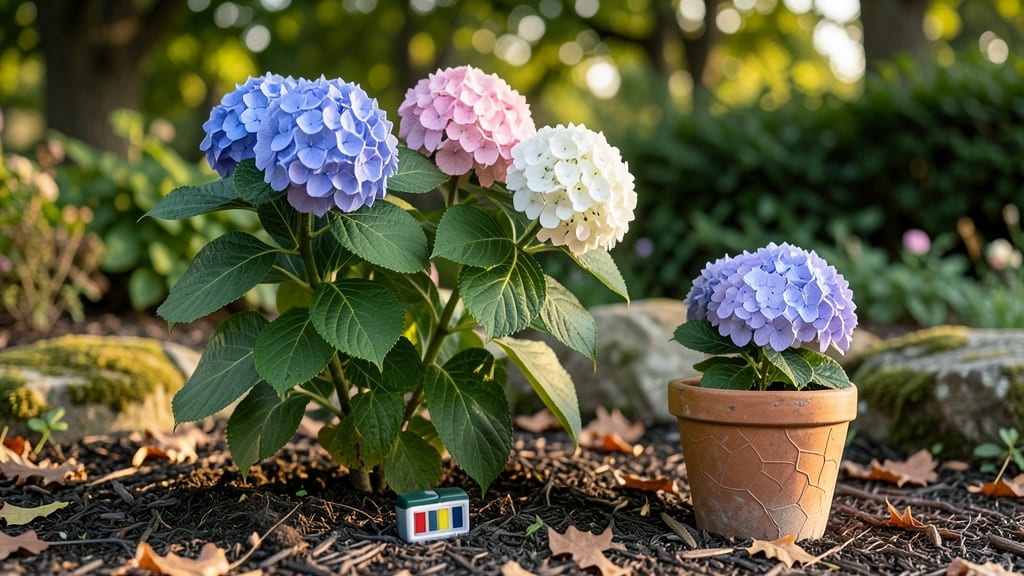
Hydrangea flower colors shift like mood rings in your garden—blue, pink, purple, or white, depending on soil pH and seasonal surprises. 🌸 I’ve watched my own hydrangeas go from soft lavender to deep blue in a single summer, and it’s the most magical color-changing act in the plant world.
The secret isn’t just about the blooms themselves but how they respond to what’s happening underground.
Pink hydrangeas thrive in slightly acidic soil, while blue varieties need a more alkaline touch—just a sprinkle of lime or aluminum sulfate can transform their hues overnight. Even white flowers can blush pink when conditions change.
The best part? These shifts happen naturally with each season, giving you a free, ever-changing display without buying new plants.
Imagine pairing deep blue blooms with creamy white for a dreamy, romantic border, or mixing pink and purple for a bold, summery statement. The color shifts also mean your garden evolves—what starts as a soft pink in spring might turn a rich violet by fall, keeping things fresh and exciting.
Let’s explore how to work with these natural transformations.
Whether you’re designing a cottage garden, a modern landscape, or just brightening up a patio, hydrangeas bring drama and adaptability. The key is understanding how their colors play together and how to encourage the shifts you love most. Ready to make your garden’s palette as dynamic as the sky?
📚 In This Guide
- What you need
- Instructions
- Tips and common mistakes
- Wrapping up and next steps
What you need
- ● Hydrangea plants (preferably Hydrangea macrophylla or Hydrangea quercifolia—these are the color-changers!)
- ● Garden soil or potting mix (well-draining, 1–2 cubic yards for in-ground or 1–2 gallons per pot)
- ● pH testing kit (digital or liquid test strips for accuracy)
- ● Sulfur powder (for lowering pH, 1–2 lbs per 100 sq ft or 1 tsp per gallon of soil)
- ● Lime (calcium carbonate) (for raising pH, ½–1 lb per 100 sq ft or 1 tsp per gallon)
- ● Watering can or hose (with a gentle spray nozzle for even distribution)
- ● Gloves and safety goggles (for handling sulfur/lime—safety first!)
- ● Garden trowel or shovel (for mixing amendments into soil)
- ○ pH buffer solution (optional, for recalibrating test kits)
- ● Rain gauge or moisture meter (to track watering consistency)
- ● Mulch (pine bark or compost) (helps retain moisture and gradual pH shifts)
- ● Notebook or app (to log pH levels and color changes over time!)
How to master hydrangea flower colors through soil pH
Here’s how I’ve unlocked vibrant blooms by tweaking just one factor—your soil’s acidity.
🌱 Step 1: Test Your Soil’s Current pH Level
Grab a soil pH test kit (digital or liquid) and sample soil from around your hydrangea’s roots, about 6 inches deep. I like to test in spring before new growth starts—this gives you the full picture of what’s affecting last year’s blooms. Moisten the sample as directed, then wait 10 minutes for accurate results.
If your reading falls between 5.5-6.2, you’re in the sweet spot for blue flowers. For pink blooms, aim for 6.5-7.0. Anything outside this range? That’s your clue to adjust. I’ve seen hydrangeas go from dull greenish-white to deep purple just by lowering the pH by 0.5 points.
✂️ Step 2: Amend Soil Based on Desired Color
For blue flowers, work 1 pound of aluminum sulfate into the top 12 inches of soil per plant. Water it in well, then mulch to lock in moisture. You’ll see color changes within 4-6 weeks—watch for new buds to form with that signature blue hue. I like to split the application over two feedings to avoid shocking roots.
For pink flowers, mix ½ cup of garden lime into the soil around each plant. Water thoroughly to help it dissolve. Pink hydrangeas often need slightly alkaline soil, so don’t overdo it—too much lime can turn blooms greenish. Test again in 3 months to confirm the shift.
💧 Step 3: Maintain Consistent Moisture and Mulch
Hydrangeas thrive with 1-1.5 inches of water weekly, especially during blooming season. I water deeply in the morning to prevent fungal issues, then top off with 2 inches of mulch to preserve soil moisture and stabilize pH. Mulch also keeps roots cool in summer, which prevents stress that can dull flower colors.
Here’s the thing—hydrangeas are heavy feeders. Every 4-6 weeks during growing season, feed with a balanced fertilizer (10-10-10). But skip high-phosphorus fertilizers—they can throw off your pH adjustments. You’ll notice richer colors and more abundant blooms if you stick to this schedule.
☀️ Step 4: Monitor and Adjust Seasonally
Retest soil pH in late summer before new buds set. Colors can drift as soil composition changes naturally. If blooms look faded by fall, it’s time to amend again. I’ve found that rainwater (pH-neutral) works better than tap water for maintaining pH balance—it won’t alter your soil chemistry unexpectedly.
Pro tip: Take photos of your hydrangeas at each pH adjustment. You’ll spot patterns—like how my Endless Summer variety always needs a touch more aluminum sulfate to stay true blue. Documenting helps you fine-tune year after year.
Tips & tricks for perfect hydrangea flower colors
Mastering those stunning hydrangea blooms isn't just about luck—it's about understanding how small soil adjustments create big color transformations. Here's what I've learned after years of experimenting with my own garden.
Testing Timing: That 10-minute wait after moistening your soil sample in Step 1 is crucial—don't rush it! I've seen inaccurate readings when people check too early. For best results, test your soil on a cool morning after a light rain, when moisture levels are most natural and consistent with your garden's current state.
Application Strategy: When adding the 1 pound of aluminum sulfate for blue blooms, focus on the outer 6-8 inches of soil where roots actively grow. I've found that splitting the application into two feedings (half now, half in 2 weeks) prevents root burn while still delivering the color-changing benefits. The same goes for lime—distribute it evenly around the plant's drip line, not just at the base.
Seasonal Watering: While the 1-1.5 inches of weekly water is a great guideline, adjust based on your climate. In my zone 6 garden, I increase to 2 inches during July-August when temperatures hit 90°F+—hydrangeas need extra moisture to prevent stress that dulls colors. Always water at the base, not overhead, to avoid fungal issues that can weaken plants.
Documentation Pays Off: I can't stress enough how valuable those before-and-after photos are. Keep a simple spreadsheet tracking your pH adjustments, amendments used, and bloom colors. Last year, I noticed my 'Nikko Blue' hydrangea needed 0.3 points more acidity than my 'Endless Summer'—documentation revealed the subtle variety differences I'd been missing.
Pro Tips for Hydrangea Flower Colors
- Mastering those stunning hydrangea blooms isn't just about luck—it's about understanding how small soil adjustments c...
- Testing Timing: That 10-minute wait after moistening your soil sample in Step 1 is crucial—don't rush it! I've seen i...
- Application Strategy: When adding the 1 pound of aluminum sulfate for blue blooms, focus on the outer 6-8 inches of s...
Frequently asked questions
about hydrangea flower colors—because every gardener deserves a little clarity!Why do my hydrangea flowers change color so unpredictably?
Hydrangea colors shift based on soil pH and aluminum availability. Blue hues thrive in acidic soil (pH 5.0–5.5), while pink blooms love neutral to alkaline soil (pH 6.0–7.0). Test your soil and adjust with lime (to raise pH) or sulfur (to lower it) for consistent colors. Pro tip: Some varieties (like Endless Summer) are mule-colored—they bloom twice and may mix shades!
When is the best time to adjust soil pH for color changes?
Plan pH adjustments 6–8 weeks before your hydrangeas bloom in spring. This gives roots time to absorb amendments. For fall-blooming varieties, amend soil in early summer. Avoid drastic changes—aim for gradual shifts (e.g., 0.5–1 pH unit per season) to prevent stress. Test soil annually for accuracy!
Can I change my hydrangea’s color permanently?
Yes! With consistent pH management, you can lock in a preferred color. For example:
- Blue: Add aluminum sulfate (1 tbsp per gallon of water, monthly).
- Pink: Sprinkle garden lime (follow package rates) to raise pH.
Note: Some green-flowered hydrangeas (like H. quercifolia) are pH-resistant—their color won’t change!
Will rain or tap water affect my hydrangea’s color?
Hard water (high in calcium/magnesium) can neutralize soil pH over time, shifting colors to pink. If your water is hard:
- Use rainwater or distilled water for pH-sensitive varieties.
- Flush soil with vinegar (1 part vinegar : 5 parts water) to lower pH temporarily.
Test your water at a local nursery for a quick fix!
Are there hydrangeas that stay one color regardless of soil?
Mophead and Lacecap hydrangeas (e.g., ‘Nikko Blue’, ‘Vanille Fraise’) are pH-responsive, but panicle hydrangeas (like ‘Limelight’) and oakleaf hydrangeas (e.g., ‘Snow Queen’) ignore pH—they bloom white or greenish-white year-round. Perfect for low-maintenance color!
Wrapping up and next steps
Hydrangeas are nature’s mood rings—changing colors with the seasons and a little pH magic! 🌸 Whether you’re chasing blues, pinks, or purples, the key is patience and playfulness with soil science.
Now that you’re armed with tips on testing pH, adjusting soil, and timing adjustments, it’s time to roll up your sleeves and experiment—your garden’s masterpiece is waiting!
Start small: pick one hydrangea bush and track its color shifts over time. Share your progress or ask questions—every gardener’s journey is unique, and the community loves to cheer you on! 🌱