
Flowers
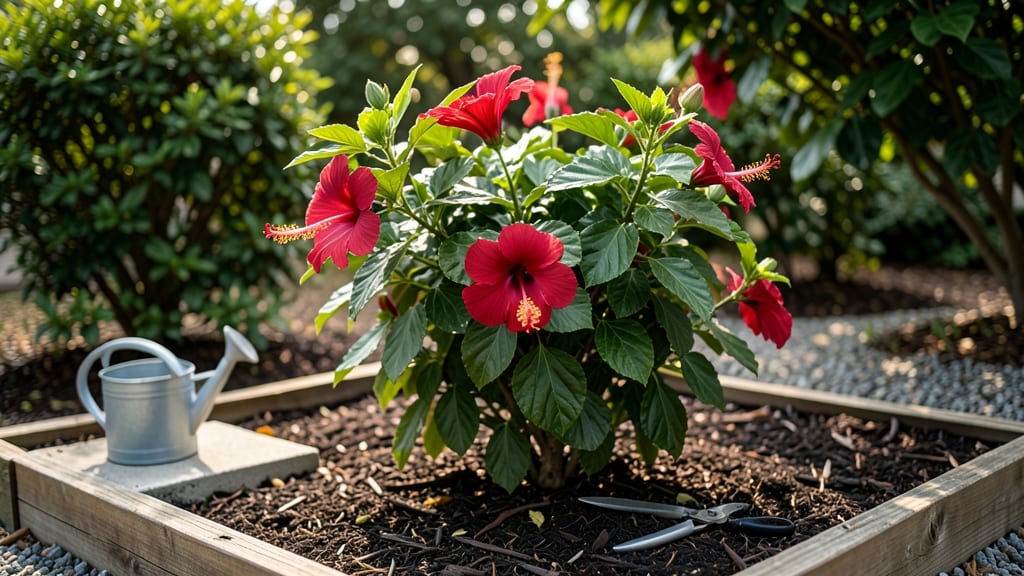
The vibrant Jamaican hibiscus flower (Hibiscus rosa-sinensis) transforms your garden into a lush tropical paradise with its striking, year-round blooms—if you provide the right conditions. I’ve grown these vibrant flowers for years, and the secret isn’t complicated: they thrive on warmth, consistent moisture, and a little pruning love.
The first time I saw one burst into full bloom in my Florida yard, I knew I’d never go back to less dramatic plants.
You’ll need well-draining soil mixed with compost, 6+ hours of sunlight daily, and regular watering to keep the roots happy without soggy roots. Fertilizing every 4-6 weeks with a balanced plant food keeps those glossy leaves and showstopping flowers coming.
Pruning after blooms encourages more flowers, and propagation is easy—just take cuttings or save seeds from spent blooms.
What you’ll end up with is a lush, flowering focal point that attracts hummingbirds and makes neighbors stop to admire. The flowers last all season if you deadhead spent blooms, and with the right care, your hibiscus will reward you with bold reds, yellows, or whites year after year.
Ready to grow one that steals the show?
Works beautifully in containers, garden beds, or as a privacy screen—just adjust watering for pots. Whether you’re in a warm climate or a sunny spot in a cooler zone, this guide covers everything you need to keep your hibiscus thriving. Let’s get those roots growing!
📚 In This Guide
- What you need
- Instructions
- Tips and common mistakes
- Wrapping up and next steps
What you need
- ● Jamaican hibiscus seeds or cuttings: 1–3 seeds (if starting from scratch)
- ● OR 1–2 healthy cuttings (6–8 inches long, with at least 2–3 leaf nodes)
- ● Well-draining potting mix or garden soil: 5–10 gallons (for containers)
- ● Enrich with compost or aged manure (1 part compost to 3 parts soil)
- ○ Containers (optional but recommended for beginners): 1–2 large pots (12–18 inches in diameter) with drainage holes
- ● OR a raised bed (if planting directly in the ground)
- ● Hand trowel or small shovel
- ● Pruning shears (for trimming and harvesting)
- ● Watering can or hose with a gentle spray nozzle
- ● Gloves (to protect hands from thorns)
- ● Mulch (straw or shredded leaves, 2–3 inches thick)
- ○ Optional but helpful: Rooting hormone (for cuttings)
- ● Fertilizer (balanced 10-10-10 or organic options like fish emulsion)
- ● Support stakes (for taller varieties)
- ● Climate: Warm, tropical or subtropical (USDA Zones 10–12; can be grown indoors in cooler zones)
- ● Sunlight: Full sun (6+ hours daily) or partial shade (4–6 hours)
- ● Water: Consistent moisture (keep soil evenly damp but not soggy)
- ● pH Level: Slightly acidic to neutral (6.0–7.0)
Step-by-step instructions for cultivating Jamaican hibiscus flowers
Tropical hibiscus thrives with patience and precise care—here’s how to coax those vibrant blooms year-round.
🌱 Step 1: Select the Right Variety and Prepare the Planting Site
Jamaican hibiscus (Hibiscus rosa-sinensis) prefers warm climates and full sun, but even cooler zones can grow it in containers. Choose a location with at least 6 hours of direct sunlight daily—partial shade in hot afternoons helps prevent leaf scorch. If planting outdoors, amend the soil with 3 inches of compost to improve drainage, as hibiscus roots rot easily in soggy conditions.
For container growing, use a well-draining potting mix and a pot with drainage holes that’s at least 12 inches deep. Hibiscus roots need space to spread, so larger containers yield bigger blooms. I always add a handful of perlite to the mix to prevent compaction. Test the soil moisture by sticking your finger 2 inches deep—if it feels dry, it’s time to water.
☀️ Step 2: Plant and Establish the Hibiscus for Optimal Growth
Dig a hole twice as wide as the root ball but no deeper, as hibiscus dislikes being buried too deeply. Gently loosen the roots if they’re circling and place the plant so the top of the root ball sits level with the soil surface. Backfill with native soil mixed with compost, pressing lightly to eliminate air pockets. Water deeply right after planting to settle the soil and encourage root contact.
In the first 4-6 weeks, keep the soil consistently moist but not waterlogged—hibiscus is drought-tolerant once established, but young plants need steady hydration. You’ll know it’s thriving when new leaves emerge with a deep green, glossy sheen. Avoid fertilizing during this time; wait until you see new growth before applying a balanced 20-20-20 fertilizer at half strength.
💧 Step 3: Maintain Year-Round Blooms with Proper Care
Jamaican hibiscus blooms continuously when given the right conditions. Prune spent flowers just above a leaf node to encourage more blooms, and trim leggy growth in early spring to promote bushier shape. Feed every 4-6 weeks during the growing season with a low-nitrogen, high-phosphorus fertilizer (like 5-10-10) to boost flowering. In cooler months, reduce watering slightly but keep the soil lightly moist.
Watch for pests like aphids or spider mites—these thrive in dry conditions. Spray affected areas with neem oil or insecticidal soap if you spot sticky residue on leaves or fine webbing. Mulch around the base with 2-3 inches of organic mulch to retain moisture and suppress weeds. The key to vibrant blooms is consistent care: sunlight, water, and occasional pruning keep hibiscus flowering nonstop.
✂️ Step 4: Overwinter Care for Container-Grown Plants
If you’re growing hibiscus in containers, move it indoors before temperatures drop below 50°F. Place it near a south-facing window or under grow lights for 12-14 hours daily to maintain blooming. Reduce watering but keep the soil lightly damp—overwatering in winter causes root rot. I’ve found that hibiscus tolerates cooler indoor temps if humidity stays moderate; a pebble tray with water helps mimic tropical conditions.
In spring, resume outdoor placement once nighttime temps stay above 55°F. Prune back any dead or weak growth before moving it outside to encourage fresh, vigorous shoots. Hibiscus is forgiving but rewards attentive care with bold, long-lasting blooms—worth every effort for a tropical touch in any garden.
Tips & tricks for perfect Jamaican hibiscus cultivation
Here's what nobody tells you about keeping your tropical hibiscus thriving—these insights come from years of trial and error with finicky varieties.
Sunlight Strategy: The 6 hours of direct sunlight mentioned is non-negotiable, but I've found hibiscus actually benefits from morning sun and afternoon shade in zones above 90°F. Watch for leaf edges turning crispy—this is your plant's way of saying "I need relief." Position your container where it gets morning rays and afternoon shade during peak summer months, even if it means rotating it weekly to maintain even exposure.
Root Health Secret: That 12-inch deep pot isn't just about space—it's about creating an oxygen-rich environment. I've seen hibiscus roots literally suffocate in shallow containers. When repotting, always use a pot that's 3-4 inches larger in diameter than the previous one, and never skip the perlite. The roots need that air space to prevent rot, especially in humid climates where water lingers around roots.
Fertilizer Timing: The 4-6 week feeding schedule is perfect, but here's the trick: split that fertilizer dose into two applications—half when you water deeply, half when the top inch of soil feels dry. This mimics natural rainfall patterns and prevents fertilizer burn. I've lost count of how many times I've seen hibiscus leaves crisp at the edges from over-fertilizing, so start conservative and adjust based on leaf color.
Winter Survival Hack: When moving your hibiscus indoors before 50°F hits, don't just plop it by the window. Create a microclimate by placing it on a tray of pebbles with shallow water underneath. The evaporation creates humidity that mimics tropical conditions, and I've kept hibiscus blooming indoors through winter using this simple setup. Just keep the pebbles topped off and avoid letting the pot sit directly in water.
Pro Tips for Jamaican Hibiscus Flower
- Here's what nobody tells you about keeping your tropical hibiscus thriving—these insights come from years of trial and error with finicky varieties.
- Sunlight Strategy: The 6 hours of direct sunlight mentioned is non-negotiable, but I've found hibiscus actually benefits from morning sun and afternoon shade in zones above 90°F.
- Root Health Secret: That 12-inch deep pot isn't just about space—it's about creating an oxygen-rich environment.
Frequently asked questions
about growing Jamaican hibiscus flowers—because every gardener deserves a little clarity! Here are answers to the most common queries to help you cultivate these stunning tropical blooms with confidence.How long does it take for a Jamaican hibiscus to bloom after planting?
A healthy Jamaican hibiscus typically begins flowering 6–12 months after planting, depending on conditions like sunlight, soil quality, and care. Young plants may take longer, but patience pays off—once established, they reward you with year-round blooms in warm climates!
Can Jamaican hibiscus survive cold weather, or do I need to bring it indoors?
Jamaican hibiscus thrives in USDA zones 10–12 and is not frost-tolerant. If temperatures dip below 50°F (10°C), move potted plants indoors near a sunny window or greenhouse. In colder regions, grow them as annuals or overwinter them carefully.
Why aren’t my hibiscus flowers opening? Troubleshooting tips?
Bud drop or unopened flowers often signal stress. Check for:
- Insufficient sunlight (they need 6+ hours of direct sun daily).
- Overwatering (let soil dry slightly between waterings).
- Nutrient deficiencies (feed with a balanced fertilizer every 4–6 weeks).
- Drafts or temperature swings (keep them stable and warm).
Are there dwarf varieties of Jamaican hibiscus for small gardens?
Yes! While Jamaican hibiscus (Hibiscus rosa-sinensis) isn’t typically dwarf, you can find compact cultivars like ‘Helene’ or ‘Pink Gorilla’, which max out at 3–5 feet tall. Prune regularly to control size, and they’ll still pack vibrant blooms in a smaller space.
Do Jamaican hibiscus attract pollinators like hummingbirds?
Their bright, tubular flowers are a magnet for hummingbirds, bees, and butterflies. Plant them near seating areas or windows to enjoy a lively garden show. Bonus: The nectar-rich blooms support local ecosystems while adding color to your space.
How do I propagate Jamaican hibiscus from cuttings?
Propagating is easy! Take 4–6 inch cuttings from healthy stems, strip lower leaves, and dip in rooting hormone. Plant in moist potting mix, cover with a plastic bag to retain humidity, and place in bright, indirect light. Roots form in 4–8 weeks.
Wrapping up and next steps
The Jamaican hibiscus, with its vibrant blooms and low-maintenance charm, is a showstopper for any garden or patio. Whether you're a seasoned gardener or a beginner, its resilience and beauty make it a rewarding plant to grow—plus, you’ll enjoy year-round color with the right care! 🌺
Ready to bring this tropical gem into your space? Start small—pick a sunny spot, gather your supplies, and dive in! With patience and love, you’ll soon be surrounded by lush, fragrant hibiscus that’s as delightful to look at as it is to nurture.
Next steps:
- 🌱 Plant your first seedling or propagate a cutting.
- 📅 Mark your calendar for regular watering and feeding.
- 📸 Share your progress—tag us and inspire others!