
Flowers
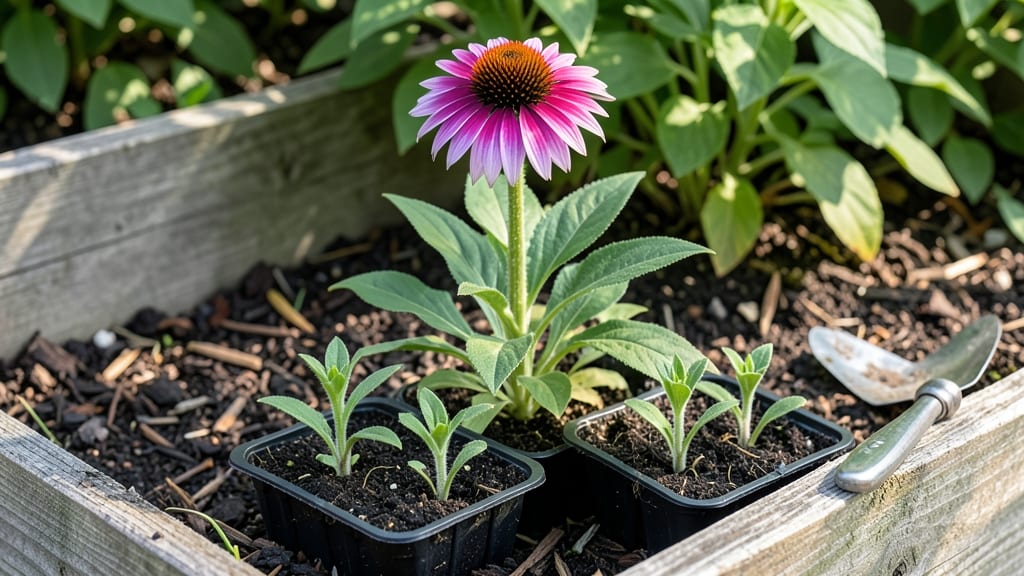
Fast germination with purple coneflower sprouts starts with a little patience and the right conditions—those first green shoots emerge within 7-14 days when you nail the soil and warmth.
I’ve watched my seedlings race from tiny specks to sturdy sprouts in just two weeks, and the secret isn’t complicated: keep the soil consistently moist but not soggy, and maintain a steady temperature around 70°F.
Your setup only needs three things: a shallow tray, well-draining seed-starting mix, and a sunny windowsill or grow light. Scatter seeds ¼-inch deep and space them 12 inches apart—they’ll resent crowding later.
The key is consistency: overwatering drowns them, while dry soil slows germination. Once those first leaves appear, thin to the strongest sprouts and watch them grow.
By month two, you’ll have lush, velvety foliage and the first hints of those iconic purple blooms forming. These plants thrive in full sun, so move them outdoors after the last frost, and you’ll see them reward your care with 3-foot-tall stems packed with pollinator-friendly blooms by midsummer.
The best part? They multiply easily—just leave some stems to self-seed.
For troubleshooting, slow germination often means cold soil or old seeds. Weak sprouts? Check for legginess (a sign of weak light) and move them closer to a window.
And if you’re short on space, these do beautifully in containers—just give them room to spread. Here’s how to keep them thriving from seed to bloom.
📚 In This Guide
- What you need
- Instructions
- Tips and common mistakes
- Wrapping up and next steps
What you need
- ● Purple coneflower seeds: 1 packet (500–1,000 seeds, organic or heirloom preferred).
- ● Seed-starting mix: 2–3 quarts of lightweight, sterile potting soil (avoid garden soil—it’s too dense!).
- ● Seed trays or small pots: 2–4 shallow containers (2–3 inches deep) with drainage holes.
- ● Grow lights or sunny windowsill: A south-facing window (6+ hours of sunlight) or a full-spectrum LED grow light (12–16 hours/day).
- ● Spray bottle: For gentle watering (avoid over-saturating seeds!).
- ○ Plastic wrap or humidity dome: Optional but helpful for keeping seeds cozy while germinating.
- ● Watering can or cup: For post-germination care (once sprouts appear).
- ● Heating mat: Speeds up germination (70–75°F ideal).
- ● Fertilizer: Balanced liquid fertilizer (diluted to half-strength) for faster growth.
- ● Transplanting tools: Small trowel or spoon for moving seedlings.
- ● Label markers: To track planting dates (purple coneflowers take 70–100 days to bloom!).
- ● Compost or worm castings: Boosts soil nutrients for lush sprouts.
Step-by-step guide to germinating purple coneflower seeds
Here’s how to coax those stubborn purple coneflower seeds into sprouting quickly—no more waiting months for germination.
Pre-Treat Seeds for Faster Sprouting
Purple coneflowers have tough seed coats that slow germination. To speed things up, soak the seeds in warm water for 24 hours before planting. Place them in a small container, cover with water, and let them sit in a warm spot—you’ll see the water turn slightly cloudy as the seed coats soften.
After soaking, drain the water and let the seeds air-dry for 30 minutes on a paper towel. This prevents mold while keeping the seed coats pliable. I like to spread them out on a clean towel and leave them near a sunny window until they’re just damp to the touch.
Here’s the thing—skipping this step can double your germination time. The soak mimics natural weathering that would otherwise happen in the wild, breaking dormancy so you can enjoy blooms sooner.
Plant in Well-Draining, Warm Soil
Fill your seed-starting trays with a light, sterile potting mix—purple coneflowers hate soggy roots. Mix in a little perlite or sand to improve drainage, especially if your mix tends to compact. Press the soil down gently but firmly so it’s just snug around the seeds.
Sow the seeds ¼ inch deep, spacing them ½ inch apart in rows. A toothpick helps place them precisely without burying too deeply. Cover lightly with a thin layer of additional mix, then mist the surface with a spray bottle until evenly moist. You’ll know it’s right when the soil looks damp but not glistening.
Place the tray in a warm, dark spot (around 70-75°F) to encourage germination. A seedling heat mat set to 75°F works wonders—it mimics the forest floor conditions these wildflowers prefer. Check daily for moisture, but avoid watering again until the soil surface feels dry to the touch.
Provide Light and Monitor for Sprouts
Once the seeds sprout—usually in 7-14 days—move the tray to a bright, indirect light spot. Purple coneflowers need light to grow strong, but direct sun can scorch tiny seedlings. A south-facing window with sheer curtains works well, or use a grow light kept 2-3 inches above the seedlings.
Watch for first true leaves (the second set after the initial seed leaves) to appear. This is your signal to thin the seedlings if they’re crowded. Use small scissors to snip excess seedlings at soil level, leaving the strongest one per cell. You’ll see leggy stems if the light isn’t strong enough—adjust immediately to prevent weak growth.
Real talk: If germination takes longer than two weeks, the seeds might need another soak. Don’t give up—purple coneflowers are worth the wait for their bold blooms.
Harden Off and Transplant Young Plants
When seedlings reach 2-3 inches tall and have 4-5 true leaves, it’s time to harden them off. Start by placing them outside in a shaded, sheltered spot for 1 hour the first day. Gradually increase their outdoor time over 7-10 days, ending with full sun exposure.
Transplant outdoors after the last frost when soil temperatures are at least 55°F. Space them 12-18 inches apart in well-draining soil with full sun (6+ hours daily). Water deeply at the base to encourage root growth, and mulch with 2 inches of organic mulch to retain moisture and suppress weeds.
You’ve got this. With these steps, you’ll have sturdy purple coneflower seedlings ready to thrive in your garden—no more slow starts or weak sprouts.
Tips & tricks for perfect purple coneflower sprouts
Common pitfalls—and how to sidestep every one—when growing these hardy wildflowers from seed.
Soaking Strategy: The 24-hour warm water soak isn't just about speed—it's about breaking dormancy. Use distilled water if your tap water is heavily chlorinated, as chlorine can inhibit germination. Place the container in a warm spot like on top of your fridge to maintain consistent 75°F temperatures. If you notice mold developing after 24 hours, rinse the seeds gently and extend the soak another 12 hours—just keep an eye on them.
Soil Science: Purple coneflowers despise soggy conditions, so your light, sterile potting mix should feel like a damp sponge—not a wet rag. Mix in horticultural charcoal (about 10% by volume) to improve drainage and prevent fungal issues. When pressing the soil around seeds, aim for gentle firmness—think "just enough to hold a seed in place" rather than compacting it. Overly dense soil can suffocate emerging sprouts.
Light Transition: The move from dark germination to bright indirect light is critical. If you're using a grow light, position it 2-3 inches above seedlings and use it for 12-14 hours daily. Watch for leggy growth—this is your signal to increase light intensity. For window placement, rotate the tray daily so all seedlings get equal exposure, preventing them from stretching toward the light source.
Harden Off Gradually: The 7-10 day hardening process should mirror your local climate conditions. Start with just 1 hour in shade, then increase by 1 hour each day. On cloudy days, you can extend outdoor time slightly since UV exposure is lower. If nighttime temperatures drop below 50°F during hardening, bring seedlings indoors overnight until they've fully acclimated to your garden's conditions.
Pro Tips for Purple Coneflower Sprouts
- Common pitfalls—and how to sidestep every one—when growing these hardy wildflowers from seed.
- Soaking Strategy: The 24-hour warm water soak isn't just about speed—it's about breaking dormancy. Use distilled wate...
- Soil Science: Purple coneflowers despise soggy conditions, so your light, sterile potting mix should feel like a damp...
Frequently asked questions
Got questions about growing purple coneflower sprouts? You’re not alone! Here are some of the most common queries—and their straightforward answers—to help you cultivate thriving blooms with ease.
How long does it take for purple coneflower seeds to sprout?
Patience is key! Under ideal conditions (consistent moisture and warm soil, 60–70°F), purple coneflower seeds typically sprout in 14–30 days. Cold stratification (chilling seeds for 30–60 days) can speed this up. If sprouts don’t appear after 45 days, gently check for mold or rot—adjust watering if needed.
Can I speed up germination for purple coneflower sprouts?
Try these tricks: Soak seeds overnight in water before planting, use a seedling heat mat (70°F+), or stratify seeds in a damp paper towel in the fridge for 1–2 months. Lightly scratching the seed coat with sandpaper can also help break dormancy. Patience pays off, but these methods often cut wait time by half!
What’s the best soil mix for purple coneflower sprouts?
These hardy perennials thrive in well-draining, slightly rocky soil with a pH of 6.0–7.5. Mix 1 part compost with 2 parts native soil or potting mix, and add a handful of perlite or sand to prevent sogginess. Avoid heavy clay—it can suffocate tender sprouts. Mulch lightly after germination to retain moisture.
Why aren’t my purple coneflower seeds sprouting at all?
Don’t panic! Common culprits include:
- Old seeds: Purple coneflower seeds lose viability after 2–3 years—check your packet date.
- Too dry or cold: Keep soil consistently moist (not soggy) and maintain temps above 50°F.
- Poor seed-to-soil contact: Press seeds lightly into soil—they need darkness to germinate.
- Fungal issues: If mold appears, reduce watering and consider a fungicide spray.
Can I grow purple coneflower sprouts indoors before transplanting?
Yes! Start seeds indoors 8–10 weeks before your last frost using small pots or a seed tray. Use a grow light (12–14 hours/day) to prevent leggy sprouts. Harden off seedlings for 1 week before transplanting outdoors—acclimate them to sunlight gradually. Choose a sunny, open spot with at least 6 hours of light daily.
Wrapping up and next steps
Growing purple coneflower sprouts is a rewarding journey that brings vibrant color and wildlife support to your garden—and it’s easier than you think! With the right soil, patience, and care, you’ll soon enjoy lush blooms that attract pollinators and add charm to your outdoor space.
Now that you’re armed with tips and answers, why not take the next step? Grab your supplies, follow the steps, and watch your garden thrive with these stunning perennials! 🌸
Pro tip: Share your progress with fellow gardeners—inspiration spreads faster when we grow together! 🌱✨