
Tools
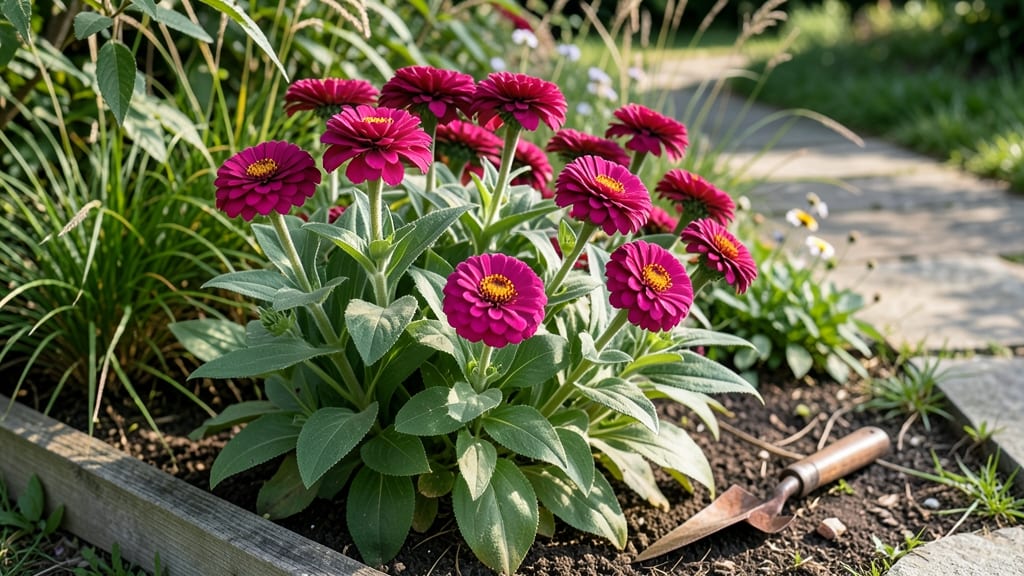
Transform your zinnias flower garden into a pollinator paradise with bold purple blooms that tower like living spires over almost any yard. 🌸 wild cottage charm to sleek modern borders.
I’ve designed zinnias into everything from rustic herb spirals to minimalist concrete planters, and they always deliver. Pair them with lavender for a dreamy purple cascade, or mix in sunflowers for a playful height contrast. Their long bloom season means color from early summer through frost, with minimal fuss.
You’ll end up with a garden that hums with bees, butterflies, and hummingbirds—all while requiring less water and care than fussy annuals. The secret? Plant them in full sun, deadhead spent blooms, and let them multiply naturally. They’re the workhorse of summer gardens.
Whether you’re framing a walkway, filling containers, or creating a wildflower meadow, zinnias adapt beautifully. Start with just a few plants, and you’ll soon be surrounded by their cheerful faces—proof that bold colors make the biggest impact.
📚 In This Guide
- What you need
- Instructions
- Tips and common mistakes
- Wrapping up and next steps
What you need
- ● Zinnia seeds – Choose purple varieties like 'Profusion Purple' or 'Benary’s Giant' (1–2 seed packets, ~50–100 seeds total).
- ● Well-draining potting mix – 5–10 gallons (or enough to fill your containers/garden beds). Opt for a blend with 50% compost for nutrient-rich soil.
- ● Garden space – Full sun (6+ hours/day) in a raised bed, containers (12"+ depth), or in-ground plot.
- ● Watering can or hose with a gentle spray nozzle (for seedlings).
- ● Fertilizer – Balanced 10-10-10 granular or liquid fertilizer (1 tbsp per plant at planting + monthly).
- ● Mulch – 1–2 inches of straw or shredded bark to retain moisture and suppress weeds.
- ● Stakes or cages – Tall varieties (like 'Benary’s Giant') may need 6-inch stakes for support.
- ● Pollinator-friendly companions – Marigolds, cosmos, or salvia to attract butterflies and bees.
- ● Slow-release fertilizer pellets – Mix into soil at planting for 3–4 months of nutrients.
- ● Decorative garden flags or markers – For a chic, curated look (bonus points for purple!
- ● Pruning shears – To deadhead spent blooms and encourage more flowers.
Step-by-step guide for planting a stunning zinnia flower garden
Here's how to create a vibrant, pollinator-friendly display that blooms all summer long.
🌱 Step 1: Prepare the Planting Site for Zinnias
Zinnias thrive in full sun—choose a location with at least 6-8 hours of direct sunlight daily. Clear the area of weeds and loosen the soil to a depth of 12 inches using a garden fork. I like to work in a 5-foot square section for each serving of plants, which gives them room to spread without crowding.
Amend the soil with 2-3 inches of compost mixed into the top 6 inches of soil. Zinnias prefer well-draining soil, so if your garden holds water, add a 1-inch layer of perlite or coarse sand to improve drainage. Test the soil pH—zinnias grow best in slightly acidic to neutral soil with a pH of 6.0-7.0. If your soil is too alkaline, work in sulfur or peat moss to adjust it.
⏰ Step 2: Plant Zinnia Seeds at the Right Time and Depth
Start seeds indoors 4-6 weeks before your last frost date or sow directly outdoors 2-3 weeks after the last frost when soil temperatures reach at least 55°F. Plant seeds ¼ inch deep—they need light to germinate, so don’t bury them too deeply. Space seeds 12-18 inches apart in rows 18-24 inches apart for proper airflow and reduced disease risk.
Water the soil gently but thoroughly after planting to settle the seeds. Keep the soil evenly moist (not soggy) until germination, which typically occurs in 7-14 days. Real talk: Overwatering at this stage can cause damping-off, so mist the soil lightly instead of using a heavy stream. Once seedlings emerge, thin them to 12 inches apart to prevent competition for nutrients.
💧 Step 3: Water and Fertilize for Continuous Blooms
Zinnias are drought-tolerant once established, but consistent moisture is key during the first 4-6 weeks. Water deeply once a week, providing 1 inch of water per week, and more during dry spells. Water at the base of the plant in the morning to reduce fungal diseases and evaporation. Avoid wetting the foliage, as zinnias are prone to powdery mildew in humid conditions.
Feed plants with a balanced, water-soluble fertilizer (10-10-10) every 4-6 weeks during the growing season. I like to mix in ½ cup of compost tea every 2-3 weeks for extra nutrients without overloading the soil. Deadhead spent blooms by pinching off faded flowers just above the first set of leaves—this encourages nonstop blooming and prevents the plant from putting energy into seed production.
☀️ Step 4: Support and Maintain for Long-Lasting Beauty
Tall zinnia varieties like 'Benary’s Giant' may need staking or cages to prevent flopping, especially in windy areas. Install supports early—once the plant is 6-8 inches tall—to avoid disturbing roots. Prune leggy stems back to a lower leaf node to encourage bushier growth. If you notice yellowing leaves, it’s often a sign of overwatering or nutrient deficiency—cut back on water and feed with a low-nitrogen fertilizer to correct it.
Watch for pests like aphids or spider mites, which love zinnias. Treat infestations early with neem oil or a strong spray of water to dislodge them. Zinnias attract pollinators like bees and butterflies, so resist the urge to use chemical pesticides—they’ll disrupt the very ecosystem you’re cultivating. By mid-summer, you’ll have a vibrant, pollinator-friendly garden that keeps blooming until frost.
Tips & tricks for a thriving zinnia flower garden
Creating a stunning zinnia display isn't just about following steps—it's about understanding the little details that make all the difference. Here's what I've learned from years of growing these vibrant blooms.
Sunlight Strategy: While the instructions call for 6-8 hours of direct sunlight, I've found that zinnias actually perform best with at least 8 hours in hotter climates. If your garden gets afternoon shade, consider placing your zinnias where they'll receive the most intense sunlight during those critical morning hours. The difference in bloom size and color intensity is remarkable—think of it as giving your zinnias their daily vitamin D boost.
Soil Prep Secret: When amending your soil with 2-3 inches of compost in Step 1, don't just mix it in superficially. Dig it down to the full 6 inches depth specified, but also create small trenches around each planting area. This creates nutrient-rich channels that roots can easily access as they grow. I've noticed plants established this way show stronger early growth and better drought resistance.
Germination Hack: The 7-14 day germination window can feel like an eternity, but there's a trick to speed things up. After planting seeds ¼ inch deep, cover the area with clear plastic wrap or a humidity dome. This creates a mini greenhouse effect that can reduce germination time to as little as 5-7 days. Just remember to remove the cover once you see sprouts to prevent damping-off disease.
Deadheading Discipline: While the instructions mention deadheading, I've found that being consistent with this step is absolutely critical for continuous blooms. Make it a habit to check your zinnias every 2-3 days during peak bloom season. The moment you see a flower starting to fade, pinch it off. This redirects the plant's energy from seed production back to creating more vibrant blooms—it's like giving your zinnias a constant reminder to focus on beauty rather than reproduction.
Pro Tips for Zinnias Flower Garden
- Creating a stunning zinnia display isn't just about following steps—it's about understanding the little details that make all the difference.
- Sunlight Strategy: While the instructions call for 6-8 hours of direct sunlight, I've found that zinnias actually perform best with at least 8 hours in hotter climates.
- Soil Prep Secret: When amending your soil with 2-3 inches of compost in Step 1, don't just mix it in superficially.
Frequently asked questions
Got questions about creating a stunning zinnias flower garden? You’re not alone! Here are some of the most common queries—and their answers—to help you grow bold, pollinator-friendly blooms with confidence.
When is the best time to plant zinnias for continuous blooms?
Zinnias thrive in warm weather, so plant them after the last frost in spring (typically late April to early June, depending on your zone). For a longer blooming season, start seeds indoors 6–8 weeks before the last frost or sow directly outdoors once soil temps reach 55°F (13°C). Deadhead spent blooms to encourage more flowers!
Do zinnias attract bees and butterflies? How can I maximize pollinator visits?
Zinnias are a pollinator magnet, especially their bright purple, pink, or red varieties. To boost visits, plant them in clusters (3–5 plants together), provide shallow water sources nearby, and avoid pesticides. Double-flowered varieties are gorgeous but less bee-friendly—opt for single-bloom types like ‘Benary’s Giant’ for maximum buzz!
Why aren’t my zinnias blooming? Troubleshooting tips.
If your zinnias are leafy but not flowering, they may need more sunlight (6+ hours/day), well-draining soil, or a light fertilizer (like 5-10-10) every 4–6 weeks. Overcrowding or excessive nitrogen can also stunt blooms. Pinch back leggy stems early to encourage bushier growth and more flowers!
What are some low-maintenance alternatives to zinnias for a pollinator garden?
If zinnias seem high-maintenance, try these easy-care pollinator favorites:
- Coneflowers (Echinacea): Drought-tolerant, long-lasting blooms.
- Black-eyed Susans (Rudbeckia): Cheerful yellow flowers, thrive in poor soil.
- Lantana: Heat-loving, attracts butterflies, and blooms nonstop.
- Marigolds (Tagetes): Pest-repellent and super simple to grow.
Can zinnias survive winter? How should I overwinter them?
Zinnias are annuals in most climates, so they won’t return after frost. However, you can save seeds for next year! Let a few blooms mature fully, then harvest seeds from dried flower heads. Store them in a cool, dry place until spring. For perennial zinnias (rare), look for varieties like Zinnia grandiflora (e.g., ‘Profusion’ series).
Wrapping up and next steps
Creating a vibrant zinnias flower garden isn’t just about adding color—it’s about nurturing a thriving ecosystem that delights both you and pollinators. 🌸 From choosing the right soil to deadheading for continuous blooms, every step brings you closer to a stunning, low-maintenance garden that hums with life.
Whether you’re a seasoned gardener or just starting, these bold purple spires will reward your efforts with effortless beauty.
Ready to dive in? Start small—pick a sunny spot, gather your supplies, and let your zinnias do the rest! Plant your first seeds this weekend and watch your garden transform.