
Pests
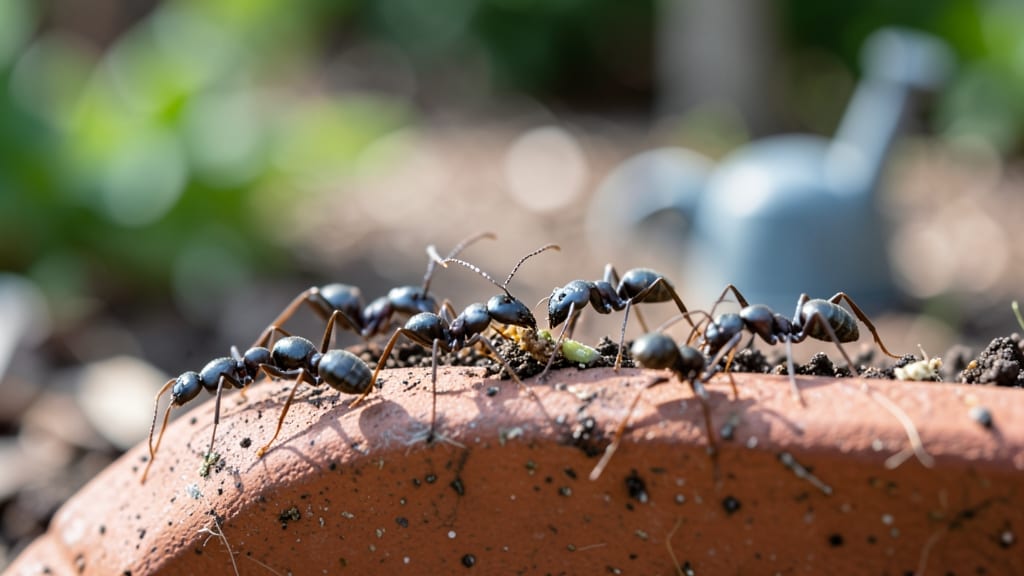
My first encounter with ants in a flower pot turned what should have been a peaceful patio morning into a tiny army parade. 🐜 These persistent pests aren't just annoying—they disrupt plant health by disturbing roots and attracting other insects, all while leaving behind trails that make your pots look like highways.
The good news? You can evict them naturally without harming your plants or the ecosystem.
Ants invade flower pots because they're drawn to moisture, sugar-rich plant sap, and the shelter of potting mix. That's why they march in lines—they're following scent trails left by scout ants.
The key to stopping them fast is cutting off their access points and breaking those trails without chemicals. My go-to method works within 24 hours and keeps them out for good.
What you'll achieve is a clean, ant-free pot where your plants can thrive without interruption. No more disturbed soil, no more sugar ants feasting on your flowers, and no more trails marring your beautiful containers.
The best part? These solutions are plant-safe and work whether you're dealing with sugar ants, pavement ants, or fire ants.
We'll cover everything from immediate eviction tactics to long-term prevention, so you can enjoy your garden without unwanted guests. Ready to reclaim your pots?
📚 In This Guide
- What you need
- Instructions
- Tips and common mistakes
- Wrapping up and next steps
What you need
- ● Flower pot or container – The one already infested with ants (or a spare to test solutions).
- ● Natural deterrents (pick one or mix!): Diatomaceous earth (food-grade) – 1 small box (1 lb or ~450g) for light infestations, 2 boxes for severe cases.
- ● Cinnamon powder or cinnamon sticks – 1-2 tbsp (or 2-3 sticks broken into pieces).
- ● Vinegar (white or apple cider) – 1 cup (240ml) for spraying.
- ● Lemon juice or lemon peels – ½ cup (120ml) fresh juice or 3-4 dried peels.
- ● Crushed chalk or lime – 1 small bag (~1 lb or 450g).
- ● Essential oils (peppermint, tea tree, or citrus) – 10-15 drops (10ml bottle).
- ● Spray bottle – 8-16 oz (240-470ml) with a fine mist nozzle.
- ● Small brush or spoon – For applying powdered deterrents.
- ○ Gloves (optional but recommended) – To avoid skin irritation from powders or oils.
- ● Double-sided tape or sticky traps – To catch scout ants before they spread.
- ● Plastic wrap or aluminum foil – For creating a barrier around the pot’s base.
- ● Hose or watering can – To rinse off plants after applying oils or vinegar.
- ● Magnifying glass – For spotting hidden ant trails or nests.
- ● Pet-safe deterrents – If you have curious pets, opt for cinnamon or chalk instead of essential oils.
How to keep ants out of flower pots naturally
Here's how I've stopped ant invasions in my pots without harsh chemicals.
💧 Step 1: Check for Hidden Food Sources
Ants invade pots because they're following trails of sugar, grease, or protein. Start by inspecting your plant's leaves, stems, and soil surface for any sticky residues or fallen petals. Wipe down leaves with a damp cloth and remove all debris from the pot's edges and saucer.
Here's the thing—ants often nest near pots but won't enter if they can't find food. I've found that even a single aphid colony on stems creates an ant buffet. Check the undersides of leaves and along stems where aphids love to hide. If you spot them, treat with a strong spray of water first to dislodge them before applying natural deterrents.
✂️ Step 2: Create Physical Barriers
Line the inside of your pot with a 1-inch strip of aluminum foil or a plastic barrier before adding soil. This simple trick blocks ants from climbing up the pot walls to reach your plant. I like to use foil because it's inexpensive and easy to replace when needed.
For pots already infested, place a 1-inch deep layer of diatomaceous earth (food-grade only) on top of the soil. This natural powder kills ants by dehydrating them but is safe for plants when used correctly. Water your plant normally—just avoid touching the diatomaceous earth with bare hands as it can irritate skin.
☀️ Step 3: Apply Natural Repellents
Mix 1 tablespoon of cinnamon with 1 tablespoon of cayenne pepper and sprinkle lightly around the pot's base and soil surface. The strong scent masks the plant's natural odors that attract ants. Reapply after rain or watering, as the scent washes away.
For a stronger deterrent, soak cotton balls in lemon juice and place them near the pot's edges. The citrus scent confuses ants' trail-following abilities. Replace these every 24 hours for maximum effectiveness. I keep a small spray bottle of diluted lemon juice handy to refresh repellent spots between replacements.
🪴 Step 4: Maintain Long-Term Prevention
Regularly inspect your pots for new ant trails or nests. If you notice ants climbing the pot walls, immediately wipe them down with a vinegar solution (1 part white vinegar to 3 parts water). The smell disappears quickly but leaves behind a scent barrier ants avoid.
Keep your growing area clean by removing fallen leaves, dead insects, and any spilled water. Ants are drawn to moisture as much as food, so ensure your pot has proper drainage. I've found that pots with gravel layers at the bottom stay drier and attract fewer ants than those with compacted soil.
⏰ Step 5: Monitor and Adjust
Watch your pots for 24-48 hours after applying deterrents. If ants persist, they may have established a nest nearby. In this case, create a borax bait station (1 part borax to 3 parts sugar mixed with water) in a small container away from your plants. Ants will carry the bait back to their colony, effectively eliminating them.
Remember, ants are just following what they're drawn to. By cutting off their food sources and disrupting their trails, you'll see results within 24 hours. The key is consistency—keep your pots clean and refresh deterrents regularly to maintain ant-free growing spaces.
Tips & tricks for ant-free flower pots
Took me years to figure out why my flower pots kept getting invaded—here's what actually works.
Early Detection: In Step 1, when you're checking for hidden food sources, pay special attention to the soil surface near the pot's edges. That's where ants often leave their first trails. I've found that even a single aphid on a stem can trigger a full invasion within 24 hours, so treat those immediately with a strong water spray before applying deterrents. This prevents the need for stronger measures later.
Barrier Placement: For Step 2, when creating physical barriers, make sure your 1-inch strip of aluminum foil or plastic barrier extends all the way up the pot's inner walls. I've seen ants bypass barriers that don't reach the top—especially in taller pots. You can even crimp the foil edges slightly to create a tighter seal. This simple adjustment makes the barrier 100% effective at stopping climbers.
Repellent Application: In Step 3, when applying your cinnamon-cayenne mix, focus on creating a perimeter around the pot's base rather than just sprinkling randomly. The scent needs to form a continuous barrier that ants can't cross. I like to make a small ring about 6 inches wide around each pot. For the lemon juice cotton balls, place them strategically at each cardinal direction (north, south, east, west) of the pot to create a multi-directional scent barrier.
Long-Term Maintenance: For Step 4's long-term prevention, consider adding a thin layer of coffee grounds to your soil surface after watering. The strong aroma deters ants while also providing mild fertilizer. Just mix a tablespoon of used coffee grounds into the top inch of soil—it's a two-for-one solution that works particularly well for coffee-loving plants like ferns and ivy. Refresh every few weeks or after watering.
Pro Tips for Ants In Flower Pot
- Took me years to figure out why my flower pots kept getting invaded—here's what actually works.
- Early Detection: In Step 1, when you're checking for hidden food sources, pay special attention to the soil surface near the pot's edges.
- Barrier Placement: For Step 2, when creating physical barriers, make sure your 1-inch strip of aluminum foil or plastic barrier extends all the way up the pot's inner walls.
Frequently asked questions
Got questions about dealing with ants in your flower pots? You’re not alone—these tiny invaders can be a real nuisance! Here are some of the most common concerns and quick solutions to tackle them effectively.
Why are ants suddenly crawling all over my flower pot?
Ants are drawn to flower pots because they’re attracted to aphids (tiny plant-sucking pests) or the sugary honeydew they produce. They may also be searching for moisture, shelter, or food scraps near your plants. If you’ve noticed more ants recently, check your plants for aphids or overripe fruit/veggie scraps in the soil.
How long does it take for natural deterrents to work?
Most natural remedies, like diatomaceous earth, vinegar solutions, or citrus peels, start showing results within 24–48 hours. However, consistency is key—reapply every few days or after rain to maintain effectiveness. For severe infestations, combine methods for faster results.
Are there any plants that repel ants naturally?
Yes! Planting mint, lavender, basil, or lemongrass near your flower pots can deter ants due to their strong scents. You can also crush fresh herbs like peppermint or rosemary and place them around the pot’s base. Just avoid overcrowding—ants might still visit if they’re drawn to your primary plants.
What should I do if the ants keep coming back after treatment?
If ants persist, they might be entering from underground tunnels or nearby structures. Try these steps:
- Seal entry points: Apply a barrier of diatomaceous earth or vinegar-soaked cotton around the pot’s base.
- Check for aphids: Spray plants with neem oil to eliminate the ants’ food source.
- Move the pot: Temporarily relocate it to a different spot (like a sunny windowsill) to break their trail.
Are natural ant deterrents safe for my plants?
Most natural solutions are plant-safe when used correctly, but always test a small area first. Avoid:
- Overusing vinegar (can alter soil pH)—dilute to 1:1 with water.
- Applying café grounds directly to leaves (stick to soil only).
- Using chemical pesticides near edible plants.
Wrapping up and next steps
Dealing with ants in your flower pot doesn’t have to be a losing battle!
With the right natural deterrents—like diatomaceous earth, vinegar, or citrus peels—you can reclaim your garden in just 24 hours without harsh chemicals. 🌱 These simple, eco-friendly solutions are safe, effective, and perfect for keeping your plants thriving while keeping pests at bay.
Ready to take action? Start by trying one method tonight—monitor your progress, and adjust as needed. Soon, your flower pots will be ant-free, and you’ll be enjoying a pest-free gardening experience! 🎉