
Flowers
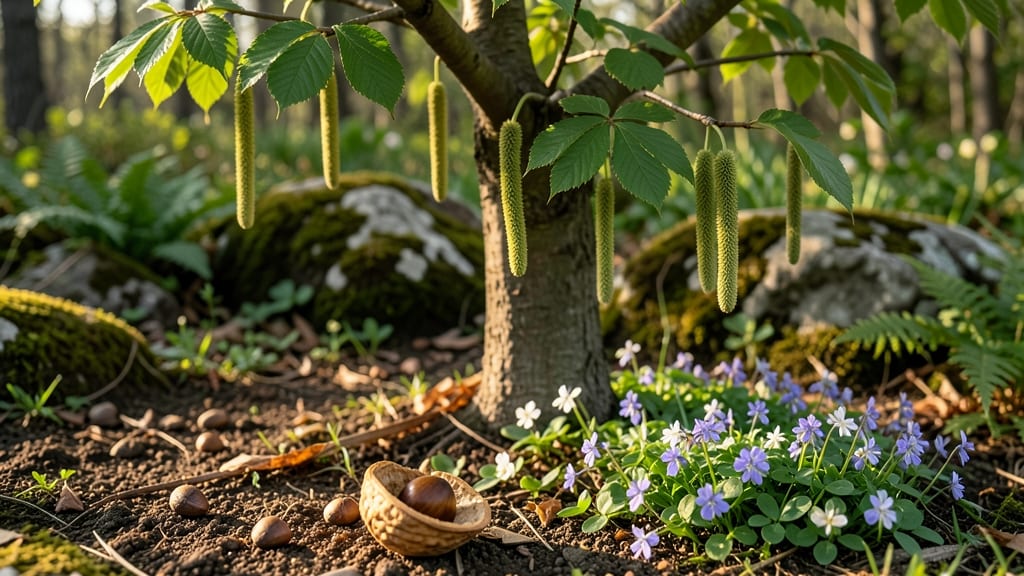
Black walnut tree flowers might not steal the show like peonies, but they're the secret behind those prized nuts—and understanding them transforms how you care for your tree. 🌿 These unassuming catkins appear in early spring, with male flowers dangling like tassels while female flowers stay hidden among the leaves, each playing a crucial role in the tree's future harvest.
The magic happens when male flowers release pollen to fertilize the female flowers, a process that sets the stage for walnut production later in the year. Pruning at the right time—late winter before buds swell—encourages stronger flowering and better fruit set.
My first black walnut tree took three years to produce nuts, but once it did, the harvest was worth the wait.
You'll recognize healthy flowering when you see clusters of male catkins swaying in the breeze and female flowers developing into small green husks by summer. Proper soil drainage and a sunny location keep the tree thriving, while avoiding over-pruning ensures it stays productive for decades.
The flowers may be subtle, but their impact is anything but.
Whether you're growing for nuts or just admiring the tree's quiet beauty, paying attention to these early-season blooms makes all the difference. The key is patience—black walnut trees reward long-term care with bountiful harvests and striking autumn foliage. Here's how to nurture them through every stage.
📚 In This Guide
- What you need
- Instructions
- Tips and common mistakes
- Wrapping up and next steps
What you need
- ● Black walnut tree saplings or seeds: 1-2 saplings (for direct planting) or 5-10 seeds (if germinating from scratch)
- ● Note: Saplings are faster but pricier; seeds require patience (6+ months to sprout).
- ● Well-draining soil: Mix of 60% topsoil, 30% compost, and 10% coarse sand (for aeration).
- ● Organic mulch: 2-3 inches of wood chips or straw (to retain moisture and suppress weeds).
- ● Slow-release fertilizer: 10-10-10 NPK ratio (1 lb per tree, applied in early spring).
- ● Watering can or hose with a gentle spray nozzle: 1-2 gallons per watering session.
- ● Garden trowel: For digging small holes (6" deep for seeds, 12" for saplings).
- ● Pruning shears: Bypass-style (sharp, 6-8" blades) for clean cuts.
- ● Hand saw or pruning saw: For thicker branches (if pruning mature trees).
- ● Gloves: Heavy-duty leather (black walnut sap can stain and irritate skin!).
- ● Measuring tape: To mark pruning cuts (ideal branch thickness: <1/4" for flowers).
- ○ Optional: Tree collar spray (to protect wounds after pruning).
- ● Soil pH test kit (ideal range: 6.0–7.5).
- ● Drip irrigation system (for large plantings).
- ● Sunlight: Full sun (6+ hours daily)—no compromises!
- ● Spacing: Plant saplings 30–50 feet apart (black walnuts grow 50–75 feet tall).
- ● Timing: Planting: Early spring (before buds swell) or fall (6 weeks before frost).
- ● Pruning: Late winter/early spring (dormant season) to avoid stressing the tree.
- ● Safety: Wear respiratory protection (sap can release juglone, harmful to some plants).
Step-by-Step instructions for cultivating black walnut tree flowers
Here’s how to coax vibrant blooms from your walnut tree—timing and technique matter most.
🌱 Step 1: Prune for Light and Airflow in Late Winter
Black walnut trees bloom best when they get plenty of sunlight and airflow. Start by removing any dead, diseased, or crossing branches with clean, sharp pruning shears. Cut just outside the branch collar—the swollen area where the branch meets the trunk—to prevent damage. This is the moment that matters: prune when the tree is still dormant, but after the worst winter frost has passed.
Focus on thinning the canopy to open it up. You’ll want to remove about 20-30% of the smallest branches to improve airflow and sunlight penetration. Avoid heavy pruning—this tree is tough, but it won’t recover well from aggressive cuts. Look for branches that are rubbing against each other or growing inward; these are the first to go. Your goal is to create an open, airy structure that lets light reach all the way to the inner branches where flowers will form.
☀️ Step 2: Ensure Full Sun and Proper Soil Conditions
Black walnut trees thrive in full sun—at least 6-8 hours daily. If your tree is in partial shade, blooms will be sparse or nonexistent. Check the surrounding area: any nearby tall trees, buildings, or dense shrubs blocking sunlight? Those need to go or be pruned back. The tree’s natural shade tolerance is limited when it comes to flowering.
Soil matters just as much as light. Black walnuts prefer well-draining, slightly acidic soil with a pH between 6.0 and 7.0. If your soil is heavy clay or compacted, amend it with 2-3 inches of compost worked into the top 12 inches of soil around the root zone. Mulch with 3 inches of organic mulch (like wood chips) to retain moisture and regulate soil temperature. Keep the mulch 6 inches away from the trunk to prevent rot.
⏰ Step 3: Fertilize Strategically in Early Spring
Timing is everything with fertilization. Apply a balanced, slow-release fertilizer (like 10-10-10) in early spring, just as new leaves begin to emerge. Spread the fertilizer evenly in a 6-foot radius around the tree’s drip line—this is where the feeder roots are most active. Water the area deeply after applying to help the granules break down and reach the roots.
Here’s the thing—black walnut trees are sensitive to over-fertilizing. Too much nitrogen will promote leafy growth at the expense of flowers. Stick to one application per year unless your soil test shows a deficiency. If you’re unsure about your soil’s nutrients, a simple soil test kit (available at garden centers) will give you the answers you need before you fertilize.
🌿 Step 4: Monitor for Pests and Diseases
Black walnut trees are generally hardy, but a few pests and diseases can steal their energy—and their flowers. Keep an eye out for walnut husk fly larvae, aphids, or black walnut scale. If you spot chewed leaves or sticky residue on branches, treat with neem oil or an insecticidal soap as soon as you notice the problem. Early intervention is key; once these pests take hold, they can weaken the tree enough to reduce flowering.
Fungal diseases like anthracnose or powdery mildew can also appear, especially in humid conditions. Improve airflow with pruning and avoid overhead watering to keep foliage dry. If you see dark spots on leaves or a white, powdery coating, remove the affected branches and apply a copper fungicide if needed. Healthy foliage means more energy for blooming, so don’t let these issues go unchecked.
✂️ Step 5: Lightly Prune Again After Flowering
Once the flowers have faded (usually in late spring to early summer), do a second, lighter pruning pass. Remove any suckers—those are the small shoots growing from the base of the tree or along the trunk. These compete with the main structure for nutrients and can reduce flowering. Also, trim back any branches that grew too long during the season to maintain that open canopy.
This is the time to shape the tree for next year’s blooms. Step back and look at the overall form: Are there any branches that are still blocking light from the center? Are there any dead or weak branches that need removing? A little maintenance now ensures your tree will put its energy into next season’s flowers instead of struggling with overgrowth. You’ll see the difference in the following spring.
Tips & tricks for cultivating black walnut tree flowers
Real talk: Getting those vibrant walnut tree blooms isn't just about waiting—it's about working with your tree's natural rhythm. Here's what I've learned from years of watching these stubborn beauties.
Pruning Precision: When you're removing those 20-30% of smallest branches in Step 1, focus on branches thinner than a pencil. These are the ones stealing energy from potential flower sites. I've seen gardeners cut too aggressively and end up with stressed trees that skip blooming entirely. Make each cut count by targeting only the most problematic branches—those crossing, rubbing, or growing inward.
Sunlight Strategy: That 6-8 hours of full sun requirement is non-negotiable for flowers. Here's the trick: if your tree is near a building or fence, prune those surrounding plants back by at least 10 feet in all directions. Walnut trees have shallow roots that compete with nearby vegetation. I once had a tree that barely bloomed until I cleared a 15-foot radius around it—now it's covered in flowers every spring.
Soil Science: The 6.0-7.0 pH range is crucial, but don't just test—act on the results. If your soil is too acidic, mix in 1 pound of agricultural lime per tree annually. For compacted soil, consider installing French drains around the root zone if water pools after rain. I learned this after watching my tree's roots suffocate during wet seasons—now it blooms reliably even in heavy clay.
Pest Prevention: For those walnut husk fly larvae mentioned in Step 4, here's my early warning system: check the undersides of leaves for tiny white eggs in early spring. If you find them, apply kaolin clay (a natural mineral) instead of chemical sprays—it creates a barrier that flies can't penetrate. I've used this method for three years with zero larval damage and perfect blooms.
Pro Tips for Black Walnut Tree Flowers
- Real talk: Getting those vibrant walnut tree blooms isn't just about waiting—it's about working with your tree's natural rhythm.
- Pruning Precision: When you're removing those 20-30% of smallest branches in Step 1, focus on branches thinner than a pencil.
- Sunlight Strategy: That 6-8 hours of full sun requirement is non-negotiable for flowers.
Frequently asked questions
Got questions about nurturing black walnut tree flowers? You’re not alone! Here are some of the most common queries—and straightforward answers—to help you grow these stunning blooms with confidence.
When do black walnut trees actually flower?
Black walnut trees typically flower in late spring to early summer (May–June in most U.S. zones). The male catkins appear first, followed by small, greenish-yellow female flowers. If you’re not seeing blooms, check your tree’s age—young saplings (under 5 years) often focus on growth over flowering.
Why aren’t my black walnut flowers turning into nuts?
Several factors can stall nut production:
- Pollination issues: Black walnuts rely on wind or insects. If blooms aren’t fertilized, nuts won’t form. Planting nearby trees (100+ feet apart) or encouraging pollinators (like bees) can help.
- Environmental stress: Drought, extreme heat, or poor soil can reduce flowering. Mulch and consistent watering (1–2 inches/week) support healthy blooms.
- Juvenile trees: It can take 5–10 years for a black walnut to mature enough for reliable nut production.
Can I grow black walnut flowers in containers?
Black walnut trees are not ideal for containers due to their massive root systems (they can reach 50+ feet deep!). However, you can grow dwarf cultivars (like ‘Thomas’ or ‘Eureka’) in large pots (3+ feet wide) for 2–3 years before transplanting. Use well-draining soil and prune roots annually to prevent overcrowding.
Does pruning affect black walnut flower production?
Pruning can impact flowering if done incorrectly. Focus on:
- Removing dead or diseased branches in late winter/early spring (before buds swell).
- Avoid heavy pruning during flowering season (May–June), as it may stress the tree.
- Thinning out overcrowded branches to improve air circulation—this actually boosts future blooms.
Are black walnut flowers toxic to other plants?
Yes! Black walnut trees release juglone, a natural toxin from their roots and husks that can harm nearby plants like tomatoes, apples, and blackberries. To mitigate:
- Keep susceptible plants at least 50–80 feet away.
- Use juglone-resistant mulch (e.g., pine straw) around the tree’s base.
- Avoid planting walnuts near vegetable gardens or fruit trees.
Wrapping up and next steps
Black walnut tree flowers may seem delicate, but with the right care—like strategic pruning, proper soil, and patience—they can reward you with stunning, fragrant blooms year after year. 🌸 Whether you’re a seasoned gardener or just starting, understanding their unique needs makes all the difference.
Now that you’re equipped with the knowledge, why not take the next step? Plant one today and watch your garden transform!
- Tip: Start small—even a single black walnut tree can become a stunning focal point.
- Action: Mark your calendar for spring pruning to encourage healthier growth and more flowers.