
Flowers
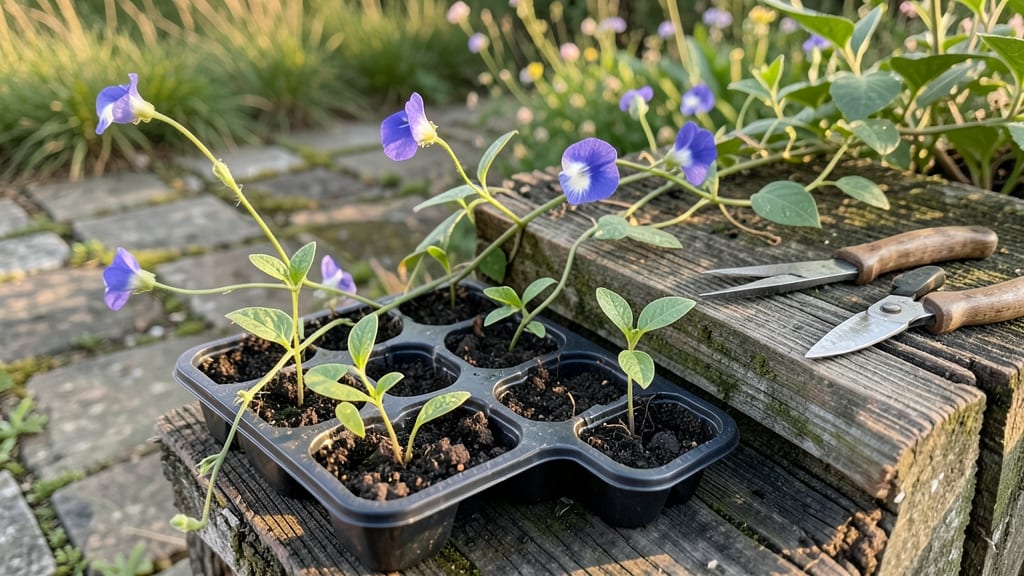
Growing butterfly pea flower seedlings from seed unlocks those shockingly vivid blue blooms that change color with pH—something you won’t find in store-bought plants. 🌿 I’ve learned the hard way that these delicate seedlings need patience and just the right conditions to thrive, but once they do, they reward you with months of stunning displays.
The secret starts with soil that’s light, airy, and slightly acidic—not the heavy garden mix you might grab first.
You’ll need a shallow tray or small pots with drainage, a 50-50 mix of seed-starting soil and perlite, and a warm spot with bright, indirect light. Plant the tiny seeds just ¼-inch deep—they’re so small that burying them too deep will delay germination for weeks.
Keep the soil consistently moist (not soggy) and cover the tray with plastic wrap until sprouts appear, which can take 10-20 days depending on temperature.
Leggy seedlings? That’s usually a sign of too little light or overcrowding. Once they’ve got their first true leaves, thin them to 2-3 inches apart and move them to a south-facing window or under grow lights for 12-14 hours a day.
The real magic happens when they start flowering—just a splash of vinegar or lemon juice can turn those blues into purples overnight.
These plants love warmth and humidity, so if your summers are dry, mulch around them and water at the base to keep the roots happy. Pair them with basil, nasturtiums, or marigolds to deter pests, and you’ll have a low-maintenance pollinator magnet that blooms from summer through fall.
Here’s how to keep them thriving from that first sprout to a bush full of color-changing blooms.
📚 In This Guide
- What you need
- Instructions
- Tips and common mistakes
- Wrapping up and next steps
What you need
- ● Butterfly pea flower seeds: 5–10 seeds (organic, non-GMO preferred for best results).
- ● Seed-starting trays or small pots: 2–4" deep with drainage holes (biodegradable peat pots work too!).
- ● High-quality seed-starting mix: Lightweight, well-draining potting soil (avoid garden soil—it’s too dense!).
- ● Grow lights or sunny windowsill: 6–8 hours of bright, indirect light daily (south-facing windows or LED grow lights work best).
- ● Spray bottle: For gentle watering (avoids disturbing seeds).
- ○ Clear plastic dome or plastic wrap: To retain humidity (optional but highly recommended for seedlings!).
- ● Plant labels: Small sticks or markers to track seedling progress.
- ● Humidity tray: A shallow tray with pebbles + water to boost moisture levels.
- ● Fertilizer: Balanced, water-soluble fertilizer (diluted to half-strength for seedlings).
- ○ Heat mat (optional): For cooler climates—keeps soil at 70–75°F for faster germination.
- ● Tweezers or small spoon: For delicate seed placement.
- ● Transplanting tools: Small trowel or spoon for moving seedlings later.
Step-by-step guide for growing butterfly pea flower seedlings
Here’s how to nurture delicate blue blooms from tiny seeds into thriving saplings.
🌱 Step 1: Start Seeds in a Humid, Warm Environment
Butterfly pea seeds need warmth to germinate—aim for 75-85°F soil temperatures. I use a seedling heat mat under my trays to speed things up. Fill 2-3 inch deep biodegradable pots with sterile seed-starting mix (never garden soil—it’s too dense and can harbor diseases). Moisten the mix until it feels like a damp sponge, then press it down lightly to remove air pockets.
Drop 2-3 seeds per pot just below the surface—about ¼ inch deep. Cover them with a thin layer of mix, then mist gently with a spray bottle until the surface looks evenly damp. Place the pots under a clear plastic dome or wrap to trap humidity. Check daily for condensation—if it fogs up, you’ve got the moisture right. Germination takes 10-14 days, so patience is key. If seeds don’t sprout in 2 weeks, they may need a little more warmth or fresh mix.
☀️ Step 2: Provide Bright, Indirect Light for Seedlings
Once sprouts emerge, remove the dome immediately to prevent damping-off (a fungal disease that collapses stems). Place seedlings under bright, indirect light—a south-facing window works, but they’ll stretch toward the light if it’s not strong enough. I use a grow light on a timer for 12-14 hours daily to keep them stocky and green.
Watch for leggy growth—thin, pale stems with leaves far apart. This means light is too weak or too far away. Adjust the grow light to 2-4 inches above the plants and rotate the pots daily so they grow evenly. Strong seedlings have thick stems and dark green leaves. If leaves yellow, they’re getting too much water or not enough light.
💧 Step 3: Water Gently and Fertilize Lightly
Water seedlings when the top inch of soil feels dry—stick your finger in to check. Overwatering is the biggest killer of young butterfly peas, so I use a spray bottle to mist the soil instead of pouring from above. This keeps the roots from getting waterlogged while still keeping the mix moist.
After 4-6 weeks, when seedlings have 3-4 true leaves, switch to a balanced liquid fertilizer (like 10-10-10) diluted to half-strength. I fertilize every 2 weeks to encourage lush growth without burning tender roots. Too much fertilizer now will make them grow too fast, leading to weak stems. If leaves curl or brown, flush the soil with water and cut back on fertilizer.
🪴 Step 4: Transplant When Strong Enough
Butterfly pea seedlings are ready for transplanting when they’ve developed 5-6 sets of leaves and the weather is consistently above 50°F. Choose a spot with full sun to partial shade—they tolerate heat well but appreciate afternoon shade in scorching climates. Dig holes twice as wide as the root ball but no deeper.
Gently remove the seedling from its pot, loosen the roots if they’re circling, and place it in the hole. Fill around the base with soil, pressing lightly to remove air pockets. Water deeply to settle the roots, then mulch with 1-2 inches of organic mulch to retain moisture and suppress weeds. Space plants 12-18 inches apart—they’ll spread but need room to breathe.
✂️ Step 5: Prune and Support for Bushy Growth
Pinch back the tips of new growth when seedlings are 6-8 inches tall to encourage bushier plants. This isn’t just for looks—it also prevents leggy stems and promotes more blooms. Use clean pruners to snip just above a set of leaves, and don’t worry if it looks rough. The plant will fill out quickly.
Butterfly peas are vining plants, so provide trellises or stakes as they grow. Gently tie stems to supports with soft plant ties as they climb. If left unsupported, they’ll sprawl, and flowers may not show off as dramatically. Deadhead spent blooms regularly to encourage more flowers—just pinch them off with your fingers. With proper care, you’ll see vibrant blue blooms in 8-12 weeks from seed!
Tips & tricks for perfect butterfly pea flower seedlings
Real talk: These delicate seedlings demand patience and precision—but here’s how to turn potential pitfalls into thriving blue blooms.
Warmth is Non-Negotiable: Butterfly pea seeds need that 75-85°F soil temperature range to germinate. If your home stays cooler, place pots on a seedling heat mat or even a sunny windowsill with a clear plastic wrap tent. I’ve seen germination fail completely when soil temps dipped below 70°F—don’t let that happen to you. The 10-14 days window is your target, but if nothing emerges by day 14, gently press fresh, warm mix over the seeds before giving up.
Light Balance is Everything: Those 12-14 hours of daily light aren’t just about duration—they’re about quality. Place seedlings 2-4 inches below grow lights (not touching!) and rotate pots daily to prevent lopsided growth. I’ve caught leggy seedlings reaching toward weak light sources, and once they stretch, they never recover. If your windowsill isn’t cutting it, invest in a basic LED grow light—it’s the difference between sad, spindly plants and stocky, vibrant saplings.
Transplanting Timing Matters: Wait until you see 5-6 sets of leaves and confirm outdoor temps stay above 50°F before moving plants. I’ve transplanted too early, only to watch seedlings wilt from nighttime chills. Harden off gradually by moving pots outside for increasing durations (starting with just 30 minutes) over 7-10 days before the final move. This toughens stems and prevents shock.
Pruning for Blue Abundance: The 6-8 inch pinch point isn’t arbitrary—it’s when lateral branches begin forming. Use clean pruners (sterilized with rubbing alcohol) to snip just above a leaf node. This might seem counterintuitive, but you’re actually encouraging more blooms. I’ve seen plants with unpinched growth produce half as many flowers as their pruned counterparts. And when you do get those vibrant blue blooms, deadhead regularly to redirect energy to new flowers.
Pro Tips for Butterfly Pea Flower Seedling
- Real talk: These delicate seedlings demand patience and precision—but here’s how to turn potential pitfalls into thriving blue blooms.
- Warmth is Non-Negotiable: Butterfly pea seeds need that 75-85°F soil temperature range to germinate.
- Light Balance is Everything: Those 12-14 hours of daily light aren’t just about duration—they’re about quality.
Frequently asked questions
Got questions about growing butterfly pea flower seedlings?
You’re not alone! Here are answers to the most common queries to help you nurture vibrant blue blooms with ease.
How long does it take for butterfly pea flower seedlings to germinate?
Butterfly pea flower seeds typically germinate in 10–21 days when kept in warm (70–80°F), moist soil. For faster results, soak seeds overnight before planting. Patience is key—consistent moisture and warmth speed up the process!
Why aren’t my butterfly pea seedlings sprouting?
Slow or no germination often stems from cold soil, dry conditions, or old seeds. Try these fixes:
- Use a seedling heat mat (65–75°F) for warmth.
- Keep soil consistently damp (not soggy).
- Test seed viability by soaking in water—if they sink, they’re likely good!
When should I transplant butterfly pea seedlings outdoors?
Wait until nighttime temperatures stay above 50°F (10°C) and frost risk has passed. Seedlings thrive in full sun to partial shade and need 6–8 weeks of warm weather to establish roots. Harden them off for 7–10 days before transplanting!
Can I grow butterfly pea flowers from cuttings instead of seeds?
Yes! Take 4–6 inch cuttings from healthy stems, strip lower leaves, and root them in water or moist perlite. Keep them in bright, indirect light until roots form (2–4 weeks). This method is faster but requires a mature plant to start with.
Why are my butterfly pea flowers turning purple instead of blue?
Butterfly pea flowers naturally shift colors based on pH and sunlight:
- Blue: Neutral to slightly acidic soil (pH 6.0–7.0) + sunlight.
- Purple: Alkaline soil (pH 7.5+) or low light.
- Pink/lavender: High acidity or stress.
Wrapping up and next steps
Growing butterfly pea flower seedlings is a rewarding journey that brings vibrant blue blooms to your garden! With the right conditions—like well-draining soil, warmth, and patience—you’ll soon enjoy their stunning, edible, and versatile flowers.
Whether you’re a seasoned gardener or just starting, these seedlings are a fantastic addition to any space.
Ready to take the next step? Start by planting your seedlings outdoors once temperatures are consistently warm, and watch your garden transform into a mesmerizing blue paradise. Happy gardening! 🌱✨