
Flowers
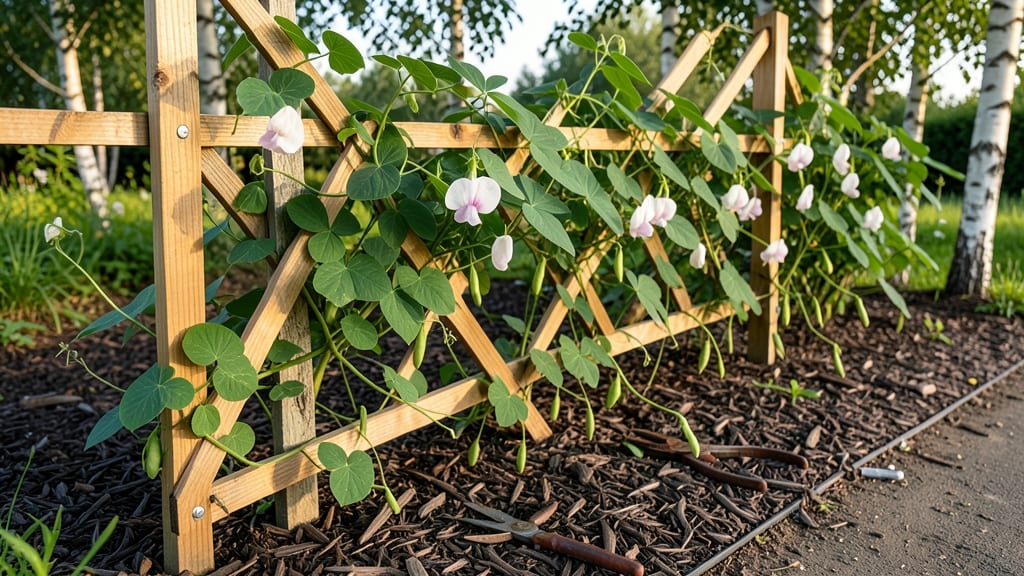
The delicate climbing sweet pea flowers lacing your trellis by June taste as good as they look—edible blooms that turn salads into edible art. 🌸 I grew my first batch after seeing them in a neighbor’s garden, and now I can’t imagine a spring without them. without their delicate fragrance and vibrant colors.
The key is starting seeds early indoors, where they thrive in cool soil before transplanting to their support structure.
You’ll need a sturdy trellis or fence, well-draining soil mixed with compost, and a sunny spot with at least 6 hours of light daily. Sweet peas are surprisingly low-maintenance once established—they self-climb if given something to grip, but a simple wire trellis keeps them organized.
The secret to those showstopping blooms? Consistent moisture and regular deadheading to encourage more flowers.
By late spring, your trellis will be draped in fragrant, edible blossoms that last for weeks. Pinch back early shoots to encourage bushier growth, and harvest blooms in the morning for peak flavor.
The vines themselves are edible too—young shoots make a peppery addition to salads, while mature pods are sweet when steamed. This is gardening that feeds both your eyes and your plate.
Works beautifully in containers too—just use a tall, narrow pot with built-in support. Whether you’re a beginner or a seasoned gardener, sweet peas reward patience with a harvest that’s as pretty as it is practical. Let’s get those seeds started!
📚 In This Guide
- What you need
- Instructions
- Tips and common mistakes
- Wrapping up and next steps
What you need
- ● Climbing Sweet Pea Seeds: 10–20 seeds (choose heirloom or edible varieties like Lathyrus odoratus ‘Cupani’ or ‘Perfume’).
- ● Garden Soil: Well-draining, slightly acidic mix (pH 6.0–7.0). Amend with compost for nutrients.
- ● Containers or Garden Bed: For containers: 12–18" deep pots with drainage holes (1–2 plants per pot).
- ● For in-ground: Full sun (6+ hours/day) or partial shade (morning sun).
- ● Support Structure: Trellis, fence, or obelisk (5–6 ft tall) for vining.
- ● Watering Can or Hose: With a gentle spray nozzle for hydration.
- ● Fertilizer: Balanced organic fertilizer (10-10-10) or compost tea (apply every 4–6 weeks).
- ● Mulch (straw or shredded leaves) to retain moisture.
- ● Peat moss or coconut coir for seed-starting mixes.
- ● Plant ties or soft twine to secure vines to supports.
- ● Pest deterrents (neem oil or companion plants like marigolds).
- ● Food-safe spray (for cleaning blooms before eating).
Step-by-step guide to growing climbing sweet peas for edible blooms
Here's how to coax these fragrant, edible climbers into a thriving garden display.
🌱 Step 1: Choose the Perfect Planting Site and Prep Soil
Sweet peas love cool weather and need a spot with full sun to partial shade—at least 6 hours of sunlight daily. I plant mine where they’ll get morning sun and afternoon shade in hotter climates, especially if you’re growing them for both flowers and edible blooms. The soil should drain well but retain moisture—amend heavy clay with 2-3 inches of compost to improve texture.
Work in a balanced fertilizer (like 10-10-10) at planting time to give your sweet peas a nutrient boost. Avoid fresh manure—it can burn tender roots. Test your soil’s pH too; sweet peas prefer a slightly acidic to neutral range of 6.0-7.0. If your soil is too alkaline, add sulfur to adjust it before planting.
🪴 Step 2: Plant Seeds at the Right Depth and Spacing
Sweet pea seeds are tiny but hardy—plant them 1 inch deep in rows spaced 12-18 inches apart. I like to sow them in early spring, about 6-8 weeks before the last frost, or in fall for a winter bloom. If you’re growing them as an edible garden feature, space plants 6-8 inches apart in a trellis or cage to ensure good air circulation and easier harvesting.
For climbing varieties, install a trellis or tall stakes at planting time. Sweet peas have tendrils that wrap around supports naturally—no tying needed. Water gently after planting to settle the soil, but avoid soaking the seeds. Keep the soil consistently moist until germination, which typically takes 7-14 days in cool weather.
☀️ Step 3: Train Vines and Maintain for Continuous Blooms
Once seedlings emerge, let them grow 4-6 inches tall before pinching the top growth to encourage bushier plants. This step is key for edible blooms—stronger vines produce more flowers. As vines climb, gently guide them along the trellis or stakes, but don’t force them. Sweet peas are delicate and will wrap their tendrils naturally if given support.
Water at the base of the plant 1-2 inches per week, keeping the soil evenly moist but not soggy. Mulch with 2-3 inches of straw or shredded leaves to retain moisture and suppress weeds. Feed with a low-nitrogen fertilizer (like 5-10-10) every 4-6 weeks to promote flowering. Deadhead spent blooms regularly to encourage more flowers—this is especially important if you’re harvesting edible blossoms for salads.
✂️ Step 4: Harvest Edible Blooms at Peak Freshness
Pick sweet pea flowers in the morning when they’re fully open but before they wilt. Use clean scissors or fingers to snip stems just above a leaf node. For salad garnishes, harvest the youngest, most vibrant blooms—these have the mildest flavor. I like to harvest a few flowers daily to keep the plant producing new blooms. Store harvested flowers in a damp paper towel in the fridge for up to 3 days.
If you’re growing sweet peas for both aesthetics and edibles, avoid over-harvesting. Leave enough blooms on the plant to ensure continuous production. The more you pick, the more the plant will compensate by producing new flowers. Just don’t take more than 30% of the blooms at once—this keeps the plant healthy and flowering strong.
Tips & tricks for perfect climbing sweet pea flowers
These little tricks will help you grow sweet peas that burst with flavor and beauty—without the common pitfalls.
Sunlight Strategy: If your garden gets intense afternoon sun, I’ve found that planting sweet peas where they receive morning sunlight and afternoon shade produces more vibrant blooms. The key is maintaining those 6 hours of sunlight daily—if you’re in a hotter climate, this adjustment makes all the difference for both yield and edibility.
Germination Boost: Sweet pea seeds can be slow to sprout, especially in cooler weather. To speed up germination, I soak the seeds in lukewarm water for 4-6 hours before planting. This simple trick can cut that 7-14 day germination window by nearly half, giving you earlier blooms and more time to enjoy them.
Trellis Timing: Install your trellis or support structure before planting seeds—not after. I’ve learned this the hard way: trying to insert stakes later risks disturbing the delicate roots once seedlings emerge. The 12-18 inch row spacing gives you plenty of room to work without crowding, and climbing varieties will naturally find their way up the supports.
Harvesting Hack: For the mildest flavor in edible blooms, harvest when flowers are fully open but still in their first day. I use a pair of small kitchen scissors to snip stems just above a leaf node—this keeps the plant healthy and encourages more blooms. Store harvested flowers in a sealed container with a damp paper towel; they’ll stay fresh in the fridge for up to 3 days, perfect for garnishing salads or infusing oils.
Pro Tips for Climbing Sweet Pea Flowers
- These little tricks will help you grow sweet peas that burst with flavor and beauty—without the common pitfalls.
- Sunlight Strategy: If your garden gets intense afternoon sun, I’ve found that planting sweet peas where they receive morning sunlight and afternoon shade produces more vibrant blooms.
- Germination Boost: Sweet pea seeds can be slow to sprout, especially in cooler weather.
Frequently asked questions
Got questions about growing and using climbing sweet pea flowers?
Here are some of the most common queries—plus quick, practical answers to help you succeed with these fragrant, edible blooms!
Are climbing sweet pea flowers really edible?
Yes! All parts of the Lathyrus odoratus plant are edible, but the flowers are the star. They’re mild, slightly sweet, and perfect for garnishing salads, desserts, or cocktails. Just avoid the seeds—they contain toxic compounds. Stick to petals and buds for safe, flavorful use!
How long does it take for climbing sweet peas to flower?
With proper care, climbing sweet peas typically bloom 8–12 weeks after sowing (or 6–8 weeks if started indoors). For faster results, choose early-maturing varieties like ‘Cupani’ or ‘Perfume’. Pro tip: Deadhead spent blooms to encourage continuous flowering all season!
Can I grow climbing sweet peas in containers?
These vining beauties thrive in 5-gallon containers or larger with a trellis or cage for support. Use well-draining soil and ensure the pot has drainage holes. Bonus: Container-grown sweet peas are easier to protect from pests and rotate for optimal sunlight.
Why aren’t my sweet pea flowers opening?
Several factors can delay blooms: overcrowding, poor sunlight (they need 6+ hours/day), or lack of water. Check for pests like aphids too! If buds form but won’t open, try hand-pollinating with a soft brush or move the plant to a sunnier spot.
What’s a good alternative if I can’t grow sweet peas?
Try these edible, fragrant climbers: Nasturtiums (peppery flowers), borage (star-shaped blue blooms), or morning glories (mild, trumpet-shaped). Note: Always confirm edibility before consuming—some lookalikes (like foxglove) are toxic!
Still stumped? Drop your question in the comments—we’re happy to help your sweet peas (and your plates) bloom beautifully!
Wrapping up and next steps
Climbing sweet pea flowers aren’t just a feast for the eyes—they’re a delicious, edible treat that can elevate your dishes with their sweet aroma and vibrant beauty! 🌸 Whether you’re growing them for their ornamental charm or culinary potential, these versatile blooms are a fantastic addition to any garden or kitchen.
Start small—plant a few vines, experiment with flavors, and soon you’ll be harvesting your own edible garnishes with confidence.
Ready to take the next step? Try pairing them with salads, desserts, or infused oils—your taste buds (and Instagram feed) will thank you! 🌿