
Flowers
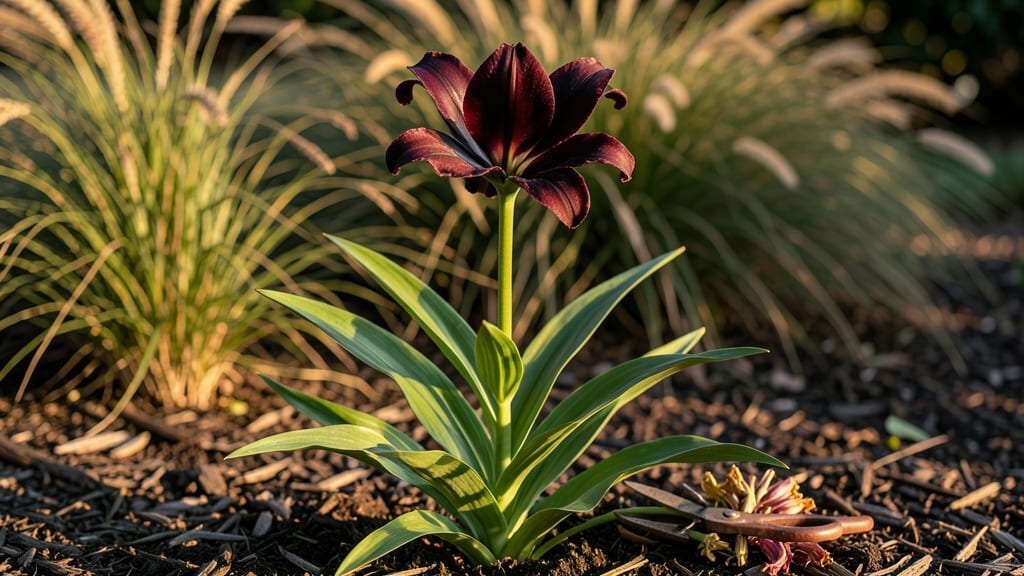
The dark lily flower in all its velvety glory—like Lilium 'Black Out' or Lilium 'African Queen'—doesn’t just add drama; it turns your garden into a moody, fragrant masterpiece. 🌿 I’ve designed entire borders around their petals, and the contrast with silvery foliage or soft pink blooms creates a look that feels like a secret garden.
These deep-hued beauties thrive in partial shade, making them perfect for under trees or along north-facing walls where other flowers wilt.
The secret to their dramatic height and fragrant canopy lies in their placement: group them in clusters of three or five for maximum impact.
Pair them with silver-leaved plants like lamb’s ear or dusty miller to make the dark petals pop, or contrast them with bright yellow daylilies for a striking color combo. Containers work too—just ensure they get 6+ hours of morning sun and well-draining soil to prevent bulb rot.
By midsummer, your garden will hum with the spicy-sweet scent of dark lilies, drawing in bees and butterflies while keeping deer and rabbits at bay. The velvety texture of their blooms adds depth to any design, whether you’re creating a moody woodland edge or a contemporary container display.
With proper spacing and support stakes, they’ll reach 3-5 feet tall, making them the star of any border.
Here’s the catch: they’re not low-maintenance—they demand rich, moist soil and regular watering once established. But the payoff? A fragrant, high-impact display that lasts from late summer into fall. Start with 3-5 bulbs to test your design, and watch your garden transform into a dramatic, sensory-rich space.
📚 In This Guide
- What you need
- Instructions
- Tips and common mistakes
- Wrapping up and next steps
What you need
- ● Dark Lily Bulbs: 10–20 Lilium 'Black Out' or Lilium 'Queen of Night' bulbs (depending on garden size)
- ● Choose high-quality, firm bulbs (avoid soft or moldy ones)
- ● Soil: 5–10 bags of well-draining, fertile garden soil (amend with compost for richness)
- ○ Optional: 1–2 bags of peat moss or perlite for extra drainage (especially in clay-heavy soil)
- ● Fertilizer: 1 lb of balanced bulb fertilizer (e.g., 10-10-10) or organic compost
- ● Slow-release granules for long-term nourishment
- ● Mulch: 2–3 bags of organic mulch (e.g., shredded bark or straw) to retain moisture
- ● Garden trowel or bulb planter
- ● Garden fork or spade (for loosening soil)
- ● Measuring tape or ruler (for spacing bulbs)
- ● Watering can or hose with a gentle spray nozzle
- ● Gloves (to protect hands from thorns or soil)
- ○ Optional but helpful: Pruners (for trimming foliage post-bloom)
- ● Stakes or trellis (if supporting tall varieties)
- ● pH testing kit (to ensure soil is slightly acidic, pH 6.0–7.0)
- ● Sunlight: Full sun (6+ hours daily)—dark lilies thrive in bright, open spaces.
- ● Spacious planting area: Bulbs need 12–24 inches of space between each (depending on variety).
- ● Well-draining soil: Avoid waterlogged areas—dark lilies hate soggy roots!
- ● Patience: Bulbs take 6–8 weeks to sprout and 2–3 months to bloom.
Step-by-step instructions for designing a dark lily flower garden
Here’s how to craft a bold, fragrant garden that commands attention with height and drama.
🌿 Step 1: Select the Right Dark Lily Varieties
Start with dramatic, deep-hued lilies like ‘Stargazer,’ ‘African Queen,’ or ‘Black Out’ for maximum impact. These varieties deliver rich burgundy, deep purple, and near-black blooms that create a striking visual canopy. I always mix 3-4 varieties to ensure continuous bloom times—some lilies flower in early summer, while others peak in late summer or early fall.
Check each variety’s mature height (typically 3-6 feet) and space them accordingly. Taller varieties should anchor the back of the garden bed, while shorter types can fill gaps or edge pathways. Pair dark lilies with silver foliage plants like lamb’s ear or dusty miller to make the blooms pop even more.
🪴 Step 2: Prepare the Planting Site for Height and Stability
Lilies thrive in well-draining soil with a slightly acidic to neutral pH (6.1-7.0). Amend heavy clay soil with 2-3 inches of compost and 1 part perlite to improve aeration. Dig holes twice as wide as the root ball but only as deep as the bulb’s top—burying too deeply can rot the bulb.
For a dramatic effect, plant bulbs in odd-numbered clusters (3, 5, or 7) spaced 8-12 inches apart. This creates natural groupings that feel intentional rather than random. If your garden bed has slope or wind exposure, stake taller varieties at planting to prevent flopping later.
☀️ Step 3: Position for Sunlight and Fragrance Impact
Dark lilies demand full sun (6-8 hours daily) for the deepest colors and strongest fragrance. In hot climates, provide afternoon shade to prevent wilting. I’ve found that positioning lilies near patio seating or walkways ensures their intoxicating scent wafts naturally when breezes pass through.
Here’s the thing—fragrance peaks in the evening. Plant lilies where their aroma will linger near outdoor dining areas or garden benches. Avoid placing them directly under air-conditioning vents or in low-traffic zones where scent won’t be enjoyed.
💧 Step 4: Water and Mulch for Longevity
Water deeply once a week (or more in extreme heat) to encourage strong stems and large blooms. The soil should be dry 1-2 inches down before watering again—lilies hate soggy roots. Once foliage appears, apply 2-3 inches of mulch (like shredded bark or straw) to retain moisture and suppress weeds.
Don’t skip mulching—it also protects bulbs in winter. In colder zones, add an extra 4-6 inches of mulch after the first frost to insulate the soil. Remove it in early spring once new shoots emerge to prevent rot.
✂️ Step 5: Prune and Maintain for Next Season’s Drama
After blooming, cut back stems to ground level but leave the foliage until it yellows naturally. This ensures the bulb stores energy for next year’s flowers. Fertilize lightly in early spring with balanced 10-10-10 to encourage robust growth.
Divide clumps every 3-4 years when blooms diminish. Dig up bulbs in early fall, separate offsets, and replant immediately. This rejuvenates the garden and prevents overcrowding, which leads to smaller flowers. Store any extras in a cool, dry place until replanting time.
Tips & tricks for perfect dark lily flower garden design
Creating a striking dark lily garden takes more than just planting bulbs—it’s about strategic placement and care that transforms your space into a fragrant masterpiece.
Variety Selection: When choosing your 3-4 dark lily varieties, prioritize those with different bloom times to ensure continuous color throughout summer and early fall. I've found that mixing 'Stargazer' (early summer) with 'African Queen' (mid-summer) and 'Black Out' (late summer) creates a seamless transition of deep hues. The color contrast between burgundy, purple, and near-black blooms will be most dramatic when viewed from multiple angles—consider planting in triangular formations rather than straight lines to maximize visual impact.
Planting Depth: The planting depth rule of "as deep as the bulb's top" is crucial—burying too deeply can suffocate the bulb while planting too shallowly exposes it to temperature fluctuations. I use a simple trick: place the bulb in the hole with the pointed end up, then fill halfway with soil. Gently press down until the soil level reaches just below the bulb's neck. This ensures proper stability while allowing room for growth. For windy locations, add a 6-inch stake at planting time to support stems before they become top-heavy.
Sunlight Strategy: While dark lilies need full sun (6-8 hours daily), their color intensity actually deepens when they receive morning sun and afternoon shade in hot climates. Position taller varieties on the north side of the bed to provide natural shade for shorter ones during peak afternoon heat. I've noticed that lilies planted near reflective surfaces like light-colored gravel or white-painted fences develop even richer colors due to the increased light exposure from multiple angles.
Fragrance Optimization: The evening fragrance peak is your secret weapon—place lilies near seating areas where breezes will carry their scent directly to guests. I recommend positioning them 3-4 feet away from seating to create a natural scent trail. For maximum impact, add a small fan on low setting near the garden during evening hours to gently circulate the fragrance without disturbing the blooms. This technique creates a sensory experience that feels intentional rather than random.
Pro Tips for Dark Lily Flower
- Creating a striking dark lily garden takes more than just planting bulbs—it’s about strategic placement and care that transforms your space into a fragrant masterpiece.
- Variety Selection: When choosing your 3-4 dark lily varieties, prioritize those with different bloom times to ensure continuous color throughout summer and early fall.
- Planting Depth: The planting depth rule of "as deep as the bulb's top" is crucial—burying too deeply can suffocate the bulb while planting too shallowly exposes it to temperature fluctuations.
Frequently asked questions
Got questions about the mysterious and stunning dark lily flower? You’re not alone! Here are answers to some of the most common inquiries—from care tips to design inspiration.
What’s the best way to plant dark lilies for maximum height and fragrance?
Dark lilies thrive in well-draining soil with partial shade (morning sun, afternoon shade). Plant bulbs 6 inches deep in early spring or fall, spacing them 8–12 inches apart for dramatic vertical impact. Mulch lightly to retain moisture—this boosts fragrance and encourages towering blooms!
How long does it take for dark lilies to reach their full height?
With proper care, dark lilies can shoot up to 3–5 feet tall in 6–8 weeks after planting. For faster growth, fertilize with a balanced bloom booster (like 10-10-10) when foliage appears. Patience pays off—fragrance peaks in late summer!
Are dark lilies toxic to pets or children?
Yes! All true lilies (Lilium spp.) are highly toxic to cats, dogs, and small children if ingested. Keep them in pet-free zones or opt for pet-safe alternatives like daylilies (Hemerocallis). Symptoms include vomiting or drooling—contact a vet immediately if exposure occurs.
Can I grow dark lilies in containers? What’s the trick?
Use a large pot (18+ inches wide) with drainage holes and a chunky potting mix. Plant 3–5 bulbs per container for a lush display. Place in a bright, sheltered spot (e.g., balcony or patio) and water deeply when soil dries. Pro tip: Stake tall stems early to prevent tipping!
What flowers pair well with dark lilies for a moody garden?
For a dramatic, fragrant canopy, pair dark lilies with:
- Black calla lilies (for bold contrast)
- Purple statice (drought-tolerant texture)
- Silver foliage plants (e.g., lamb’s ear or dusty miller)
- Deep red salvia (complements their velvety blooms)
Wrapping up and next steps
The dark lily flower isn’t just a stunning addition to your garden—it’s a bold statement of elegance and mystery. 🌙 With its dramatic height and intoxicating fragrance, it transforms any space into a fragrant oasis.
Whether you’re a seasoned gardener or just starting, these tips will help you create a breathtaking canopy that’s sure to impress.
Ready to bring this enchanting beauty into your outdoor space? Start by sketching your design, gathering your materials, and planting with confidence. Your garden’s next masterpiece is just a few steps away!