
Flowers
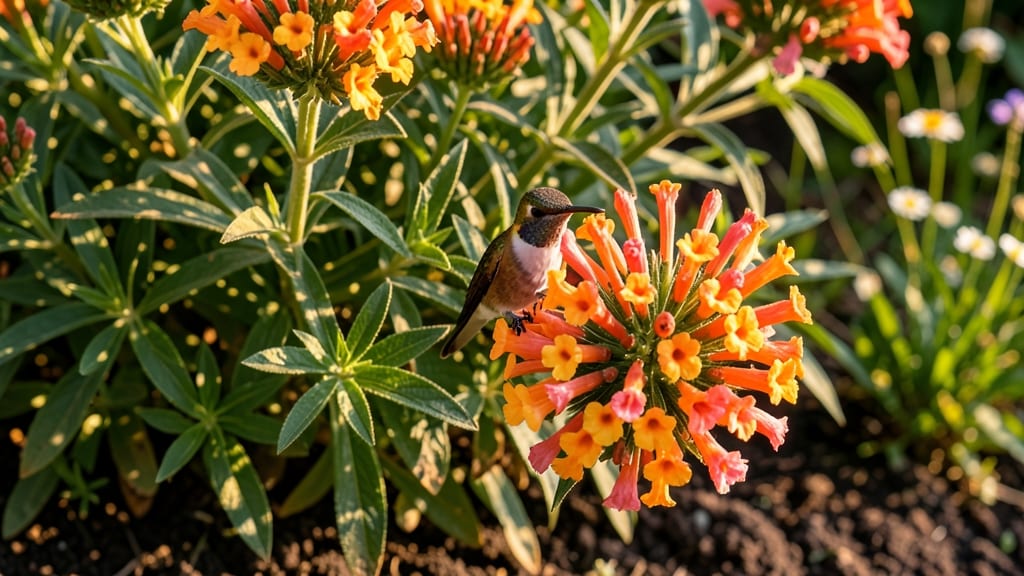
Lantana flowers are hummingbirds' secret weapon—those tiny, neon-orange and pink blooms pack enough nectar to fuel a hummingbird's day. 🌸 I've watched them hover, sip, and dart between plants like tiny, iridescent acrobats, and it's not just the color that draws them.
The flowers' tubular shape makes it easy for their long beaks to reach deep inside, while the constant blooming provides a steady food source from summer through fall.
The real magic happens when you plant lantana in full sun, where it thrives and produces the most nectar. Pair it with other pollinator favorites like salvia, bee balm, or coneflowers, and you create a hummingbird buffet that keeps them visiting all day.
The key is grouping plants in clusters—hummingbirds spot them more easily that way, and the combined scent signals a reliable food source.
You'll see the results almost immediately: darting wings, chirping calls, and plants that stay vibrant longer because the hummingbirds help with pollination. The flowers stay bright and abundant, even in heat waves, making lantana one of the most reliable choices for a hummingbird-friendly garden.
Plus, it's drought-tolerant once established, so it's low-maintenance too.
For best impact, plant lantana at varying heights—some as low shrubs, others as taller bushes—to create layers that hummingbirds can explore. In just a few weeks, your garden will become a stop on their migration route, and you'll have front-row seats to watch their aerial ballet.
The payoff? A garden that hums with life and color all season long.
📚 In This Guide
- What you need
- Instructions
- Tips and common mistakes
- Wrapping up and next steps
What you need
- ● Lantana plants: 3–5 mature plants (choose varieties like Lantana camara or Lantana montevidensis for vibrant blooms). Opt for disease-resistant types if your climate is humid.
- ● Well-draining soil: 1–2 bags of potting mix (if planting in containers) or amendments like perlite or sand (for in-ground planting). Lantana thrives in USDA Zones 7–11.
- ● Sunlight access: A spot with 6+ hours of direct sunlight daily (lantana is a sun-worshipper!).
- ● Watering can or hose: For gentle, deep watering (let soil dry between waterings to prevent root rot).
- ● Pruning shears: Sharp, clean pair (sterilize with rubbing alcohol to avoid spreading disease).
- ● Garden gloves: To protect hands while handling thorny stems (some lantana varieties have mild prickles!).
- ○ Fertilizer (optional): Balanced 10-10-10 fertilizer (apply sparingly, 2–3 times per growing season).
- ● Organic options like compost or worm castings (for a slow-release boost).
- ● Birdbath or shallow water source: Place near lantana plants (hummingbirds need water too!).
- ● Pest control (if needed): Neem oil spray (for aphids or whiteflies).
- ● Ladybugs or lacewings (natural predators for garden pests).
- ● Stakes or trellis (for climbing varieties): If growing Lantana horrida or similar vining types.
How to create a hummingbird-friendly lantana garden
Here's how to turn your yard into a hummingbird hotspot using lantana's irresistible blooms.
🌿 Step 1: Choose the Right Lantana Varieties
Not all lantana varieties attract hummingbirds equally. Look for compact, bushy types like 'New Gold,' 'Miss Huff,' or 'Bandana Series'—these produce the most nectar-rich flowers. Avoid tall, leggy varieties that spread too thin; hummingbirds prefer dense clusters they can easily access.
Check for brightly colored blooms (red, orange, yellow, or pink)—these are hummingbird favorites. The more vibrant the flower, the more nectar it typically contains. I always plant at least 3-4 different varieties to extend the blooming season from early summer through fall.
☀️ Step 2: Plant in Full Sun with Proper Spacing
Lantana thrives in full sun (6+ hours daily), which is exactly what hummingbirds prefer. Plant in well-draining soil—lantana hates soggy roots. I dig a hole twice as wide as the root ball but only as deep, then loosen the soil around the edges to encourage root spread.
Space plants 2-3 feet apart for bushy varieties or 3-4 feet apart for sprawling types. This creates natural perching spots for hummingbirds between feeding sessions. Cluster 3-5 plants together to form a "feeding station"—birds are more likely to discover and return to dense flower clusters.
💧 Step 3: Water and Fertilize for Continuous Blooms
Water deeply once a week (or when soil feels dry 2 inches down) during the first year to establish roots. Once established, lantana is drought-tolerant—overwatering actually reduces nectar production. I use a slow-release fertilizer in early spring to encourage vigorous growth without excessive foliage.
Deadhead spent blooms by pinching off 1/3 of the stem just above a set of leaves. This triggers new flower production and keeps plants compact. Hummingbirds prefer fresh blooms, so regular deadheading ensures a steady nectar supply. I do this every 2-3 weeks during peak blooming season.
✂️ Step 4: Prune Strategically for Year-Round Interest
Prune lightly in early spring to shape plants and remove any dead or crossing branches. Never cut into old wood—lantana blooms on new growth. I trim back 1/3 of the plant's height to encourage bushier growth, which produces more flower clusters.
In late fall, give plants a harder prune (cut back to 6-12 inches tall) to promote fresh spring growth. This also removes any potential winter dieback, keeping plants healthy for next season's hummingbird visitors. The more you prune, the more compact and flower-packed your lantana becomes.
🪴 Step 5: Add Companion Plants for Maximum Appeal
Plant salvias, fuchsias, or bee balm nearby to create a multi-layered nectar buffet. Hummingbirds will visit all your plants more frequently when they find a variety of food sources. I also add native shrubs like buttonwillow for perching spots and shelter.
Avoid planting lantana near strongly scented herbs like mint or lavender—their fragrance can deter hummingbirds. Instead, pair it with lightly fragrant flowers that complement rather than compete. This creates a balanced ecosystem where both pollinators and your garden thrive.
Tips & tricks for creating a hummingbird-friendly lantana garden
Here's what I've learned after years of watching hummingbirds flock to my lantana—these little details make all the difference.
Color Matters: While red is the classic hummingbird magnet, don't overlook orange, yellow, or pink lantana varieties. The key is vibrant color—these flowers contain more nectar than pale blooms. I've noticed hummingbirds will even visit yellow flowers more frequently when they're the only option available. The brighter the better, especially when you cluster 3-5 plants together as mentioned in Step 2.
Plant Placement Strategy: Position your lantana clusters near windows or seating areas where you can watch the hummingbirds feed. I placed mine within 3 feet of my patio—this gives you prime viewing while satisfying the birds' preference for open, visible feeding spots. Avoid planting near tall structures that block their flight paths or create wind tunnels.
Deadheading Timing: The 2-3 week deadheading schedule in Step 3 works perfectly, but I've found that doing it right after a heavy rain gives even better results. The extra moisture helps the plants recover faster and produces more vibrant new blooms. Just be gentle—you're not trying to strip the plant, just encourage new growth.
Companion Plant Pairing: When adding salvias or fuchsias as companions, choose varieties that bloom at different times. This creates a continuous nectar supply throughout the season. I pair my early-blooming salvias with mid-season lantana and late-season bee balm to keep hummingbirds visiting all summer long.
Pro Tips for Do Hummingbirds Like Lantana Flowers
- Here's what I've learned after years of watching hummingbirds flock to my lantana—these little details make all the difference.
- Color Matters: While red is the classic hummingbird magnet, don't overlook orange, yellow, or pink lantana varieties.
- Plant Placement Strategy: Position your lantana clusters near windows or seating areas where you can watch the hummingbirds feed.
Frequently asked questions
Got questions about hummingbirds and lantana flowers? You're not alone! Here are some of the most common queries—plus quick, practical answers to help you create a hummingbird-friendly haven.
Do hummingbirds only like lantana flowers?
Not at all! While hummingbirds adore lantana for its nectar-rich blooms, they’re also fans of bee balm, salvia, fuchsia, and trumpet vine. Planting a variety ensures they have options year-round. Lantana’s bright colors and tubular shape make it a top pick, but diversity keeps them well-fed and happy.
When is the best time to plant lantana for hummingbirds?
Spring or early fall is ideal—lantana thrives in warm soil and blooms prolifically in USDA zones 7–11. For instant results, buy established plants in bloom, as hummingbirds are drawn to active nectar production. If planting seeds, expect flowers in 6–8 weeks, but they may not be as vibrant as nursery-grown varieties.
Will lantana attract other pests besides hummingbirds?
Yes, lantana’s sweet nectar can lure bees, butterflies, and even aphids. While this is natural, excessive pests may stress the plant. Use organic neem oil or introduce ladybugs to keep populations in check. Hummingbirds help by pollinating, so the trade-off is usually worth it for gardeners!
Can lantana survive in partial shade?
Lantana prefers full sun (6+ hours daily), but some varieties (like Lantana camara ‘Miss Huff’) tolerate partial shade—though they’ll bloom less. If your yard is shady, pair lantana with sun-loving companions like salvia or cardinal flower for a layered hummingbird buffet.
What if my lantana isn’t blooming? How can I encourage flowers?
Prune leggy stems in early spring to promote bushier growth. Deadhead spent blooms (remove faded flowers) to redirect energy into new buds. Ensure it gets well-draining soil and regular water (but avoid soggy roots). A balanced fertilizer in spring can also give blooms a boost!
Still stumped? Drop your lantana or hummingbird woes below—we’ve got the solutions!
Wrapping up and next steps
So, do hummingbirds love lantana flowers? Absolutely! 🌸 These vibrant blooms are a nectar powerhouse, attracting hummingbirds like a magnet with their bright colors and sweet rewards. Planting lantana isn’t just a win for your garden’s beauty—it’s a delicious feast for these tiny, energetic pollinators.
Ready to turn your yard into a hummingbird hotspot? Start by adding lantana to your garden and watch the wings flutter by! For extra appeal, mix in other native flowers or set up a hummingbird feeder nearby. Happy gardening—and happy humming! ✨