
Flowers
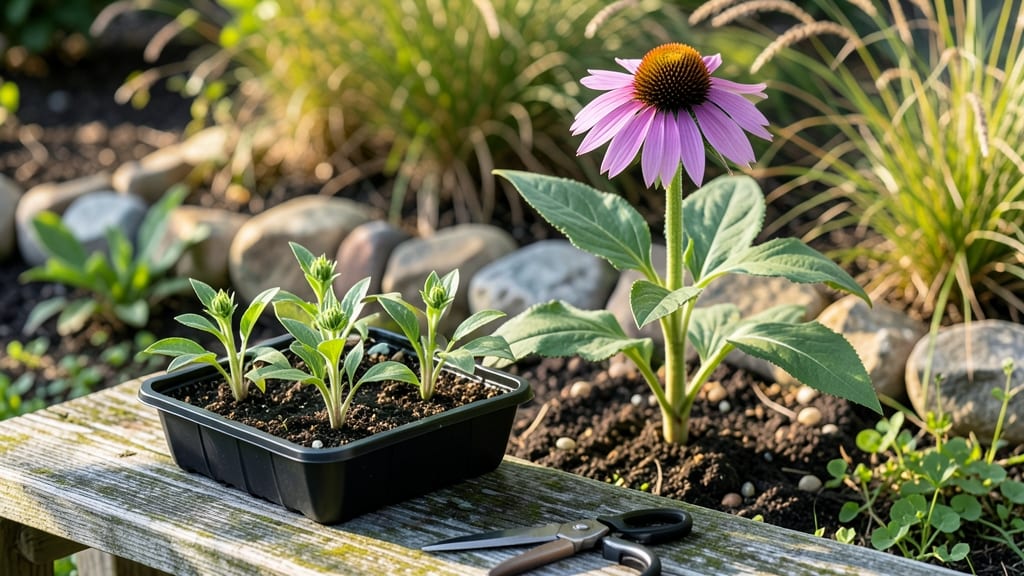
Growing echinacea from seeds means cold-resistant blooms that thrive where other flowers falter—those iconic purple daisies that bring pollinators to your yard year after year. 🌿 I’ve started seeds in my unheated garage in March, and they’ve outlasted every store-bought transplant, blooming stronger and lasting longer.
The secret isn’t fancy; it’s patience, the right soil mix, and understanding echinacea’s love for cool roots and full sun.
You’ll need just a few supplies: echinacea seeds (choose a variety like ‘Magnus’ or ‘White Swan’ for reliability), seed-starting mix, small pots, and a sunny windowsill or grow light. Germination takes 10-20 days at 60-70°F, so don’t rush—these seeds need consistency.
Once sprouted, keep them cool (50-60°F) to prevent leggy seedlings, and they’ll reward you with sturdy, disease-resistant plants ready for transplanting in late spring.
By summer’s first heatwave, you’ll be pinching back leggy stems and watching for the first bold, cone-shaped buds that’ll burst into color by early fall. Echinacea thrives in poor soil, so no need to fuss over fertilizer—just water deeply once a week and watch them multiply.
The best part? These perennials return year after year, their roots growing deeper with each season.
Works in zones 3-9, from rocky slopes to city containers, and even tolerates drought once established. Here’s how to skip the common pitfalls—like overwatering or planting too early—and get blooms that’ll make your neighbors ask for cuttings.
📚 In This Guide
- What you need
- Instructions
- Tips and common mistakes
- Wrapping up and next steps
What you need
- ● Echinacea seeds – Purchase high-quality, organic seeds (e.g., Echinacea purpurea or Echinacea pallida). Aim for 50–100 seeds if planting in a garden or 10–20 seeds for containers.
- ● Seed-starting mix – A lightweight, sterile potting mix (avoid garden soil). A 5–10 lb bag is ideal.
- ● Seed trays or small pots – Use biodegradable peat pots (3–4 inches deep) or cell trays (for 50+ seeds).
- ● Grow lights or sunny windowsill – Seeds need 6–8 hours of light daily. A LED grow light works well if natural light is limited.
- ● Spray bottle – For gentle watering (avoid over-saturating seeds).
- ● Plastic wrap or humidity dome – Keeps moisture in until germination (typically 10–21 days).
- ○ Fertilizer (optional but helpful) – A balanced, water-soluble fertilizer (e.g., 10-10-10) for transplanting.
- ● Gloves – Protects hands from soil and sharp seed shells.
- ● Small hand trowel – For transplanting seedlings.
- ○ Thermometer (optional) – Helps monitor soil temps (70–75°F is ideal for germination).
- ● Cold frame or greenhouse (for zone 3–5) – Extends the growing season if planting outdoors early.
- ● Mulch (straw or shredded leaves) – Protects seedlings from late frost and retains moisture.
How to grow echinacea flowers from seed
Here's my foolproof method for growing hardy echinacea from seed—perfect for cold climates.
🌱 Step 1: Start Seeds Indoors 10-12 Weeks Before Last Frost
Fill a seed tray with sterile seed-starting mix and moisten it until damp but not soggy. Press the soil down lightly to create a firm planting surface. Echinacea seeds germinate slowly, so patience is key—don't rush this step.
Scatter seeds thinly across the surface—no need to cover them with soil. The tiny seeds need light to germinate, so simply press them gently into the top layer. Place the tray in a warm spot (around 70°F) with indirect light. A seedling heat mat speeds up germination, but a sunny windowsill works too.
💧 Step 2: Maintain Moisture and Wait for Germination
Keep the soil consistently moist by misting lightly every 2-3 days. Overwatering is the biggest mistake here—echinacea seedlings hate soggy soil. You'll know moisture is right when the surface looks slightly damp but not glistening.
Germination can take 2-4 weeks, so don't give up if nothing appears immediately. Once sprouts emerge, move them to a brighter spot with 12-14 hours of light daily. Weak seedlings will stretch toward any available light, so a grow light prevents leggy growth.
☀️ Step 3: Harden Off and Transplant After Frost
When seedlings have 2-3 sets of true leaves (about 6-8 weeks after sowing), begin hardening them off. Place them outside in a sheltered spot for 1 hour daily, gradually increasing time over 10 days until they can handle full sun.
Transplant after the last frost date, spacing plants 12-18 inches apart in well-draining soil. Echinacea thrives in full sun but tolerates partial shade. Mulch around the base to retain moisture and suppress weeds—this is especially helpful in dry climates.
🌿 Step 4: Support Growth and Encourage Blooms
Water deeply once a week during the first growing season, allowing the soil to dry slightly between waterings. Overwatering causes root rot, which is fatal for echinacea. You'll see strong stems and deep green foliage as a sign of healthy growth.
Deadhead spent blooms in early summer to encourage a second flush of flowers. The plants may not rebloom as vigorously as first-year growth, but consistent care ensures long-lived perennials. Fertilize lightly in spring with balanced organic fertilizer—too much nitrogen reduces flowering.
Tips & tricks for perfect echinacea flower seed starting
Common pitfalls—and how to sidestep every one when growing these hardy perennials.
Light Requirements: The 12-14 hours of daily light in Step 2 is non-negotiable for echinacea. If your natural light falls short, invest in a basic LED grow light—even a 12-inch model works for seed trays. Place it just 4-6 inches above seedlings to prevent leggy growth. I've seen weak seedlings stretch toward weak light sources, which makes them vulnerable to breakage when transplanting.
Germination Patience: Those 2-4 weeks of waiting in Step 2 can feel like forever, but echinacea seeds need this time to break dormancy. Here's what nobody tells you—cover the seed tray with clear plastic wrap during germination to create a humid microclimate. This can cut germination time by 3-5 days while preventing moisture loss. Just remember to remove the plastic once sprouts appear to avoid fungal issues.
Soil Preparation: The sterile seed-starting mix mentioned in Step 1 should be moist but not soggy—think of it as a damp sponge. I learned this the hard way after ruining three batches with overly wet soil. To test consistency, squeeze a handful: water should drip out slowly, not pool. For extra insurance, mix in a handful of perlite to improve drainage and prevent root rot.
Transplant Timing: Waiting until you have 2-3 sets of true leaves (Step 3) ensures seedlings are strong enough to handle outdoor conditions. But here's the trick I use: transplant on a cloudy day or in late afternoon to reduce stress. The plants will establish more quickly when they're not battling intense midday sun during their first few days outside.
Pro Tips for Echinacea Flower Seeds
- Common pitfalls—and how to sidestep every one when growing these hardy perennials.
- Light Requirements: The 12-14 hours of daily light in Step 2 is non-negotiable for echinacea.
- Germination Patience: Those 2-4 weeks of waiting in Step 2 can feel like forever, but echinacea seeds need this time to break dormancy.
Frequently asked questions
Got questions about growing echinacea from seeds? You’re not alone!
Here are some of the most common queries—and their straightforward answers—to help you get started with confidence.
How long does it take for echinacea seeds to germinate?
Echinacea seeds can take anywhere from 10 to 30 days to sprout, depending on temperature and moisture. For best results, keep soil consistently moist and maintain a steady 70–75°F (21–24°C). Patience is key—some seeds may even wait until spring to break dormancy if sown in fall!
Can echinacea seeds survive winter planting?
Yes! Echinacea thrives in cold climates, and fall sowing (8–10 weeks before frost) is ideal. Plant seeds directly in the garden, lightly cover them, and let nature handle the rest. The cold period actually stratifies the seeds, improving germination rates. Just ensure they’re in well-draining soil to avoid rot.
What’s the best way to start echinacea indoors?
Use sterilized seed-starting mix in small pots or trays. Plant seeds ¼-inch deep and keep them warm (70°F/21°C) under grow lights or near a sunny window. Once seedlings have 2–3 true leaves, transplant them outdoors after the last frost—harden them off for a week first to prevent shock.
What can I do if my echinacea seeds don’t sprout?
Try these troubleshooting steps:
- Check moisture: Seeds need consistent dampness (not soggy) to germinate.
- Verify depth: Plant no deeper than ¼-inch—too deep can suffocate them.
- Try stratification: Place seeds in a damp paper towel in the fridge for 2–4 weeks before replanting.
- Test viability: If seeds are old (>2 years), they may have lost potency—try fresh seeds.
Are there any alternatives to echinacea seeds for faster blooms?
For quicker results, opt for:
- Transplants: Nursery-bought seedlings bloom the first year (vs. 2+ years from seed).
- Cuttings: Divide mature echinacea plants in early spring or fall and replant.
- Hybrid varieties: Some, like ‘White Swan’ or ‘Magnus,’ are bred for vigor and may germinate more reliably.
Wrapping up and next steps
Growing echinacea flower seeds is a rewarding journey that brings vibrant color and resilience to your garden—even in cooler climates! 🌸 With the right soil, sunlight, and patience, these hardy blooms will thrive and attract pollinators for years to come.
Whether you're a seasoned gardener or just starting, your efforts will pay off with stunning, long-lasting flowers.
Ready to dive in? Start by gathering your supplies and follow the steps outlined above. Before you know it, you’ll be enjoying the cheerful faces of echinacea blooming in your outdoor space! 🌱