
Flowers
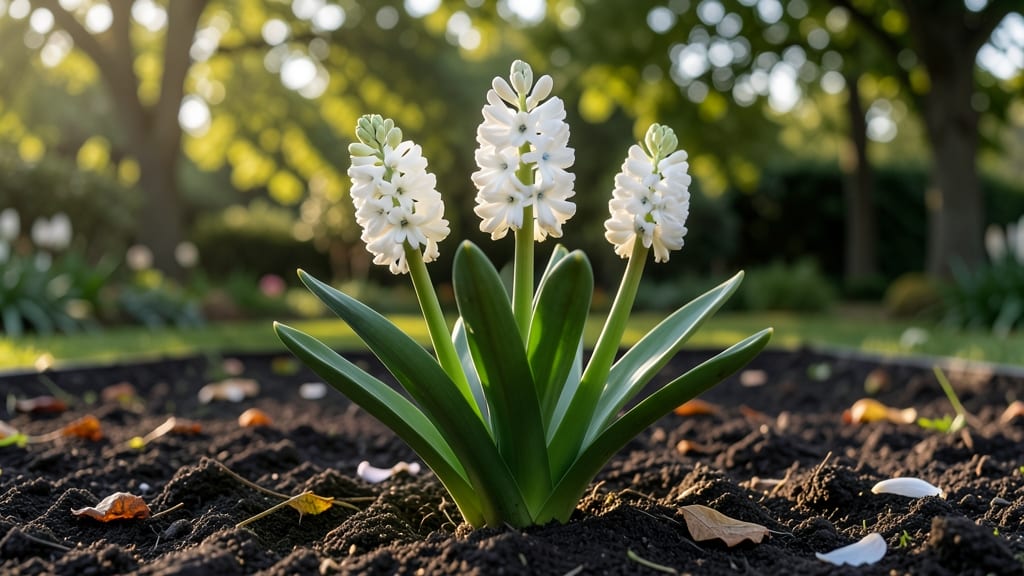
White hyacinths burst into fragrant bloom with just the right balance of sunlight, soil, and patience—something I learned after my first batch of bulbs produced only sad, sparse flowers.
The secret lies in treating them like the delicate divas they are: rich soil, cool roots, and precise pruning to coax those signature clusters back year after year. That sweet, intoxicating scent isn’t just a bonus—it’s the reward for getting every detail right.
You’ll need well-draining soil, a spot with morning sun and afternoon shade, and bulbs planted 6 inches deep in fall for spring blooms—or indoors by late winter for a forced bloom. Water lightly until shoots appear, then fertilize lightly when buds form.
The key is consistency: too much water or heat, and you’ll get leafy stalks with no flowers. I’ve found that hyacinths thrive when treated like perennials, not annuals—they’ll reward you for years if you let them.
By midsummer, your plants will look spent, but don’t toss them. Prune the foliage back by half, let it yellow naturally, and feed the soil. Next year’s blooms depend on this recovery phase.
With proper care, you’ll get stronger, more abundant flowers each season, and that fragrance will fill your garden—or your home—like nothing else. The payoff? A scent so rich, neighbors will ask where you’re hiding your secret.
Works equally well in garden beds, pots on patios, or even as forced blooms indoors by late winter. The same rules apply: cool roots, bright light, and a little patience.
Once you master the timing, you’ll have white hyacinths gracing your space for decades—with minimal effort after the first year. Let’s get those bulbs in the ground (or the windowsill)!
📚 In This Guide
- What you need
- Instructions
- Tips and common mistakes
- Wrapping up and next steps
What you need
- ● Hyacinth bulbs (white variety): 3–5 bulbs (choose certified disease-free bulbs for best results).
- ● Well-draining potting mix: 2–3 gallons (use a blend of peat, perlite, and compost for optimal aeration).
- ● Containers or garden bed: For containers: 6–8" deep pots with drainage holes (1 bulb per 4" of pot diameter).
- ● For garden beds: Full sun to partial shade (6+ hours of sunlight) with loose, fertile soil.
- ● Slow-release fertilizer (10-10-10 or bulb-specific): 1 tbsp per bulb (mix into soil before planting).
- ○ Mulch (optional but recommended): 1–2" layer of organic mulch (e.g., straw or shredded bark) to retain moisture.
- ● Garden trowel or bulb planter: For digging holes (3–4" deep, twice the bulb’s width).
- ● Watering can or hose with gentle spray: Avoid soaking the bulbs—keep soil moist but not soggy.
- ● Pruning shears or sharp scissors: For trimming spent blooms and foliage (sterilize with rubbing alcohol!).
- ○ Gloves (optional): Protect your hands from soil and sharp bulb edges.
- ○ Sunlight tracker (optional): Monitor light exposure if growing indoors (hyacinths need bright, indirect light for best blooms).
- ● 🌡️ Temperature matters: Hyacinths thrive in USDA Zones 3–9. If in a colder zone, plant bulbs in fall (6–8 weeks before frost).
- ● ✨ Boost fragrance: Plant near windows or doorways to enjoy the scent year-round!
- ● 🔄 Post-bloom care: Let foliage yellow naturally—this feeds the bulb for next year’s flowers.
How to grow and maintain white hyacinths for long-lasting fragrance
Here’s how to cultivate these fragrant bulbs so they bloom reliably year after year.
🌱 Step 1: Plant Bulbs at the Right Depth and Time
White hyacinths need 6-8 weeks of cold dormancy before blooming, so plant bulbs in fall—typically 6-8 weeks before your first hard frost. Choose a spot with full sun to partial shade (they tolerate light shade better than full sun in hot climates). Dig a hole 3 times as deep as the bulb’s height (usually 6-8 inches deep) and 6 inches apart for clusters.
Place the bulb pointy side up and cover with soil, leaving no air pockets. Water thoroughly after planting to settle the soil. If your winter is mild, you may need to chill bulbs in the fridge for 8-10 weeks before planting to mimic dormancy. This ensures strong, synchronized blooms the following spring.
☀️ Step 2: Provide Consistent Care Through Winter and Early Spring
After planting, do not water again until you see green shoots in early spring. Overwatering in winter can rot bulbs. Once growth starts, apply 1 inch of water per week, keeping soil moist but not soggy. Mulch with 2-3 inches of organic mulch (like shredded bark) to protect roots from freezing temperatures and retain moisture.
When shoots reach 4-6 inches tall, fertilize lightly with a balanced bulb fertilizer (10-10-10) to encourage strong blooms. Avoid high-nitrogen fertilizers—they promote leafy growth at the expense of flowers. Watch for yellowing leaves in late spring, which signals the bulb is finishing its cycle and storing energy for next year.
✂️ Step 3: Deadhead and Prune for Next Year’s Blooms
Once flowers fade, cut the stems back by half but leave the leaves intact. The leaves are critical—they photosynthesize and feed the bulb for next season’s blooms. If you remove leaves too early, the bulb won’t store enough energy and may skip flowering. Let foliage yellow naturally before trimming it down to 2-3 inches above the soil in early summer.
After trimming, water sparingly to avoid encouraging new growth. Once leaves are completely brown and crispy, stop watering entirely. This signals the bulb to enter dormancy. In late summer or early fall, before new growth starts, you can divide and replant any crowded clumps for even more blooms next year.
🪴 Step 4: Overwinter Bulbs for Repeat Blooms
Hyacinths thrive in USDA Zones 3-8, but in warmer climates, they need winter dormancy. If your area doesn’t get cold enough, dig up bulbs after foliage dies back, cure them in a dry, shaded spot for 2 weeks, then store in a cool (40-50°F), dark place until fall replanting. In colder zones, leave bulbs in the ground—they’ll naturally overwinter and return every spring.
Here’s the thing—consistent dormancy is key. If bulbs get too warm in storage or miss their cold period, they may produce weak or no flowers. Mark your calendar to replant in fall each year, and you’ll enjoy fragrant white blooms for years to come.
Tips & tricks for perfect white hyacinth cultivation
Here’s what I’ve learned after years of growing these fragrant beauties—tricks that’ll help you avoid common pitfalls and get the most from your white hyacinths.
Timing is Everything: When planting in fall, mark your calendar 6-8 weeks before your first hard frost—this is non-negotiable for those 6-8 weeks of cold dormancy they need. I always check my local frost date and plant accordingly. If you’re in doubt, err on the earlier side; bulbs can handle waiting in the ground, but they can’t make up for missed cold time. In warmer climates, that fridge chill for 8-10 weeks is your secret weapon for synchronized blooms.
Planting Precision: The 3 times deep rule (usually 6-8 inches) might seem excessive, but it’s crucial. Planting too shallow can expose bulbs to frost damage or uneven growth. I like to use a trowel to create a small trench first, then place the bulb pointy-side up with its base resting on a handful of soil. This prevents air pockets that could lead to rot. For spacing, stick with 6 inches apart—crowding leads to competition for nutrients and smaller blooms.
Winter Care Secret: The instructions say not to water until you see green shoots, but here’s the thing: mulching with 2-3 inches of organic material is just as important as withholding water. That mulch acts like a blanket, protecting roots from temperature swings that could stress the bulbs. I’ve seen hyacinths in unmulched beds struggle with heaving (when soil freezes and expands, pushing bulbs up) and poor spring growth. In my experience, shredded bark or straw works best—it’s lightweight enough to remove in spring without disturbing the soil.
Fertilizer Timing: Wait until those shoots hit 4-6 inches tall before fertilizing—this is when the bulbs are actively growing but haven’t yet diverted energy to flower production. I use a 10-10-10 balanced fertilizer at half strength (about 1/2 teaspoon per plant) to avoid overstimulating leafy growth. The key is to feed lightly but consistently, not heavily all at once. And remember: those yellowing leaves in late spring are nature’s way of saying “I’m storing energy for next year”—don’t panic and cut them early!
Pro Tips for Hyacinth Flower White
- Here’s what I’ve learned after years of growing these fragrant beauties—tricks that’ll help you avoid common pitfalls and get the most from your white hyacinths.
- Timing is Everything: When planting in fall, mark your calendar 6-8 weeks before your first hard frost—this is non-negotiable for those 6-8 weeks of cold dormancy they need.
- Planting Precision: The 3 times deep rule (usually 6-8 inches) might seem excessive, but it’s crucial.
Frequently asked questions
about growing white hyacinth flowers—because every gardener deserves a little clarity!When is the best time to plant white hyacinth bulbs for spring blooms?
Plant your bulbs in fall (8–10 weeks before the first frost), typically between September and November. This gives roots time to establish before winter dormancy. For year-round blooms, stagger plantings in early fall, winter, and late winter in mild climates (Zones 7–10).
Why aren’t my white hyacinths blooming—just green leaves?
Common culprits include too much shade, overcrowded bulbs, or lack of sunlight (6+ hours/day). Ensure bulbs get full sun to partial shade and divide clumps every 3–4 years. If leaves die back too soon, reduce watering—hyacinths need rest after blooming!
Can white hyacinths survive winter outdoors in cold climates?
These hardy bulbs thrive in USDA Zones 3–8. In colder areas, mulch heavily (4–6 inches) with straw or leaves after foliage fades. Avoid cutting leaves until they yellow naturally—this fuels next year’s blooms. No winter prep needed in Zones 9–10.
What’s a fragrant alternative to white hyacinths if I want similar scent?
Try these low-maintenance, sweet-scented picks:
- Grape hyacinth (Muscari) – Tiny blue/purple bells, deer-resistant.
- Sweet alyssum – Delicate white clusters, thrives in containers.
- Daffodils (Narcissus) – Bold blooms, pest-resistant.
- Lavender – Drought-tolerant, calming fragrance.
Are white hyacinths toxic to pets or children?
Yes—all parts are toxic
if ingested, containing oxalates and alkaloids. Symptoms in pets/kids may include drooling, vomiting, or diarrhea. Plant in containers or pet-safe zones if you have curious critters. Call Poison Control immediately if exposure occurs.
Wrapping up and next steps
The white hyacinth flower isn’t just a burst of beauty—it’s a year-round gift of fragrance and elegance, waiting for you to unlock its full potential. With the right soil, sunlight, and pruning precision, you’ll enjoy its sweet scent and vibrant blooms season after season.
Whether you’re a seasoned gardener or just starting, this guide gives you the confidence to cultivate a thriving patch of these delicate charmers.
Ready to transform your space? Start small—plant one bulb today! 🌱✨ Before you know it, your garden will be filled with the intoxicating aroma of white hyacinths, proving that a little effort leads to big rewards.