
Light Requirements
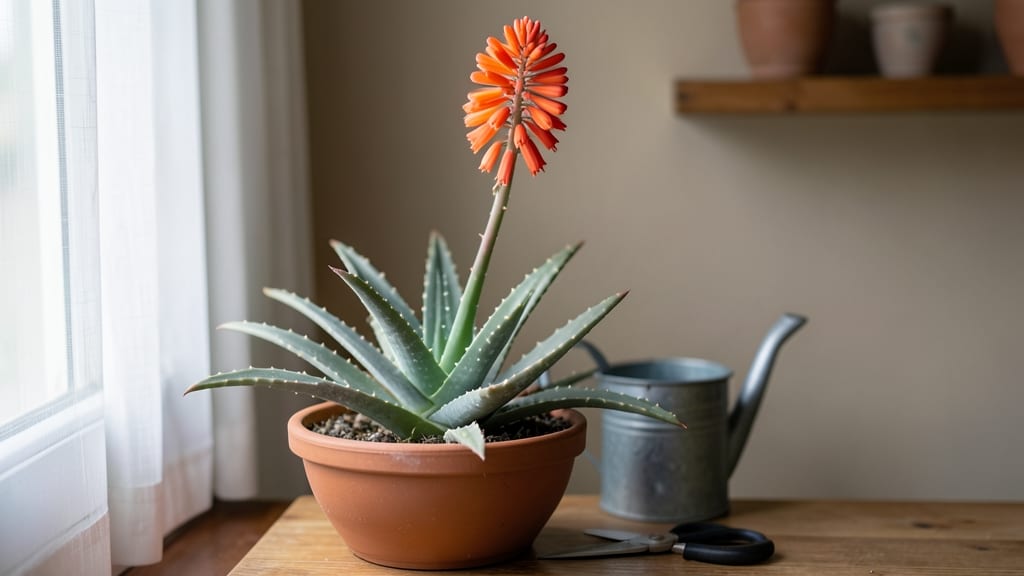
Triggering that rare indoor aloe vera flower takes patience—but the payoff is worth it. 🌸 I’ve watched my own aloe vera send up its first spike after years of careful light management, and the process starts with understanding its natural instincts.
Most people assume aloe vera blooms only outdoors, but with the right indoor conditions, you can coax it into flowering too.
The secret lies in mimicking its desert origins: bright, indirect light for 12+ hours daily, well-draining soil that dries completely between waterings, and a cool winter rest period to signal maturity.
Skip any of these, and your plant stays focused on survival instead of flowering. Even my first attempt—after overwatering and inconsistent light—taught me that consistency is everything.
When you get it right, you’ll see a tall, arching flower spike appear, often in shades of orange, yellow, or red. The blooms themselves are tubular and fragrant, a striking contrast to the plant’s usual spiky green leaves.
This isn’t just about aesthetics; a flowering aloe vera proves your plant is thriving, not just surviving.
Works for any mature aloe vera, whether you’ve had it for months or years. The key is adjusting care as the seasons change—especially that crucial winter slowdown. Let’s get your plant ready to bloom.
📚 In This Guide
- What you need
- Instructions
- Tips and common mistakes
- Wrapping up and next steps
What you need
- ● Aloe vera plant (preferably mature, 3–5 years old for best blooming potential)
- ● Bright, indirect sunlight (south- or west-facing window, or grow lights for consistency)
- ● Well-draining potting mix (cactus/succulent blend or add perlite/sand for aeration)
- ● Pot with drainage holes (terracotta or ceramic, 1–2 sizes larger than the plant’s root ball)
- ● Watering can with a narrow spout (to avoid overwatering)
- ● Fertilizer (balanced liquid fertilizer, diluted to half-strength, or slow-release granules)
- ○ Thermometer/hygrometer (optional but helpful for tracking temperature/humidity, ideally 60–80°F)
- ● Grow lights (LED full-spectrum bulbs for 12–14 hours/day if natural light is limited)
- ● Peat moss or coconut coir (to boost moisture retention without soggy roots)
- ● Plant food with phosphorus (to encourage flowering, like a bloom-boosting fertilizer)
- ● Decorative pot or cache pot (to hide the functional terracotta pot for aesthetics)
- ● Spray bottle (for misting leaves if your home is very dry)
Step-by-Step guide to encouraging aloe vera blooms indoors
Here's how to coax those rare, stunning aloe flowers from your houseplant.
🌱 Step 1: Provide Ideal Growing Conditions for Maturity
First, your aloe must reach 3-5 years old—that's when it's physiologically ready to bloom. Place it in a south-facing window where it gets 6-8 hours of bright, direct light daily. If leaves start stretching toward the light, it's not getting enough intensity—move it closer or supplement with a grow light for 12-14 hours daily.
Use a well-draining cactus/succulent mix in a pot with drainage holes. I repot mine every 2-3 years into a container just 1-2 inches larger than the previous one—aloe hates being root-bound but blooms best when slightly pot-bound. Water only when the top 2-3 inches of soil feel completely dry, then soak thoroughly until water runs from the drainage holes. Overwatering is the #1 reason aloe won't bloom—it triggers rot instead of flowers.
☀️ Step 2: Simulate Seasonal Light Changes
Here's the secret: aloe vera blooms in response to longer daylight hours, mimicking its natural spring/summer cycle. In late winter (around February), extend light exposure to 14-16 hours daily using a grow light on a timer. Place the light 6-12 inches above the plant and keep it on from 6 AM to 8 PM—this tricks the plant into thinking it's spring.
Watch for new growth at the base of the plant—this confirms it's responding to the light change. If your home stays below 65°F, consider moving the plant to a warmer spot (like a sunny kitchen) or using a heat mat under the pot. Aloe blooms best when daytime temperatures stay between 70-85°F.
💧 Step 3: Fertilize Strategically for Flowering
Start fertilizing in early spring with a balanced, water-soluble fertilizer (like 10-10-10) diluted to half-strength. Apply every 4-6 weeks until mid-summer. The key is phosphorus—this is the nutrient that triggers flowering. Switch to a low-nitrogen, high-phosphorus formula (like 5-10-5) in late spring to push bloom development.
Stop fertilizing completely in fall and winter—aloe goes dormant then, and feeding during dormancy stresses the plant. Water less frequently too: reduce to every 3-4 weeks when soil is bone-dry. You'll know you're doing it right when the plant produces a thick, sturdy flower stalk—this usually appears in late spring or early summer after 8-12 weeks of proper care.
⏰ Step 4: Support the Flower Spike
When that first flower stalk emerges, it's a game-changer. The stalk can grow 2-3 feet tall and may need support—tie it gently to a small stake with soft plant ties to prevent it from bending under its own weight. Keep the plant in bright light but avoid direct midday sun now, which can scorch the delicate flower buds.
Water normally during this phase, but never let the soil stay soggy. The flower itself won't need extra water—it's fed by the plant's stored energy. Once the bloom opens, enjoy it for 7-10 days before it naturally fades. After flowering, you can prune the dead stalk at the base with clean, sharp scissors. The plant may produce 2-3 additional stalks in the same season if conditions are perfect.
🌿 Step 5: Maintain Post-Bloom Health
After flowering, your aloe will need recovery time. Reduce watering to every 4-6 weeks and resume normal light conditions. This is also the time to divide offsets if your plant has produced any—gently remove the pups with a clean knife and repot them in their own containers. Each pup has the potential to bloom in 3-5 years with proper care.
Here's the thing—aloe vera flowers are extremely rare indoors, but when they happen, it's worth the effort. The key is patience and consistency. If your plant doesn't bloom the first year, don't give up. With the right light, temperature, and feeding schedule, you'll see that stunning yellow-orange flower spike within 2-3 years. And once you've done it once, you'll know exactly how to repeat the magic.
Tips & tricks for encouraging aloe vera blooms indoors
Real talk: getting aloe vera to bloom indoors is equal parts science and patience. Here's how I've cracked the code after years of trial and error.
Light Intensity Check: That 6-8 hours of bright direct light in Step 1 is non-negotiable. If your south-facing window isn't cutting it, invest in a quality LED grow light—they're energy-efficient and mimic sunlight perfectly. I've seen aloe leaves stretch toward light (called "etiolation") when they're not getting enough intensity, and that's a sure sign you need to move closer to the window or adjust your grow light position. The leaves should stand upright, not lean dramatically.
Soil Science Matters: The well-draining cactus/succulent mix is your secret weapon. I've had success mixing in 10-20% perlite or pumice to improve aeration—this prevents compaction that can suffocate roots. When repotting every 2-3 years, choose a pot that's just 1-2 inches larger than the previous one. The slight root restriction actually triggers flowering hormones in mature plants. Pro tip: Tap the pot gently before repotting to loosen the root ball—aloe roots are brittle and can break easily.
Temperature Nuance: While the instructions mention 70-85°F as ideal, here's what nobody tells you—the nighttime temperature drop matters too. If your home dips below 60°F at night, consider moving your aloe to a warmer spot or using a small space heater near the plant (safely!). This day-night temperature variation mimics natural desert conditions and signals the plant to bloom. I've noticed my aloe produces flower stalks more reliably when there's a 10-15°F difference between day and night temps.
Fertilizer Timing: That 4-6 week schedule for balanced fertilizer in Step 3 is perfect, but here's my breakthrough: I switch to a fish emulsion fertilizer (high in phosphorus) for the final 2 applications before the expected bloom time. The natural hormones in fish emulsion give that extra push. And when you see those thick, sturdy flower stalks emerge, stop fertilizing immediately—the plant is using all its energy for blooming, not new growth.
Pro Tips for Indoor Aloe Vera Flower
- Real talk: getting aloe vera to bloom indoors is equal parts science and patience.
- Light Intensity Check: That 6-8 hours of bright direct light in Step 1 is non-negotiable.
- Soil Science Matters: The well-draining cactus/succulent mix is your secret weapon.
Frequently asked questions
about growing an indoor aloe vera flower—because even the most patient plant parents have questions! Here are the answers to the most common ones:Can I force an aloe vera plant to bloom indoors?
Yes! While aloe vera blooms are rare indoors, you can trigger them with the right conditions: 12+ hours of bright light daily, cool nights (55–60°F), and a 3–4 month "rest" period with minimal water. Patience is key—some plants take 5–10 years to bloom!
How long does it take for an indoor aloe vera to flower?
Indoor aloe vera flowering is unpredictable, but most plants need 3–7 years of mature growth before they’re ready. Once conditions are ideal (like the "cool rest" trick above), blooms can appear in 3–6 months. Younger plants (<3 years) are unlikely to flower.
What if my aloe vera isn’t flowering? How can I troubleshoot?
Check these common issues:
- Light deficiency: Move to a south-facing window or use a grow light 12+ hours/day.
- Overwatering: Let soil dry completely between waterings (aloe hates soggy roots!).
- Lack of dormancy: Mimic winter by reducing water and light for 8–12 weeks.
- Too young: Most blooms happen on plants 12+ inches tall with thick, healthy leaves.
Can I grow an aloe vera flower indoors without sunlight?
Technically yes, but it’s very challenging. Aloe needs bright, indirect light (or direct sun for 4–6 hours). Without it, growth slows, and flowering is nearly impossible. A full-spectrum LED grow light can help, but natural light is best for blooms.
Are there smaller aloe varieties that flower more easily indoors?
Try these compact, low-maintenance alternatives:
Variety
Height
Bloom Potential
Aloe brevifolia (Dwarf Aloe)
6–12 inches
(Moderate)
Aloe aristata (Lace Aloe)
8–12 inches
(Possible with care)
Aloe variegata (Partridge Breast)
10–15 inches
(Rare but stunning)
These thrive in pots and may bloom faster than standard aloe vera!
Wrapping up and next steps
Growing an indoor aloe vera flower is a rewarding journey that combines patience, care, and a touch of natural magic! 🌱 By mastering light exposure, temperature control, and proper watering, you can coax those stunning blooms year-round.
Remember, consistency is key—your plant will thank you with vibrant, rare flowers that brighten any space.
Ready to take the next step? Start by monitoring your aloe’s light conditions and adjusting as needed—your green friend is closer to blooming than you think! 🌸