
Planting
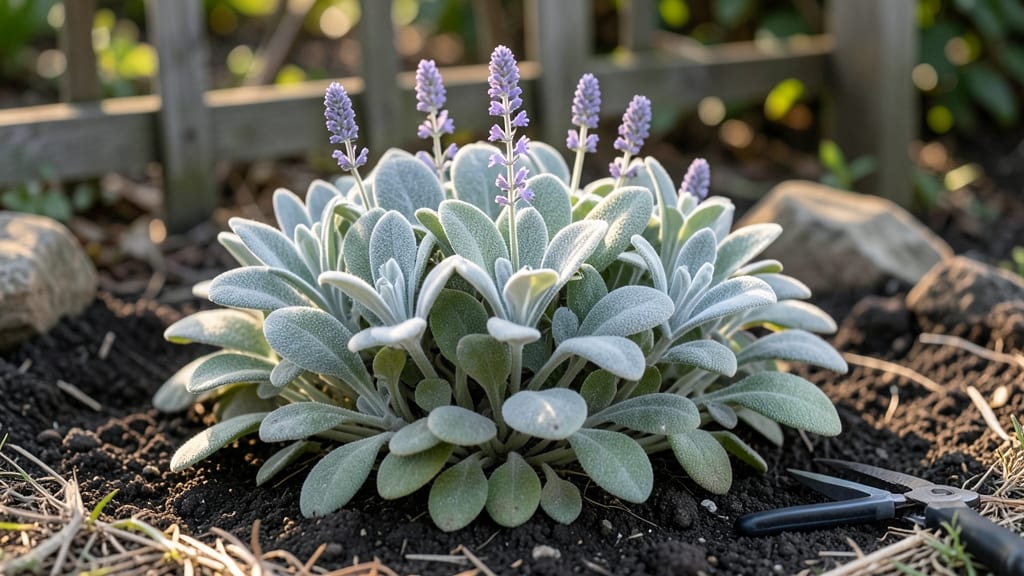
Lamb's ear plants (Stachys byzantina) can burst into delicate lavender blooms with the right care—something I learned after struggling with floppy, non-flowering plants for years.
The secret isn’t fancy tricks but matching their needs to their natural rhythm: bright sun, well-draining soil, and just enough water to keep those fuzzy leaves velvety soft. Most gardeners overlook how pruning after blooms fade (not before) triggers fresh growth and flowers.
You’ll need 6+ hours of sunlight daily, loose soil with gritty compost, and a sharp pair of pruners—that’s it. The real magic happens in late spring when you snip back spent flower stalks at the base.
This fools the plant into thinking winter’s coming, spurring fresh shoots and blooms by early summer. Even in shady spots, lamb’s ear rewards patience with occasional flowers, though the foliage stays stunning year-round.
By mid-summer, you’ll see clusters of tiny purple blooms hovering above the silvery leaves, attracting bees while adding a dreamy cottage-garden touch. The flowers may look modest, but they’re long-lasting—cut stems for vase arrangements that stay fresh for weeks.
And here’s the best part: once established, lamb’s ear thrives on neglect, making it perfect for busy gardeners who still want drama.
Works in zones 3-8, from sunny borders to rocky slopes where other plants struggle. The key is balancing pruning and watering—too much of either, and you’ll lose those signature fuzzy leaves. Let’s get those blooms going!
📚 In This Guide
- What you need
- Instructions
- Tips and common mistakes
- Wrapping up and next steps
What you need
- ● Lamb’s ear plant (Stachys byzantina) – 1 to 3 nursery-grown plants (choose healthy, well-established specimens).
- ● Well-draining potting mix – 1 bag (1 cubic foot) of high-quality, organic soil blend (e.g., Miracle-Gro Potting Mix or FoxFarm Ocean Forest).
- ● Containers or garden bed – Choose either: A 5-7 gallon pot (1 per plant) with drainage holes, or
- ● A garden bed with full sun to partial shade exposure (6+ hours of sunlight daily).
- ● Organic fertilizer – 1 bottle of balanced, slow-release fertilizer (e.g., Fish emulsion 5-5-5 or Osmocote Smart-Release).
- ● Watering can or hose with a gentle spray nozzle.
- ● Pruning shears – Small, sharp pair (e.g., Fiskars Bypass Pruners) for trimming dead leaves or shaping.
- ● Gloves – 1 pair of gardening gloves (to protect from fuzzy foliage!).
- ● Mulch – 1 bag of pine bark or straw mulch (to retain moisture and suppress weeds).
- ○ Slow-release pellets – Optional for longer blooms (e.g., Osmocote Flower & Vegetable).
- ○ Decorative stones or pebbles – Optional for aesthetic garden beds.
How to encourage blooms on lamb's ear plants
Lamb's ear thrives with simple care—here's how to coax those delicate flowers year after year.
Select the Right Growing Conditions
Lamb's ear (Stachys byzantina) prefers full sun to partial shade, with at least 6 hours of sunlight daily for best flowering. I plant mine in well-draining soil—sandy loam works perfectly—because soggy roots lead to yellowing leaves and no blooms.
If your climate gets hotter than 85°F, provide afternoon shade to prevent leaf scorch. The plant tolerates drought once established, but consistent moisture during the first growing season encourages stronger root development and more vigorous flowering the following year.
Prune Strategically for Bushier Growth
Cut back one-third of the oldest stems in early spring before new growth begins. This removes woody stems and redirects energy to fresh, flowering shoots. Use clean, sharp shears to avoid tearing the fuzzy foliage.
Here's the thing—don't prune too late in the season. If you trim after mid-summer, new growth won't have time to harden off before winter, and you'll lose that velvety texture next year. Watch for new shoots emerging from the base—that's your cue to stop pruning for the season.
Fertilize Lightly for Flower Production
Apply a balanced, slow-release fertilizer (10-10-10) in early spring when you see new growth appear. Over-fertilizing leads to lush leaves but fewer flowers—lamb's ear responds better to light feeding than heavy doses.
I skip fertilizer after mid-summer because the plant focuses on root strengthening for winter. Instead, I top-dress with 1-2 inches of compost in fall to replenish nutrients naturally. The key is consistency: once in spring, once in fall keeps blooms coming without stressing the plant.
Deadhead Spent Blooms Promptly
Snip off faded flower spikes as soon as they appear. This prevents seed production and encourages the plant to produce more blooms throughout the season. Use your fingers or small pruners—no need for heavy tools.
I deadhead every 2-3 weeks during peak bloom time (late spring to early fall). You'll notice new flower buds forming within 7-10 days of removing old blooms. The plant rewards prompt attention with longer flowering periods and fewer leggy stems.
Overwinter for Year-Round Lushness
In colder climates, mulch heavily with 2-3 inches of straw or shredded leaves after the first hard frost. This insulates roots and protects against heaving. Lamb's ear is hardy to Zone 3, but young plants benefit from extra protection their first winter.
In spring, remove the mulch once new shoots emerge (usually by late April). Avoid pruning until you see 3-4 inches of fresh growth—this ensures the plant has enough energy to rebound quickly. With proper overwintering, you'll get earlier and more abundant blooms the following season.
Tips & tricks for perfect lamb's ear blooms
Real talk: The difference between a few sporadic blooms and a year-round display of velvety flowers often comes down to these simple but critical moves.
Lighting Strategy: That 6 hours of sunlight is non-negotiable for flowering, but quality matters more than quantity. If your morning sun is weak, focus on afternoon sun instead—lamb's ear gets its energy boost from those later rays. I've seen plants in east-facing gardens struggle to bloom well, while west-facing ones produce flowers all season long. For container growers, rotate pots every few weeks to ensure even light exposure.
Pruning Precision: When you cut back one-third of those oldest stems in early spring, aim for just above a set of leaves or a bud. This creates a clean cut that heals faster and encourages new growth from exactly where you want it. I use clean shears and wipe them with rubbing alcohol between cuts to prevent spreading disease—especially important when working with fuzzy foliage that can trap bacteria.
Fertilizer Timing: The spring application of balanced fertilizer (10-10-10) is your secret weapon, but here's what nobody tells you—apply it when you see those first 1-2 inches of new growth appear, not when the soil looks dry. Overwatering after fertilization can wash nutrients away before roots absorb them. I always water deeply the day before fertilizing to help the plant take up nutrients more efficiently.
Deadheading Discipline: Those 2-3 week intervals between deadheading sessions might seem frequent, but they're what keep your lamb's ear producing flowers continuously. Look for the first sign of wilting on the flower spikes—that's your exact cue to remove them. I keep a small pair of pruners in my gardening apron so I can snip them immediately when I notice them, which prevents the plant from wasting energy on seed production.
Pro Tips for Lambs Ear Plant Flowers
- Real talk: The difference between a few sporadic blooms and a year-round display of velvety flowers often comes down to these simple but critical moves.
- Lighting Strategy: That 6 hours of sunlight is non-negotiable for flowering, but quality matters more than quantity.
- Pruning Precision: When you cut back one-third of those oldest stems in early spring, aim for just above a set of leaves or a bud.
Frequently asked questions
about growing lambs ear plant flowers—because even the most low-maintenance plants have their quirks! Here are answers to the most common queries to help you keep your fuzzy foliage thriving.Do lambs ear plants actually produce flowers?
Yes! While their velvety leaves steal the show, Stachys byzantina (common lambs ear) blooms in late spring to early summer with spikes of tiny purple, pink, or white flowers. These blooms are short-lived but add a charming contrast. Pro tip: Deadhead spent flowers to encourage more foliage growth—your plant’s signature fuzzy texture is the real star!
How long does it take for lambs ear to flower?
With ideal conditions (full sun to partial shade and well-draining soil), lambs ear typically flowers within 6–8 weeks after planting in spring. Established plants may bloom earlier. Patience is key: Focus on leaf growth first—healthy foliage = better blooms later! For container plants, ensure they’re in a sunny spot by late winter to speed up flowering.
Can I grow lambs ear indoors?
While lambs ear thrives outdoors, it can adapt to indoor life with the right care. Place it near a south- or west-facing window for 6+ hours of sunlight daily. Use a well-draining potting mix and avoid overwatering—let the soil dry completely between waterings. Expect slower growth and fewer flowers indoors, but the silvery leaves will still add texture to your space!
What should I do if my lambs ear isn’t flowering?
No flowers? Don’t worry—it’s often due to overcrowding, poor light, or excess nitrogen (which fuels leaves over blooms). Try these fixes:
- Prune leggy stems to encourage bushier growth.
- Move to sunnier spot (6+ hours of direct sun).
- Fertilize lightly with a low-nitrogen, high-phosphorus formula (like 5-10-10) in early spring.
- Divide mature clumps every 2–3 years to rejuvenate growth.
Are there alternatives to lambs ear with similar fuzzy leaves?
If you love the velvety texture but want variety, try these low-maintenance, drought-tolerant plants:
Plant
Key Traits
Flower Color
Lambs ear (Stachys byzantina)
Silvery-gray, heart-shaped leaves; deer-resistant.
Purple/pink spikes.
Woolly thyme (Thymus pseudolanuginosus)
Dwarf, fragrant, edible leaves; great for borders.
Pink/purple blooms.
Cotton lavender (Santolina chamaecyparissus)
Silvery-blue, needle-like foliage; compact shrub.
Yellow button-like flowers.
Silver Falls dichondra (Dichondra argentea)
Trailing, silvery vines; perfect for hanging baskets.
White/pink tiny flowers.
Wrapping up and next steps
The Lamb’s Ear plant is a dream for gardeners who love low-maintenance, velvety foliage and occasional delicate blooms—without the fuss! With just a little care, you can enjoy its silvery charm year-round, making it the perfect addition to borders, containers, or even as a ground cover.
Whether you’re a seasoned green thumb or a beginner, its resilience and beauty make it a must-have for any garden.
Ready to transform your space? Grab your shears, pick a sunny spot, and give this stunner the love it deserves. Start small—plant one this weekend! 🌱✨