
Pests
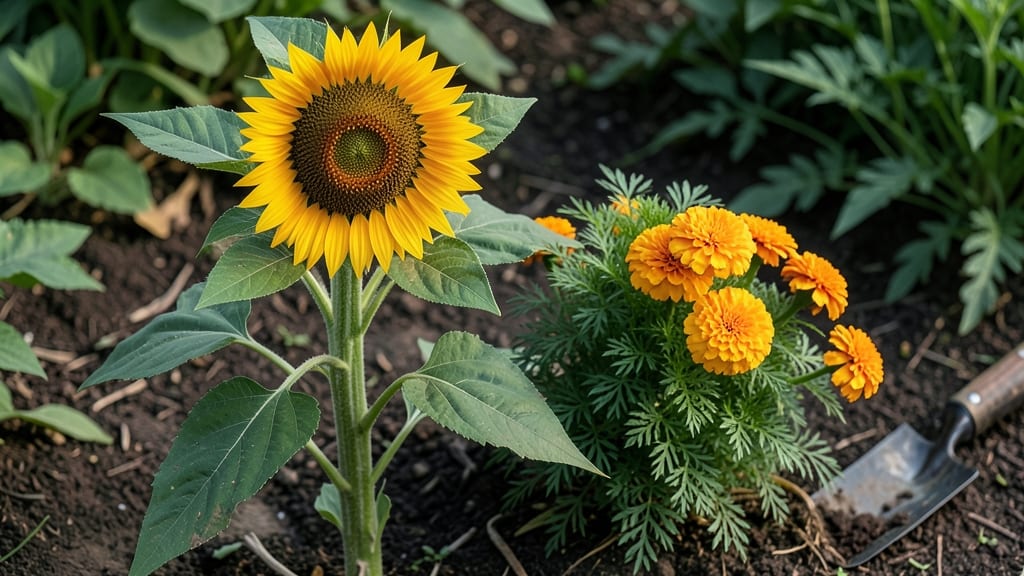
Planting marigolds and sunflowers together isn’t just smart—it’s a game-changer for pest control and pollinator power. 🌻 I learned this the hard way when my tomato plants became a buffet for aphids until I added these two powerhouses to the mix.
The marigolds’ strong scent confuses pests, while sunflowers attract beneficial insects that keep the garden balanced.
This dynamic duo works in any space—flower beds, borders, or even containers. Marigolds’ compact size and bright colors contrast beautifully with sunflowers’ towering stems, creating a striking visual while keeping pests at bay.
For best results, plant marigolds in clusters around the base of sunflowers, where their scent will be most effective.
You’ll notice fewer pests, more pollinators, and a garden that thrives with minimal effort. The sunflowers provide height and drama, while marigolds add bursts of color and natural pest protection. This combo is foolproof for gardeners who want beauty and function without the hassle.
Whether you’re designing a full flower bed or just adding a pop of color to a container, these two plants play well together year after year. Let’s make your garden both stunning and resilient!
📚 In This Guide
- What you need
- Instructions
- Tips and common mistakes
- Wrapping up and next steps
What you need
- ● Marigold seeds or seedlings: French marigolds (Tagetes patula) – 12-24 plants (great for pest control)
- ● African marigolds (Tagetes erecta) – 6-12 plants (taller, excellent for borders)
- ● Mexican marigolds (Tagetes lucida) – 6-12 plants (herb-like, fragrant)
- ● Sunflower seeds or seedlings: Dwarf varieties (e.g., 'Teddy Bear' or 'Moulin Rouge') – 6-12 plants (compact, great for containers)
- ● Standard varieties (e.g., 'Autumn Beauty' or 'Russian Giant') – 3-6 plants (taller, for borders or cut flowers)
- ● Garden gloves (1 pair) – for comfortable handling
- ● Trowel or transplanting spade – for planting seeds/seedlings
- ○ Garden fork or hoe – for loosening soil (optional but helpful)
- ● Watering can or hose with a gentle spray nozzle – for hydration
- ● Measuring tape or ruler – to space plants correctly
- ● Mulch (straw, shredded leaves, or compost) – 2-3 inches per planting area
- ● Sunlight: Full sun (6-8+ hours daily) – both marigolds and sunflowers thrive here!
- ● Soil: Well-draining, fertile soil with a pH of 6.0-7.0 (test or amend if needed)
- ● Spacing: Marigolds: 8-12 inches apart
- ● Sunflowers: 12-24 inches apart (depending on variety)
- ○ Companion plants (optional but beneficial): Basil, tomatoes, or peppers (marigolds repel pests for these!)
- ● Nasturtiums (adds extra pest-deterring power)
Step-by-Step guide to planting marigolds and sunflowers together
Pair these two powerhouses for a pest-free, visually stunning garden that thrives all season.
🌱 Step 1: Choose the Perfect Planting Location
Sunflowers need full sun—at least 6-8 hours daily—while marigolds tolerate 4-6 hours. Pick a spot where sunflowers get maximum light, then place marigolds 1-2 feet away on the north or east side to avoid shading them. I like to position sunflowers along property borders where they can cast shade later in the day.
Check your soil’s drainage first—both plants hate soggy roots. Press a trowel into the ground: if water pools after 10 minutes, amend with 2 inches of compost to improve aeration. Sunflowers grow tall, so avoid planting near structures unless you want them leaning dramatically.
🌿 Step 2: Plant Sunflowers First for Structural Support
Sow sunflower seeds ½ inch deep in 12-inch deep holes, spacing them 18-24 inches apart. Their deep taproots establish quickly, giving marigolds a sturdy anchor nearby. I press seeds firmly into moist soil—this prevents them from washing away during watering. Cover lightly with soil, then water gently to avoid disturbing the seeds.
Sunflowers germinate in 7-14 days, but don’t rush to thin them. Once seedlings reach 2 inches tall, snip the weakest ones at the base with clean scissors. You’ll end up with 4-6 strong stalks per 4-foot row, which marigolds can nestle between without competing for space.
💧 Step 3: Add Marigolds for Pest Control and Color
Plant marigold seeds ¼ inch deep, spacing them 12-18 inches apart between sunflower rows. Their strong scent deters nematodes and aphids that might target sunflower leaves. I like to interplant them in a checkerboard pattern—this creates a natural barrier while letting both species thrive.
Water marigolds once daily for the first week, keeping soil consistently moist but not soggy. You’ll see first true leaves in 7-10 days, signaling they’ve taken root. Once established, marigolds need 1 inch of water per week, but sunflowers will drink more—water sunflowers deeply 2-3 times weekly to support their rapid growth.
☀️ Step 4: Maintain Light and Airflow for Maximum Growth
Sunflowers grow 3-4 inches per day in ideal conditions, so monitor their height. If they start leaning toward the sun, gently stake taller varieties with bamboo stakes tied loosely at the base. Marigolds, meanwhile, will sprawl outward—let them fill gaps between sunflowers naturally.
Here’s the thing—prune sunflowers lightly if they get too crowded. Trim side branches when they’re 6 inches tall to encourage a single, sturdy stem. This prevents them from shading marigolds below. Deadhead spent marigold blooms to prolong flowering, but leave seed heads on sunflowers for birds and extra height.
✂️ Step 5: Harvest and Extend the Season Together
Sunflowers reach maturity in 80-100 days, but you can harvest baby sunflower leaves as microgreens when plants are 4-6 inches tall. Marigolds produce continuous blooms from early summer until frost—cut them back by ⅓ after flowering to encourage bushier growth.
At season’s end, leave marigold stems for seed collection (they self-sow beautifully) and cut sunflower stalks at the base. Dry them upside down in a well-ventilated space for winter arrangements. The leftover roots will decompose, enriching the soil for next year’s pair.
Tips & tricks for perfect marigold and sunflower pairings
These simple strategies will help you maximize the natural benefits and beauty of your sunflower-marigold duo while avoiding common gardening pitfalls.
Sunlight Strategy: In Step 1, when positioning your sunflowers for 6-8 hours of full sun, consider their growth arc. Plant them slightly east of your desired location—they’ll naturally lean west as they grow, creating perfect shade for marigolds in the afternoon. This passive movement eliminates the need for staking in many cases. I’ve found that varieties like ‘Russian Giant’ benefit most from this approach, as their height creates natural shade patterns.
Soil Prep Secret: The 10-minute drainage test mentioned in Step 1 is worth repeating—especially if your garden has clay soil. For faster results, mix in 2 inches of compost and a handful of perlite to the planting hole before adding seeds. This creates an ideal microclimate for both plants, where sunflowers get the drainage they need while marigolds retain enough moisture. The perlite also prevents soil compaction around those critical taproots.
Thinning Technique: When thinning sunflower seedlings in Step 2, don’t just pull—snip at the base with clean scissors. This prevents disturbing the roots of nearby seedlings and gives you a clear view of what you’re removing. I like to thin to 4-5 plants per 4-foot row rather than the maximum 6, leaving extra space for marigolds to spread. The removed seedlings make excellent microgreens if harvested immediately after cutting.
Watering Wisdom: The 2-3 times weekly deep watering for sunflowers in Step 3 works best when done in the morning. Water at the base rather than overhead to prevent fungal diseases on sunflower leaves, while still keeping marigold foliage dry enough to maintain their pest-repelling properties. I use a soaker hose for sunflowers and a gentle spray for marigolds—this targeted approach prevents water waste while meeting each plant’s needs.
Pro Tips for Marigold And Sunflower
- These simple strategies will help you maximize the natural benefits and beauty of your sunflower-marigold duo while a...
- Sunlight Strategy: In Step 1, when positioning your sunflowers for 6-8 hours of full sun, consider their growth arc. ...
- Soil Prep Secret: The 10-minute drainage test mentioned in Step 1 is worth repeating—especially if your garden has cl...
Frequently asked questions
Got questions about pairing marigolds and sunflowers in your garden? Here are some common ones—and their answers—to help you grow a thriving, pest-free plot!
Can marigolds and sunflowers grow well together?
Sunflowers provide shade for marigolds (especially in hot climates), while marigolds deter pests like aphids and squash bugs that might target sunflowers. Just space them 3–4 feet apart—sunflowers need room to tower, and marigolds thrive in their dappled shade.
What’s the best time to plant them together?
Start marigolds 4–6 weeks before your last frost date (they germinate quickly) and sunflowers 1–2 weeks after the last frost. This staggered approach ensures marigolds establish roots and begin repelling pests before sunflowers sprout. Both love full sun, so a sunny spot is key!
Will marigolds protect sunflowers from all pests?
Marigolds are powerhouses against aphids, nematodes, and whiteflies, but they won’t stop everything. Larger pests like deer or rabbits may still munch on sunflowers—consider adding fencing or companion plants like basil for extra defense. Rotate crops yearly to break pest cycles too!
Can I replace marigolds with another pest-repelling plant?
Yes! Try nasturtiums, chrysanthemums, or basil—they’re also great pest deterrents. However, marigolds stand out for their strong scent and dual benefits (pest control + pollinator attraction). If you love sunflowers’ height, pair them with dwarf marigolds to save space.
Why are my sunflowers wilting even with marigolds nearby?
Wilt can stem from overwatering, root rot, or sun stress—not just pests. Check soil moisture (sunflowers need 1–2 inches of water weekly), ensure good drainage, and mulch to retain moisture. If pests are the issue, inspect leaves for holes or sticky residue (aphids) and spray with neem oil if needed.
Wrapping up and next steps
Marigolds and sunflowers aren’t just stunning additions to your garden—they’re a powerhouse pest-repelling duo! By planting them together, you create a natural defense system that keeps bugs at bay while boosting your garden’s beauty and health.
Whether you’re a seasoned gardener or just starting, this dynamic combo makes pest control effortless and eco-friendly.
Ready to transform your garden? Start small—plant a few marigolds near your sunflowers this season and watch the magic happen! 🌻🌼 With minimal effort, you’ll enjoy a thriving, pest-free oasis. Happy gardening!