
Planting
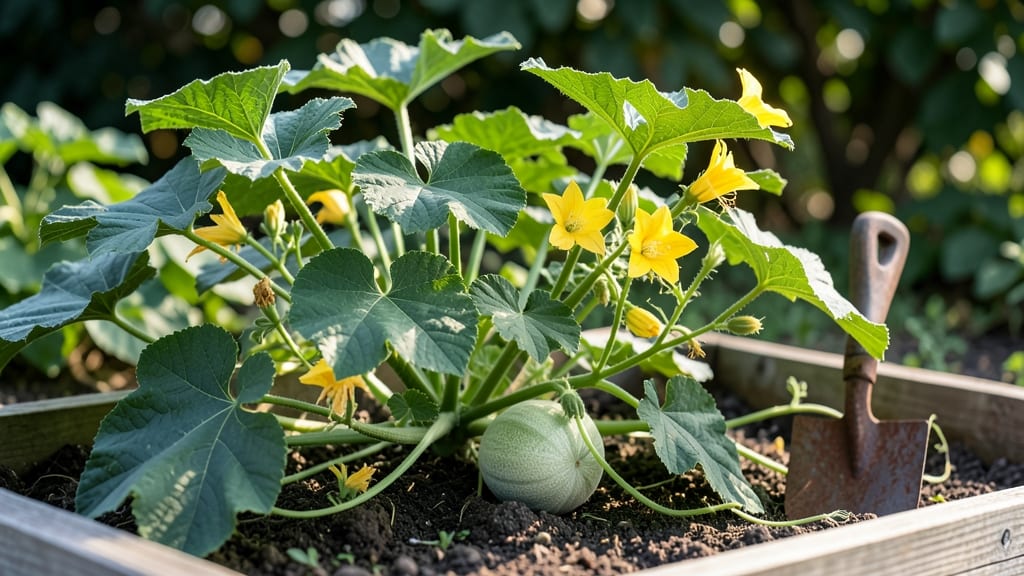
When melon plant flowers fail to set fruit, it’s not a plant personality flaw—it’s usually a pollination puzzle. 🌸 I’ve watched my own vines produce dozens of blooms only to see them drop before fruit could form, and I learned the hard way that melons are divas about their pollination needs.
The key isn’t just having flowers; it’s creating the perfect conditions for them to turn into heavy, sweet fruit.
Healthy melon flowers need bright sunlight, warm days (75°F or above), and gentle breezes to shake pollen loose. Male flowers appear first—they’re the little guys with long stems and no bulge at the base—while female flowers show up later with tiny melon bumps at their base.
If your vines are struggling to flower at all, check for consistent watering and nutrient balance, especially potassium and phosphorus.
Once you’ve got strong blooms, hand-pollination becomes your secret weapon. On cloudy mornings or in greenhouses, gently brush a male flower’s pollen onto female flowers with a paintbrush or cotton swab.
Within days, those female blossoms will swell into fruit—proof that you’ve cracked the pollination code. The payoff? A vine loaded with melons instead of empty promises.
This works for both outdoor vines and greenhouse setups, though container growers may need extra attention to wind currents. Even in small spaces, a little patience and the right technique turns floppy flowers into a harvest you’ll brag about at the farmers’ market.
📚 In This Guide
- What you need
- Instructions
- Tips and common mistakes
- Wrapping up and next steps
What you need
- ● Melon plants: Healthy, mature vines (1–3 plants per gardener, depending on space). Choose varieties like Cantaloupe, Honeydew, or Watermelon.
- ● Pollination aids: Soft paintbrush (1–2, for hand-pollination)
- ○ Small artist’s brush or cotton swab (optional, for precision)
- ● Watering tools: Watering can (5-gallon capacity) or hose with a gentle nozzle
- ○ pH test strips (optional, to check soil acidity—ideal range: 6.0–7.0)
- ● Protective gear: Gloves (nitrile or cotton, to avoid plant sap irritation)
- ● Sunscreen & hat (if working outdoors in full sun)
- ● Sunlight: Full sun (6–8+ hours daily). Melon flowers thrive in warmth!
- ● Temperature: Ideal range for flowering: 70–90°F (21–32°C). Avoid cold snaps (<50°F/10°C).
- ● Soil: Well-draining, fertile soil (amend with compost or aged manure if needed)
- ● pH: 6.0–7.0 (test or use a soil kit)
- ○ Bees or pollinators: At least 2–3 bee-friendly plants (e.g., marigolds, basil) nearby to attract natural helpers. (Optional: Hand-pollinate if bees are scarce!)
- ● Fertilizer: Balanced 10-10-10 or organic options like fish emulsion (apply lightly during flowering).
- ● Row covers (fine mesh, to protect flowers from pests while allowing pollinators access).
- ● Pruning shears (for removing spent flowers or excess vines to redirect energy).
- ● Journal or app (to track flowering dates, pollination attempts, and fruit sets).
How to hand-pollinate melon flowers for guaranteed fruit sets
Here's the foolproof method I use to transform every melon flower into a heavy fruit load.
🌱 Step 1: Identify Male and Female Flowers
Melon plants produce two flower types, and knowing the difference is key. Female flowers appear first and have a tiny melon at their base—this is your fruit starter. Male flowers have long stems with no swelling, and their sole job is to produce pollen. I check plants daily after morning watering when flowers are fully open and pollen is visible.
Real talk: If you see more male flowers than female ones early on, your plant is focusing on growth rather than fruiting. This is normal—just be patient. Once female flowers appear consistently, you're in the prime pollination window. I always start hand-pollinating when I see my third female flower of the season.
☀️ Step 2: Time Your Pollination for Maximum Effectiveness
Pollinate between 8 AM and 10 AM when flowers are fully open and pollen is fresh. The stigma (the fuzzy center of female flowers) needs to be receptive—it should look slightly damp and sticky. If it's dry or closed, wait until the next morning. I've found that using a soft-bristled paintbrush works best for transferring pollen without damaging delicate petals.
Here's the thing—melon pollen is heavy and doesn't travel far in still air. That's why hand-pollination works so well in greenhouses or when bees are scarce. If you're growing outdoors with plenty of bee activity, you might not need to intervene. But if your area has low bee traffic or you're growing in containers where bees can't access easily, this step is non-negotiable.
💧 Step 3: Transfer Pollen from Male to Female Flowers
Gently dip the paintbrush into a male flower's center where the pollen collects. You'll see yellow dust clinging to the bristles—that's what you're after. Then, lightly brush the stigma of a female flower in a circular motion. Do this for 3-5 female flowers per male flower to ensure good coverage. I always pollinate at least two female flowers per plant to guarantee fruit development.
Don't overdo it—one good brushing per flower is enough. Too much pollen can actually inhibit fruit set. After pollinating, leave the flowers undisturbed for 24 hours. You'll know it worked when the tiny melon at the base of the female flower starts swelling within 5-7 days. If it doesn't, repeat the process the next morning.
⏰ Step 4: Maintain Conditions for Fruit Development
After successful pollination, keep soil consistently moist but not soggy—melons need 1-1.5 inches of water per week. I water at the base in the morning to prevent fungal issues. Also, maintain temperatures between 75-85°F during the day for optimal fruit set. If nights drop below 60°F, cover plants with frost cloth to protect developing fruits.
Here's where it gets fun—watch for the flower to wilt and drop off within 24-48 hours after pollination. This is normal and means the energy is now going into fruit development. If flowers stay open for more than 48 hours, they weren't successfully pollinated. In that case, try again with fresh flowers the next morning.
Tips & tricks for perfect melon flower pollination
Here's what nobody tells you about making every pollination count.
Timing Secret: The 8 AM to 10 AM window is non-negotiable for fresh pollen, but here's the thing—morning dew can delay opening. If flowers haven't opened by 9 AM, wait until the next morning. I've seen flowers open as late as 10 AM in cooler weather, but never risk it after noon when pollen loses potency. The stigma needs to be that slightly damp, sticky look to accept pollen properly.
Tool Technique: That soft-bristled paintbrush isn't just about gentleness—it's about pollen transfer efficiency. I've tried cotton swabs and they pick up too little pollen. For best results, use a new brush for each male flower to avoid cross-contamination. And here's a pro move: Tap the brush gently against the male flower's center before dipping to dislodge any stubborn pollen grains clinging to the anthers.
Visual Cues for Success: After pollinating, look for the female flower's stigma to turn slightly darker within those 24 hours. This color change means the pollen took. The real test comes at 5-7 days when you should see that tiny melon at the base start swelling noticeably. If you're unsure whether pollination worked, check for this visual cue before giving up on a flower.
Environmental Rescue: If your area has cool nights below 60°F, don't just cover plants—create a microclimate. Place a small heat mat under containers or use a cloche to trap daytime warmth. I've seen melon flowers abort fruit development when night temps dip below 60°F for more than two nights in a row. The plant needs that consistent 75-85°F range during the day for successful fruit set to continue after pollination.
Pro Tips for Melon Plant Flowers
- Here's what nobody tells you about making every pollination count.
- Timing Secret: The 8 AM to 10 AM window is non-negotiable for fresh pollen, but here's the thing—morning dew can delay opening.
- Tool Technique: That soft-bristled paintbrush isn't just about gentleness—it's about pollen transfer efficiency.
Frequently asked questions
Got questions about those delicate melon plant flowers and how to turn them into sweet, juicy fruit? You’re in the right place! Here are answers to the most common queries from gardeners—from curious beginners to seasoned growers.
Why aren’t my melon flowers turning into fruit?
If your melon plant flowers drop off or fail to develop into fruit, it’s often due to poor pollination. Melons rely on bees, wind, or hand-pollination (for greenhouse growers). Try gently shaking plants near flowers or using a small brush to transfer pollen. Heat stress (above 90°F) can also cause flower drop—provide afternoon shade if needed.
How long does it take for melon flowers to produce fruit?
After successful pollination, melon plant flowers typically take 7–14 days to form a tiny fruit (called a "melon button"). Once set, fruit grows rapidly—expect ripe cantaloupes in 50–70 days and honeydews in 70–90 days, depending on the variety and growing conditions.
Can I hand-pollinate melon flowers if there are no bees?
Grab a soft paintbrush or cotton swab, dip it in pollen from a male flower (the one with a long stem), and gently brush it onto the female flower’s stigma (the tiny bump at the base of the flower). Do this in the morning when flowers are open. Pro tip: Male flowers usually appear first—save their pollen for female flowers!
What should I do if my melon flowers wilt or die?
Wilting melon plant flowers can signal overwatering, underwatering, or heat stress. Check soil moisture—melons prefer consistently moist (not soggy) soil. If temperatures soar above 95°F, provide afternoon shade or mulch to keep roots cool. Pests like aphids can also stress flowers—spray with neem oil if needed.
Do all melon flowers produce fruit?
Nope! Only female flowers (with a tiny melon at the base) develop into fruit. Male flowers (long stems, no melon) are pollen producers. Fun fact: Some varieties (like muskmelons) have separate male and female plants, while others are self-pollinating. Count your female flowers—each one has the potential for a bountiful harvest!
Wrapping up and next steps
Growing melon plant flowers into abundant, sweet fruit is all about understanding their needs—from proper pollination to ideal growing conditions.
Whether you’re hand-pollinating with a paintbrush or attracting bees naturally, these secrets will help you maximize your harvest. Don’t let a single bloom go to waste—your future melons are counting on you!
Ready to put your new knowledge into action? Start by inspecting your plants this week—watch for those delicate flowers and take the next step toward a bountiful harvest. 🌱✨ Check out our guide on troubleshooting common melon-growing issues to keep your garden thriving!