
Flowers
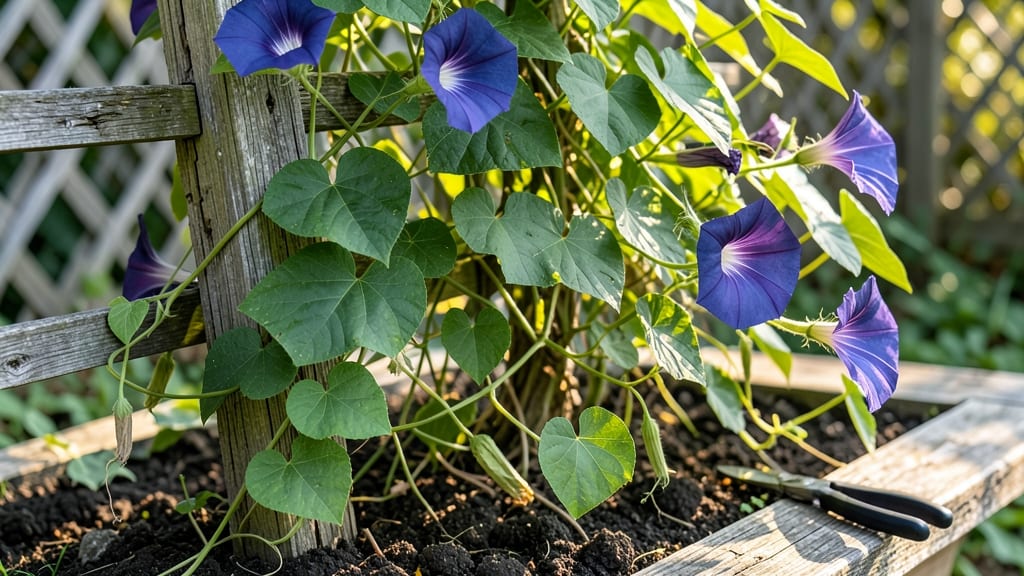
The morning glory flower vine transforms bare fences or trellises into a breathtaking vertical garden in just weeks. I remember the first time I watched them spiral upward like blue-green ribbons—it felt like magic.
These fast growers thrive on neglect, making them perfect for busy gardeners or anyone who wants instant impact without fuss.
The secret to their vibrant blooms starts with the right setup: full sun, well-draining soil, and a sturdy support structure. You’ll need minimal tools—a pair of pruners, some compost, and maybe a trellis—but the payoff is worth it.
Most varieties bloom within 6-8 weeks of planting, and with just three easy trims a year, they’ll keep flowering until frost.
Imagine waking to trumpet-shaped blooms in every shade from sky blue to deep purple, then watching them close by noon—only to reopen the next morning. The scent is light but intoxicating, and hummingbirds can’t resist them.
With proper care, these vines will climb 10-15 feet in a single season, transforming bare walls into living art.
Whether you’re a first-time gardener or a seasoned pro, morning glories adapt to almost any climate. They’re tough enough to handle occasional drought and cold snaps, but they reward attention with longer blooming seasons. Let’s get those seeds in the ground—or those vines climbing!
📚 In This Guide
- What you need
- Instructions
- Tips and common mistakes
- Wrapping up and next steps
What you need
- ● Morning glory seeds: Choose fast-growing varieties like Ipomoea purpurea or Ipomoea tricolor. Start with 5-10 seeds for a small vine or 20+ seeds for a lush display.
- ● Growing containers or garden bed: For containers: Use 5-gallon pots or larger (12+ inches deep) with drainage holes. Opt for fabric grow bags or wooden planters for better airflow.
- ● For garden beds: Ensure 6+ feet of vertical space (trellises, pergolas, or fences) and full sun (6+ hours/day).
- ● Potting soil or garden soil: Use a well-draining mix (e.g., 50% potting soil + 50% perlite or coco coir) to prevent root rot.
- ● Trellis or support structure: Install a tall trellis (8-12 feet), arbor, or chain-link fence for climbing. Use twine or soft ties to guide vines gently.
- ● Watering can or hose with nozzle: Morning glories need consistent moisture—aim for 1-2 inches of water per week (adjust for heat/drought).
- ○ Fertilizer (optional but recommended): Balanced liquid fertilizer (10-10-10) or compost tea for foliar feeding.
- ● Slow-release granular fertilizer (e.g., 5-10-5) mixed into soil at planting.
- ● Hand trowel or small shovel for transplanting seedlings.
- ● Pruning shears (sharp, bypass-style) for trimming vines and deadheading.
- ○ Gloves (optional, to protect hands from thorns on some varieties).
- ● Mulch (straw or wood chips) to retain moisture and suppress weeds.
- ○ pH test kit (optional) to ensure soil pH is 6.0-7.0 (morning glories thrive in slightly acidic to neutral soil).
- ● Warm weather: Morning glories germinate best in soil temps above 60°F (15°C). Start seeds indoors 2-3 weeks before last frost or direct-sow after frost.
- ● Patience: Seeds can take 7-14 days to sprout—stay consistent with watering!
- ● Daily sunlight: Ensure your vine gets full sun (6+ hours) for vibrant blooms.
Step-by-step instructions for cultivating a thriving morning glory vine
Here’s how to coax those iconic trumpet blooms into full, year-round glory—no fuss, just three simple trims.
🌱 Step 1: Choose the Right Location and Plant Seeds
Morning glories thrive in full sun—at least 6-8 hours daily—so pick a sturdy trellis, fence, or pergola where they can climb. These vines grow aggressively, so 6-8 feet of vertical space per plant is ideal. If starting from seed, sow them ½ inch deep in well-draining soil after the last frost. I like to plant mine in late spring when the soil warms to 60°F or above—cold soil slows germination.
Space seeds 12 inches apart in rows 18 inches apart to allow airflow and prevent fungal issues. Water gently but thoroughly after planting, keeping the soil evenly moist until germination, which typically takes 7-14 days. Avoid overwatering—soggy soil invites rot. Once seedlings appear, thin to the strongest one per spot, snipping the rest at the base with clean scissors.
☀️ Step 2: Train the Vine and Support Early Growth
The moment your vine reaches 6 inches tall, gently tie it to the trellis with soft twine or plant clips. Let it climb naturally—morning glories twine counterclockwise, so resist the urge to force direction. I use wooden stakes for smaller varieties and metal trellises for heavier climbers like Ipomoea purpurea. The vine will need weekly watering once established, but let the top inch of soil dry between drinks to encourage deep roots.
Watch for new leaves—they signal active growth. If your vine starts to sprawl instead of climb, it’s likely not getting enough light. Move it closer to a sunny window or supplement with a grow light for 12-14 hours daily. Leggy growth is a red flag: it means the plant is stretching for light and will produce fewer blooms.
✂️ Step 3: First Trim to Encourage Bushier Blooms
When your vine hits 4-5 feet tall, it’s time for the first trim. Pinch back the top 2-3 inches of the main stem to encourage branching. This might seem counterintuitive—you’re cutting off potential blooms—but it forces the plant to produce more lateral shoots, each of which will bear flowers. Do this in early summer when growth is vigorous. You’ll see new leaves sprouting from the sides within 2-3 weeks.
Real talk: Don’t skip this step. I learned the hard way that untrimmed vines grow tall and spindly, with all their energy going into one long stem instead of a bushy display. After trimming, water deeply to help the plant recover. You’ll notice stronger stems and a fuller habit by mid-summer.
⏰ Step 4: Deadhead and Trim for Continuous Blooms
Morning glories bloom in morning-only bursts, so deadheading spent flowers in the afternoon keeps them producing. Snip off faded blooms at the node where they meet the stem—this redirects energy to new flowers. I do this every 2-3 days during peak bloom (late summer to early fall). The vine will reward you with nonstop blooms if you stay on top of it.
For a second flush of flowers in fall, give the vine a light haircut after the first frost. Cut back one-third of the growth to remove damaged foliage and encourage fresh shoots. Water well and fertilize lightly with a balanced 10-10-10 mix to jumpstart regrowth. With this trim, you’ll often see new blooms by late September or October, depending on your climate.
🪴 Step 5: Winter Care for Year-Round Success
In colder zones, morning glories die back in winter, but with a little care, they’ll bounce back. Once frost blackens the foliage, cut the vine down to 6 inches above the ground. Mulch the base with 2-3 inches of shredded leaves or straw to insulate the roots. In mild climates (zones 9-11), the vine may survive winter with minimal protection—just trim back dead growth in early spring.
Here’s the thing—morning glories self-seed like crazy. If you let them go to seed, you’ll get volunteer plants the following year. To control spread, pull up unwanted seedlings in spring or collect seeds from the dried pods. With this routine, you’ll have vibrant blooms year after year, with minimal effort and just three strategic trims.**
Tips & tricks for cultivating a thriving morning glory vine
Between us, these simple adjustments will transform your morning glory vine from a straggly mess into a lush, blooming powerhouse—without the guesswork.
Sunlight Strategy: Morning glories need that full sun (6-8 hours daily), but here's the thing: if your vine starts stretching toward light like a teenager reaching for candy, it's begging for more. I've seen dramatic improvements by moving plants closer to south-facing windows or supplementing with grow lights for 12-14 hours when natural light falls short. The key is watching for those telltale elongated stems—this is your plant's way of saying "I need more light!"
Pruning Precision: When you reach Step 3 and trim those top 2-3 inches at 4-5 feet tall, here's what I've learned: use clean, sharp pruners and make cuts just above a leaf node. The angle matters too—cut at a 45-degree angle to prevent water from pooling on the wound. I also recommend doing this on a dry morning when the plant is fully hydrated, which helps it recover faster. This single technique has given me bushier vines with twice as many blooms.
Watering Wisdom: The instructions mention keeping soil evenly moist during germination, but here's the follow-up: once established, morning glories are surprisingly drought-tolerant. Let the top inch dry between waterings to encourage deep root growth. I've found that deep watering once a week (rather than frequent light waterings) produces stronger vines that handle heat waves better. Just don't let them wilt completely—morning glories bounce back quickly from a single dry spell.
Fertilizer Timing: While the instructions mention a light 10-10-10 mix after your fall trim, I've discovered the real magic happens in early summer. When you see those first lateral shoots after your initial trim, give them a boost with a balanced fertilizer. This is when the plant is putting all its energy into new growth—just don't overdo it. Too much nitrogen early on will give you lots of leaves but few flowers. I use half-strength fertilizer at this stage for best results.
Pro Tips for Morning Glory Flower Vine
- Between us, these simple adjustments will transform your morning glory vine from a straggly mess into a lush, blooming powerhouse—without the guesswork.
- Sunlight Strategy: Morning glories need that full sun (6-8 hours daily), but here's the thing: if your vine starts stretching toward light like a teenager reaching for candy, it's begging for more.
- Pruning Precision: When you reach Step 3 and trim those top 2-3 inches at 4-5 feet tall, here's what I've learned: use clean, sharp pruners and make cuts just above a leaf node.
Frequently asked questions
Got questions about growing and maintaining your morning glory flower vine? You’re not alone! Here are some of the most common concerns—and their solutions—to keep your climbing beauty thriving.
How fast does a morning glory vine grow, and how long does it take to bloom?
A healthy morning glory vine can shoot up 3–4 inches per day in ideal conditions (warmth, sunlight, and consistent moisture) and may reach 10–15 feet in a single season! Blooms typically appear 6–8 weeks after planting, but some varieties (like Ipomoea purpurea) may flower even faster if given plenty of sun. Patience pays off—these vines are fast growers but reward you with vibrant colors early in the game.
Can morning glory vines grow indoors, or do they need to be outside?
While morning glories love outdoor sunshine (6+ hours daily), you can grow them indoors near a south-facing window or under grow lights. However, they’ll be less vigorous and may produce fewer blooms. For best results, plant them outdoors in spring after the last frost. If you’re experimenting indoors, choose compact varieties like Ipomoea batatas (sweet potato vine) for better adaptability.
Why aren’t my morning glory flowers opening, or are they wilting quickly?
Wilting or closed blooms often signal stress from heat, thirst, or poor support. Check these fixes:
- Water consistently—keep soil evenly moist (not soggy) but avoid overhead watering to prevent fungal issues.
- Provide trellises or fences—vines need vertical support to climb; without it, they’ll flop and stress.
- Trim leggy growth—prune back overgrown stems to encourage bushier, healthier blooms.
- Watch for pests—aphids or spider mites can sap energy; use neem oil if needed.
Are morning glories annuals or perennials, and can I save seeds for next year?
Most morning glories are annuals in colder climates, but some (like Ipomoea nil) may self-seed and return yearly if conditions are right. To save seeds:
- Wait until pods turn brown and papery (usually late summer/fall).
- Gently squeeze the pod to release seeds—don’t let them pop open on the vine or they’ll scatter.
- Store seeds in a cool, dry place (like a paper envelope) for up to 3 years.
- Sow directly outdoors in spring after frost.
What’s the best way to train a morning glory vine up a trellis or fence?
Training is simple but critical for strong growth:
- Start early—attach young vines to the trellis with soft plant ties or twist ties as they emerge.
- Guide gently—let the vine curl naturally around supports; don’t force it.
- Prune strategically—trim back side shoots to encourage upward growth and more blooms.
- Rotate the trellis—if your vine grows unevenly, adjust the trellis to balance sunlight exposure.
Wrapping up and next steps
Growing a morning glory flower vine is a rewarding journey that brings bursts of color and life to your garden with minimal effort! Whether you’re trimming for shape, health, or year-round blooms, these three simple techniques will keep your vine thriving. 🌸
Ready to transform your space? Start by gathering your tools and picking a sunny spot—then roll up your sleeves and enjoy the process. Your vibrant, blooming paradise is just a trim away!
- Next step: Pick a variety (like Heavenly Blue or Scarlet O’Hara) and plant your seeds or cuttings today!
- Bonus tip: Share your progress with fellow gardeners—inspiration spreads faster than vines! 🌱