
Flowers
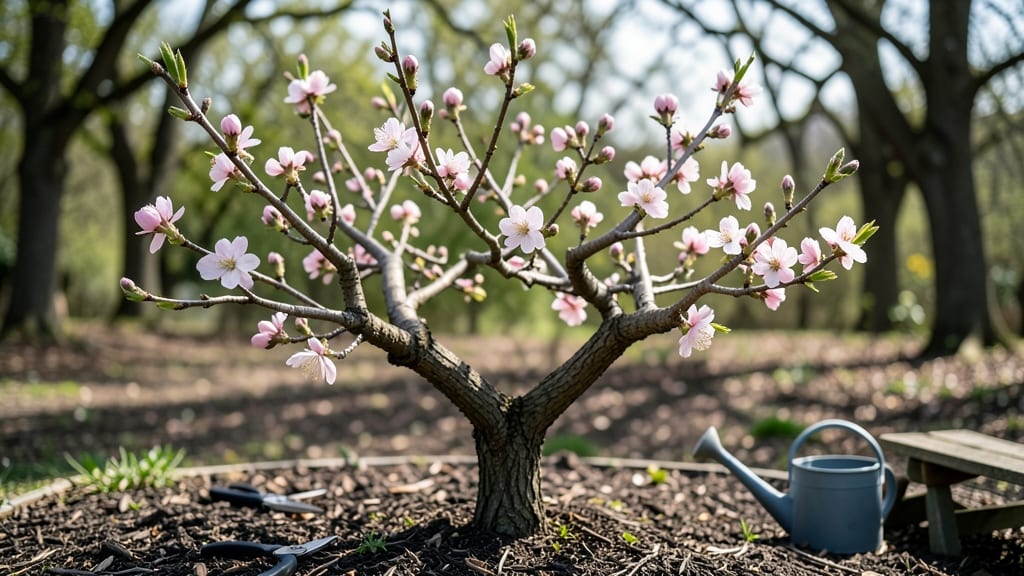
Nectarine tree flowers are the secret to a bountiful harvest, and pruning them right turns a single tree into a fruit-producing powerhouse. 🌸 I spent three seasons watching my nectarine’s blooms fade without fruit—until I learned the precise timing and cuts that transform dormant branches into flowering factories.
The difference between a handful of fruit and bushels often comes down to when you prune and how aggressively.
The best time to prune for maximum blooms is late winter, just as buds swell but before they burst into color. You’ll remove dead wood first, then open the canopy to let sunlight reach inner branches where flowers love to form.
A sharp pair of pruners and a clear day are all you need—no fancy tools required. The goal is to encourage next year’s flowers while keeping the tree strong enough to support fruit later.
What you’ll end up with is a tree covered in fragrant blossoms that turn into sweet, juicy nectarines by summer. The flowers themselves are delicate pink clusters that attract pollinators, and when pruned correctly, they produce fruit year after year without decline.
Even better? The tree’s structure stays balanced, so you avoid the messy, overgrown look that chases away buyers at farmers’ markets.
This method works for both young trees and mature specimens, though younger trees need lighter pruning to establish their shape. Whether you’re in a warm climate like California or a cooler zone like Virginia, the principles stay the same—just adjust timing slightly for your local frost dates.
Let’s get those branches blooming like never before.
📚 In This Guide
- What you need
- Instructions
- Tips and common mistakes
- Wrapping up and next steps
What you need
- ● Pruning shears – Bypass or anvil type, sharp and sanitized (1 pair). Pro tip: 💡 Avoid dull blades—they crush branches instead of cleanly cutting!
- ● Loppers – For thicker branches (½–1½ inches) (1 pair). Look for ratcheting or bypass-style for precision.
- ○ Pruning saw – For branches >1½ inches thick (1 saw). Optional: A folding saw for hard-to-reach spots.
- ● Garden gloves – Heavy-duty, cut-resistant (1 pair). Protects hands from thorns and debris!
- ● Disinfectant (70% isopropyl alcohol or bleach solution) – To sterilize tools between cuts (small bottle). Pro tip: 🌡️ Prevents disease spread!
- ● Rubbing alcohol or hand sanitizer – For cleaning hands after pruning (travel-sized bottle).
- ○ Pruning sealant (optional) – For large cuts (>½ inch) (small tube). Helps wounds heal faster.
- ● Ladder or sturdy step stool – For high branches (1). Safety first! 🎯 Use a non-slip surface.
- ● Trash bags or bucket – For collecting pruned branches (1–2). Keeps your workspace tidy!
- ● Know your tree’s age & health – Young trees (light pruning; mature trees may require structural shaping.
- ● Best time to prune – Late winter/early spring (just before buds swell) or immediately after harvest.
- ● Weather check – Prune on a dry, calm day (no rain forecasted for 24 hours).
- ○ Tree diagram (optional but helpful) – Sketch the tree’s structure beforehand to visualize cuts. ✨ Bonus: Use a phone app like "iTree" for guidance!
Step-by-step pruning guide for nectarine tree flowers
Here’s how I keep my nectarine trees blooming like clockwork—no guesswork, just proven cuts.
✂️ Step 1: Prune in Late Winter Before Bud Break
Timing is everything. Wait until 2-4 weeks before your last frost when temperatures stay above 32°F but before buds swell. I check the weather forecast and mark my calendar—pruning too early risks frost damage to fresh cuts, while waiting too long encourages early blooms that’ll get nipped by late frosts.
Start by removing dead, diseased, or crossing branches first. These are your priority—they compete with healthy growth and invite pests. Use sharp pruning shears to make clean cuts at a 45-degree angle, about ¼ inch above an outward-facing bud. This ensures new growth emerges away from the trunk, improving airflow and sunlight penetration.
🌿 Step 2: Thin Out Overcrowded Branches
Nectarine trees bloom on both old and new wood, so you’ll see flowers on last year’s branches and fresh growth. The key is balance—too many branches mean weak blooms and poor fruit set. Aim to keep 6-8 main scaffold branches spaced evenly around the trunk, removing any that rub against each other or grow inward.
Look for branches thinner than a pencil—these are energy vampires. Cut them back to the nearest strong bud or lateral branch. You’ll notice the tree’s structure opens up, letting sunlight reach the center where flowers form. Real talk: don’t be shy with this step. I’ve seen gardeners hesitate, and those crowded branches lead to smaller, fewer blooms.
☀️ Step 3: Shape for Sunlight and Airflow
Step back and visualize your tree as an open vase shape—wider at the top than the bottom, with branches spreading outward. This shape maximizes sunlight exposure, which is critical for flower production. Remove any branches growing straight up (called "water sprouts") or those growing downward, as they block light and create shady spots where flowers won’t develop.
Focus on outward-facing buds when making cuts. You’ll see them as small bumps along the branch—cut just above them to encourage new growth in the right direction. After pruning, the tree should look like it’s reaching for the sky. If it feels too bare, don’t worry—nectarines rebound quickly with proper care, and you’ll see fresh, vigorous growth by spring.
💧 Step 4: Post-Pruning Care for Strong Recovery
Water deeply right after pruning to help the tree recover. Give it 1-2 gallons of water (depending on tree size) to compensate for the loss of leaves and branches. Avoid heavy fertilizing immediately—pruned trees need time to heal before they can use extra nutrients. Wait 4-6 weeks before applying a balanced 10-10-10 fertilizer to support new growth.
Keep an eye out for sap bleeding—a normal (if messy) sign that the tree is alive and healing. If you see it, don’t panic. Just wipe it away occasionally to prevent fungal issues. Mulch the base with 2-3 inches of organic mulch (like wood chips) to retain moisture and regulate soil temperature. This step is often overlooked, but it makes a huge difference in how well the tree recovers.
Tips & tricks for perfect nectarine tree pruning
Here's what nobody tells you about pruning nectarine trees that actually makes a difference.
Timing is Non-Negotiable: That 2-4 week window before your last frost is critical—don't rush it! I've seen gardeners prune too early and lose branches to frost damage, or too late and encourage early blooms that get nipped. Check your local frost dates and mark your calendar now. If you're unsure, err on the earlier side of that window. The buds should still be tight and dormant when you prune, not starting to swell.
Tool Prep Matters: Your pruning shears need to be sharper than a chef's knife before you start. Dull blades crush branches instead of making clean cuts, which invites disease. I clean and sharpen mine with a file and rubbing alcohol before each pruning session. Also, sterilize your tools with rubbing alcohol between cuts on diseased branches to prevent spreading pathogens.
Visualize the Vase Shape: When shaping your tree in Step 3, imagine an open vase—wider at the top than the bottom. This isn't just aesthetic; it's about sunlight penetration. I like to hold my pruners at a 45-degree angle and make cuts just above outward-facing buds. You'll know you're doing it right when you can see sunlight reaching the center of the tree where flowers form. Think of it like giving your tree a spa day—more light means more blooms.
Post-Pruning Recovery Hack: After you've finished pruning, don't just walk away. Give your tree that 1-2 gallons of water right away—it's like giving it a drink after a workout. I've found that adding a handful of compost to the watering hole helps too. And that mulch? Spread it in a donut shape around the base, keeping it 2-3 inches thick but leaving space around the trunk to prevent rot. This simple step can mean the difference between a tree that struggles and one that thrives.
Pro Tips for Nectarine Tree Flowers
- Here's what nobody tells you about pruning nectarine trees that actually makes a difference.
- Timing is Non-Negotiable: That 2-4 week window before your last frost is critical—don't rush it!
- Tool Prep Matters: Your pruning shears need to be sharper than a chef's knife before you start.
Frequently asked questions
Got questions about nectarine tree flowers and pruning? You’re not alone!
Here are some of the most common queries—plus quick, actionable answers to keep your tree blooming beautifully.
When do nectarine tree flowers bloom, and how long do they last?
Nectarine tree flowers typically bloom in early spring (March–April in most U.S. zones), just before the leaves emerge. Each flower lasts 3–5 days, but the tree’s entire bloom cycle spans 1–2 weeks. Timing varies by climate—warmer regions may see earlier blooms, while cooler areas might delay until late spring.
Can I prune my nectarine tree while it’s flowering?
Pruning during the bloom is generally not recommended—it removes potential fruit buds and stresses the tree. Instead, prune in late winter (dormant season) or after harvest (summer/early fall) to shape the tree without disrupting flowering. Focus on removing dead wood, crossing branches, and thinning dense areas.
Why aren’t my nectarine tree flowers turning into fruit?
Several factors can prevent fruit set: frost damage (killing flowers), poor pollination (nectarines need bees!), or nutrient deficiencies (lack of nitrogen/phosphorus). Check for thin, weak blooms—these often drop without pollination. Try hand-pollinating with a soft brush if bees are scarce, or fertilize with balanced fruit-tree food in early spring.
Are there any alternatives to pruning for better nectarine tree flowers?
While pruning is key, you can also boost flower production with these tips:
- Water deeply (1–2 inches weekly) during dormancy to encourage robust growth.
- Apply bloom-promoting fertilizers (high in phosphorus) in late winter.
- Thin overcrowded branches to improve air circulation and sunlight.
- Protect flowers from late frosts with frost cloth or a sprinkler system.
What should I do if my nectarine tree flowers fall off before fruiting?
Flower drop is often normal, but excessive shedding may signal stress. Common causes:
- Temperature swings (too hot/cold during bloom).
- Over-fertilizing with nitrogen (promotes leaves over flowers).
- Disease or pests (e.g., bacterial spot).
Check for yellowing leaves or spots and treat with copper fungicide if needed. For next year, prune lightly and avoid heavy nitrogen in early spring.
Wrapping up and next steps
Watching your nectarine tree burst into vibrant, fragrant blooms year after year is a rewarding experience—and now, you’re equipped with the knowledge to make it happen! 🌸 From mastering the right pruning tools to understanding seasonal timing, every step plays a role in nurturing a thriving tree.
Remember, consistency and patience are your best allies.
Ready to put your newfound skills into action? Start by scheduling your first pruning session this fall or winter—just follow the blueprint you’ve learned here. Before you know it, your garden will be alight with beauty, and you’ll be the proud gardener behind it! 🌿✨