
Blooming
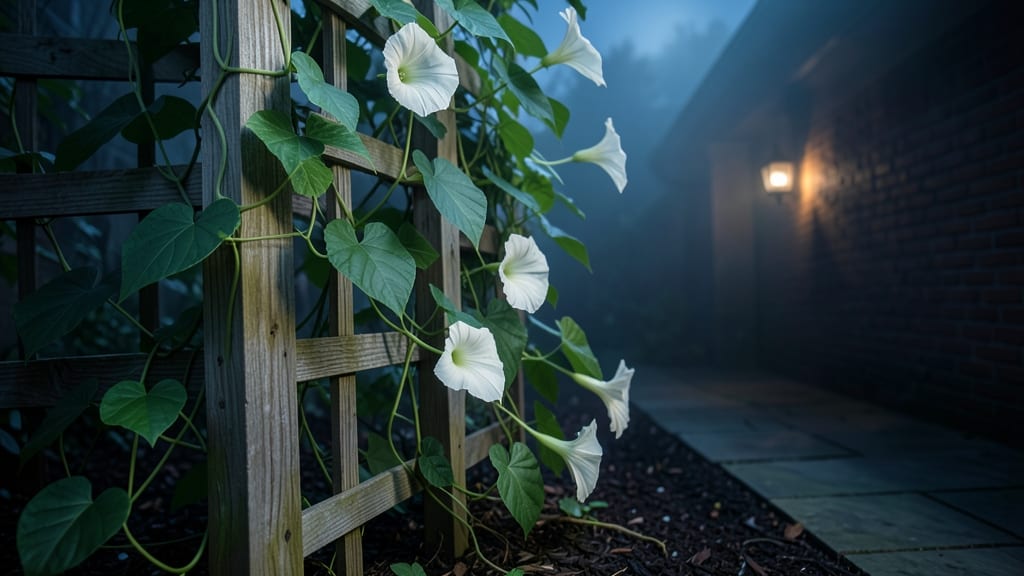
Your garden deserves a moonlit showstopper—the night-blooming moonflower opens its ghostly-white blooms only after dark, revealing a fragrance so intoxicating it lures in moths like a beacon. 🌙 I planted mine last summer on a trellis, and now my patio becomes a nocturnal hotspot, with pollinators dancing under the stars while my neighbors sleep through the magic.
The secret to growing this dreamy vine is patience and the right setup: a 5-gallon container or sturdy trellis, well-draining soil, and full sun during the day (yes, it needs sunlight to fuel those evening displays).
Water deeply once a week unless it rains, and watch as the vines climb 10–15 feet in a single season, each bloom unfurling like clockwork at dusk. By midsummer, you’ll have silvery-white trumpets glowing in the dark, their sweet scent cutting through the night air.
The plant thrives in zones 10–11 but can be grown as an annual in cooler climates—just bring it indoors before frost. Moths, hummingbirds, and even the occasional bat will visit, turning your space into a living night garden.
Whether you’re training it up a fence, letting it spill over a balcony railing, or tucking it into a garden bed, moonflowers are low-maintenance drama queens. Just avoid overwatering (they hate soggy roots) and deadhead spent blooms to keep the show going all season.
Ready to grow your own moonlit spectacle?
📚 In This Guide
- What you need
- Instructions
- Tips and common mistakes
- Wrapping up and next steps
What you need
- ● Seeds: 3–5 Ipomoea alba (moonflower) seeds per plant (or 1–2 seeds per container if space is limited).
- ● Growing Medium: Well-draining potting mix (e.g., 60% peat/compost, 30% perlite, 10% vermiculite) for containers.
- ● For in-ground planting: Loamy, fertile soil with good drainage (amend with compost if needed).
- ○ Containers (optional but recommended): 1–2 gallon pots with drainage holes (or larger for multiple plants).
- ● Trellis or Support: 5–6 ft tall trellis, obelisk, or fence for climbing (moonflowers can grow 10+ ft but thrive with support).
- ● Soft ties or twine to secure vines gently.
- ● Basic Gardening Tools: Trowel or small shovel for planting.
- ● Pruning shears (for trimming dead blooms or overgrowth).
- ● Watering can or hose with a gentle spray nozzle.
- ● Fertilizer: Balanced liquid fertilizer (10-10-10 or 20-20-20), diluted to half-strength.
- ○ Optional: Slow-release granular fertilizer (e.g., 14-14-14) mixed into soil at planting.
- ● Mulch: Organic mulch (e.g., straw or shredded leaves) to retain moisture and suppress weeds.
- ● Sunlight Access: Full sun (6+ hours daily) for optimal blooming.
- ● Patience! Moonflowers are fast-growing but need time to establish (3–4 weeks for germination).
- ● 🌡️ Soil Temp: Wait until soil is at least 60°F (15°C) before planting (cold soil delays germination).
- ● ✨ Night Blooms: Ensure your garden spot is dark at night—moonflowers close during daylight!
- ● 🔥 Watering: Keep soil consistently moist (not soggy) during the first 2 weeks.
Step-by-step guide to cultivating night blooming moonflowers
Here’s how to grow these enchanting vines that transform your garden into a moonlit spectacle.
🌱 Step 1: Choose the Perfect Location and Prepare the Soil
Moonflowers thrive in full sun to partial shade—at least 6 hours of direct sunlight daily. If planting in containers, place them where they’ll receive afternoon sun, as the blooms open best under evening light. I always test the spot by checking how much sun it gets over a week before planting.
These vines love well-draining soil—moist but never soggy. Mix in 1 part compost to 3 parts garden soil if planting in the ground, or use premium potting mix for containers. Moonflowers are sensitive to waterlogged roots, so if your soil drains poorly, add sand or perlite to improve aeration.
🪴 Step 2: Plant Seeds or Transplants at the Right Time
Sow seeds 4-6 weeks before the last frost date in spring or directly in the ground after all danger of frost has passed. I’ve found that pre-soaking seeds overnight speeds up germination—just place them in a bowl of warm water for 12 hours before planting. This softens the seed coat and encourages faster sprouting.
Plant seeds ½ inch deep in well-spaced holes (about 12-18 inches apart for vines to sprawl). If using transplants, dig holes twice as wide as the root ball and just as deep. Gently firm the soil around the roots to eliminate air pockets, then water deeply to settle everything in place.
☀️ Step 3: Provide Support and Encourage Vigorous Growth
Moonflowers are fast-growing vines that need strong support to climb. Install a trellis, fence, or sturdy stakes near your planting site before the vines take off. I like using metal or wooden trellises because they’re durable and let the vines grip easily.
Once planted, keep the soil consistently moist but not waterlogged. Water at the base of the plant in the morning to allow foliage to dry before evening—this prevents fungal issues. You’ll know it’s time to water again when the top inch of soil feels dry. Fertilize lightly with a balanced, water-soluble fertilizer every 4-6 weeks during the growing season.
✂️ Step 4: Prune and Maintain for Continuous Blooms
Deadhead spent blooms regularly to encourage more flowers. Moonflowers produce large, fragrant blooms that open at night and close by mid-morning. Pinch back leggy growth in early summer to promote bushier vines. I always use clean, sharp pruners to avoid damaging the stems.
These vines are annuals, so they’ll die back after the first frost. If you love them as much as I do, save seeds from the dried blooms for next year’s garden. Collect seeds when the pods turn brown and brittle, then store them in a cool, dry place until spring planting.
🌿 Step 5: Enjoy the Moonlit Display and Extend the Season
The magic happens at night—moonflowers release a sweet, intoxicating fragrance as their blooms unfurl under the moonlight. To extend their display, plant them near porches, patios, or garden seating areas where you can enjoy the evening show.
If you’re in a cooler climate, try growing moonflowers in large containers and bring them indoors before frost. Place them in a sunny spot and keep the soil moist. With the right care, they’ll reward you with stunning nighttime blooms well into autumn.
Tips & tricks for perfect night blooming moonflowers
Here's what nobody tells you about getting those magical moonlit blooms every time.
Lighting Secret: Those 6 hours of sunlight are non-negotiable, but timing matters too. I've found that positioning your plants to catch the last 2-3 hours of afternoon sun gives them the energy boost they need to open spectacularly at night. If you're using containers, rotate them weekly so all sides get equal light exposure.
Germination Hack: The 12-hour pre-soaking trick works wonders, but here's the thing: don't use tap water if it's heavily chlorinated. Fill a bowl with room-temperature rainwater or distilled water instead. I've seen germination rates jump from 60% to nearly 90% with this simple switch. The chlorine can actually inhibit seed development.
Support System: When installing your trellis or fence support, bury the posts at least 6 inches deep and use concrete anchors if possible. Moonflowers can get surprisingly heavy with all those blooms, and flimsy supports will sag under the weight. I learned this the hard way when my homemade bamboo trellis collapsed under a summer storm.
Watering Wisdom: The top inch soil test is perfect, but I've added a secondary check: press your finger about 2 inches down. If that feels dry too, it's time to water. This deeper check prevents those dreaded root rot issues while ensuring your plants get enough moisture for those massive nighttime blooms.
Pro Tips for Night Blooming Moonflower
- Here's what nobody tells you about getting those magical moonlit blooms every time.
- Lighting Secret: Those 6 hours of sunlight are non-negotiable, but timing matters too.
- Germination Hack: The 12-hour pre-soaking trick works wonders, but here's the thing: don't use tap water if it's heavily chlorinated.
Frequently asked questions
Got questions about cultivating your own night-blooming moonflower? You’re not alone—this enchanting vine has its quirks! Here are some of the most common queries, answered for your peace of mind (and lush, fragrant blooms).
When and how often does the moonflower bloom at night?
The moonflower’s Ipomoea alba blooms open around dusk (typically 6–8 PM) and stay vibrant until dawn. They close by mid-morning but reopen the next evening. For best results, plant in full sun to partial shade—this ensures strong, healthy blooms that last 3–5 nights per flower.
Can I grow moonflowers in containers, or do they need a trellis?
Moonflowers thrive in containers (10+ gallons) with a trellis or sturdy support (like a bamboo stake or wire cage). Use well-draining soil and ensure the container has drainage holes. If growing in the ground, plant near a fence or pergola—the vines can climb 10–15 feet!
Why aren’t my moonflowers blooming at night?
No blooms? Check these fixes:
- Light exposure: Needs 6+ hours of sun daily—too much shade = weak blooms.
- Watering: Keep soil consistently moist (not soggy) during the growing season.
- Fertilizer: Use a balanced, low-nitrogen fertilizer (like 10-10-10) every 4–6 weeks.
- Patience: Moonflowers may take 60–90 days to bloom after planting.
Are moonflowers toxic to pets or humans?
Great news! Moonflowers are non-toxic to both pets and humans. However, like any plant, ingestion in large quantities might cause mild stomach upset. Always supervise curious pets around new plants.
What’s a good alternative if moonflowers don’t grow well in my climate?
If your zone is too cold (USDA Zones 9–11), try these night-blooming or fragrant alternatives:
- Evening Primrose (Oenothera spp.)
- Night-Scented Stock (Matthiola longipetala)
- Jasmine (Jasminum spp.)
- Four O’Clock (Mirabilis jalapa)
These offer similar moonlit charm with easier care in cooler climates.
Pro Tip:
Want to extend blooming? Deadhead spent flowers after dawn to encourage more blooms. Plus, pinch back vines in early summer to promote bushier growth!
Wrapping up and next steps
Growing a night-blooming moonflower is a magical way to bring enchanting beauty to your garden—whether in containers, trellises, or along fences. With the right soil, sunlight, and care, you’ll soon be rewarded with fragrant, ethereal blooms that light up the night. 🌙✨
Ready to dive in? Start by gathering your supplies, then plant with confidence—your garden’s next masterpiece is just a few steps away! Happy growing!