
Flowers
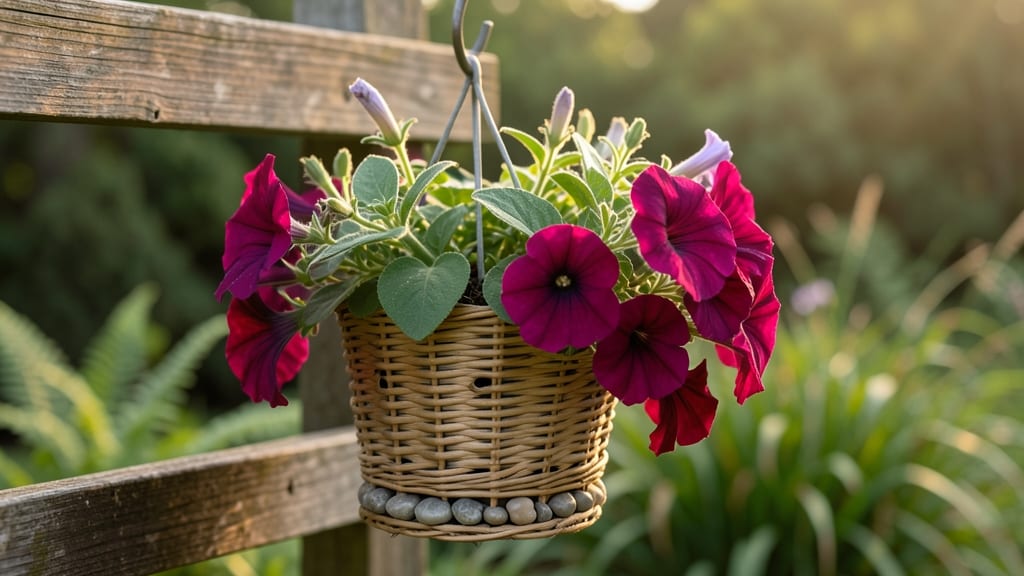
Outdoor flower baskets turn blank walls and empty porches into bursting displays of color that last from spring through frost. 🌸 I’ve transformed my own patio with these living decorations—no green thumb required—just the right plants, a sturdy hanger, and a little patience.
The secret lies in mixing annuals for instant impact with perennials that return year after year, creating a cascade of blooms that never fades completely.
You’ll need just three supplies: a weatherproof basket (12 inches wide works best), lightweight potting mix designed for containers, and a selection of plants that thrive in similar sunlight.
Petunias, lobelia, and trailing verbena create a foolproof summer combo, while pansies and dusty miller keep things lively in cooler months. The key is spacing plants so they fill in quickly—no sparse gaps allowed!
By late summer, your baskets will be spilling over with blooms, attracting butterflies while making your space the envy of the neighborhood. The best part? Swap out a few plants each season to keep the show going—think mums in fall or hellebores for winter interest.
Even small balconies can host these living art pieces with the right setup.
Perfect for patios, porches, or garden borders, these hanging gardens adapt to any space. The only rule? Don’t overwater—containers dry out fast. Let’s make your outdoor walls bloom like never before!
📚 In This Guide
- What you need
- Instructions
- Tips and common mistakes
- Wrapping up and next steps
What you need
- ● Flower basket: Choose a durable, weather-resistant basket (plastic, woven, or metal) with drainage holes. Size: 10–14 inches in diameter for standard baskets.
- ● Potting mix: Use a lightweight, well-draining blend (e.g., 60% peat moss, 20% perlite, 20% compost). Quantity: 1–2 cubic feet per basket.
- ● Slow-release fertilizer: Granular or spike form (10–10–10 NPK ratio). Quantity: 1–2 tbsp per basket.
- ● Moss or sphagnum: For moisture retention and aesthetics. Quantity: 1–2 cups per basket.
- ● Flowering plants: Select trailing or cascading varieties (e.g., petunias, fuchsias, or ivy). Quantity: 3–5 plants per basket (mix heights for fullness).
- ● Scissors or pruners: For trimming plants and moss.
- ● Gloves: Protect your hands from soil and thorns.
- ● Watering can (with a fine rose nozzle) or hose with spray attachment.
- ○ Basket liner (optional): Coconut coir or landscape fabric to prevent soil spillage.
- ○ Decorative accents (optional): Ribbon, paint, or solar lights for a personalized touch.
- ○ Support stakes (optional): For taller plants (e.g., snapdragons or lobelia).
Step-by-Step guide to creating stunning hanging flower baskets
Here's how to craft vibrant, long-lasting hanging gardens that burst with color all season!
🪴 Step 1: Choose the Perfect Baskets and Materials
Start with 12-18 inch diameter plastic or coconut fiber baskets—they're lightweight yet sturdy enough for heavy blooms. I always opt for ones with built-in watering systems at the bottom to keep roots hydrated without overwatering. For the liner, use sphagnum moss or coco coir to retain moisture while allowing airflow.
Here's the thing—don't skip the liner. Without it, soil washes out quickly, and roots dry out. Cut the liner to fit snugly inside the basket, leaving about 1 inch of space at the top for planting. For 4 baskets, you'll need roughly 4 cubic feet of potting mix—lightweight, well-draining mix designed for containers.
🌱 Step 2: Layer Soil and Plants for Maximum Impact
Fill the liner with 2-3 inches of potting mix first, then add a layer of slow-release fertilizer to feed plants for weeks. This ensures your flowers won't starve mid-season. Press the soil down gently so it's firm but not compacted—roots need room to breathe.
Plant your largest flowers first, placing them in the center of the basket. For 4 baskets, I use a mix of trailing plants like petunias or lobelia and upright bloomers like geraniums or impatiens. Space them 6-8 inches apart so they have room to spread. If a plant looks too crowded, add a bit more soil around it before moving to the next one.
☀️ Step 3: Position for Sunlight and Watering Success
Hang baskets where they get 6+ hours of sunlight daily. A south or west-facing wall is ideal, but east-facing works too—just avoid deep shade. I like to position them at eye level so I can admire them while relaxing outside. Use a sturdy hook or bracket rated for 20+ pounds to support the weight of saturated soil and blooms.
Water thoroughly right after planting, then check daily during hot weather. The top inch of soil should feel dry to the touch before watering again. Here's a trick: water in the morning so plants absorb moisture before the heat of the day. If leaves start to wilt by afternoon, your baskets need more frequent watering—trailing plants dry out fastest.
🌿 Step 4: Maintain Blooms and Prevent Common Problems
Deadhead spent blooms weekly to encourage new flowers. I always use clean, sharp scissors to snip just above a set of leaves—this prevents disease and keeps plants looking tidy. Fertilize every 2-3 weeks with a balanced liquid fertilizer to keep growth strong.
Watch for pests like aphids or spider mites, which love hanging baskets. If you see sticky residue on leaves or tiny webs, spray with neem oil or insecticidal soap. Real talk: if you notice yellowing leaves, it's usually overwatering—let the soil dry out more between waterings. For 4 baskets, a 1-gallon spray bottle of neem oil is plenty for treatment.
Tips & tricks for perfect outdoor flower baskets
Here's what nobody tells you about creating baskets that stay vibrant and lush all season!
Basket Weight Strategy: When selecting baskets, prioritize ones with reinforced bottoms—especially for larger varieties. The 20+ pound weight rating mentioned in Step 3 is non-negotiable when fully saturated with soil and blooms. I've seen lightweight baskets sag under the weight after just one good watering. For extra security, consider adding a second hook or bracket at the top to distribute weight evenly.
Soil Layering Technique: The 2-3 inches of potting mix in Step 2 should be your base, but here's the secret: add a thin layer of perlite or vermiculite mixed in. This improves drainage while keeping moisture retention perfect for hanging gardens. For 4 baskets, a 1-gallon bag of perlite split evenly between all containers works perfectly—it's a game-changer for preventing root rot in summer heat.
Plant Placement Pro Tip: In Step 2, when arranging your trailing plants like petunias, tuck the stems through the basket's drainage holes before planting. This creates instant cascading beauty without waiting for vines to grow long enough to drape naturally. For upright plants, trim any leggy stems by about 1/3 before planting—they'll bush out beautifully and fill space faster.
Sunlight Optimization: The 6+ hours of sunlight requirement in Step 3 is ideal, but here's how to maximize it: position baskets so they get morning sun (which is gentler) and afternoon shade if your climate gets extremely hot. I've found that east-facing baskets with partial afternoon shade produce 20% more blooms than those in full sun all day, especially in hotter regions. Rotate baskets every 2-3 weeks so all sides get even sunlight exposure.
Pro Tips for Outdoor Flower Baskets
- Here's what nobody tells you about creating baskets that stay vibrant and lush all season!
- Basket Weight Strategy: When selecting baskets, prioritize ones with reinforced bottoms—especially for larger varieti...
- Soil Layering Technique: The 2-3 inches of potting mix in Step 2 should be your base, but here's the secret: add a th...
Frequently asked questions
Got questions about outdoor flower baskets?
You’re not alone! Whether you’re a beginner or a seasoned gardener, these answers will help you create stunning, long-lasting hanging gardens with ease.
What’s the best time of year to plant outdoor flower baskets?
For most climates, late spring after the last frost is ideal—typically April to June. In warmer zones, you can plant as early as March, while cooler regions may wait until May or June. Always check your local frost dates to avoid chilly surprises!
How often should I water my hanging flower baskets?
Watering depends on your climate, but daily checks are key—especially in hot weather. Most baskets need water every 1-2 days (morning is best). Let the top inch of soil dry out before watering again. Pro tip: Use self-watering baskets or drip irrigation to keep roots happy without overdoing it!
What are common pests for outdoor flower baskets, and how do I prevent them?
Watch for aphids, spider mites, and slugs—they love tender blooms! Prevent pests by:
- Choosing pest-resistant varieties (e.g., marigolds, petunias).
- Using neem oil or insecticidal soap as a natural deterrent.
- Ensuring good airflow by spacing baskets properly.
Can I keep flower baskets blooming all summer? What’s the secret?
Yes! The trick is regular care:
- Deadhead spent blooms weekly to encourage new flowers.
- Fertilize every 2-3 weeks with a balanced liquid fertilizer.
- Rotate baskets occasionally for even sun exposure.
What can I do if my flower basket stops blooming or looks leggy?
Leggy or sparse blooms often mean too little light or overcrowding. Try these fixes:
- Move baskets to a sunnier spot (6+ hours of light daily).
- Trim back overgrown stems to encourage bushier growth.
- Repot or thin out plants if roots are tangled.
- Switch to bloom-boosting fertilizer (high in phosphorus).
Are there low-maintenance alternatives to traditional flower baskets?
Try these hassle-free options:
- Self-watering baskets: Reduce watering chores with built-in reservoirs.
- Succulent or herb baskets: Drought-tolerant plants like sedum or rosemary need less attention.
- Pre-planted hanging baskets: Grab a store-bought kit (e.g., petunias + ivy) for instant color.
- Drought-resistant mixes: Use lavender, geraniums, or verbena for hardy, long-lasting blooms.
Wrapping up and next steps
Transforming your outdoor space with outdoor flower baskets is a rewarding way to bring color, life, and charm to any season! Whether you’re a seasoned gardener or just starting, these hanging gardens offer endless creativity—from vibrant annuals to fragrant perennials.
The key is to start small, plan thoughtfully, and enjoy the process.
Ready to turn your balcony, patio, or porch into a blooming paradise? Grab your supplies, pick your plants, and let your imagination run wild! 🌸🌿 Check out our step-by-step guide to get started today!