
Flowers
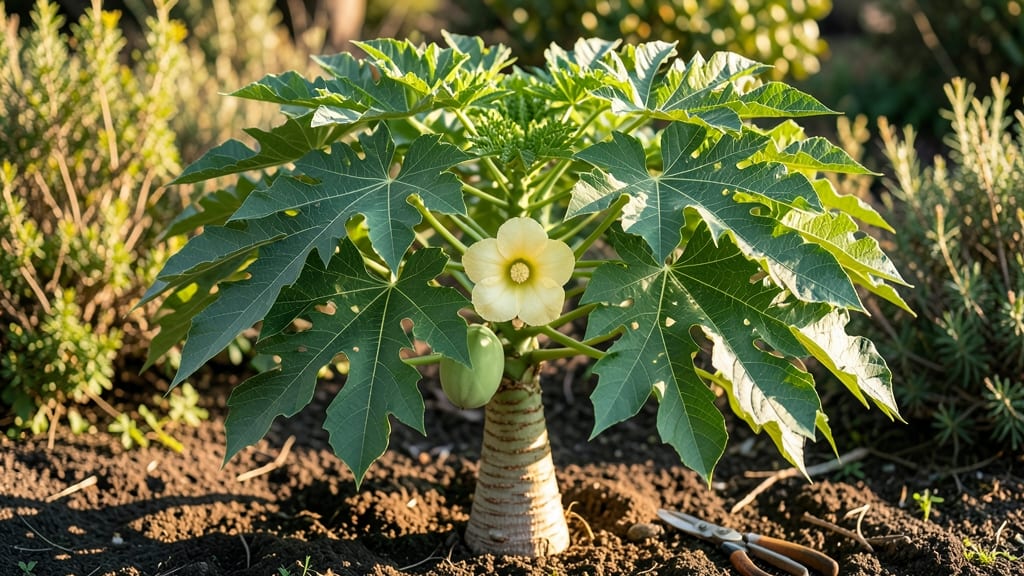
Your papaya plant’s hermaphrodite flowers are the secret to year-round fruit loads without needing separate male and female plants. 🌱 I’ve grown papayas in Florida’s heat and California’s coastal fog, and the difference between a plant with hermaphrodite flowers and one stuck with unisexual blooms is night and day—literally.
Those perfect flowers mean no pollinator dependency, no wasted energy on separate sexes, and a steady harvest when you want it.
The key to unlocking them lies in temperature control, plant age, and a few care tweaks most growers miss.
Papayas naturally produce unisexual flowers at first, but with the right conditions—like keeping daytime temps between 75-90°F and ensuring your plant gets enough phosphorus—they’ll start developing those self-pollinating hermaphrodite blooms within 3-6 months.
Prune strategically to encourage new growth, and fertilize with a balanced formula (10-10-10) every 4-6 weeks to keep the plant energized.
What you’ll end up with is a single plant that sets fruit continuously, no bees or wind required. Imagine plucking ripe papayas straight from the vine every 6-8 weeks, regardless of season.
The fruit stays sweeter, the yields stay consistent, and you skip the frustration of relying on pollinators—or worse, ending up with mostly male flowers and no harvest. This is how tropical growers in Hawaii and Puerto Rico do it year after year.
Here’s the catch: if your plant is under stress—whether from drought, overwatering, or nutrient deficiencies—it’ll cling to unisexual flowers. We’ll cover how to troubleshoot that, plus how to tell the difference between a hermaphrodite bloom and a regular one, so you never waste another season guessing.
Let’s get those flowers producing!
📚 In This Guide
- What you need
- Instructions
- Tips and common mistakes
- Wrapping up and next steps
What you need
- ● Papaya Seeds: 3–5 hermaphrodite papaya seeds (e.g., Carica papaya ‘Solo’ or ‘Tainong No. 1’—check seed packets for hermaphrodite labels).
- ● Growing Containers or Soil: Containers: 5–10 gallon pots with drainage holes (1 per seedling).
- ● In-Ground: Well-draining, slightly acidic soil (pH 6.0–6.5). Add compost or coconut coir for fertility.
- ● Growth Medium: 1 part peat moss or coco coir + 1 part perlite (for containers).
- ● Fertilizer: Balanced liquid fertilizer (e.g., 10-10-10 NPK) or organic options like worm castings or fish emulsion.
- ● Watering Can or Hose: With a gentle spray nozzle for hydration.
- ● Pruning Shears: Sharp, sterilized shears for trimming excess foliage or flowers.
- ○ Gloves & Sunscreen: Papaya plants can be thorny (optional but helpful!).
- ● Grow Lights: LED bulbs (12–16 hrs/day) for indoor setups.
- ● Humidity Dome: Clear plastic cover to retain moisture during germination.
- ● Pollination Aid: Small paintbrush or cotton swab to manually transfer pollen (if needed).
- ● Mulch: Straw or wood chips to retain soil moisture and regulate temperature.
- ● Trellis or Stakes: For larger varieties to support vines (1–2 ft tall).
How to cultivate papaya hermaphrodite flowers for self-pollinating fruit
This is the secret to reliable papaya harvests—no bees, no cross-pollination headaches, just steady fruit from a single plant.
🌱 Step 1: Select and Prepare a Disease-Free Seedling
Start with a true hermaphrodite variety like 'Solo' or 'Tainong No. 1', available from tropical nurseries. These plants develop both male and female flowers on the same stem, eliminating the need for multiple plants. I always inspect seedlings for yellowing leaves or stem lesions—these are early signs of papaya ring spot virus, which spreads like wildfire in humid conditions.
Use a sterile potting mix (not garden soil) in a 5-gallon container with drainage holes. Papaya roots are sensitive to waterlogging, and soggy soil invites root rot. Fill the container to 2 inches below the rim, leaving room for mulch. Tap the pot gently to settle the mix without compacting it—you want a fluffy medium that encourages root spread.
☀️ Step 2: Establish Ideal Light and Temperature Conditions
Papayas demand full sun exposure—at least 8-10 hours daily—to trigger flowering. In cooler climates, supplement with a high-intensity grow light positioned 12-18 inches above the plant. Without sufficient light, stems elongate and leaves pale, signaling the plant is stretching toward any available photons. I test light sufficiency by watching for dark green, glossy leaves—a sure sign the plant is photosynthesizing optimally.
Maintain temperatures between 75-90°F during the day and no lower than 60°F at night. Papayas are tropical and won’t tolerate frost or even light chills. If your evenings dip below 65°F, use a space heater or move the plant indoors near a sunny window. Cold stress causes flower buds to drop before opening, wasting your investment in a hermaphrodite variety.
💧 Step 3: Water Deeply and Fertilize for Flower Production
Water the plant deeply every 2-3 days, allowing the top 2 inches of soil to dry between waterings. Overhead watering can spread fungal spores, so I use a drip irrigation system or water at the base with a gentle stream. Watch for wilting leaves in the afternoon—this is your cue to water immediately, as papayas wilt quickly when thirsty but recover just as fast.
Feed the plant with a balanced 10-10-10 fertilizer every 4-6 weeks once flowering begins. I switch to a low-nitrogen, high-phosphorus formula (5-10-10) during bloom to encourage fruit set. Apply fertilizer only when the soil is slightly moist—dry soil burns roots, while soggy soil dilutes nutrients. You’ll know fertilization is working when new leaves emerge deep green and slightly cupped at the edges.
✂️ Step 4: Hand-Pollinate Flowers for Maximum Fruit Set
Hermaphrodite flowers open in the morning, revealing bright yellow petals and a central column. Use a soft-bristle paintbrush to gently transfer pollen from the male anthers (top of the flower) to the female stigma (the swollen base). I pollinate three flowers per cluster to ensure at least one fruit develops—papayas are prone to dropping buds if overloaded. Work in the early morning when flowers are freshest and humidity is lowest, reducing the risk of fungal infection.
Remove any small, misshapen fruits that develop after pollination to redirect the plant’s energy into fewer, larger fruits. I leave one fruit per cluster, pruning the rest with clean, sharp scissors to avoid tearing the stem. This practice prevents the plant from becoming overburdened, which can lead to blossom end rot or stunted growth. Within 2-3 weeks, you’ll see the fruit swell and change color—a sure sign your pollination worked.
🌿 Step 5: Monitor and Adjust for Year-Round Production
Papayas flower continuously in ideal conditions, so prune spent flowers regularly to maintain energy flow. I remove wilted blooms and small fruits every 7-10 days, using sterilized pruners to prevent disease spread. This keeps the plant productive and encourages new flower clusters to form. Watch for yellowing leaves on lower branches—this often signals overcrowding or nutrient deficiency, both of which can be corrected with thinning and a balanced fertilizer boost.
Rotate the plant quarter-turn weekly to ensure even light exposure on all sides. Uneven growth leads to lopsided canopies and reduced fruit yield. In winter months, supplement with a grow light if natural light drops below 6 hours daily. With consistent care, a single hermaphrodite papaya can produce 4-6 fruits per year, each weighing 1-2 pounds—enough for fresh eating, smoothies, or sharing with neighbors.
Tips & tricks for perfect papaya hermaphrodite flower cultivation
Real talk: Growing papaya flowers that reliably produce fruit takes more than just sunlight and water—it's about understanding the plant's delicate balance. Here's what nobody tells you about keeping your hermaphrodite papaya thriving.
Seedling Selection: When choosing your 'Solo' or 'Tainong No. 1' seedling, look beyond just the leaves. Tap the stem gently—it should feel firm, not hollow or mushy. I've learned this the hard way after ruining three batches from compromised seedlings. The root system should be white and fibrous, not brown or slimy, which indicates disease or poor storage conditions.
Light Optimization: Those critical 8-10 hours of sunlight aren't just about duration—they're about quality. If your papaya starts developing long, spindly stems with pale leaves, it's stretching toward light. This happens when grow lights are positioned too far away (over 18 inches) or when natural light is blocked by nearby structures. I position my high-intensity grow light at exactly 15 inches above the plant and adjust as it grows—this creates the dense, bushy growth that supports heavy fruit loads.
Temperature Management: The 75-90°F daytime range is non-negotiable, but what happens when your evenings dip below 65°F? Cold stress is the silent killer of papaya flowers. I've found that placing a small space heater near the plant (but not directly on it) for just 2-3 hours in the evening can make all the difference. The key is maintaining that 60°F minimum—any lower and you risk flower bud drop before they even open.
Pollination Strategy: That 2-3 week window after pollination is when most growers lose their fruit. The secret is in the timing—pollinate three flowers per cluster in the morning when humidity is lowest. I've noticed that flowers pollinated after 10 AM often fail to set fruit, likely due to increasing humidity. Also, use a clean paintbrush for each flower cluster to prevent cross-contamination of any potential pathogens that might be present.
Pro Tips for Papaya Hermaphrodite Flower
- Real talk: Growing papaya flowers that reliably produce fruit takes more than just sunlight and water—it's about understanding the plant's delicate balance.
- Seedling Selection: When choosing your 'Solo' or 'Tainong No.
- Light Optimization: Those critical 8-10 hours of sunlight aren't just about duration—they're about quality.
Frequently asked questions
Got questions about papaya hermaphrodite flowers? You’re not alone!
Here are answers to the most common queries—from pollination tricks to troubleshooting—so you can maximize your fruit harvest with ease.
What makes a papaya flower hermaphrodite, and why does it matter?
A hermaphrodite papaya flower has both male and female reproductive parts in one bloom, meaning it can pollinate itself. This is a game-changer for growers because it eliminates the need for separate male and female plants, simplifying cultivation and ensuring fruit production even in isolated settings. Plus, it’s more reliable for year-round harvests!
How long does it take for a hermaphrodite papaya flower to produce fruit after blooming?
After successful pollination (which can happen within hours of opening!), expect fruit to develop in 3–4 months. Factors like temperature, sunlight, and plant health can tweak this timeline—keep flowers shaded during peak sun to prevent wilting. Patience pays off with juicy, ripe papayas!
Can I force a hermaphrodite flower to pollinate if no bees are around?
Use a soft paintbrush or cotton swab to gently transfer pollen from the flower’s male stamens to its pistil (the center “tube”). Do this in the morning when flowers are fresh. For extra insurance, lightly tap the flower—sometimes vibration helps. Pro tip: Repeat every 2–3 days for 3–5 days post-bloom to boost success.
Why did my hermaphrodite papaya flower drop before fruiting?
Flower drop is often due to stress—check for these culprits:
- Under/overwatering: Keep soil moist but well-drained.
- Extreme heat/cold: Papayas thrive in 75–90°F (24–32°C). Use shade cloth if temps spike.
- Pests/disease: Inspect for aphids or fungal spots; treat with neem oil if needed.
- Nutrient deficiency: Feed with a balanced fertilizer (high in potassium) every 4–6 weeks.
Are there any alternatives if my papaya plant only produces hermaphrodite flowers?
Not to worry—hermaphrodite flowers are self-sufficient, but if you want variety, you can:
- Plant a separate male papaya nearby to cross-pollinate (though it’s unnecessary for fruit production).
- Graft hermaphrodite scions onto a rootstock for stronger growth (advanced technique!).
- Choose a different papaya variety like ‘Solo’ or ‘Tainong No. 1,’ bred for hermaphrodite dominance.
Wrapping up and next steps
The papaya hermaphrodite flower unlocks a world of effortless, bountiful harvests—no bees, no stress, just year-round fruit from a single plant! 🌱 By mastering pollination techniques and providing optimal care, you’re not just growing fruit—you’re cultivating self-sufficient abundance. Ready to turn your garden into a tropical treasure trove?
Your next step? Plant that first seedling—or share this guide with a fellow gardening enthusiast to multiply the magic! 🌟 Whether you’re a beginner or a seasoned grower, the key to success starts with your materials list and a little patience. Happy growing!