
Flowers
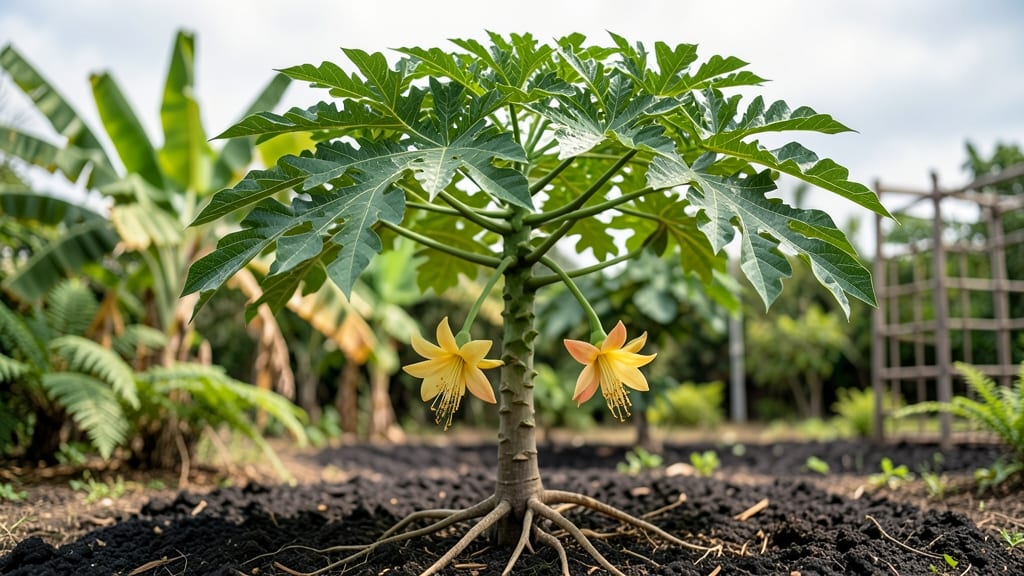
Papaya tree flowers are the secret to your tropical harvest—male, female, and hermaphrodite blooms all play a role in fruit production. 🌺 I’ve learned that the difference between a handful of papayas and a tree heavy with fruit comes down to understanding these flowers and a few key pruning tricks that keep them blooming year-round.
The first step is learning to spot the difference: female flowers grow near the stem with a tiny papaya forming below, while males have no fruit and grow on long stalks. Hermaphrodites—self-pollinating flowers—are the holy grail for indoor growers, producing fruit without needing bees or hand-pollination.
Once you can tell them apart, you’ll prune with purpose, encouraging more female blooms and keeping the tree productive.
With the right conditions—warmth, humidity, and bright light—your papaya tree will reward you with vibrant, fragrant flowers that turn into sweet fruit in just a few months. Hand-pollination is easy once you know the technique, and a little pruning here and there keeps the tree blooming continuously, even indoors.
The payoff? A steady supply of papayas all year long.
Whether you’re growing in a greenhouse, a sunny patio, or a bright kitchen window, these tricks adapt to your setup. The key is consistency—watering, light, and pruning all work together to turn those delicate flowers into a bountiful harvest. Let’s get those blooms producing!
📚 In This Guide
- What you need
- Instructions
- Tips and common mistakes
- Wrapping up and next steps
What you need
- ● Papaya tree seeds or saplings: Choose disease-resistant varieties like Carica papaya ‘Solo’ or ‘SunUp’ for optimal flowering.
- ● Well-draining potting mix: 50% coconut coir, 30% perlite, and 20% compost (sterilized). 10-gallon bag for 1-2 saplings.
- ● Large containers (15–20 gallons): With drainage holes. 2–3 containers if growing multiple trees.
- ● Slow-release fertilizer (10-10-10): 1 lb per tree at planting; organic options like fish emulsion work too!
- ● Pruning shears: Bypass-type, sterilized with rubbing alcohol to prevent disease.
- ● Grow lights or sunny spot: 6+ hours of direct sunlight daily (or LED grow lights for indoor setups).
- ● Watering can with a rose nozzle: For gentle, deep hydration.
- ● pH test kit: Ideal soil pH: 6.0–7.0 (adjust with lime or sulfur if needed).
- ● Humidity dome or tray: Mimics tropical conditions for faster germination.
- ● Rooting hormone: Speeds up propagation if grafting or taking cuttings.
- ● Automatic timer for grow lights: Ensures consistent light cycles.
- ● Handheld magnifier: Helps spot early flower buds or pests.
- ● Compost tea: Boosts microbial activity for healthier blooms.
How to encourage papaya tree flowers year-round
Here's how to coax vibrant blooms from your papaya tree with simple pruning and care.
🌱 Step 1: Ensure Proper Light and Temperature Conditions
Papaya trees need full sun exposure—at least 6-8 hours daily—to trigger flowering. Place your tree near a south-facing window or under grow lights if indoors. The ideal temperature range for blooming is 70-85°F. If your home runs cooler, a heat mat under the pot can help maintain root warmth.
Watch for yellowing leaves—this signals insufficient light. Move the tree closer to the window immediately. Papaya trees also need high humidity (50-70%). Mist the leaves daily or use a humidifier near the plant. You'll know humidity is right when new leaves appear glossy and upright rather than curling.
☀️ Step 2: Prune for Airflow and Light Penetration
Prune one-third of the oldest leaves every 4-6 weeks to encourage new growth and flowering. Use sterilized pruning shears to cut just above a leaf node. This prevents disease and promotes lateral branching, where flowers typically form. Avoid heavy pruning—it stresses the tree and delays blooming.
Focus on removing crowded or yellowing leaves first. You'll see small buds forming along the new stems within 2-3 weeks of pruning. If your tree has long, bare stems, it needs more light. Move it to a brighter spot or supplement with grow lights for 12-14 hours daily.
💧 Step 3: Water and Fertilize for Blooming Success
Water the tree deeply once a week, letting the top 2 inches of soil dry out between waterings. Overwatering causes root rot, which kills flowers before they open. Use room-temperature water to avoid shocking the roots. You'll know the soil is moist enough when it feels light but not soggy.
Feed the tree with a balanced liquid fertilizer (10-10-10) every 4 weeks during spring and summer. In fall and winter, switch to a low-nitrogen, high-phosphorus fertilizer to encourage flowering. Stop fertilizing 2 months before the first frost if growing outdoors. You'll see small flower buds forming within 3-4 weeks of proper fertilization.
✂️ Step 4: Remove Old Flowers to Stimulate New Blooms
Deadhead wilted or spent flowers by pinching them off at the base with your fingers. This redirects the tree’s energy toward producing new buds instead of seed development. Do this every 2 weeks during the blooming season. Avoid cutting stems—it can damage the tree and reduce future flowers.
If your tree produces mostly male flowers, it may need more direct sunlight or a warmer environment. Male flowers appear first and look like small clusters, while female flowers have a tiny papaya fruit forming at the base. Prune back excessive male flowers to balance growth. You'll see female flowers forming within 1-2 weeks of adjusting care.
Tips & tricks for encouraging papaya tree flowers
Real talk: Getting your papaya tree to bloom reliably takes patience and precision—but these tricks will double your chances of success.
Light and Temperature Optimization: The 6-8 hours of sunlight in Step 1 isn't just about quantity—it's about quality. Position your tree where it gets morning sun (gentler light) and afternoon shade if you're in a hot climate. I've seen trees in 80°F+ heat stop blooming until I moved them to a spot with filtered afternoon light. For indoor growers, rotate the pot weekly so all sides get even light exposure.
Pruning Precision: When you prune one-third of the oldest leaves every 4-6 weeks, focus on leaves that are at least 6 inches long. Smaller leaves contain more nutrients the tree needs for flowering. I learned this the hard way after over-pruning and watching my tree take months to recover. Also, always prune just above a leaf node—this is where new growth (and flowers) will emerge.
Fertilizer Timing: The switch to low-nitrogen, high-phosphorus fertilizer in fall and winter is crucial for flowering, but timing matters. I've found that applying this fertilizer right after the first cool night (around 60°F) signals the tree to prepare for blooming. Too early, and the tree may still focus on leaf growth. Too late, and you'll miss the flowering window entirely.
Deadheading Strategy: While Step 4 says to deadhead every 2 weeks, I've had better results checking weekly during peak blooming season. Male flowers often appear first and can overwhelm the tree—pinch these back aggressively to encourage female flowers. Look for tiny fruit bumps at the base of buds; those are your female flowers waiting to happen.
Pro Tips for Papaya Tree Flowers
- Real talk: Getting your papaya tree to bloom reliably takes patience and precision—but these tricks will double your chances of success.
- Light and Temperature Optimization: The 6-8 hours of sunlight in Step 1 isn't just about quantity—it's about quality.
- Pruning Precision: When you prune one-third of the oldest leaves every 4-6 weeks, focus on leaves that are at least 6 inches long.
Frequently asked questions
Got questions about papaya tree flowers?
Here are answers to the most common ones—from timing to troubleshooting—so you can grow blooms like a pro!
How long does it take for a papaya tree to flower after planting?
A healthy papaya tree typically starts flowering 12–18 months after planting, depending on climate and care. In tropical regions, expect blooms sooner (6–12 months), while cooler zones may take longer. Patience is key—consistent sunlight (6+ hours/day) and warm soil (70°F+) speed up the process!
Why aren’t my papaya tree flowers turning into fruit?
Papaya trees are dioecious (male and female flowers on separate plants), so you’ll need both for fruit. If you have only one tree, check for:
- Temperature stress (below 50°F or above 100°F stunts pollination).
- Lack of pollinators (hand-pollinate with a soft brush if bees are scarce).
- Over/under-watering (drooping flowers = thirsty roots!).
Can I prune papaya tree flowers to encourage more blooms?
Yes! Prune spent flowers and weak branches (but avoid cutting more than 20% of the plant at once). Focus on:
- Removing yellowing or diseased leaves to redirect energy.
- Trimming overcrowded growth near the base for airflow.
- Opening the canopy to maximize sunlight (flowers thrive in bright light!).
Can I grow papaya flowers indoors for decoration?
Papaya trees are tropical plants and struggle indoors long-term, but you can try:
- A south-facing window + grow lights (14+ hours/day).
- Keeping soil warm (70–85°F) with a heat mat.
- Using a large pot (15+ gallons) with drainage.
How do I hand-pollinate papaya flowers if there are no bees?
Hand-pollination is easy! Use a soft paintbrush or cotton swab to:
- Gently brush the male flower’s stamens (yellow pollen-covered parts).
- Transfer pollen to the female flower’s stigma (the bulbous base).
- Repeat 2–3 times daily for 3–5 days to ensure fertilization.
Wrapping up and next steps
Growing papaya tree flowers is a rewarding journey that brings vibrant blooms and delicious fruit year-round! With the right pruning techniques, proper care, and a little patience, you’ll enjoy a thriving papaya tree that keeps gifting you stunning flowers and sweet rewards. 🌺
Now that you’re armed with expert tips, take the next step—start pruning your tree today and watch those beautiful blooms flourish! Share your progress with fellow gardeners or explore more tropical plants to expand your green space. Happy gardening! 🌱