
Flowers
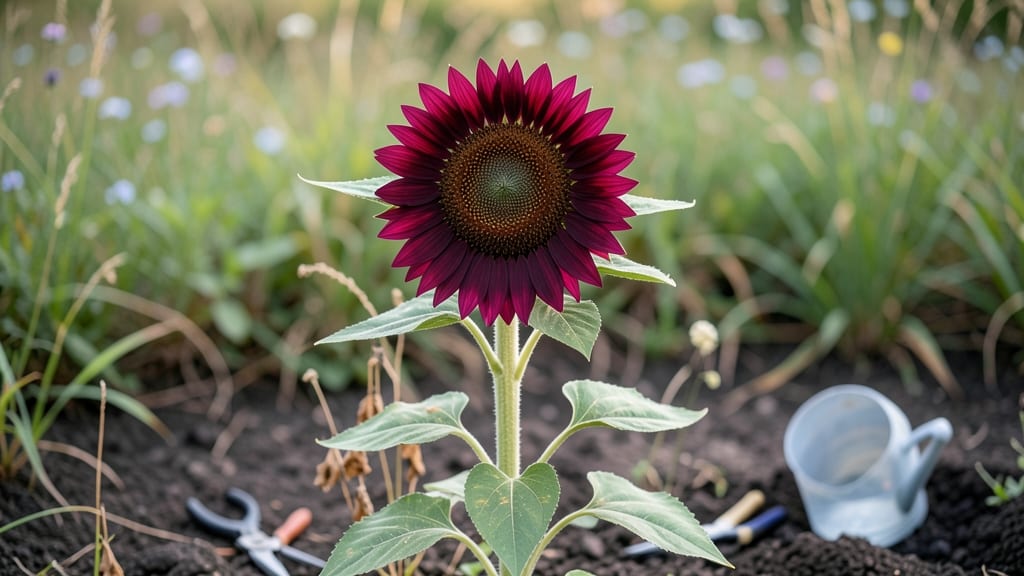
Purple sunflower colors bring drama to gardens that white or yellow blooms can’t match. 🌻 I’ll never forget the first time I planted them—they turned my summer border into a living painting. These aren’t your grandma’s sunflowers; they’re bold, velvety, and impossible to ignore.
They pair beautifully with dusty pinks, deep blues, and even chartreuse foliage for high-contrast drama. In containers, they steal the show alongside silver foliage plants or black mondo grass. The key? Plant them where they’ll get full sun—their petals deepen into rich plum hues when they bask in warmth.
You’ll love how they hold their color all season, fading only slightly in the heat. Cut a few for vases, and the purple-petal centers add unexpected depth to bouquets. These sunflowers aren’t just pretty—they’re the statement piece your garden’s been missing.
Works in cottage gardens, modern borders, or even as a single dramatic accent. Let’s make your space unforgettable with these purple powerhouses—here’s how to style them like a pro.
📚 In This Guide
- What you need
- Instructions
- Tips and common mistakes
- Wrapping up and next steps
What you need
- ● Purple sunflower seeds: Choose heirloom varieties like Moulin Rouge or Purple Sunflower (50–100 seeds, depending on desired quantity).
- ● Well-draining potting mix: 5–10 lbs (for containers) or enrich garden soil with compost (2–3 lbs per sq. ft.).
- ● Containers or garden bed: Containers: 12–18" deep pots (1–2 plants per 12" pot).
- ● Garden bed: Full sun (6+ hours/day) and loose, fertile soil.
- ● Watering can or hose: With a gentle spray nozzle for seedlings.
- ○ Fertilizer (optional): Balanced 10-10-10 or slow-release granules (1 tbsp per plant).
- ● Gloves & knee pads: For easy planting and comfort.
- ● Trowel or small shovel: For digging soil and transplanting.
- ● Plant markers: To label varieties (e.g., popsicle sticks + paint).
- ○ Mulch (optional): Straw or shredded leaves to retain moisture.
- ● Pruning shears: For deadheading spent blooms (encourages regrowth!).
- ● 🌡️ Temperature: Start seeds indoors 4–6 weeks before last frost (60–70°F ideal).
- ● ✨ Spacing: Plant seeds 1" deep, 12–18" apart (containers) or 18–24" apart (garden).
- ● 💧 Watering: Keep soil consistently moist but not soggy—purple sunflowers love hydration!
How to cultivate striking purple sunflower varieties
Here’s how to grow sunflowers with deep, rich purple hues that stand out in any garden.
🌱 Step 1: Choose the Right Purple Sunflower Varieties
Not all sunflowers turn purple—look for cultivars like ‘Moulin Rouge,’ ‘Purple Sunbird,’ or ‘Teddy Bear’ for true purple blooms. These varieties produce deep, velvety petals that range from lavender to nearly black. I always check seed packets for color consistency, as some may fade in full sun.
If you’re working with limited space, dwarf varieties like ‘Purple Pincushion’ stay compact at 2-3 feet tall, while standard types like ‘Purple Sunbird’ can reach 6 feet or more. Plant taller varieties toward the back of beds or along fences to create a dramatic vertical effect. The key is selecting seeds with stable purple pigmentation—avoid hybrids that may revert to yellow or orange.
☀️ Step 2: Plant in Full Sun with Well-Draining Soil
Purple sunflowers thrive in 6-8 hours of direct sunlight daily, so pick the sunniest spot in your garden. They tolerate heat well but need fertile, well-draining soil to prevent petal discoloration. Amend heavy clay with 2-3 inches of compost before planting to improve drainage and nutrient availability.
Test your soil’s pH—purple sunflowers prefer a slightly acidic to neutral range (6.0-7.0). If your soil is alkaline, mix in peat moss or sulfur to lower the pH gradually. Overly alkaline conditions can cause petals to lose their vibrancy, turning dull or streaked. Water the soil thoroughly before planting to help roots establish quickly.
💧 Step 3: Water Deeply and Support Tall Varieties
Water sunflowers at the base once a week, providing 1-1.5 gallons per plant during dry spells. Avoid wetting the foliage to prevent fungal diseases like powdery mildew, which can discolor petals. I use a soaker hose for deep, even moisture—this encourages strong stems and prevents blossoms from splitting.
Tall varieties need staking or cages to prevent toppling in wind or rain. Install 5-6 foot stakes at planting and tie stems loosely with soft fabric strips as they grow. Purple sunflowers have heavier blooms than yellow types, so extra support ensures they don’t flop mid-season. Watch for first true leaves to appear in 7-10 days—this signals successful germination and the need for consistent moisture.
✂️ Step 4: Deadhead and Extend the Bloom Season
Remove spent blooms by cutting the stem 2-3 inches below the flower head to encourage more buds to form. This keeps plants looking tidy and prolongs flowering for 4-6 weeks beyond the initial bloom. I deadhead in the morning when dew is present—this reduces stress on the plant and prevents pests from gathering on dried petals.
For a continuous display, stagger plantings by 2-3 weeks. This ensures some flowers are opening while others are still maturing. Purple sunflowers attract pollinators like bees and butterflies, so avoid over-pruning—leave some blooms intact to support local ecosystems. If you notice petals wilting prematurely, check for aphids or spider mites, which thrive in dry conditions.
🌿 Step 5: Harvest Seeds for Next Year’s Garden
Leave a few flower heads on the plant until they turn brown and dry. Once the back of the head feels papery, cut the head off and place it in a paper bag. Shake the bag daily to release seeds—this prevents rodents from stealing them. Store seeds in a cool, dry place until spring planting.
Purple sunflower seeds retain their color better than hybrid varieties, so save seeds from the most vibrant blooms for next year. If you’re growing for cut flowers, harvest stems when 75% of petals are open—this captures their peak color and fragrance. Cut at a 45-degree angle just above a leaf node to encourage water uptake and prolong vase life.
Tips & tricks for cultivating vibrant purple sunflowers
Here's what I wish I knew before planting my first batch of purple sunflowers—these tricks make all the difference for those stunning blooms.
Variety Verification: Some seed packets label varieties as "purple" but produce more lavender or pink hues. To guarantee true deep purple, cross-reference with trusted seed suppliers or gardening forums. I once planted a batch labeled "purple" that turned out a disappointing mauve—always verify with photos or reviews from other growers. The difference between a rich plum and a pale pink is worth the extra research.
Soil pH Precision: While the ideal range is 6.0-7.0, I've found that purple sunflowers actually thrive slightly more acidic at 5.8-6.2. Test your soil before planting, and if you need to adjust, use elemental sulfur for gradual pH reduction rather than quick-acting amendments. The difference in petal intensity is noticeable—my first attempt with neutral soil produced duller blooms. A simple soil test kit costs less than $10 and saves hours of frustration.
Staking Strategy: For varieties over 5 feet tall, use two stakes per plant rather than one. Install them at planting time, positioning them 3-4 inches from the stem on opposite sides. This creates a more stable base that prevents leaning in windy conditions. I learned this the hard way when a storm snapped my single-staked 'Purple Sunbird' plants—now I double-stake everything over 4 feet. The extra effort prevents heartbreak mid-season.
Deadheading Timing: The 2-3 inch cut below the flower head is crucial—cutting too close can damage the stem's vascular system, while cutting too high leaves unsightly stubs. I now use clean pruning shears and make the cut at a slight angle just above a leaf node. This technique also prevents bacterial infections that can spread through open wounds. Morning deadheading minimizes stress on the plant and keeps your garden looking pristine all season.
Pro Tips for Purple Sunflower Colors
- Here's what I wish I knew before planting my first batch of purple sunflowers—these tricks make all the difference for those stunning blooms.
- Variety Verification: Some seed packets label varieties as "purple" but produce more lavender or pink hues.
- Soil pH Precision: While the ideal range is 6.0-7.0, I've found that purple sunflowers actually thrive slightly more acidic at 5.8-6.2.
Frequently asked questions
Got questions about those stunning purple sunflower colors? You’re not alone! Here are some of the most common queries—and their answers—to help you bring bold blooms to life, whether you're gardening, crafting, or just admiring their vibrancy.
Why do purple sunflowers sometimes look more lavender or pink?
Purple sunflower hues can shift based on genetics, sunlight exposure, and soil pH. Lavender or pinkish tones often appear in hybrid varieties (like ‘Moulin Rouge’), while deeper purples thrive in cooler climates or acidic soil. For consistent color, choose named cultivars and monitor growing conditions!
When is the best time to plant purple sunflowers for vibrant blooms?
Plant seeds 2–3 weeks after your last frost (spring) for summer blooms, or 60–90 days before the first frost (fall) for late-season color. Purple varieties often need full sun (6+ hours/day)—plant in well-draining soil and space them 12–18 inches apart to avoid overcrowding, which can dull their intensity.
Can I dye fabrics or paper with purple sunflower petals?
Sunflower petals (especially purple ones) yield a soft mauve or lilac dye. Steep fresh or dried petals in hot water with a mordant (like vinegar or alum) for 1–2 hours. For deeper hues, simmer longer or add a pinch of turmeric. Pro tip: Wear gloves—the juice stains!
Are purple sunflowers good for pollinators like bees and butterflies?
Yes! While not as bee-magnetizing as yellow sunflowers, purple varieties still attract butterflies, bees, and beneficial insects. Their tall stems also provide perches for birds. For maximum pollinator appeal, plant them alongside native wildflowers or herbs like dill and fennel.
Why are my purple sunflowers wilting or turning yellow?
Common culprits include:
- Underwatering: Sunflowers need 1–2 inches of water weekly (more in heatwaves). Check soil moisture—it should be dry 1–2 inches down.
- Overcrowding: Too many plants competing for nutrients can stress roots. Thin seedlings to 12–18 inches apart.
- Pests: Aphids or powdery mildew (white fungus) can weaken stems. Spray with neem oil or insecticidal soap if needed.
- Nutrient deficiency: Yellowing leaves? Add a balanced fertilizer (10-10-10) or compost.
Give them space, water, and a little TLC—they’ll bounce back!
Wrapping up and next steps
Incorporating purple sunflower colors into your space or garden is a vibrant way to add drama and depth to any setting. Whether you’re drawn to their lush lavender hues or the bold royal purple shades, these sunflowers bring unmatched energy and charm. 🌸
Ready to make your space bloom with confidence? Start by selecting your favorite purple sunflower variety—whether for containers, borders, or bold statement pieces—and let nature’s boldest colors take center stage! 🌻✨