
Flowers
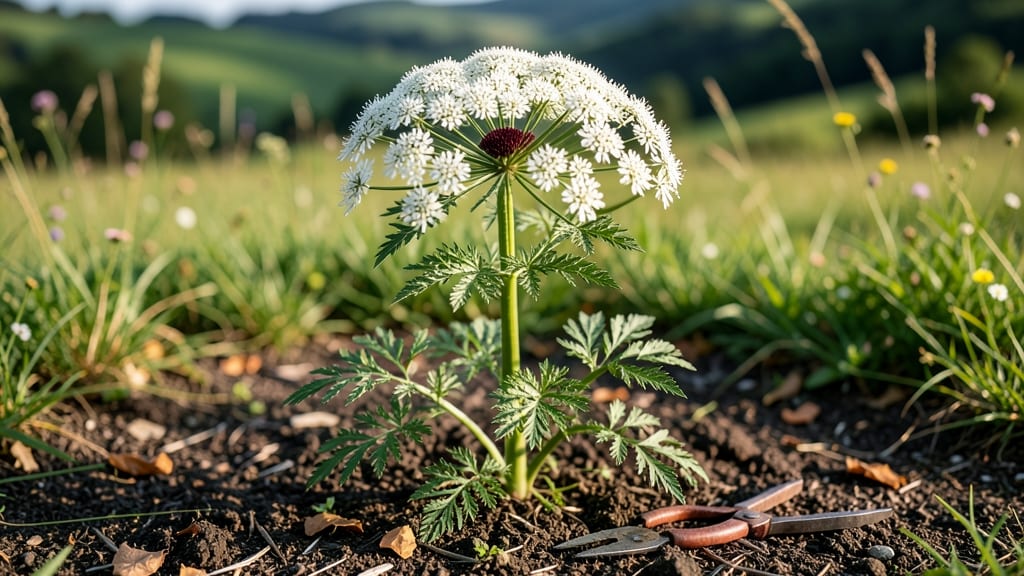
The Queen Anne's lace flower transforms any garden into a dreamy, old-world meadow with almost no effort. 🌿 I planted mine last spring along the fence line, and now it spreads effortlessly, creating a sea of delicate white blooms that hum with bees by midsummer.
The secret lies in its adaptability—it thrives where other wildflowers struggle, making it perfect for beginners.
You only need three things to get started: a sunny spot (at least 6 hours of light daily), loose soil that drains well, and a sprinkle of patience. This hardy perennial handles poor soil better than many annuals, and once established, it practically takes care of itself.
Water lightly after planting, then let nature do the work—it’s drought-tolerant once roots settle in.
By late summer, you’ll have a romantic, low-maintenance meadow that blooms longer than most flowers. The lacy white umbels contrast beautifully with purple coneflowers or golden black-eyed Susans, and the feathery foliage adds texture year-round. Best of all? It self-seeds, so your meadow grows richer each year without replanting.
Works in cottage gardens, pollinator patches, or even as a border. Here’s how to make it happen—no green thumb required.
📚 In This Guide
- What you need
- Instructions
- Tips and common mistakes
- Wrapping up and next steps
What you need
- ● Queen Anne’s lace seeds – 1-2 lbs (enough for ~1,000 sq. ft.). Choose wildflower seed mixes with at least 10% Queen Anne’s lace or buy pure seeds for a dominant display.
- ● Well-draining soil – Native, sandy, or loamy soil works best. If your soil is heavy clay, amend with compost or sand.
- ● Sunlight access – A full-sun location (6+ hours/day) is critical for these sun-loving wildflowers.
- ● Water source – A hose or drip irrigation system for initial watering (1-2 inches per week).
- ● Garden rake – For loosening soil and removing debris.
- ○ Broadcast spreader (optional but helpful) – Ensures even seed distribution.
- ● Garden gloves – Protects hands from prickly stems and thistles.
- ○ Mulch or straw (optional) – Helps retain moisture and suppress weeds.
- ○ String & stakes (optional) – Marks seed rows if precision planting.
- ● 🌡️ Best planting time: Early spring (March-April) or late summer (August-September) for fall blooms.
- ● ✨ Native companion plants: Pair with yarrow, black-eyed Susans, or wild bergamot for a thriving meadow.
- ● 🚫 Avoid: Over-fertilizing—Queen Anne’s lace thrives in low-nutrient soil!
Step-by-step guide to establishing a Queen Anne's lace meadow
Here's how to create a naturalistic meadow where this elegant wildflower thrives effortlessly.
🌱 Step 1: Prepare the Site for Wildflower Success
Choose a sunny location with 6-8 hours of direct sunlight daily. Queen Anne's lace tolerates poor soil but grows most vigorously in well-draining, slightly rocky ground. I always start by removing existing grass—either with a sod cutter or by applying cardboard and mulch to smother it for 4-6 weeks before planting.
Test your soil's drainage by digging a 6-inch deep hole and filling it with water. If it drains completely in under an hour, your site is ready. If water pools, amend with 2-3 inches of coarse sand mixed into the top 6 inches of soil. Queen Anne's lace despises soggy roots, so this step prevents future rot.
🌿 Step 2: Plant Seeds at the Right Time and Depth
Sow seeds in early spring or late summer when soil temperatures are 50-60°F. Scatter seeds thinly—Queen Anne's lace self-seeds readily, so you don't need dense coverage. I like to broadcast seeds by hand, then lightly rake them into the soil just enough to cover them with ¼ inch of topsoil. Press them gently but don't compact the soil too firmly.
Water immediately after planting, keeping the soil consistently moist but never soggy until germination. You'll see the first tiny leaves appear in 10-21 days, though they might take longer in cooler climates. Here's the thing—don't be tempted to thin seedlings. Queen Anne's lace grows best in loose colonies, and thinning actually reduces its naturalizing ability.
☀️ Step 3: Maintain Low-Intervention Care for Natural Spread
Once established, Queen Anne's lace requires minimal care. Water only during prolonged dry spells—this wildflower thrives on neglect once rooted. I recommend mowing the surrounding meadow area just once per year in late summer or early fall, cutting back to 4-6 inches to encourage new growth and prevent seed heads from becoming too heavy.
Watch for lace bugs or aphids, which occasionally target Queen Anne's lace. If you spot them, a strong spray of water usually dislodges them without chemicals. The real magic happens in the second year when plants spread via underground runners, creating lacy white clouds that dominate the meadow. Real talk: the first year might look sparse, but patience pays off with dramatic, low-maintenance blooms.
Tips & tricks for perfect Queen Anne's lace meadows
Creating a thriving Queen Anne's lace meadow doesn't require a green thumb—just a few strategic moves that make all the difference.
Location is Everything: That 6-8 hours of direct sunlight isn't just a suggestion—it's non-negotiable for these wildflowers. I've seen Queen Anne's lace struggle in partial shade, producing sparse blooms. If your site gets less than 6 hours, consider adding a reflective surface nearby, like a white fence or gravel path, to bounce extra light onto the area. The more sunlight, the more dramatic those lacy white clouds will become.
Soil Prep Secret: The 6-inch drainage test is your best friend here. If water pools, don't just add sand—mix in some perlite or pumice too. These amendments improve aeration while maintaining that slightly rocky texture Queen Anne's lace loves. I've found that adding a handful of crushed granite to the soil mix mimics the natural rocky meadows where this flower thrives, giving it that perfect growing environment.
Planting Precision: When covering seeds with just ¼ inch of topsoil, think "light dusting" rather than "blanketing." Use a fine mesh screen to sift soil gently over the seeds—this keeps them from being buried too deeply. I've learned this the hard way: seeds planted too deeply may never emerge, while those barely covered grow into robust plants. For larger areas, consider using a seed spreader with a fine setting to ensure even distribution without over-seeding.
Germination Patience: Those 10-21 days to germination can feel like forever, but resist the urge to check daily. Overwatering or disturbing the soil can prevent seeds from sprouting. Instead, set up a simple drip irrigation system on a timer for 10 minutes every other day—this keeps moisture consistent without creating soggy spots. The first true leaves will appear as delicate, fern-like shapes, signaling successful germination.
Pro Tips for Queen Anne'S Lace Flower
- Creating a thriving Queen Anne's lace meadow doesn't require a green thumb—just a few strategic moves that make all t...
- Location is Everything: That 6-8 hours of direct sunlight isn't just a suggestion—it's non-negotiable for these wildf...
- Soil Prep Secret: The 6-inch drainage test is your best friend here. If water pools, don't just add sand—mix in some ...
Frequently asked questions
Got questions about Queen Anne’s lace? We’ve got answers!
Whether you’re curious about its growth habits, uses, or how to spot it in the wild, this section covers the most common inquiries. Let’s dive in!
What does Queen Anne’s lace look like, and how can I identify it?
Queen Anne’s lace (Daucus carota) is easy to spot with its delicate, lacy white flower clusters (sometimes with a single dark red flower in the center). Its fern-like leaves and slender stems also help distinguish it from similar wildflowers. Look for it in meadows, roadsides, or open fields—especially in late spring to summer. Pro tip: Rub a leaf between your fingers—it smells like carrots (its edible cousin)!
How fast does Queen Anne’s lace grow, and when does it bloom?
This hardy wildflower grows quickly—often reaching 2–4 feet tall in one season. Blooms typically appear in late spring to early summer (May–July in most regions) and last for weeks. If you’re growing it from seed, expect flowers 60–90 days after planting. Note: It thrives in full sun and well-drained soil, so give it space and patience!
Is Queen Anne’s lace poisonous to pets or humans?
Generally, Queen Anne’s lace is non-toxic to humans and pets, but moderation is key. While its roots and seeds are edible (similar to carrots), large quantities may cause mild stomach upset. Warning: Avoid consuming it if you’re unsure about pesticides or local contaminants. Keep pets away if they’re prone to nibbling wild plants—better safe than sorry!
Can I grow Queen Anne’s lace in my garden, and does it spread aggressively?
Yes! It’s a great low-maintenance addition to wildflower gardens. While it self-seeds readily, it’s not invasive like some weeds. To control spread, deadhead spent blooms or trim stems before seeds mature. Bonus: It attracts pollinators like bees and butterflies—perfect for eco-friendly gardens!
What’s the difference between Queen Anne’s lace and poison hemlock?
Critical distinction:
Queen Anne’s lace is safe and smells like carrots, while poison hemlock (toxic!) has purplish stems, no scent, and grows much taller (up to 10 feet). Never consume any wild plant unless you’re 100% sure it’s edible. When in doubt, admire from afar!
Bonus Tip: How to harvest seeds for next year’s garden!
Let a few flower heads dry on the plant until they form pappus-like seed clusters (like dandelions). Gently rub them to release seeds, then store in a cool, dry place. Plant in fall for early spring blooms—or scatter them in meadows to support local wildlife!
Wrapping up and next steps
Queen Anne’s lace isn’t just a delicate wildflower—it’s a symbol of resilience and a gateway to transforming your space into a thriving meadow. With just a few simple steps, you can invite pollinators, add rustic charm, and connect with nature’s beauty. 🌿
Ready to take the next step? Start small—plant a few seeds in a sunny corner, then expand as you see your meadow grow.
Whether you’re a gardening newbie or a seasoned green thumb, this wildflower is your perfect partner in creating a low-maintenance, high-impact landscape. Grab your tools and let nature do the rest! 🌸