
Flowers
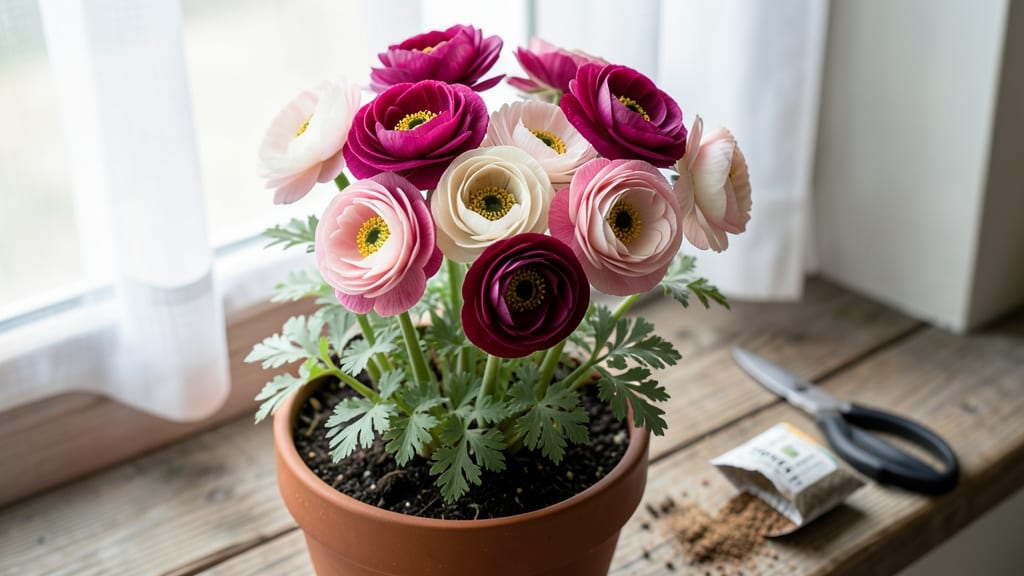
This ranunculus cut flower—velvety and long-lasting in vases—begins with the perfect growing conditions, and I’ve mastered the secrets to coaxing their best blooms. These layered blooms feel like luxury cut flowers, but they’re surprisingly easy to grow at home with the proper timing and care.
The secret lies in their delicate roots and how you handle them from bulb to vase.
You’ll need cool-season timing, well-draining soil, and a sunny spot to coax those papery petals into bloom. Plant bulbs in late summer for spring flowers or early fall for winter harvests, keeping them moist but never soggy.
A balanced fertilizer every 4-6 weeks ensures strong stems and vibrant colors, while deadheading spent blooms encourages more flowers. The payoff? Stems that hold their shape in water for two glorious weeks—longer than most cut flowers.
Harvesting at the right moment—when buds are just opening—guarantees the longest vase life. Snip stems at an angle, strip the lower leaves, and place them in lukewarm water with a floral preservative.
Within days, you’ll have bouquets that look like they came from a high-end florist, not your backyard. The best part? You’ll save money and enjoy fresh, fragrant blooms all season.
Whether you’re growing for your own enjoyment or to sell at local markets, ranunculus cut flowers deliver effortless elegance. They adapt well to containers or garden beds, and their unique layered petals make every arrangement stand out.
Once you master the basics, you can experiment with colors and varieties—just remember, patience with watering and timing pays off in stunning, long-lasting blooms.
📚 In This Guide
- What you need
- Instructions
- Tips and common mistakes
- Wrapping up and next steps
What you need
- ● Fresh ranunculus cut flowers: 10–25 stems (depending on vase size; opt for mixed colors for a stunning bouquet!)
- ● Clean, sharp floral shears or scissors: Dull blades crush stems—invest in a pair with a stainless-steel blade for precision cuts.
- ● A vase or container: Glass vase: 6–12 inches tall (proportionate to stem length; tall and narrow works best for ranunculus).
- ● Alternative: A clean, wide-mouthed jar or even a repurposed pitcher (just ensure it holds water securely!).
- ● Fresh, cool water: Room-temperature or slightly chilled (never hot or tap water straight from the faucet—let it sit for 30 minutes to dechlorinate).
- ● Floral preservative: 1 packet or homemade mix (1 tsp sugar + 2 drops bleach per quart of water). Critical for longevity!
- ● Buckets or buckets with water: For pre-conditioning stems (soak for 1–2 hours before arranging).
- ● Floral foam or chicken wire: To secure stems in vases without crowding.
- ● Tweezers or floral tape: For delicate adjustments to petals or stems.
- ● Food coloring or natural dyes: To tint water for themed arrangements (e.g., blue for a "twilight" look).
- ● Decorative elements: Greenery (eucalyptus, ferns), pebbles, or ribbon to elevate your bouquet.
How to grow ranunculus cut flowers for long-lasting blooms
Here’s how to cultivate these velvety beauties with stems strong enough to stand vase life for weeks.
Start Seeds Indoors for Early Blooms
Ranunculus seeds need a long growing season—120-150 days—so begin indoors 8-10 weeks before your last frost. Use sterile seed-starting mix in 2-3 inch deep trays or biodegradable pots. Press seeds ¼ inch deep since they require light to germinate, then cover with a fine layer of mix. Keep soil consistently moist at 65-75°F until germination, which typically takes 14-21 days.
Once seedlings emerge, remove the cover immediately to prevent damping-off. Place trays under grow lights for 14-16 hours daily—natural light alone won’t provide enough intensity. You’ll know they’re ready for transplant when true leaves (not the first seed leaves) appear and fill the cotyledon space. At this stage, seedlings should be 2-3 inches tall with sturdy stems.
Harden Off and Transplant for Strong Roots
Two weeks before moving outdoors, begin hardening off by placing seedlings in a shaded, sheltered spot for 1-2 hours the first day. Gradually increase exposure over 10-14 days, ending with full sun. Ranunculus thrives in full sun (6+ hours daily) and well-draining soil with a pH of 6.0-7.0. Amend garden beds with compost to improve drainage—these plants despise soggy roots.
Transplant seedlings 12-18 inches apart in rows spaced 18-24 inches apart. Dig holes deep enough to bury ⅔ of the stem without disturbing roots. Water deeply after planting to settle soil around the base. Mulch with 2-3 inches of organic mulch to retain moisture and suppress weeds. Avoid overhead watering once plants are established—wet foliage encourages fungal diseases like powdery mildew.
Fertilize and Support for Long Stems
Feed ranunculus with a balanced, water-soluble fertilizer (10-10-10) every 2-3 weeks once flowers begin forming. These plants are heavy feeders and respond well to fish emulsion or compost tea for organic growth. You’ll notice stems elongating rapidly—this is when staking becomes critical. Insert 6-inch tall stakes at planting and tie stems loosely with soft twine as they grow. Ranunculus stems can reach 18-24 inches but often flop without support.
Deadhead spent blooms immediately to redirect energy into new flowers. Cut stems back by ⅓ after the first flush of blooms to encourage a second round. Avoid cutting into woody stems—ranunculus produces basal growth, so prune just above a leaf node. Harvest flowers in the early morning when stems are fully hydrated. Cut stems at a 45-degree angle and place in lukewarm water immediately to extend vase life.
Harvest and Condition for Maximum Vase Life
Ranunculus stems contain latex, which can clog vase openings. To prevent this, recut stems under running water to remove air bubbles and refresh the cut. Remove all lower leaves that will sit below the waterline—these decay quickly and foul the water. Place stems in a clean vase with fresh, room-temperature water and add 1 teaspoon of floral preservative (or a mix of 1 part bleach to 4 parts water for sterilization).
Change water every 2-3 days and trim stems by ½ inch daily to encourage uptake. Keep vases in a cool (60-65°F) but bright location away from direct heat or sunlight. You’ll see blooms last 10-14 days—longer than most cut flowers—if you recut stems and refresh water regularly. For even longer vase life, mist foliage lightly daily to maintain humidity around the blooms.
Tips & tricks for perfect ranunculus cut flowers
Growing these stunning blooms takes patience, but these pro tips will help you avoid common pitfalls and maximize those velvety petals.
Seed Starting Strategy: Use a heat mat set to 70-75°F under your seed trays to speed up germination—this keeps soil consistently warm and reduces the 14-21 day wait. I've found that maintaining this temperature range cuts germination time by nearly half. Also, place a clear plastic dome or wrap over the trays to create a humid microclimate, then remove it immediately when seedlings emerge to prevent damping-off.
Harden Off Like a Pro: During the 10-14 day hardening off period, I recommend increasing exposure time by 30 minutes each day rather than the standard 1-2 hour increments. This gradual approach helps seedlings adjust better to outdoor conditions. On cloudy days, you can extend exposure time since UV intensity is lower, which prevents sunburn on tender leaves.
Support System Secrets: The 6-inch stakes mentioned are perfect, but I've found bamboo stakes work even better because they're naturally straight and biodegradable. When tying stems, use soft floral tape instead of twine—it's gentler on stems and won't leave marks as the plants grow. Remember to loosen the ties every few weeks as stems thicken during the 120-150 day growing season.
Vase Life Extension: For that extra week of vase life, add 1 teaspoon of sugar to your water along with the floral preservative. This provides immediate energy for the cut stems while they rehydrate. I also recommend using a narrow-necked vase—it creates a smaller water surface area that stays cleaner longer, reducing bacterial growth that shortens bloom life.
Pro Tips for Ranunculus Cut Flower
- Growing these stunning blooms takes patience, but these pro tips will help you avoid common pitfalls and maximize those velvety petals.
- Seed Starting Strategy: Use a heat mat set to 70-75°F under your seed trays to speed up germination—this keeps soil consistently warm and reduces the 14-21 day wait.
- Harden Off Like a Pro: During the 10-14 day hardening off period, I recommend increasing exposure time by 30 minutes each day rather than the standard 1-2 hour increments.
Frequently asked questions
Got questions about keeping your ranunculus cut flowers looking fresh and stunning? You’re in the right place! Here are answers to the most common queries—from care tips to troubleshooting—so you can enjoy their velvety beauty for weeks.
How long do ranunculus flowers last in a vase?
With proper care, ranunculus cut flowers typically last 7 to 14 days in a vase. To maximize their lifespan, trim stems at an angle, change the water every 2–3 days, and keep them in a cool spot away from direct sunlight or heat sources (like radiators). A little TLC goes a long way!
Do I need to trim the stems before arranging?
Yes! Always trim 1–2 inches off the stems at a 45-degree angle before placing them in water. This helps them absorb moisture efficiently and reduces air bubbles that can block hydration. Use sharp scissors or pruners to avoid crushing the stems.
What kind of water should I use for ranunculus?
Use room-temperature, filtered, or distilled water to prevent bacteria and chlorine buildup. Avoid tap water with high mineral content, which can clog stems. For extra freshness, add a flower food packet or a pinch of sugar and bleach (1 tsp sugar + 1 drop bleach per quart of water) to the water.
Why are my ranunculus wilting or drooping?
Wilting can happen for a few reasons:
- Thirsty stems: Check the water level—stems should always be submerged at least 1 inch.
- Bacterial growth: Change the water immediately if it looks cloudy or smells off.
- Heat or sunlight: Keep them away from direct sunlight or warm spots (like kitchens or bathrooms).
- Ethylene gas: Avoid placing them near ripening fruits or other flowers that release ethylene.
Can I mix ranunculus with other cut flowers?
Ranunculus pair beautifully with tulips, dahlias, snapdragons, or eucalyptus for a lush, textured arrangement. Just avoid mixing them with flowers that release ethylene gas (like lilies or roses) or have thorny stems, which can damage their delicate petals. Keep stems separate if possible!
How often should I change the water?
Replace the water every 2–3 days to prevent bacterial growth and keep your ranunculus thriving. Before adding fresh water, give the stems a quick 10-second rinse under cool water to remove any debris. Pro tip: Add a drop of bleach or a flower preservative to the new water for extra freshness!
Wrapping up and next steps
Ranunculus cut flowers are a showstopper—their velvety layers and long vase life make them perfect for brightening any space! With the right care, they’ll stay fresh for two weeks, proving they’re worth the effort.
Whether you’re a floral pro or a beginner, these tips ensure your blooms thrive.
Now that you’re armed with the best practices, go ahead and arrange your ranunculus bouquet! Experiment with colors, pair them with complementary flowers, and share your creations—your space (and Instagram feed) will thank you. 🌸✨