
Flowers
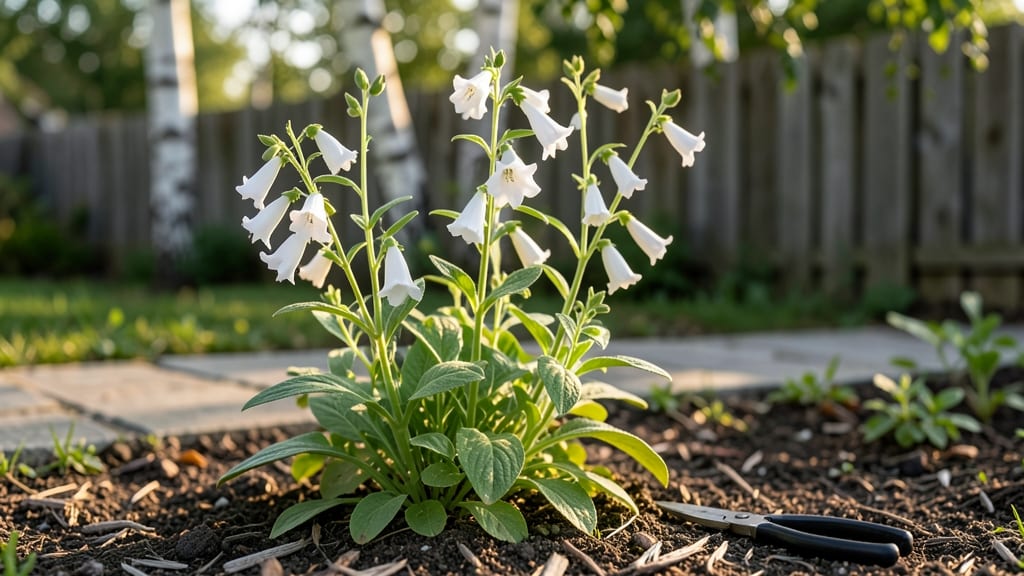
White bellflower campanula transforms shady corners into dreamy, ethereal displays with its delicate cascading blooms. I first fell for this cool-climate perennial after it thrived in my north-facing garden where nothing else would grow—its bell-shaped white flowers dangling like tiny chandeliers from 12- to 24-inch stems.
The secret lies in its love for shade and moist, well-draining soil, making it the perfect solution for spots where sun-loving plants struggle.
This hardy beauty handles everything from partial shade to full shade, thriving in zones 3 through 8 where winter chill actually improves its vigor.
Plant it in spring or fall for best root establishment, and choose a spot with humus-rich soil—amend with compost if your native soil is heavy. Container growers can use well-draining potting mixes, though they'll need more frequent watering to keep those stems upright and blooms abundant.
Once established, campanula is nearly maintenance-free, but a light pruning after flowering encourages a second flush of blooms. The foliage stays lush and deep green, providing year-round interest even when flowers fade.
For a foolproof look, pair it with hostas or ferns in borders or let it spill over container edges—its graceful habit adds vertical drama without demanding attention.
Common mistakes? Overwatering in containers or planting in full sun, which causes leggy growth. The key is consistent moisture without soggy roots and a spot where it gets at least 3-4 hours of dappled light daily.
With these simple adjustments, you'll have a shade garden that feels like a secret fairy retreat—every season.
📚 In This Guide
- What you need
- Instructions
- Tips and common mistakes
- Wrapping up and next steps
What you need
- ● Campanula plants: 1–3 Campanula latifolia (giant bellflower) or Campanula persicifolia (peach-leaved bellflower) nursery plants (6-inch pots).
- ● OR 1 packet of Campanula seeds (50–100 seeds per packet, cold-stratified for best germination).
- ● Well-draining potting mix: 1–2 bags (1–2 cubic feet each) of organic, peat-free soil blend (e.g., Pro-Mix BX or Miracle-Gro Potting Mix).
- ● Garden soil (if planting outdoors): Amend with 2–3 inches of compost per square foot.
- ○ Containers (optional for starting seeds): 2–3 small seed trays (72-cell) or 4-inch pots with drainage holes.
- ● Slow-release fertilizer: 1 lb of 10-10-10 or 5-10-5 granular fertilizer (for planting holes or potting mix).
- ● Trowel or hand shovel (for transplanting).
- ● Garden gloves (to protect hands from thorns or rough soil).
- ● Watering can or hose with a gentle spray nozzle.
- ● Mulch (2–3 inches of shredded bark or pine needles to retain moisture).
- ○ Optional: Grow lights (for indoor seed starting).
- ● Plant labels (to track varieties).
- ● Frost cloth (for early-season protection in cold climates).
- ● Location: Partial to full shade (2–6 hours of sunlight daily; tolerates dappled light).
- ● Climate: Hardy in USDA Zones 3–8 (cold-hardy and drought-tolerant once established).
- ● Timing: Seeds: Start indoors 8–10 weeks before last frost or direct-sow in early spring or fall.
- ● Plants: Transplant spring or early fall (avoid summer heat).
- ● Soil pH: Slightly acidic to neutral (6.0–7.0). Test with a soil kit if unsure.
Step-by-step instructions for planting and cultivating campanula
Here's how to establish thriving white bell flowers with minimal fuss—ideal for shady spots.
🌱 Step 1: Select and Prepare the Planting Site
Campanula thrives in partial to full shade with well-draining soil that stays consistently moist but never soggy. Choose a location receiving 3-6 hours of morning sun—afternoon shade prevents leaf scorch in hot climates. Test your soil by squeezing a handful: if it forms a tight ball, amend with 2-3 inches of compost to improve drainage.
I always dig a hole twice as wide as the root ball but only as deep as the container's base. Loosen the sides of the hole with a fork to encourage root spread. For 4 plants, space them 12-18 inches apart in rows 18 inches apart—this prevents overcrowding and improves airflow, reducing fungal risks.
☀️ Step 2: Plant at the Right Time and Depth
Fall is the best planting window for campanula—roots establish before winter dormancy. If planting in spring, wait until after the last frost when soil warms to 55°F. Gently remove the plant from its container and tease apart any circling roots. Place it in the hole so the top of the root ball sits flush with soil level—burying too deep suffocates the crown.
Backfill with native soil mixed with 1 part compost to the original hole size, pressing lightly to eliminate air pockets. Water deeply until moisture reaches 6 inches down, then let the soil settle for 24 hours before adding a 2-inch layer of mulch around the base (but not touching stems). This conserves moisture and regulates soil temperature.
💧 Step 3: Water and Maintain Through Establishment
Keep the soil evenly moist for the first 4-6 weeks—campanula roots are shallow and sensitive to drought. Water early in the morning to reduce evaporation, aiming for 1 inch of water weekly. You'll know you're on track when the top 1-2 inches of soil feel damp but not saturated. Overwatering causes root rot, especially in heavy clay soils.
Fertilize lightly in spring with a balanced 10-10-10 formula at half-strength—too much nitrogen produces lush foliage but fewer flowers. I skip summer feeding entirely; campanula blooms best when roots focus on growth, not rapid leaf production. Deadhead spent blooms by pinching off the faded flower stems just above the next set of leaves to encourage continuous flowering.
✂️ Step 4: Prune and Overwinter for Long-Term Health
After the first hard frost, cut back stems by half to promote bushier growth next season. Avoid pruning in late summer—this removes next year's flower buds. In zones 5-7, campanula is hardy to -20°F, but a 4-inch layer of shredded bark mulch protects young plants. In colder zones, mound soil around the base for extra insulation.
Watch for powdery mildew in humid summers—space plants properly and water at the base to prevent leaf wetness. If you see white powder on leaves, remove affected foliage immediately and treat with neem oil (mix 1 tablespoon per gallon of water). Campanula rarely needs division, but if growth slows after 3-4 years, dig up clumps in early spring and separate roots with a clean knife.
Tips & tricks for perfect white bell flower campanula
Transforming your shade garden into a campanula paradise starts with these essential insights that turn good intentions into thriving plants.
Soil Preparation Insight: The 2-3 inches of compost I recommend isn't just about drainage—it's about creating the perfect microbial ecosystem. Campanula roots thrive when beneficial fungi and bacteria colonize the soil. For heavy clay soils, mix in 1 part perlite to the compost ratio to prevent compaction. This ensures those delicate roots can spread freely without suffocating.
Planting Depth Secret: Placing the root ball flush with soil level might seem obvious, but I've seen too many gardeners bury the crown too deeply, which suffocates the plant. Use a small stake to mark the original soil line on the container before planting—this visual guide prevents guesswork. The crown should sit just above the surrounding soil level, never buried.
Watering Strategy: Those first 4-6 weeks of consistent moisture are critical, but timing matters just as much as quantity. I water campanula at dawn to maximize absorption before evaporation kicks in. Use a rain gauge or tuna can to measure your water output—aim for that 1 inch weekly mark by collecting water in a container until it reaches 1 inch depth. This ensures you're not over- or under-watering.
Frost Protection Technique: When preparing for winter in zones 5-7, don't just pile on mulch—create a microclimate. Spread the 4-inch layer of shredded bark mulch in a dome shape around the base, leaving a small opening at the top for air circulation. This protects the crown while preventing moisture buildup that could cause rot. In colder zones, add a layer of straw over the mulch for extra insulation.
Pro Tips for White Bell Flower Campanula
- Transforming your shade garden into a campanula paradise starts with these essential insights that turn good intentio...
- Soil Preparation Insight: The 2-3 inches of compost I recommend isn't just about drainage—it's about creating the per...
- Planting Depth Secret: Placing the root ball flush with soil level might seem obvious, but I've seen too many gardene...
Frequently asked questions
Got questions about growing Campanula (white bell flower)?
You’re not alone! Here are answers to the most common queries—from planting tips to troubleshooting—to help your shade garden thrive.
When is the best time to plant white bell flower?
Plant Campanula in early spring or early fall for optimal root establishment. Avoid extreme heat or frost, which can stress young plants. If transplanting mature plants, do it on a cool, cloudy day to reduce shock. Pro tip: Amend soil with compost to improve drainage—Campanula hates soggy roots!
How much sun does white bell flower need?
While Campanula tolerates partial shade, it thrives in morning sun with afternoon shade, especially in hot climates. In cooler regions, it can handle full shade (e.g., under trees). Watch for: Yellowing leaves = too much sun; leggy growth = too little light. Adjust placement as needed!
Why aren’t my white bell flowers blooming?
Common culprits include:
- Over-fertilizing: Too much nitrogen = lush foliage, few flowers. Use a low-phosphorus fertilizer (5-10-5) in early spring.
- Deadheading: Remove spent blooms to encourage continuous flowering.
- Stress: Check for pests (slugs!) or root rot from poor drainage.
Can I grow white bell flower in containers?
Choose a container with drainage holes and use a well-draining potting mix (add perlite or sand). Dwarf varieties like Campanula portenschlagiana work best. Container tips:
- Water consistently—containers dry out faster.
- Fertilize lightly every 4–6 weeks during growing season.
- Move pots to shade if leaves scorch in summer.
How do I protect white bell flowers from pests?
Slugs and snails are the #1 threat! Use these organic defenses:
- Set out beer traps (slugs drown in shallow dishes of beer).
- Apply copper tape around pots or garden edges.
- Handpick pests at dawn (toss into soapy water).
Wrapping up and next steps
Growing white bell flower campanula is a rewarding way to bring delicate beauty and resilience to your shade garden. Whether you’re a seasoned gardener or just starting out, this cool-climate perennial thrives with minimal fuss—just the right soil, shade, and a little patience. 🌿✨
Ready to transform your garden? Start by selecting the perfect spot—one with dappled shade and well-draining soil—and plant your campanula this season. Before you know it, you’ll be enjoying clusters of elegant white bells that attract pollinators and add charm to your outdoor space!