
Flowers
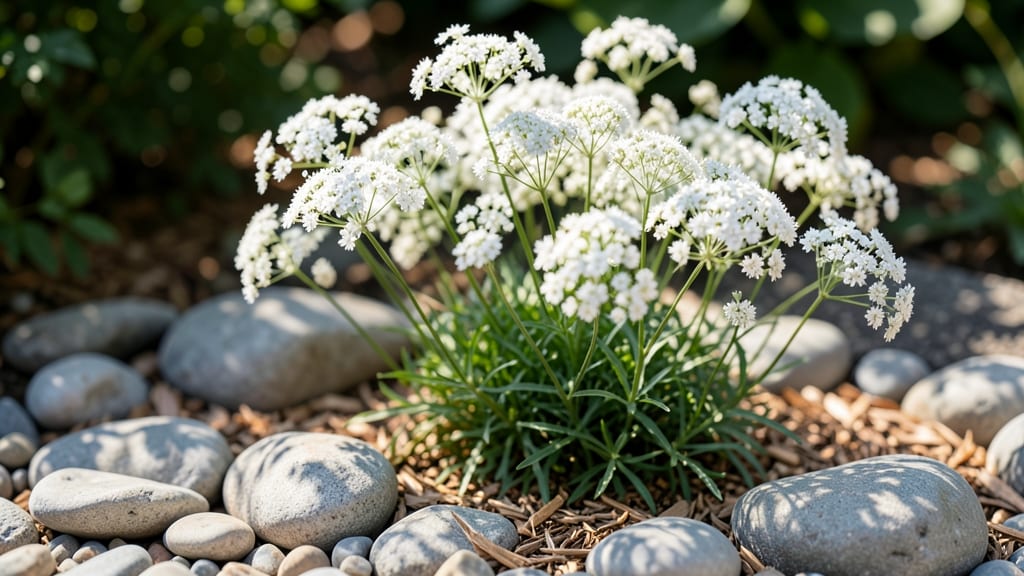
A white rock flower bed transforms any garden into a striking, low-maintenance oasis that stays beautiful even when you forget to water. 🌿 The contrast between crisp white stones and vibrant blooms creates a clean, modern look while cutting down on weeds and watering chores.
I designed mine last spring, and it’s now the centerpiece of my front yard—drought-resistant plants mean I only water twice a month, and the rocks keep the soil temperature perfect for heat-loving flowers.
The key is balancing structure and softness: rocks provide the bold framework, while drought-tolerant plants like lavender, sedum, and Russian sage add movement and color. Start with a base layer of landscape fabric to block weeds, then add 2–3 inches of gravel for drainage before placing your rocks.
For a polished look, mix larger accent stones with smaller pebbles—just avoid sharp edges that could damage plant roots. My favorite combo? White river rocks with deep purple salvia for a bold pop.
By summer, you’ll have a year-round display that thrives on neglect: succulents stay plump, ornamental grasses sway in the breeze, and late-season blooms like coneflowers keep the color going until frost. The rocks reflect sunlight, reducing soil heat stress, while the plants’ deep roots prevent erosion.
Even in winter, the structure remains clean and inviting—no dead leaves or muddy messes to clean up.
This design works for any climate or space, from small urban patios to sprawling backyard landscapes. The same principles apply whether you’re lining a walkway, framing a tree, or creating a standalone bed.
Start small if you’re unsure—just a few rocks and a single drought-resistant plant can make a statement. Once you see how little maintenance this bed truly needs, you’ll wonder why you didn’t try it sooner.
📚 In This Guide
- What you need
- Instructions
- Tips and common mistakes
- Wrapping up and next steps
What you need
- ● White gravel or crushed stone: 1–2 cubic yards (for a 4’x4’ bed, adjust for size). Choose #57 white rock (3/4"–1") for a polished look.
- ● Drought-resistant white flowers: White gaura (Oenothera lindheimeri) – 3–5 plants
- ● White yarrow (Achillea millefolium) – 3–5 plants
- ● White lantana (Lantana camara) – 3–5 plants (for heat-loving zones)
- ● White verbena (Verbena tenuisecta) – 3–5 plants (spreading habit)
- ● Soil amendments: Compost (1–2 bags, 40 lb each) for nutrient-rich soil
- ● Perlite or pumice (1 bag) to improve drainage
- ● Landscape fabric: 1 roll (4’x50’) to suppress weeds
- ○ Edging material: Flexible metal, plastic, or bricks (optional but recommended for clean lines)
- ● Mulch (gravel or decorative stones) to reduce water evaporation
- ● Drip irrigation kit for low-maintenance watering
- ● Garden gloves and knee pads for comfort
- ● String line and stakes to mark out bed dimensions
- ● Slow-release fertilizer (for established plants)
Step-by-Step guide to building a white rock flower bed
Here's how to create a striking, low-maintenance garden feature that thrives year-round.
🪴 Step 1: Plan and Prepare the Layout
Sketch your design on paper first—this helps visualize spacing and flow. White rocks create clean lines, so I like to outline the bed with a 2-3 inch deep border of larger stones. Mark the area with garden stakes and string for precision, especially if you're working with curves or geometric shapes.
Clear all vegetation from the space, then loosen the soil to a depth of 6-8 inches using a shovel or garden fork. Remove rocks, roots, and debris—this ensures your white rocks will sit flat and look intentional. For a 4-foot by 4-foot bed, you'll need roughly 1 cubic yard of soil amendments to improve drainage and fertility.
💧 Step 2: Layer Soil and Rocks for Stability
Spread a 2-inch layer of coarse sand over the prepared bed to improve drainage—this is especially important if your area has heavy clay soil. Mix in 3-4 inches of compost to feed plants and help retain moisture without waterlogging. Rake everything level so the surface is smooth and even.
Start by placing the largest white rocks along the outer edges of your design. These act as anchors and define the bed's shape. Work inward with medium-sized stones, leaving gaps of 2-3 inches between them for planting. Press each rock gently into the soil to prevent shifting—this is where a rubber mallet comes in handy.
☀️ Step 3: Choose and Plant Drought-Resistant Flowers
Select plants that thrive in full sun and tolerate dry conditions, like lavender, sedum, or Russian sage. For a 4-foot bed, you'll need about 12-16 plants spaced 12-18 inches apart. Dig holes twice as wide as the root ball and slightly shallower than the container depth.
Water each plant thoroughly before placing it in the hole to reduce transplant shock. Fill gaps with 1-2 inches of mulch (like gravel or bark chips) to suppress weeds and retain moisture. Avoid piling mulch against stems—keep it 2-3 inches away to prevent rot.
✂️ Step 4: Final Touches and Maintenance
Fill remaining spaces between rocks with smaller stones or pebbles to create a seamless look. Water the entire bed deeply after planting, then let the soil dry slightly before adding any additional mulch. This helps establish roots without overwhelming them.
Once established, water once a week during dry spells—your drought-resistant plants will thank you. Weed regularly (especially in the first few months) and trim back overgrown plants in early spring to keep the bed looking sharp. A light application of granular fertilizer in spring will encourage vibrant blooms all season.
Tips & tricks for perfect white rock flower beds
Here's what I've learned after creating these stunning, low-maintenance gardens—tricks that'll make your white rock flower bed look like a pro designed it.
Design Tip: Before you even break ground, walk around your bed while holding your largest white rocks. This helps you visualize how the stones will frame your plants and create those clean, intentional lines. I like to sketch my design twice—once freehand, then again with the rocks placed in their final positions on paper. This saves time and prevents costly mistakes when you're actually installing them.
Soil Prep Secret: The 6-8 inch soil loosening in Step 1 is crucial, but don't stop there. If your area has heavy clay soil like mine does, mix in 1 part perlite to 3 parts soil when you're adding your compost. This creates tiny air pockets that prevent waterlogging while still improving drainage. Your drought-resistant plants will thank you with healthier roots and more vibrant blooms.
Rock Placement Technique: When placing those anchor rocks along the edges in Step 2, think about creating visual movement. Arrange them slightly staggered rather than in perfect rows—this makes the bed look more natural and prevents that "geometric grid" appearance. For the 2-3 inch gaps between rocks, use a small level to check that they're perfectly even before pressing them into place.
Planting Strategy: For that 4-foot bed requiring 12-16 plants, I recommend placing your largest, most dramatic plants—like Russian sage—at the corners and along the outer edges. This creates a natural focal point that draws the eye. When spacing those 12-18 inches apart, measure from the center of each plant to its neighbor rather than from the edges—this ensures even distribution and prevents overcrowding as they grow.
Pro Tips for White Rock Flower Bed
- Here's what I've learned after creating these stunning, low-maintenance gardens—tricks that'll make your white rock f...
- Design Tip: Before you even break ground, walk around your bed while holding your largest white rocks. This helps you...
- Soil Prep Secret: The 6-8 inch soil loosening in Step 1 is crucial, but don't stop there. If your area has heavy clay...
Frequently asked questions
Got questions about creating or maintaining a stunning white rock flower bed? Here are some of the most common ones—plus expert tips to keep your design thriving with minimal fuss!
What are the best white flowers for a drought-resistant rock bed?
Opt for hardy, low-water varieties like white yarrow, lamb’s ear, white daisies, or snow-in-summer. These thrive in rocky soils, require little irrigation, and add texture with their silvery or velvety foliage. Pair them with succulents like sedum or echeveria for extra drought tolerance!
When is the best time to plant a white rock flower bed?
Plant in early spring (after the last frost) or early fall (6–8 weeks before the first frost) for the best root establishment. Avoid summer heatwaves, which can stress new plants. If adding perennials, give them 2–3 months to settle before facing winter or peak summer dryness.
How often should I water a white rock flower bed?
Water deeply but infrequently—about once a week in the first growing season, then taper to every 2–3 weeks once established (unless in extreme drought). Rocks help retain moisture, but mulch (like gravel or bark) reduces evaporation. Morning watering prevents fungal issues.
Can I use white rocks on any type of soil?
Yes! Rocks improve drainage in clay-heavy soils and insulate roots in sandy soils. For poor soil, amend with compost before planting. If your yard has compacted soil, layer rocks over a 4–6 inch base of gravel to prevent suffocating roots.
How do I keep pests away from my white rock flower bed?
Prevent pests with neem oil (for aphids), diatomaceous earth (for slugs), and healthy spacing to improve airflow. Avoid overwatering, which attracts fungus gnats. Lamb’s ear and lavender naturally repel pests—great companions for your white blooms!
Do white flowers in a rock bed need winter protection?
Most drought-resistant white flowers (like sedum or yarrow) are perennial and cold-hardy. However, mulch with 2–3 inches of straw or leaves in freezing climates. Tender annuals (like white gazanias) may die back but reseed easily—just remove dead foliage in spring!
Wrapping up and next steps
Creating a white rock flower bed is a fantastic way to add elegance and low-maintenance beauty to your outdoor space—no matter the season! With drought-resistant blooms and striking contrast, this design offers both visual appeal and practicality.
Whether you’re a gardening pro or just starting out, the key is choosing the right plants, rocks, and layout to suit your climate and style.
Ready to transform your yard? Start small—pick a sunny or partially shaded spot, gather your supplies, and dive in! Before you know it, you’ll have a stunning, year-round garden that’s as resilient as it is beautiful. 🌸✨