
Flowers
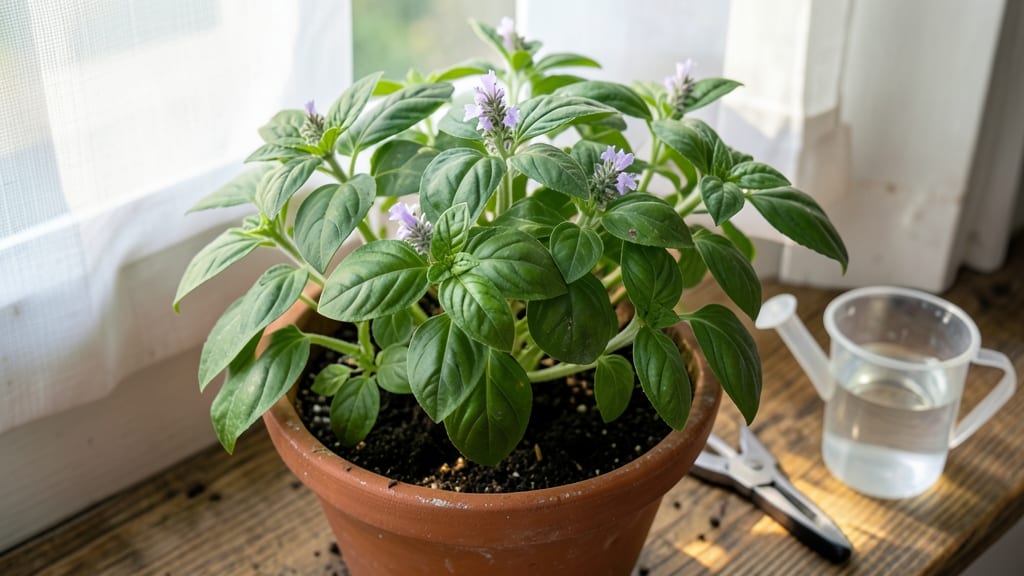
When basil has flowers, it’s not a sign of failure—it’s your plant telling you it’s ready to reproduce. 🌿 I’ve seen gardeners panic when those tiny white blooms appear, but they’re actually a natural part of the plant’s life cycle.
The real question is whether you want those flowers or not, because they’ll shift the plant’s energy away from the flavorful leaves you’re growing for.
The good news? Pruning those flowers off early keeps your basil focused on leaf production, resulting in that bright green, intensely aromatic foliage we all love. I’ve found that pinching off flower buds within 2-3 weeks of appearance gives the best results—my plants stay bushier and more productive.
It’s a simple trick that makes all the difference between a handful of leaves and a full harvest.
What you’ll end up with is a basil plant that keeps growing lush, tender leaves all season long. The flavor stays strong, the stems stay tender, and you’ll have enough for pesto, salads, and cooking without worrying about bitter notes.
This method works for both potted basil and in-ground plants, so no matter where you’re growing, you can keep the flowers in check.
Fair warning: if you let the flowers go to seed, you’ll get tiny black seeds—but that’s not what you want if you’re after fresh leaves. The key is consistent pruning every few weeks to encourage new growth.
Once you master this, your basil will be the envy of every herb garden in the neighborhood.
📚 In This Guide
- What you need
- Instructions
- Tips and common mistakes
- Wrapping up and next steps
What you need
- ● Basil plants: 1–3 healthy potted basil plants (genovese, sweet, or Thai basil work best). Ensure they’re mature (at least 3–4 inches tall) with visible flower buds or blooms.
- ● Pruning shears or clean scissors: 1 pair (sterilize with rubbing alcohol to prevent disease). Avoid dull blades—they crush stems!
- ○ Gloves (optional): A pair of gardening gloves to protect your hands from sap or thorns (if using woody basil varieties).
- ● Well-draining potting mix: 1–2 gallons (use a blend with perlite or coconut coir for aeration). Avoid heavy garden soil.
- ● Container (if repotting): 1–2 pots (6–12 inches wide) with drainage holes. Terracotta or fabric pots work great!
- ● Watering can or spray bottle: For gentle hydration—basil hates soggy roots.
- ● Balanced liquid fertilizer (5-5-5 or 10-10-10): 1 bottle (dilute to half-strength). Feed every 2–4 weeks.
- ● Sunlight: 6+ hours of direct sun daily (south- or west-facing windowsills or outdoor spots). Basil loves warmth!
- ● Temperature: Ideal range: 70–80°F (21–27°C). Avoid drafts or temps below 50°F (10°C).
- ○ Humidity (optional but helpful): A humidity tray or occasional misting (basil thrives in 50–70% humidity).
- ● 🔥 Timing: Prune in the morning when plants are hydrated and recovery is fastest.
- ● 🌡️ Temperature check: If your space dips below 60°F (15°C), basil may go dormant—bring it indoors!
- ● ✨ Flower removal hack: Snip blooms before they open to redirect energy to leaves (not flowers).
How to prune basil flowers for maximum leaf production
Here’s the simple system I use to keep my basil bushes lush and productive.
✂️ Step 1: Identify and Remove Flower Buds Early
Basil flowers are beautiful, but they signal the end of your leafy harvest. Watch for tiny flower buds forming at the leaf axils—those little nooks where stems meet leaves. The moment you spot even one bud, pinch it off between your thumb and forefinger. You’ll feel a slight resistance as you snap it cleanly at the base.
I check my plants every 3-4 days during peak growing season. If you wait until flowers open, the plant’s energy shifts from leaves to seed production, and your basil will turn bitter. Real talk: I’ve let flowers bloom before, and the leaves became tough and flavorless within a week.
✂️ Step 2: Prune Established Flowers for Regrowth
If you miss the buds and flowers already appear, don’t panic. Cut the entire flower stalk back to the main stem using clean, sharp scissors. Make your cut just above a set of leaves or a leaf node—this is where new growth will sprout. You’ll see fresh, vibrant leaves emerging within 7-10 days of this prune.
Here’s the thing—basil is surprisingly resilient. Even if half the plant is in bloom, cutting back aggressively can still coax it back into leaf production. Just avoid pruning when temperatures drop below 55°F, as cold stress slows recovery.
🌿 Step 3: Encourage Bushier Growth After Pruning
After removing flowers, give your basil a little extra care to boost regrowth. Water deeply at the base—1 inch of water per week—but avoid wetting the leaves to prevent disease. I use my finger to check soil moisture; if the top 1 inch feels dry, it’s time to water.
Place your basil in a spot with 6-8 hours of morning sun and partial afternoon shade, especially in hot climates. Too much midday sun after pruning can stress the plant. You’ll notice new leaves forming at the pruned spots within 5-7 days—that’s your signal everything’s working.
⏰ Step 4: Maintain a Regular Pruning Schedule
To keep basil producing leaves instead of flowers, prune every 2-3 weeks during the growing season. Focus on the top third of the plant first, then work your way down. This method keeps the basil compact and encourages multiple growth points.
Don’t skip this step, even if your basil looks healthy. I’ve seen basil plants go from thriving to flowering overnight if left unchecked. A quick pinch every few weeks ensures a steady supply of fresh, tender leaves for months.
Tips & tricks for pruning basil flowers
Keeping your basil productive requires a little attention to detail—and these tricks will help you avoid common pitfalls while maximizing leaf growth.
Pinch at the Right Time: Those tiny flower buds in Step 1 appear faster than you think. I check my plants every 3-4 days during warm weather, especially in the morning when buds are most visible. The key is to remove them before they open—once flowers bloom, your basil's energy shifts to seed production, and those tender leaves turn bitter within days. Confession: I skipped this once and ended up with a plant full of flowers and barely any usable leaves.
Prune with Precision: In Step 2, when cutting back established flowers, make your cut just above a leaf node—not too close, not too far. This is where new growth will sprout. I use small, clean scissors and angle the cut slightly downward to prevent water from pooling on the stem. After pruning, you'll see fresh leaves emerging within 7-10 days, but only if you make the cut in the right spot.
Sunlight Strategy: Step 3 mentions placing your basil in 6-8 hours of morning sun, but here's what nobody tells you—afternoon shade is crucial, especially in hot climates. I've seen basil plants wilt from too much midday sun after pruning. If you notice leaves curling or yellowing, move your plant to a slightly shadier spot for a few days while it recovers. This helps the plant focus on regrowth instead of stress.
Watering Wisdom: The 1 inch of water per week guideline in Step 3 works, but timing matters. Water deeply in the morning so leaves have time to dry before evening. I've ruined basil plants by watering at night—damp leaves attract fungal diseases. Also, check soil moisture with your finger: if the top 1 inch feels dry, that's your cue to water. Overwatering is just as bad as underwatering for basil.
Pro Tips for Basil Has Flowers
- Keeping your basil productive requires a little attention to detail—and these tricks will help you avoid common pitfalls while maximizing leaf growth.
- Pinch at the Right Time: Those tiny flower buds in Step 1 appear faster than you think.
- Prune with Precision: In Step 2, when cutting back established flowers, make your cut just above a leaf node—not too close, not too far.
Frequently asked questions
Got questions about basil blooms? You’re not alone—gardeners often wonder how to manage flowers, when to prune, and whether they can even eat those blossoms! Here are some of the most common queries (and answers) to keep your basil thriving.
Do basil flowers mean my plant is dying?
Not necessarily! Basil naturally produces flowers as it matures, but too many can signal stress or overgrowth. If your plant looks healthy otherwise, the blooms are just a sign it’s happy. Pro tip: Pinch off flowers early to redirect energy back to leaf production.
How often should I prune basil to prevent flowering?
Prune basil every 2–3 weeks to encourage bushier growth and delay blooming. Focus on the top sets of leaves (just above a leaf node) and remove any visible flower buds. Bonus: Regular pruning also keeps your basil compact and harvest-ready!
Can I eat basil flowers?
Basil flowers are edible and add a mild, anise-like flavor to dishes. Use them fresh in salads, garnishes, or infused oils. Warning: Avoid overconsumption—they contain tiny amounts of eugenol, which may cause mild irritation in some people.
What if my basil keeps flowering despite pruning?
If your basil keeps blooming aggressively, it may be overripe, stressed, or lacking sunlight. Try these fixes:
- Move it to a sunnier spot (6+ hours of direct light daily).
- Fertilize lightly with a balanced, water-soluble fertilizer (half-strength).
- Harvest leaves more frequently to reduce stress.
Can I save basil seeds from the flowers?
Yes, but with caution! Let a few flowers fully mature (turn brown and dry), then collect the seeds. Note: Basil seeds from store-bought plants may not produce true-to-type offspring. For reliable seeds, grow from heirloom or seed-saved varieties.
Wrapping up and next steps
Discovering that basil has flowers doesn’t mean your plant is failing—it’s just entering its natural lifecycle! With the right pruning techniques, you can keep your basil thriving with lush leaves and occasional blooms.
Remember, the key is balance: trim regularly, remove spent flowers, and give your plant the love it deserves.
Ready to level up your basil game? 🌱 Start by experimenting with these pruning tips this season—your garden (and taste buds!) will thank you. Happy growing!