
Flowers
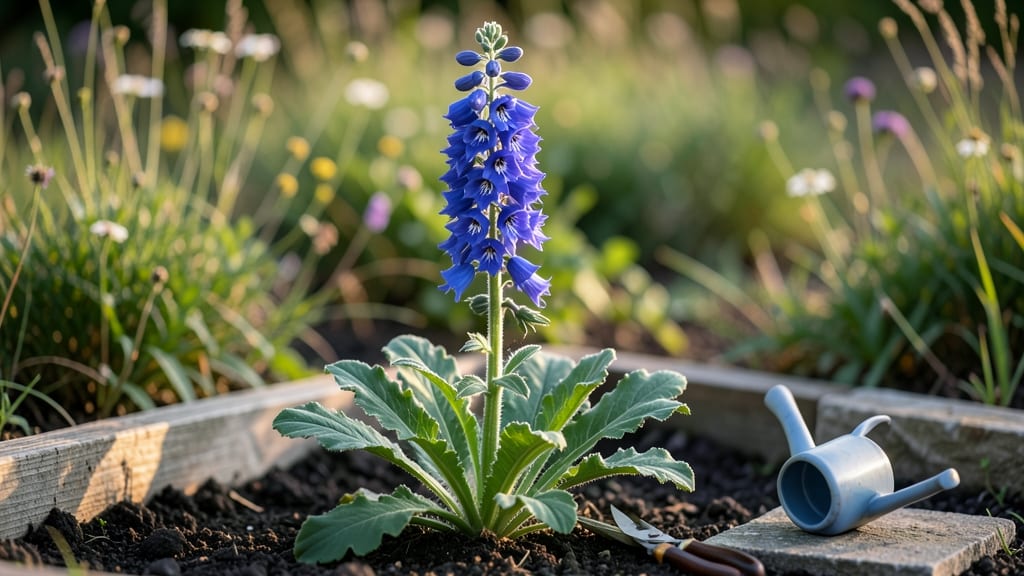
Nothing beats the drama of blue flowers on stalks arching over garden borders or climbing trellises—these pollinator magnets turn any space into a living painting. 🌿 I’ll never forget the first time my delphiniums shot up like sky-blue torches, drawing hummingbirds and bees within hours.
The tall, airy blooms create vertical interest that flat perennials can’t match, and they pair beautifully with silver foliage or deep purple clematis.
These stalks thrive in full sun and well-drained soil, making them perfect for vertical gardens, cottage-style borders, or cut-flower arrangements. Delphiniums and morning glories need sturdy support, while clematis vines can scramble up fences or arbors.
Plant them near lavender or catmint for a pollinator superhighway—the bees will thank you with endless buzzing activity. For maximum impact, mix heights: shorter blue salvia at the front, mid-height lupines in the middle, and towering delphiniums as the backdrop.
By midsummer, your garden will hum with life as butterflies sip from the nectar-rich blooms, and you’ll have armfuls of vibrant blue stems for bouquets that last weeks.
The key is deadheading spent blooms to encourage continuous flowering—my clematis vines keep producing until frost if I stay on top of it. These plants aren’t just pretty; they’re the backbone of a thriving, low-maintenance garden that feels like a secret sanctuary.
Works equally well in formal herbaceous borders or wild, meandering cottage gardens. Whether you’re training vines up a trellis or letting stalks flop gracefully over a stone wall, these blue beauties deliver season-long color with minimal effort. Let’s design your dream blue oasis—starting with the perfect plant placement.
📚 In This Guide
- What you need
- Instructions
- Tips and common mistakes
- Wrapping up and next steps
What you need
- ● Blue flowering plants: 1–3 Delphinium plants (perennial, 3–5 ft tall)
- ● 5–10 Salvia seeds/seedlings (annual/perennial, 1–3 ft tall)
- ● 1–2 Lobelia plants (annual, 6–12 in tall, trailing)
- ● 3–5 Brunnera macrophylla (perennial, 1–2 ft tall)
- ● 1 Agapanthus (perennial, 2–4 ft tall, drought-tolerant)
- ● Growing medium: Well-draining potting mix (5–10 gallons, depending on pot size)
- ● Organic compost (1–2 cups per plant for nutrient boost)
- ● Containers or garden bed: 5–10 gallon pots (with drainage holes) or a sunny garden bed (6+ hours of light)
- ● Basic tools: Garden trowel or small hand shovel
- ● Pruning shears (for deadheading)
- ● Watering can or hose with gentle spray nozzle
- ○ Optional (but helpful!): Slow-release fertilizer (e.g., 10-10-10, 1 tbsp per plant)
- ● Mulch (2–3 inches, to retain moisture)
- ● Pollinator-friendly companion plants (e.g., Echinacea or Coneflower)
- ● Stakes or cages (for tall varieties like Delphinium)
How to grow stunning blue flowers that attract pollinators all season
Here's the foolproof method I use to keep my garden buzzing with bees and hummingbirds for months.
🌱 Step 1: Select the Right Blue-Blooming Varieties for Your Climate
Start with self-seeding annuals like cleome or bachelor's buttons for continuous blooms, or perennial stalks like delphiniums and salvia for long-term beauty. I always plant 3-4 stalks per variety to ensure pollinators find them easily—isolated plants get overlooked.
Check your hardiness zone: delphiniums thrive in zones 3-9 but need winter mulch in colder areas, while salvia 'May Night' handles zones 5-10 with minimal care. For containers, choose compact blue salvia varieties—they'll bloom nonstop in 5-gallon pots with proper drainage.
☀️ Step 2: Position for Maximum Sun and Pollinator Visibility
All blue-stalk flowers need 6+ hours of direct sun—place them where pollinators naturally pass through your garden. I position mine near butterfly bushes or lavender borders so bees and hummingbirds discover them as they forage.
Stake tall varieties like delphiniums immediately—18-inch stakes prevent flopping when heavy blooms develop. For container plants, use cage supports to keep stalks upright without damaging roots. Watch for leggy growth (stems stretching toward light) and rotate containers weekly to encourage even blooming.
💧 Step 3: Water Deeply and Feed for Continuous Blooms
Water deeply once weekly (or daily in extreme heat) until soil feels moist 6 inches down. Shallow watering stresses roots and reduces bloom time. I use a soaker hose at the base to avoid wetting leaves—this prevents fungal diseases that turn blue flowers to brown.
Fertilize with low-nitrogen, high-phosphorus food (like 5-10-5) every 4-6 weeks to encourage blooms over foliage. Deadhead spent flowers regularly—this redirects energy to new stalks. For container plants, I mix slow-release granules into the soil at planting for 3-month nutrition.
✂️ Step 4: Prune for Second Flushes and Prevent Overcrowding
After the first flush of blooms fades, cut stalks back by one-third to encourage a second wave. I always use clean, sharp shears to avoid tearing stems—this prevents disease entry points. For perennials like salvia, prune in early spring before new growth appears.
Watch for overcrowded stalks—when plants compete for sunlight, blooms become sparse. Thin seedlings to 12 inches apart and divide mature perennials every 3-4 years to maintain vigor. Mulch with 2 inches of organic matter to retain moisture and suppress weeds that steal nutrients from your blue beauties.
Tips & tricks for perfect blue flowers on stalk
These simple yet game-changing strategies will help your blue-stalk blooms thrive like a pollinator paradise all season long.
Variety Selection Strategy: When choosing between annuals like cleome and perennials like delphiniums, consider your garden's lifespan needs. Annuals provide instant color but require replanting yearly, while perennials like salvia 'May Night' establish strong root systems that reward you with years of low-maintenance blooms. For containers, opt for compact varieties—these stay tidy in 5-gallon pots while still attracting bees with their vibrant blue hues.
Sunlight Optimization: The 6+ hours of direct sunlight requirement isn't just about quantity—it's about quality. Position your blue-stalk flowers where they'll receive morning sun and afternoon shade if your climate gets intense afternoon heat. This prevents leaf scorch while still providing the energy needed for continuous blooming. I've found that placing them near butterfly bushes creates a natural pollinator highway where bees and hummingbirds can easily find their way to your blue beauties.
Watering Wisdom: That deep weekly watering isn't just about moisture—it's about root development. When you water until soil feels moist 6 inches down, you're encouraging roots to grow deeper in search of water, which makes plants more drought-resistant over time. The soaker hose technique at the base prevents fungal diseases by keeping leaves dry, which is especially important for blue-stalk varieties that can develop brown spots from excess moisture on their foliage.
Pruning Precision: When you cut stalks back by one-third after the first flush, you're not just removing spent blooms—you're triggering a biological response that redirects the plant's energy into producing new growth. This technique works particularly well with delphiniums, which often produce a second flush of even more vibrant blue flowers. Always use clean shears to prevent introducing diseases through open wounds in the stems.
Pro Tips for Blue Flowers On Stalk
- These simple yet game-changing strategies will help your blue-stalk blooms thrive like a pollinator paradise all season long.
- Variety Selection Strategy: When choosing between annuals like cleome and perennials like delphiniums, consider your garden's lifespan needs.
- Sunlight Optimization: The 6+ hours of direct sunlight requirement isn't just about quantity—it's about quality.
Frequently asked questions
Got questions about growing or enjoying blue flowers on stalk? You’re not alone! Here are answers to the most common queries to help you cultivate a stunning, pollinator-friendly display with ease.
What are the easiest blue flowers to grow on a stalk?
For beginners, Delphinium, Lobelia, and Brunnera are top picks. They thrive in full sun to partial shade and produce striking blue blooms on tall, sturdy stalks. Cornflowers are another low-maintenance option—just ensure well-draining soil!
How long does it take for blue flowers on stalk to bloom?
Timing varies by variety:
- Annuals (like cornflowers): 6–8 weeks from seed.
- Perennials (like delphinium): 2–3 years for full stalks of blooms.
Are these flowers really good for pollinators?
Blue flowers like Salvia and Borage are bee and butterfly magnets. Their bright hues signal nectar-rich blooms, while their stalk structure provides easy landing spots. Bonus: Planting in clusters (3+ stalks) boosts their appeal even more!
How do I keep blue flowers on stalk from flopping over?
Floppy stalks are often a sign of weak stems or overwatering. Solutions:
- Stake tall varieties (like delphinium) with bamboo stakes or rings.
- Deadhead spent blooms to encourage new growth.
- Avoid soggy soil—ensure pots/drainage have holes.
What if my blue flowers turn purple or pink instead?
Color shifts happen! Soil pH affects hue—acidic soil (low pH) = bluer blooms, while alkaline soil (high pH) can turn them pink/purple. Test your soil and amend with sulfur (for acidity) or lime (for alkalinity) as needed. Note: Some varieties (like Hydrangeas) naturally change with pH!
Wrapping up and next steps
Transforming your garden into a vibrant haven for pollinators doesn’t have to be complicated—just add a splash of blue flowers on stalk! From hardy delphiniums to delicate lobelias, these blooms bring color, life, and purpose to your outdoor space.
Whether you’re a seasoned gardener or just starting, these pollinator-friendly picks are easy to grow and reward you with months of beauty.
Ready to take the next step? Start small—plant a few stalks in pots or beds, then expand as you see what thrives. Share your progress or ask questions in gardening forums—community support makes the journey even sweeter! 🌸🐝