
Flowers
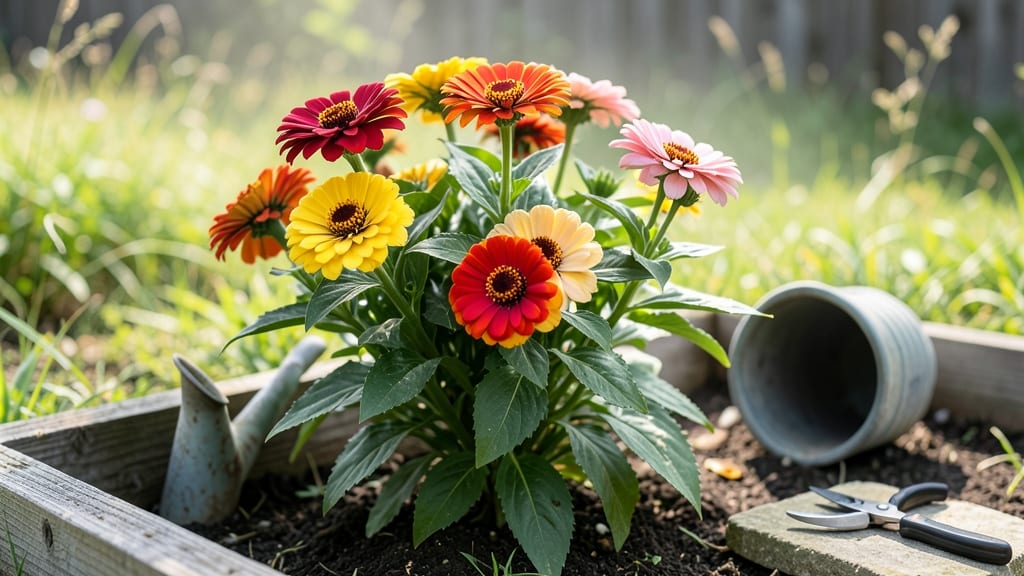
Your garden could burst with bright colorful flowers that turn every season into a living postcard. 🌻 I remember the first time I saw my spring border explode with tulips and daffodils—it felt like nature had flipped a switch.
The secret isn't complicated: layering bold blooms strategically creates drama year-round, from fiery zinnias in summer to icy hellebores in winter.
Start with a rainbow palette—sunflowers for height, marigolds for warmth, and impatiens for shadowy spots. Mix textures too: velvety roses next to spiky agave, or feathery lamb's ear against deep purple salvias.
The key is placement: tall flowers at the back, mid-height in the middle, and sprawlers like petunias at the front. This creates depth that makes your garden look professionally designed.
By autumn, your garden will still shine with fiery mums and golden asters, while winter brings structure with ornamental grasses and berries. The payoff? A space that feels alive in every season, where every walk reveals something new.
Let's make your garden the envy of the neighborhood—one bold bloom at a time.
Works in containers, borders, or full beds—adjust colors to your home's palette or go wild with clashing hues. The only rule? Have fun with it. Your garden should reflect your joy, not some perfect Pinterest board. Ready to transform your space?
📚 In This Guide
- What you need
- Instructions
- Tips and common mistakes
- Wrapping up and next steps
What you need
- ● Seeds or young plants: Choose a mix of perennials (e.g., Coneflower, Black-Eyed Susan) and annuals (e.g., Marigold, Petunia) for continuous blooms. Aim for 10–20 plants per 10 sq. ft. for a lush look.
- ● High-quality potting soil: 5–10 bags (depending on garden size), enriched with compost or organic matter for nutrient-rich growth.
- ● Fertilizer: Slow-release granular fertilizer (10–20 lbs) or liquid bloom booster for seasonal feeding.
- ● Mulch: 2–3 cubic feet (e.g., shredded bark or straw) to retain moisture and suppress weeds.
- ● Garden trowel or spade – For planting and soil prep.
- ● Pruning shears – Sharp, bypass-style for clean cuts.
- ● Watering can or hose with nozzle – Adjustable spray for gentle watering.
- ● Gloves – Durable, breathable (e.g., leather or nitrile-coated).
- ● Measuring tape or ruler – For spacing plants 12–24 inches apart (varies by type).
- ● Garden stakes or cages – For tall flowers like Delphinium or Sunflower varieties.
- ● Epsom salt – A 1 tbsp per plant boost for magnesium-loving blooms (e.g., Roses, Hydrangeas).
- ● Rain gauge or moisture meter – To track watering needs (especially for drought-resistant varieties).
- ● Seasonal extensions: Cold frames or cloches – For winter bloomers like Pansies or Violas.
- ● Heat-resistant mulch – For summer perennials like Lantana or Zinnias.
How to design a season-long flower garden with bold color
Here’s how to create nonstop visual impact—no matter the month.
🌱 Step 1: Plan for Layered Color by Season
Start by dividing your space into four seasonal zones—each with plants that bloom consecutively. For example, pair early spring bulbs like tulips with late-summer bloomers like black-eyed Susans. I always sketch a rough layout first, marking sun exposure (full sun, part shade, or shade) to avoid clashes later.
Real talk: Don’t overcrowd. Space perennials 12-18 inches apart and annuals 6-12 inches apart—tight packing leads to weak stems and fewer flowers. Use the 1/3 rule for annuals: plant 1/3 in spring, 1/3 in summer, and 1/3 in fall to keep color flowing.
☀️ Step 2: Choose Plants with Overlapping Bloom Times
Select varieties that share the same sunlight needs but bloom at different times. For instance, bearded irises (full sun, early summer) pair well with coneflowers (full sun, mid-summer) and sedum (full sun, late summer). Check bloom charts—some plants, like salvia, flower for months if deadheaded regularly.
Here’s the thing—color temperature matters. Cool tones (blues, purples) recede visually, while warm tones (reds, oranges) draw the eye. Place bold reds near pathways or seating areas to create focal points. I like to group three complementary colors (e.g., purple, yellow, and white) for maximum drama.
💧 Step 3: Water Deeply but Infrequently
Newly planted flowers need 1 inch of water per week, but established perennials often thrive on drought once rooted. Water at the base of plants in the morning to reduce evaporation and fungal risks. Mulch with 2-3 inches of shredded bark to retain moisture and suppress weeds—this alone cuts watering needs by 30%.
Watch for wilting leaves (not flowers) as your signal—it’s usually a moisture issue. If the soil feels dry 1 inch below the surface, water again. Overwatering is the #1 killer of vibrant blooms, so let the top layer dry out between sessions.
✂️ Step 4: Deadhead and Prune for Continuous Blooms
Snip spent blooms weekly to encourage new flowers. For annuals like petunias, pinch off faded blossoms at the base with clean shears. For perennials like daylilies, cut back one-third of the foliage after flowering to redirect energy to next year’s growth.
Don’t skip fall cleanup! After the first frost, cut back perennials to 4-6 inches tall and remove annuals. This prevents disease buildup and keeps your garden looking tidy year-round. I always leave seed heads from dahlias or cosmos for winter interest—birds love them, and they add texture.
⏰ Step 5: Add Seasonal Accents for Year-Round Drama
Fill gaps with fast-blooming annuals like pansies (winter/spring) or zinnias (summer/fall). These bridge the gaps between perennials’ bloom cycles. I also tuck in evergreen foliage (like heuchera or boxwood) to provide structure when flowers fade.
For winter color, plant hellbores or winter aconites—they bloom when little else does. Even a few ornamental grasses swaying in the breeze add movement and texture. The key is layering: tall plants at the back, mid-height in the middle, and spillers (like lobelia) at the front.
Tips & tricks for stunning season-long flower gardens
Creating a vibrant garden that thrives all year takes a few strategic moves—here's how to make it happen without the guesswork.
Design with Color Theory: When planning your seasonal zones in Step 1, use the 60-30-10 rule for color balance: 60% dominant color (like purple), 30% secondary (yellow), and 10% accent (red). This creates visual harmony while keeping things exciting. For example, pair deep purple salvia with sunny yellow coreopsis and pops of red geraniums—it's a winning combo that works in every season.
Soil Prep Secret: Before planting, mix in composted manure or aged compost to the top 6-8 inches of soil. This improves drainage and nutrient availability, which is especially important for newly planted flowers that need 1 inch of water per week in Step 3. I always add a handful of granular slow-release fertilizer at planting time to give flowers a head start. This single step can double your bloom production!
Seasonal Transition Strategy: In Step 5, when adding seasonal accents, plan for a 2-week overlap between seasons. For example, plant pansies in late summer for fall/winter color while keeping zinnias going until the first frost. This creates a seamless transition where you never have bare spots. I like to keep a "transition journal" to track which plants bridge the gaps best in my climate.
Pruning Pro Tip: When deadheading in Step 4, use clean, sharp pruners and cut just above a set of leaves or bud. This encourages bushier growth and more flowers. For perennials like daylilies, I cut back one-third of the foliage after flowering, but I always leave some leaves to photosynthesize for next year's growth. This balance keeps your plants healthy while maintaining that lush look.
Pro Tips for Bright Colorful Flowers
- Creating a vibrant garden that thrives all year takes a few strategic moves—here's how to make it happen without the guesswork.
- Design with Color Theory: When planning your seasonal zones in Step 1, use the 60-30-10 rule for color balance: 60% dominant color (like purple), 30% secondary (yellow), and 10% accent (red).
- Soil Prep Secret: Before planting, mix in composted manure or aged compost to the top 6-8 inches of soil.
Frequently asked questions
Got questions about keeping your garden vibrant with bright colorful flowers all year? You’re in the right place! Here are some of the most common queries—and their easy solutions.
How do I keep bright flowers blooming year-round?
For continuous color, mix seasonal bloomers like pansies (cool weather) with geraniums or marigolds (warm weather). Use slow-release fertilizer every 6-8 weeks and mulch to retain moisture. In colder climates, opt for evergreen shrubs with flowers (e.g., Camellia) or grow annuals in containers that you can move indoors during frost.
What are the easiest low-maintenance flowers for color?
Start with self-cleaning perennials like Coneflowers, Black-Eyed Susans, or Daylilies—they thrive with minimal care. For instant pops of color, try petunias, impatiens, or zinnias (annuals that bloom nonstop). Succulents like Echeveria also add vibrant hues with almost zero upkeep!
Why aren’t my flowers as bright as they should be?
Dull blooms often mean nutrient deficiencies (try a balanced liquid fertilizer) or too much shade. Most bright flowers (e.g., Snapdragons, Dahlias) need 6+ hours of sunlight. Deadhead spent blooms regularly to encourage new growth, and check for pests like aphids—they can sap color and vitality.
Can I grow colorful flowers in containers or small spaces?
Choose compact varieties like Begonias, Calibrachoa, or Mini Petunias for pots. Use well-draining soil with added compost, and rotate containers for even sun exposure. For vertical drama, try trailing flowers (e.g., Nasturtiums, Lobelia) in hanging baskets or wall planters.
How do I mix colors for a cohesive garden look?
Use the 60-30-10 rule: 60% dominant color (e.g., purple), 30% secondary (e.g., yellow), and 10% accent (e.g., red). Pair complementary colors (opposites on the color wheel) for contrast, like blue + orange or pink + green. Monochromatic schemes (shades of one hue) also create harmony!
Wrapping up and next steps
Bright, colorful flowers aren’t just a seasonal delight—they’re a year-round celebration of life, creativity, and joy! 🌸 Whether you’re a seasoned gardener or just starting, these vibrant blooms bring drama, beauty, and even a little magic to any space.
Now that you’re armed with tips, tricks, and answers to common questions, it’s time to roll up your sleeves and get planting!
Start small with a single bed or container, experiment with bold combos, and let your garden tell its own story. And remember: every bloom, no matter how tiny, is a victory worth celebrating. Happy gardening—your future garden will thank you! 🌺✨