
Flowers
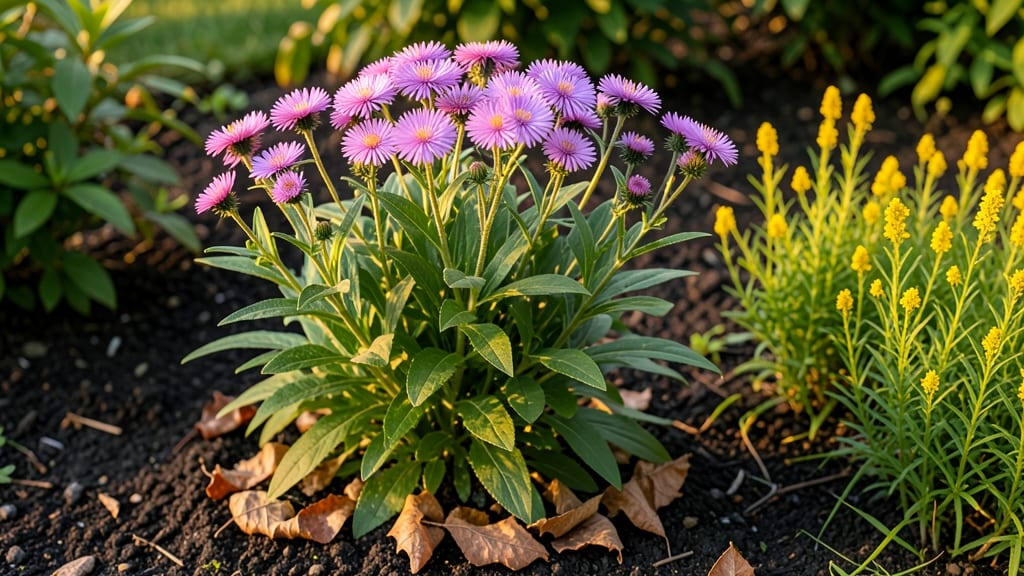
Fall flowers other than mums are stealing the show in my garden—cold-hardy perennials that refuse to surrender as temperatures drop. 🌿 The secret isn’t just their late-season color but their ability to handle frost, often blooming brighter after the first chill.
My go-to, asters, puts on a purple and pink show from October through November, while sedum’s plump clusters stay vibrant even when temps dip below freezing.
These plants need minimal fuss: most thrive in average soil with good drainage and 6+ hours of sunlight daily. Plant them in early fall (6-8 weeks before your first frost) for roots to establish before winter.
Containers work great—just use well-draining mix and move pots to sheltered spots if frost threatens. They’ll reward you with weeks of color when most gardens have gone dormant.
Imagine your borders glowing with deep burgundy, golden-yellow, or soft lavender long after mums have faded. Russian sage’s airy spikes attract late-season pollinators, while helenium’s daisy-like blooms add texture.
Even in Zone 4, these perennials bounce back year after year, proving frost isn’t the end of the season—just a pause before spring’s return.
For containers, try compact varieties like ‘Autumn Joy’ sedum or ‘Little Spoon’ coreopsis. In borders, layer them with ornamental grasses for movement. The key? Plant in groups of 3-5 for maximum impact. These flowers don’t just survive fall—they transform it into a second season of beauty.
📚 In This Guide
- What you need
- Instructions
- Tips and common mistakes
- Wrapping up and next steps
What you need
- ● Cold-hardy fall flowers: Choose from these top picks (quantities depend on garden size): 10–20 Aster plants (New England or New York varieties)
- ● 5–10 Black-eyed Susan (Rudbeckia) seedlings
- ● 15–30 Goldenrod bulbs or plants (e.g., Solidago spp.)
- ● 5–8 Toad Lily (Tricyrtis hirta) tubers (for shade)
- ● 10–15 Japanese Anemone (Anemone hupehensis) plants
- ● 5–10 Coral Bells (Heuchera) for foliage contrast
- ● Soil amendments: 5 lbs compost (for nutrient-rich soil)
- ○ 1–2 lbs bone meal (optional, for phosphorus boost)
- ● Mulch: 2–3 bags straw or shredded leaves (to insulate roots)
- ● Hand trowel (for delicate planting)
- ● Garden gloves (to protect hands from thorns/soil)
- ● Watering can or hose with a gentle spray nozzle
- ● Pruners (for deadheading spent blooms)
- ○ Soil pH test kit (optional, to check acidity—aim for 6.0–7.0)
- ● ✅ Sunlight assessment: Identify full sun (6+ hrs/day) or partial shade (3–6 hrs) areas in your yard.
- ● ✅ Frost dates: Know your first frost date (plant 4–6 weeks before for best results).
- ● ✅ Drainage check: Ensure planting areas aren’t waterlogged (flowers hate soggy roots!).
How to select and plant cold-hardy fall flowers for year-round beauty
These frost-resistant perennials deliver color long after mums fade—here’s how to integrate them.
🌱 Step 1: Choose the Right Frost-Tolerant Varieties
Focus on perennials rated for USDA Zones 3-7 that bloom into autumn. Asters (like ‘Patriot’ or ‘Violet Queen’) offer purple-blue clusters that persist until hard frost. Russian sage (Perovskia atriplicifolia) thrives in poor soil and stays vibrant until 20°F, while sedum (Hylotelephium spp.) like ‘Autumn Joy’ produces deep pink domes that harden into winter interest.
For early color, goldenrod (Solidago) provides 3-inch yellow plumes that attract pollinators until late October. Joe Pye weed (Eutrochium) delivers 5-foot purple spikes that hold up to light frosts. I always cross-reference bloom times with my local frost dates—some varieties, like anemones (Anemone hupehensis), may need lightweight row covers after 25°F to protect emerging buds.
🪴 Step 2: Prepare Planting Sites for Seasonal Conditions
Test your soil’s drainage first—fall perennials rot quickly in soggy ground. Amend heavy clay with 2-3 inches of compost mixed into the top 12 inches of soil. These plants need well-draining but moisture-retentive conditions; I add 1 part perlite to the amended soil if my native dirt is dense.
Choose locations with at least 6 hours of sun daily, but tolerate partial shade for varieties like heuchera (Coral Bells), which thrives in dappled light. Mark planting spots with wooden stakes to avoid disturbing roots later. Real talk: I’ve learned the hard way that over-amending with fresh manure can burn tender roots—stick to composted organic matter only.
☀️ Step 3: Plant at the Optimal Fall Timeline
Time your planting for 4-6 weeks before your first frost date. This gives roots time to establish before winter dormancy. Dig holes twice as wide as the root ball but only as deep—planting too deep suffocates stems. Gently tease apart circling roots to encourage outward growth.
Water deeply immediately after planting to eliminate air pockets, then mulch with 2 inches of shredded bark to insulate roots. I always water again 3 days later to settle the soil. Avoid fertilizing now—new growth before frost weakens cold hardiness. Instead, side-dress with 1/2 cup 10-10-10 fertilizer in early spring.
✂️ Step 4: Prune and Protect for Winter Resilience
Leave seed heads and dried blooms on perennials like black-eyed Susan (Rudbeckia) until spring—they provide winter interest and food for birds. Cut back dead or diseased foliage only in early spring, 3-4 inches above ground level, to avoid cutting into next year’s growth.
For Zone 4-5 gardeners, add 4-6 inches of mulch after the ground freezes to prevent heaving. I’ve found straw mulch works best—it breaks down slowly and adds organic matter. Avoid thick layers that can smother plants; 2-3 inches is plenty. Water once more in late fall to ensure roots stay hydrated through winter.
💧 Step 5: Adjust Watering for Fall’s Changing Conditions
Reduce watering frequency as temperatures drop—water every 7-10 days once daytime highs hit 50°F. Overwatering in cool weather leads to root rot, especially in heavy clay. You’ll know moisture is right when the top 2 inches of soil feel dry to the touch.
In drought-prone areas, group plants with similar water needs together. Russian sage and sedum are drought-tolerant once established, while asters and anemones prefer consistently moist soil. I always check soil moisture with my finger—no guesswork. If leaves yellow or wilt, it’s usually a sign of either overwatering or underwatering.
Tips & tricks for perfect cold-hardy fall perennials
Between us, these frost-resistant beauties are game-changers for autumn gardens—but only if you nail a few key details. Here's what nobody tells you about making them thrive through winter.
Variety Selection Matters: When choosing between asters, Russian sage, and sedum, consider your microclimate. For example, asters handle 20°F easily but may need protection after 25°F if you're in Zone 4. I've found that Autumn Joy sedum actually improves with light frost—its pink domes develop a delicate crystalline frost coating that adds texture. For early blooms, goldenrod with its 3-inch yellow plumes is my go-to for pollinator gardens.
Soil Prep is Non-Negotiable: The 2-3 inches of compost mixed into 12 inches of soil isn't just about nutrients—it's about creating that perfect balance of drainage and moisture retention. I've seen heuchera roots rot in heavy clay because the soil stayed too wet. The 1 part perlite amendment makes all the difference for plants like Joe Pye weed, which needs roots to breathe but also stay hydrated. Test your soil first—if it stays soggy 24 hours after rain, you know you need that perlite.
Planting Depth Creates or Breaks Success: Those holes should be twice as wide but only as deep as the root ball—this is where most gardeners fail. I've watched Russian sage stems suffocate when planted too deep, while asters struggle when planted too shallow. The trick is to tease apart circling roots gently—this encourages outward growth rather than a tight root ball that can't spread. After planting, that 2-inch mulch isn't just decoration; it's insulation that protects roots from 20°F temperature swings.
Winter Watering Strategy: The 7-10 day watering schedule at 50°F highs might seem counterintuitive, but here's why: fall rains often increase while evaporation drops. Check that top 2 inches of soil—if it's dry, water; if it's damp, hold off. I've seen anemones develop root rot from overzealous watering in cool weather. For Zone 4-5 gardeners, that once more in late fall watering is crucial—it helps roots stay hydrated through winter dormancy without encouraging new growth that could freeze.
Pro Tips for Fall Flowers Other Than Mums
- Between us, these frost-resistant beauties are game-changers for autumn gardens—but only if you nail a few key details.
- Variety Selection Matters: When choosing between asters, Russian sage, and sedum, consider your microclimate.
- Soil Prep is Non-Negotiable: The 2-3 inches of compost mixed into 12 inches of soil isn't just about nutrients—it's about creating that perfect balance of drainage and moisture retention.
Frequently asked questions
Got questions about fall flowers beyond mums?
You’re not alone! Here are answers to the most common queries to help you pick the perfect frost-loving blooms for your garden.
What are the best fall flowers that come back every year?
Look for cold-hardy perennials like Russian sage, asters, goldenrod, and coneflowers. These thrive in frost and return year after year with minimal effort—just plant once and enjoy seasonal color for decades!
When should I plant these fall flowers for the best results?
For most perennials, aim to plant in early spring or early fall (4–6 weeks before your first frost). This gives roots time to establish before winter. Check your USDA zone for exact timing—cooler climates can handle late fall planting!
Will these flowers survive heavy frost or light snow?
Perennials like heuchera (coral bells) and sedum (stonecrop) are built to handle frost down to 0°F (-18°C). A light dusting of snow? No problem—they’ll bounce back in spring. Just avoid soggy soil to prevent rot.
How can I extend the blooming season for these flowers?
Deadhead spent blooms regularly to encourage reblooming. For late-season color, choose Japanese anemones or toad lilies, which bloom into November. Mulch around plants in late fall to protect roots and keep them flowering longer next year.
Are these flowers pollinator-friendly like mums?
Yes! Many of these perennials, such as black-eyed Susans and bee balm, are pollinator magnets. They attract bees, butterflies, and hummingbirds—making your garden a bustling ecosystem. Just avoid pesticides to keep them thriving!
Pro Tip:
Mix textures and heights for a dynamic fall garden. Pair tall Russian sage (3–4 ft) with low-growing heuchera (1–2 ft) and add ornamental grasses for movement. Layering creates depth and keeps interest high all season!
Wrapping up and next steps
Fall doesn’t have to be a one-color, one-flower season—there’s a vibrant world of cold-hardy perennials waiting to dazzle your garden!
From the bold hues of aster and black-eyed Susan to the delicate charm of sedum and toad lily, these plants prove that frost can be just as stunning as summer blooms.
Whether you’re a seasoned gardener or a curious beginner, these resilient flowers offer low-maintenance beauty that keeps giving long after the heatwave fades.
Ready to transform your outdoor space? Start small—pick one or two of these standouts and watch your garden glow with autumn’s best colors. Browse seed catalogs, sketch a layout, or grab a shovel—your frost-proof floral masterpiece is just a season away! 🌿✨