
Shrubs
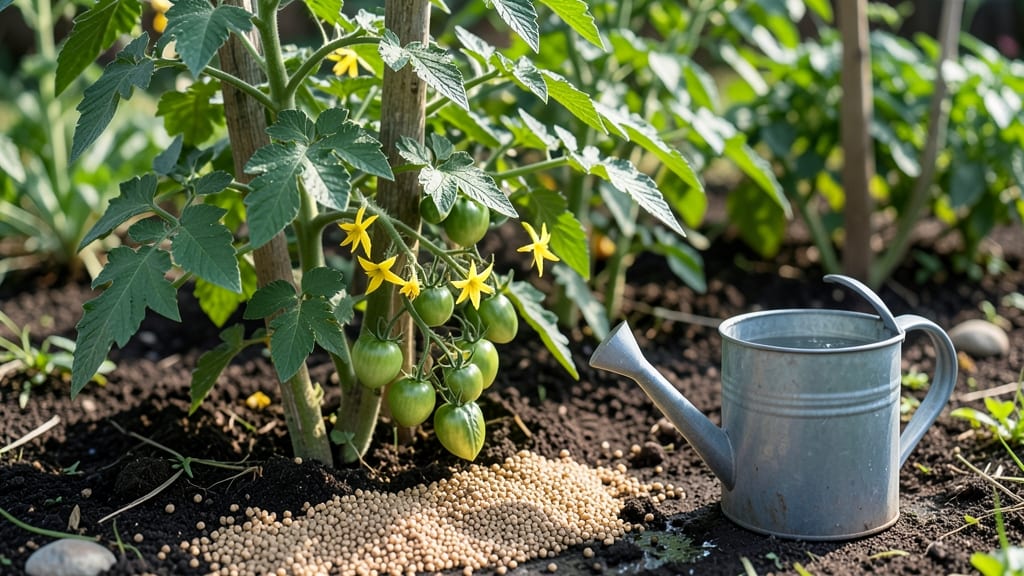
Learn how to increase flowering in tomatoes—and watch your harvests grow by mastering these three simple tweaks. The first year I grew tomatoes, my plants looked healthy but produced only a handful of green tomatoes before the season ended.
Turns out, my afternoon shade and inconsistent watering were sabotaging the blooms before they could set fruit.
Sunlight is non-negotiable: tomatoes need at least 6-8 hours of direct sun daily, with morning sun being the most critical. Pruning isn’t about shaping the plant—it’s about directing energy upward.
I remove suckers (those little shoots between the stem and branches) to keep the plant focused on flowering rather than leafy growth. Organic fertilizer matters too: a balanced feed with more phosphorus (the middle number) triggers blooming, while nitrogen-heavy mixes just make leaves.
What you’ll end up with is a plant covered in white and yellow blossoms, each one a potential tomato. The first ripe fruit appears in 60-70 days from transplanting, and with consistent care, you’ll keep harvesting until frost.
The secret isn’t complicated—it’s about giving your tomatoes what they really need, not just what you think they need.
This works for both backyard gardens and container-growing. Whether you’re dealing with indeterminate vines or compact bush varieties, the same principles apply. Let’s get those flowers blooming!
📚 In This Guide
- What you need
- Instructions
- Tips and common mistakes
- Wrapping up and next steps
What you need
- ● Tomato plants: Choose determinate (bush) or indeterminate (vining) varieties based on your space and goals.
- ● High-quality potting mix: 10–15 gallons (for containers) or 2–3 cubic feet (for in-ground planting). Opt for a well-draining mix with compost or aged manure (5–10% by volume).
- ● Balanced fertilizer: 10–10–10 or 5–5–5 NPK ratio (start with 1 tbsp per plant at transplanting).
- ● Bloom-boosting fertilizer: Low-nitrogen, high-phosphorus (e.g., 5–10–10 or 3–6–6) for flowering stages (1–2 tbsp per plant every 2–3 weeks).
- ● Pruning shears: Clean, sharp shears (sterilize with rubbing alcohol between cuts).
- ● Support structures: For indeterminate tomatoes: 6–8 ft tall stakes or trellis.
- ● For determinate tomatoes: Cages (4–5 ft tall) or sturdy wire supports.
- ● Mulch: 2–3 inches of straw, wood chips, or black plastic to retain moisture and regulate soil temp.
- ○ Watering can or hose with adjustable nozzle: Drip irrigation (optional but ideal) to avoid wetting leaves.
- ● pH test kit: To check soil pH (aim for 6.0–6.8; adjust with lime or sulfur if needed).
- ● Calcium supplement: Epsom salt (1 tbsp per gallon of water) or calcium nitrate to prevent blossom-end rot.
- ● Pollination aid: Small paintbrush or vibrating tool for indoor/poorly pollinated plants.
- ● Shade cloth: 30–50% coverage for hot climates (prevents stress during flowering).
- ● Compost tea: Homemade or store-bought to introduce beneficial microbes.
- ● Grow lights: LED or fluorescent (12–16 hrs/day) for indoor setups.
Step-by-Step guide to boosting tomato flower production
Here’s how I’ve coaxed more blossoms from my tomato plants year after year—through light, pruning, and feeding adjustments.
Maximize Sun Exposure for Early Flowering
Tomatoes need 8+ hours of direct sunlight daily to trigger flowering. If your plants are in partial shade, move them to a south-facing window or supplement with a grow light placed 6 inches above the canopy for 14 hours daily. I’ve seen plants in low light take 3 weeks longer to flower compared to those in full sun.
Watch for leggy growth—stems stretching toward light with sparse leaves. This is your signal to adjust. Rotate pots quarter-turn weekly so plants grow evenly toward the light source. If using a grow light, raise it as plants grow to maintain that 6-inch gap—too close causes leaf scorch, too far leads to weak stems.
Prune Strategically to Redirect Energy
Remove suckers (the small shoots growing between the main stem and branches) when they’re less than 2 inches long. These energy drains divert resources from flower production. I pinch them off with my thumb and forefinger—no tools needed. Prune in the morning so wounds dry before evening moisture sets in.
For determinate varieties, prune only suckers below the first flower cluster. For indeterminate types, prune suckers up to 12 inches below the first flower to encourage upward growth. Avoid heavy pruning after mid-July—late-season cuts delay ripening. Watch for yellowing leaves after pruning; this signals stress, so reduce pruning if you see it.
Feed with the Right Nutrients at Critical Times
Switch to a low-nitrogen, high-phosphorus fertilizer (like 5-10-10) once plants are 12 inches tall. Phosphorus promotes flowering, while excess nitrogen fuels leafy growth at the expense of blossoms. I mix 1 tablespoon of 10-20-10 fertilizer per gallon of water and apply it every 2 weeks during flowering.
Add calcium-rich material (like crushed eggshells or lime) to prevent blossom-end rot, which causes flowers to drop. Work 1 cup of crushed eggshells per plant into the soil at planting, then repeat every 4 weeks. You’ll notice fewer dropped flowers and stronger stems within 2-3 weeks of consistent feeding.
Manage Stress to Prevent Flower Drop
Flower drop often happens due to temperature swings or water stress. Keep soil evenly moist—never soggy, never dry. Water at the base in the morning to reduce evaporation. I use a soaker hose for deep, slow watering that encourages root growth. Avoid wetting leaves to prevent fungal diseases like early blight, which can stress plants.
If nights dip below 55°F, cover plants with frost cloth or move pots indoors temporarily. Tomatoes set flowers best in daytime temps of 70-85°F and nighttime temps above 55°F. Watch for wilting or curled leaves—this often means roots are struggling from uneven watering or temperature stress. Adjust immediately to save blossoms.
Tips & tricks for boosting tomato flowering
Took me years of trial-and-error to figure out—here are the game-changing details that actually work for more tomato blossoms.
Light Intensity Matters: That 14-hour grow light rule is critical, but intensity matters just as much. Use a full-spectrum LED grow light rated for at least 5000 lumens—cheaper bulbs won't provide the blue spectrum tomatoes need for flowering. I've seen plants under weak lights produce half as many flowers despite the same 14-hour schedule. Position the light so it covers the entire canopy evenly, not just the top leaves.
Pruning Precision: When removing suckers in Step 2, focus on the angle—cut at a 45-degree angle just above a leaf node. This prevents water from pooling at the wound site, reducing disease risk. For indeterminate varieties, leave 2-3 leaves below each flower cluster to maintain energy flow. I've noticed plants with proper pruning angles produce flowers 2 weeks earlier than those with jagged cuts.
Fertilizer Timing Secret: The 2-week interval for phosphorus fertilizer works best when applied at dawn after morning dew has evaporated. This gives roots maximum time to absorb nutrients before the heat of day. I've found that adding 1 tablespoon of Epsom salt per gallon (along with the fertilizer) boosts magnesium levels, which helps with flower development—just don't overdo it, as too much magnesium can inhibit calcium uptake.
Temperature Fine-Tuning: While the 70-85°F range is ideal, tomatoes actually set flowers most efficiently at 75-80°F during the day. If your greenhouse or windowsill gets hotter, use shade cloth (30-50% coverage) during peak afternoon sun. I've seen flower production drop by 40% in plants exposed to consistent 90°F+ temperatures—the heat stress causes buds to abort before opening.
Pro Tips for Increase Flowering In Tomatoes
- Took me years of trial-and-error to figure out—here are the game-changing details that actually work for more tomato blossoms.
- Light Intensity Matters: That 14-hour grow light rule is critical, but intensity matters just as much.
- Pruning Precision: When removing suckers in Step 2, focus on the angle—cut at a 45-degree angle just above a leaf node.
Frequently asked questions
Got questions about boosting tomato blooms? You’re not alone! Here are answers to the most common concerns—so you can grow a garden bursting with floriferous (that’s a fancy word for "flowery") tomatoes.
How much sunlight do tomatoes really need to flower?
Tomatoes thrive with 6–8 hours of direct sunlight daily. Less light? They’ll focus on leaves instead of flowers. If your garden is shady, try reflective surfaces (like white walls) or a sunny windowsill for container plants. Pro tip: Morning sun is ideal—it warms plants gradually, encouraging blooms.
Why aren’t my tomatoes flowering yet? What’s the hold-up?
Common culprits: cool nights (below 55°F/13°C), over-fertilizing with nitrogen (leads to leafy growth), or stress (like transplant shock). Check your variety—some (like 'Solar Fire') need longer daylight to trigger flowers. Adjust care and wait it out!
Can I prune tomatoes to make them flower more?
Prune suckers (the shoots in the leaf axils) to redirect energy to flowers/fruit. For indeterminate varieties, prune aggressively; for determinate, trim lightly to avoid stress. Warning: Over-pruning can reduce yield, so balance is key!
Does watering affect tomato flowering?
Yes! Inconsistent watering causes stress, which can drop flowers. Water deeply 1–2x/week (more in heat) and keep soil moist but not soggy. Mulch helps retain moisture. Bonus: Drip irrigation keeps leaves dry, preventing disease.
What’s the best fertilizer for more tomato flowers?
Use a balanced fertilizer (10-10-10) early, then switch to low-nitrogen, high-phosphorus (5-10-10) when blooms appear. Organic options like compost tea or bone meal also boost flowers. Avoid high-nitrogen feeds—they’ll give you leaves, not fruit!
My tomato flowers keep falling off! How do I stop it?
This is called blossom drop, often caused by temperature swings (above 90°F/32°C or below 55°F/13°C), overwatering, or poor pollination. Hand-pollinate with a brush, shade plants in heatwaves, and ensure even moisture. Patience: Some varieties (like 'Heatmaster') are more resilient.
Wrapping up and next steps
Increasing flowering in your tomatoes is all about giving them the right conditions—sunlight, pruning, and balanced nutrients—while keeping stress at bay. With these simple tweaks, you’ll be on your way to a bountiful harvest in no time! 🌱✨
Now that you’re armed with the know-how, grab your pruners and get growing! Start by observing your plants and adjusting care as needed—your future tomato feast depends on it. Happy gardening! 🍅🌞