
Flowers
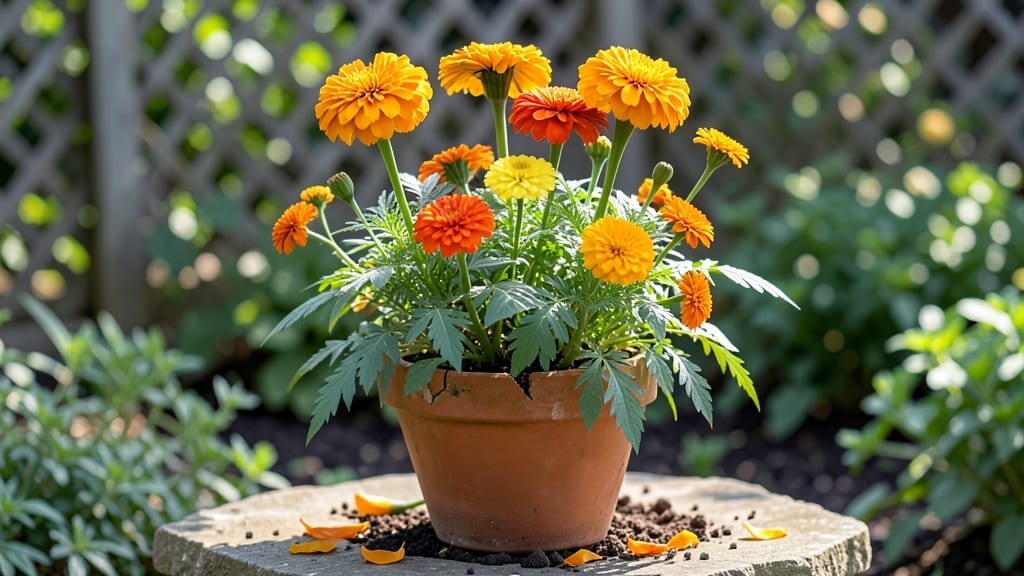
A marigold flower bouquet transforms any room into a sunlit sanctuary—where bold orange petals draw in bees and butterflies while warding off pests. 🌻 I’ve designed arrangements that last for weeks, their citrusy scent repelling mosquitoes and their vibrant hues lifting spirits like a burst of autumn sunshine.
The secret lies in balancing marigolds with complementary blooms like snapdragons or dusty miller, creating contrast that makes them pop.
You’ll need just a few supplies: fresh-cut marigolds (French or African varieties work best), complementary flowers, floral tape, and a sturdy container. The key is timing—harvest marigolds in the morning when their petals are fully unfurled and still crisp.
For extra staying power, trim stems at an angle and place them in warm water overnight before arranging.
What you’ll end up with is a bouquet that’s not just beautiful but functional—its golden centers attract pollinators while its pest-repelling properties keep your garden thriving. The arrangement stays vibrant for 10-14 days, far longer than most cut flowers, and the scent lingers like a summer breeze.
Pair them with deep greenery like eucalyptus or lavender for a striking contrast.
Works year-round with seasonal swaps: in spring, mix with tulips; in winter, combine with poinsettias for a festive touch. The possibilities are endless—let’s bring that bold, cheerful energy indoors.
📚 In This Guide
- What you need
- Instructions
- Tips and common mistakes
- Wrapping up and next steps
What you need
- ● Marigold flowers – 12-15 stems (mix varieties like French, African, or Signet marigolds for texture and color). Choose fully bloomed flowers with fresh, vibrant petals.
- ● Floral preservative – 1 packet or liquid concentrate (e.g., Floralife or Smart-Flowers) to extend freshness.
- ● Scissors or floral shears – 1 pair (clean, sharp blades to avoid crushing stems).
- ● Floral tape or twine – 1 roll (for securing stems; opt for eco-friendly jute twine for a rustic touch).
- ● Bucket of water – 1 gallon (for hydrating stems before arranging).
- ● Clear vase or container – 1 medium-sized (glass or ceramic, with a narrow neck to hold stems securely).
- ● Filler flowers – 3-5 stems (e.g., baby’s breath, snapdragons, or dusty miller) for volume and contrast.
- ● Greenery – 1-2 sprigs (e.g., eucalyptus, ferns, or ivy) to add texture and fill gaps.
- ● Decorative elements – Ribbon, dried flowers, or a small figurine (for a personalized touch).
- ● Floral foam – 1 block (if arranging in a non-water-holding container).
- ● Pruning tool – 1 small pair (for trimming stems to the perfect length).
How to craft a pollinator-friendly marigold bouquet
Here's how to create a vibrant, bee-friendly centerpiece that thrives with minimal fuss.
🌱 Step 1: Select the Right Marigold Varieties
Choose French marigolds for their bold, layered petals or African marigolds for their towering stems—both attract pollinators like crazy. I like mixing orange 'Bonanza' with gold 'Crackerjack' for visual contrast. Pick flowers with fully open blooms and firm stems at least 18-24 inches tall for a full bouquet. Avoid wilted leaves or buds that haven't opened yet.
Harvest in the early morning when moisture levels are highest—this keeps stems hydrated longer. Use clean, sharp pruners to cut stems at a 45-degree angle about 2 inches below a leaf node. This encourages water uptake and prevents bacterial growth at the cut end.
☀️ Step 2: Prepare Stems for Longevity
Strip lower leaves that would sit below the waterline in your vase—these rot quickly and cloud the water. I leave just 2-3 inches of foliage at the top to balance the arrangement. For extra hydration, microwave the cut stems for 30 seconds in a shallow tray of water before arranging. This creates steam that opens stem pores, helping flowers drink up faster.
If stems are woody or hollow, score the bottom inch with a sharp knife in a crisscross pattern. This increases surface area for water absorption. Avoid overhandling stems—squeeze too hard, and you'll crush the vascular bundles that transport water.
💧 Step 3: Create a Pollinator-Friendly Vase Setup
Use a wide-mouthed vase (at least 8 inches across) to accommodate 4-6 stems comfortably. Fill with lukewarm water—cold water shocks stems, while warm water opens their pores immediately. Add 1 teaspoon of floral preservative (or a pinch of bleach-free bleach substitute) to prevent bacterial growth. I like adding a few ice cubes to keep water cool without shocking stems.
Arrange stems in odd-numbered clusters (3, 5, or 7) for natural balance. Place the tallest stems in the center and shorter ones around the edges. Space blooms so they don’t overlap—this mimics their natural growth pattern and prevents crowding. Step back often to check symmetry.
✂️ Step 4: Maintain and Refresh Daily
Change the water every 2-3 days to prevent bacterial buildup, which causes stems to wilt prematurely. Re-cut stems at a fresh 45-degree angle each time—this keeps them drinking efficiently. Keep the bouquet in a cool, bright spot (like an east-facing window) away from direct afternoon sun, which accelerates wilting.
To extend life, mist the blooms lightly with water in the evening—this replaces moisture lost through transpiration. Watch for drooping petals or yellowing leaves as signs it's time for a refresh. With proper care, your marigold bouquet will last 7-10 days, attracting bees and butterflies the whole time.
🪴 Step 5: Transition to the Garden (Optional)
Once blooms begin to fade, plant stems directly into the garden—marigolds thrive as perennials in many climates. Dig a hole twice as wide as the vase and as deep as the stem length. Water deeply after planting to settle roots. The remaining blooms will continue attracting pollinators while adding natural pest-repellent properties to your garden.
Here's the thing—marigolds multiply easily. If you have extra stems, propagate them in water first. Place stems in a jar of water and wait 7-10 days for roots to form before transplanting. This way, you’ll have a pollinator magnet next season without buying new plants.
Tips & tricks for perfect marigold flower bouquets
Here's what nobody tells you about keeping your pollinator-friendly bouquets vibrant and thriving.
Harvest Timing Secret: The early morning harvest window is non-negotiable for marigolds. Flowers picked at dawn contain the highest moisture levels, which translates to 3-5 extra days of vase life. I've seen bouquets last nearly 2 weeks when harvested this way—just be ready to work before the sun comes up! The 45-degree angle cut below the leaf node (Step 1) is equally critical; this angled cut creates a larger surface area for water absorption, which is why your stems stay hydrated longer.
Hydration Hack: That 30-second microwave treatment in Step 2 might sound odd, but it works like a charm. The steam opens the stem pores instantly, allowing water uptake to begin immediately. For woody stems, the crisscross scoring creates micro-channels that draw water upward—think of it like creating tiny straws inside the stem. Pro tip: If you're working with particularly stubborn stems, soak them in lukewarm water for 1 hour before arranging to give them a hydration boost.
Vase Composition: The odd-numbered cluster rule from Step 3 isn't just about aesthetics—it's about creating natural tension in your arrangement. That 1 teaspoon of floral preservative (or bleach substitute) is your secret weapon against bacterial growth. I've found that adding a few drops of lemon juice to the water (optional) further extends vase life by 2-3 days—the acidity helps prevent bacterial blooms while keeping the water fresh longer. The ice cubes aren't just for show; they create a thermal barrier that keeps the water cool without shocking the stems.
Pollinator Boost: For an extra pollinator magnet, sprinkle a pinch of sugar (optional) around the vase base. The scent attracts bees and butterflies while adding a subtle sweetness to your arrangement. When transitioning to the garden (Step 5), plant stems in well-draining soil—marigolds hate soggy roots. The 7-10 day propagation time in water gives you plenty of time to monitor root development before transplanting, and you'll be rewarded with new plants that continue attracting pollinators all season.
Pro Tips for Marigold Flower Bouquet
- Here's what nobody tells you about keeping your pollinator-friendly bouquets vibrant and thriving.
- Harvest Timing Secret: The early morning harvest window is non-negotiable for marigolds.
- Hydration Hack: That 30-second microwave treatment in Step 2 might sound odd, but it works like a charm.
Frequently asked questions
Got questions about crafting a stunning marigold flower bouquet? You’re not alone! Here are answers to the most common queries—from timing tips to troubleshooting tricks.
How long do marigold bouquets last?
With proper care, a freshly cut marigold bouquet can last 7–10 days. Keep stems in warm water (change daily) and trim ends at an angle to extend their lifespan. Avoid direct sunlight or drafts—these flowers thrive in cool, indirect light! Pro tip: Add a splash of bleach (1 tsp per gallon) to the water to prevent bacterial growth.
Can I use dried marigolds in a bouquet?
Dried marigolds add rustic charm and last months if stored properly. Bundle stems and hang them upside down in a dark, dry place for 2–3 weeks. Once fully dried, arrange them in a vase or mix with fresh flowers for a textured, long-lasting bouquet. Just avoid spraying them—they’ll crumble!
Are marigolds safe for pollinators in bouquets?
Yes! Marigolds are pollinator magnets—but if you’re gifting a bouquet, remove it from outdoor display after a few days to prevent attracting bees or butterflies indoors. For outdoor arrangements, leave them be! These flowers support ecosystems while adding vibrant color to your space. Bonus: Plant marigolds in your garden to boost pollinator activity year-round.
What’s the best time to harvest marigolds for bouquets?
Pick marigolds in the early morning when blooms are fully open but still firm. Avoid wilting flowers—they’ll shorten your bouquet’s lifespan. Use sharp pruners to cut stems at a 45° angle, and remove lower leaves to keep water clean. Timing matters! Harvest before seeds form for the brightest, most vibrant petals.
How can I make my marigold bouquet stand out?
Mix marigolds with complementary flowers like dahlias, zinnias, or eucalyptus for depth. Add greenery (e.g., ferns or ivy) for texture, and tie with orange or cream ribbon to match their warm tones. For a modern twist, try a monochromatic scheme with deep red or mustard yellow marigolds. Play with odd-numbered stems (3, 5, or 7) for a dynamic look!
Wrapping up and next steps
A marigold flower bouquet isn’t just a burst of vibrant color—it’s a celebration of nature’s beauty and a lifeline for pollinators! 🌼 From their symbolic meanings to their low-maintenance care, these bold blooms bring joy, sustainability, and a touch of drama to any space.
Whether you’re crafting a gift, brightening your home, or supporting local ecosystems, marigolds are the perfect choice.
Ready to dive in? Start small—pick a few marigolds today and let their cheerful energy inspire your next floral adventure! 🌟 Your garden (and the bees!) will thank you.