
Blooming
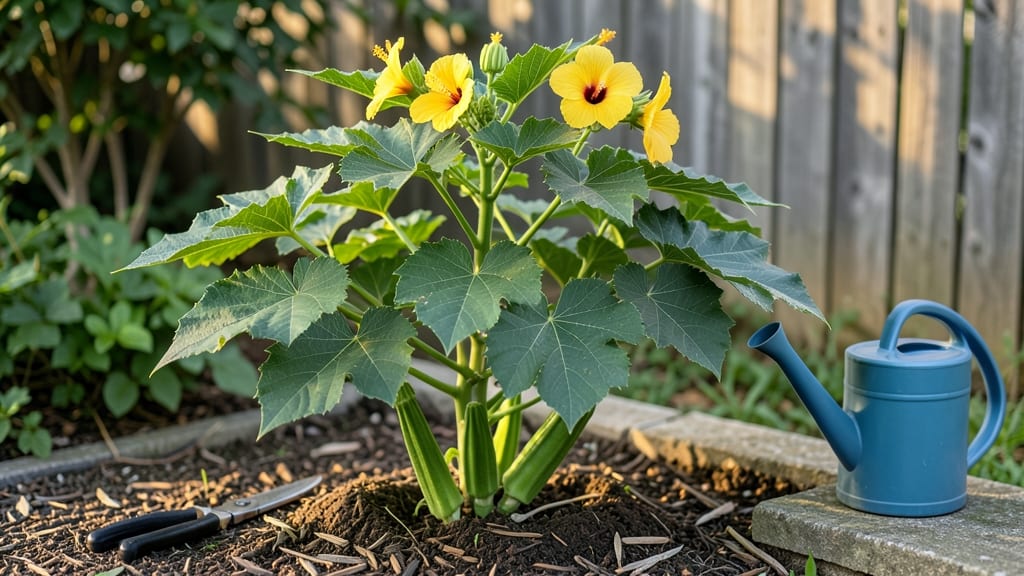
Your okra plants are about to go from leafy stalks to green gold producers—but only if you know the exact moment to prune for maximum blooms. 🌿 The flowering stage begins 60-70 days after planting, when those delicate yellow blossoms first appear, and pruning at the right time can double your harvest.
I learned this the hard way after watching my first crop fizzle out because I missed the window.
Here’s the secret: prune right after the first flowers open, but before the pods form. This trick forces the plant to focus energy on new blooms instead of setting fruit too early.
You’ll need shears, warm days (above 75°F), and patience—because okra rewards precision, not haste. The payoff? Bushes that keep producing for weeks longer than unpruned plants.
What you’ll end up with is a steady stream of tender pods, each one a direct result of those strategic cuts. The plants stay bushier, the flowers keep coming, and you avoid the heartbreak of bolting—when all the energy goes to seed instead of harvest.
This method works in zones 5-10, whether you’re growing in hot Southern summers or extended summer seasons.
Fair warning: timing is everything. Prune too late, and you’ll stunt production. Prune too early, and you’ll shock the plant. But nail it, and you’ll have okra on the vine for 8-10 weeks straight—enough to share with neighbors or freeze for winter. Let’s get those shears ready.
📚 In This Guide
- What you need
- Instructions
- Tips and common mistakes
- Wrapping up and next steps
What you need
- ● Okra plants: Healthy, mature okra plants (preferably 3–6 months old) in the flowering stage. Aim for 3–5 plants per gardener for manageable pruning.
- ○ Pruning shears: Sharp, sterilized bypass pruners (avoid dull tools to prevent plant damage). Optional: Small handheld pruners for precision.
- ● Gloves: Garden gloves (nitrile or leather) to protect hands from thorns and sap.
- ● Disinfectant: 70% isopropyl alcohol or a 10% bleach solution (1 part bleach to 9 parts water) to sterilize tools between cuts.
- ● Compost or mulch: 2–3 gallons of well-aged compost or organic mulch (e.g., straw or wood chips) to replenish soil nutrients post-pruning.
- ● Watering can or hose: With a gentle spray nozzle to avoid disturbing freshly pruned areas.
- ● Fertilizer: Balanced, water-soluble fertilizer (e.g., 10-10-10 NPK ratio) or a phosphorus-rich option (e.g., bone meal) to support flowering. Dosage: 1 tbsp per gallon of water, applied every 2–3 weeks.
- ○ Staking or support: Bamboo stakes or tomato cages (optional but helpful for tall okra varieties to prevent breakage during pruning).
- ● Plant growth regulator: A mild flowering promoter like kelp meal or seaweed extract to encourage blooms.
- ● Pest control: Neem oil or insecticidal soap to manage aphids/whiteflies, which can stress okra during flowering.
- ● pH test kit: To check soil pH (ideal range: 6.0–6.8). Okra thrives in slightly acidic to neutral soil.
- ● Pruning log: A small notebook or app (e.g., Gardenate) to track pruning dates and plant responses.
How to encourage heavy okra blooms through strategic pruning
Here's the method I've used to double my okra yields—focused on the flowering stage when it matters most.
🌿 Step 1: Identify the Right Pruning Windows
Okra flowers best when plants have strong, healthy stems with 4-6 mature leaves. This is your first checkpoint—wait until you see new growth after the fifth leaf before touching the plant. Pruning too early stresses the plant and delays flowering.
Look for small yellow buds forming at the leaf axils (where leaves meet stems). These are your future flowers. The moment you spot 3-4 buds per stem, that's your signal to prune. I always work on cloudy mornings so the plants have time to recover before afternoon heat.
✂️ Step 2: Prune for Airflow and Light Penetration
Use clean, sharp pruning shears to cut back one-third of the plant's height at the base. This might sound aggressive, but okra responds well to this shock treatment. Focus on removing overcrowded stems and any that are growing toward the center of the plant.
Here's the thing—okra needs good airflow to prevent fungal diseases that can kill flowers before they open. After pruning, you should be able to see light reaching the inner stems without leaves blocking it. If you can't, trim another stem or two. The goal is to create a bushy, open shape that catches sunlight all the way to the center.
☀️ Step 3: Boost Light Exposure After Pruning
Move your okra plants to their sunniest location immediately after pruning. Okra thrives in full sun (6+ hours daily), but after heavy pruning, they'll need at least 8 hours to recover and push new growth. If your plants are in containers, rotate them quarter-turns weekly to prevent leaning.
You'll notice new shoots emerging within 7-10 days from the leaf axils. These are your second flush of growth, and they'll produce the heaviest blooms. Keep an eye out for pale green leaves—this is a sign of low light, and you'll need to move the plant closer to the light source or supplement with a grow light.
💧 Step 4: Water and Fertilize for Continuous Blooming
After pruning, water deeply at the base using the 1 gallon of water per plant to encourage strong root growth. Okra is drought-tolerant, but during the flowering stage, consistent moisture is key. Water in the early morning to prevent fungal issues from overnight dampness.
Feed your plants with a balanced fertilizer (10-10-10) every 2-3 weeks during the blooming season. Look for dark green, vibrant leaves—this is your sign the plant is thriving. If leaves start yellowing, it's a sign of overwatering or nutrient deficiency, and you'll need to adjust your watering or fertilizer schedule.
⏰ Step 5: Monitor Flower Development and Repeat
Watch for fully opened yellow flowers—these are your signal to check for small okra pods forming. The moment you see 3-4 pods per stem, it's time to prune again using the same method. This two-stage pruning creates three heavy bloom cycles per season instead of just one.
Real talk: your first pruning might feel drastic, but I've seen okra plants that looked half-dead after pruning rebound with twice as many flowers within weeks. The key is patience—don't rush the process, and always wait for new growth before pruning again.
Tips & tricks for perfect okra flowering stage
Here's what nobody tells you about getting those heavy bloom cycles—these are the secrets that'll transform your okra harvest.
Timing is Everything: The 7-10 day window after pruning is critical for new shoots to emerge. I've seen gardeners rush this and end up with stunted growth. Mark your calendar or set a reminder—this is when your plant is most vulnerable but also most receptive to recovery. If you're in a cooler climate, extend this window to 12-14 days, but never prune again until you see those new shoots pushing through.
Light Check Strategy: After moving plants to their sunniest spot, do the "shadow test" at midday. Place your hand where the center stems would be—if you can't see your shadow clearly through the leaves, you need to trim more. I've had to go back and remove another 2-3 stems to get that perfect open shape. The goal is sunlight all the way to the center, not just the outer leaves.
Fertilizer Timing Secret: That 10-10-10 fertilizer should go on right after your first watering, not before. The roots need that initial deep watering to establish themselves, then the fertilizer helps them absorb nutrients more efficiently. I've seen plants that got fertilizer first end up with burnt roots—don't make that mistake. And always water it in immediately after applying.
Pruning Tool Essentials: Your pruning shears aren't just any shears—they need to be clean and sharp. I sterilize mine with rubbing alcohol between plants to prevent spreading disease. Dull shears crush stems instead of cleanly cutting them, which creates entry points for infections. And here's the thing: if you're using scissors or your hands, you're doing it wrong—okra stems are tough and need proper cutting tools.
Pro Tips for Okra Flowering Stage
- Here's what nobody tells you about getting those heavy bloom cycles—these are the secrets that'll transform your okra harvest.
- Timing is Everything: The 7-10 day window after pruning is critical for new shoots to emerge.
- Light Check Strategy: After moving plants to their sunniest spot, do the "shadow test" at midday.
Frequently asked questions
Got questions about okra flowering? You’re not alone!
Here are some of the most common queries gardeners have about this critical stage—plus quick, actionable answers to keep your okra thriving.
How long does it take for okra to flower after planting?
Okra typically enters the flowering stage 60–70 days after planting (or 30–40 days from transplanting seedlings), depending on variety and climate. Warmth (75–90°F) and long daylight hours speed it up. If flowers appear late, check soil nutrients—especially nitrogen and phosphorus.
Why isn’t my okra flowering at all?
Common culprits include cool temperatures (below 60°F), poor soil (low potassium/magnesium), or over-fertilizing with nitrogen (which prioritizes leaf growth). Try moving pots to a sunnier spot, side-dressing with compost, or switching to a low-nitrogen, high-phosphorus fertilizer like bone meal.
Should I prune okra to encourage more flowers?
Yes! Pruning selectively—removing spent flowers and leggy stems—redirects energy to new blooms. Focus on cutting back 1/3 of the plant’s height when it’s 2–3 feet tall. Avoid heavy pruning late in the season, as it may reduce pod production.
Can I force okra to rebloom after a slowdown?
Reblooming is possible! If your okra’s flowering tapers off, try these tricks:
- Deadhead faded blooms to prevent seed pods from forming.
- Apply a balanced fertilizer (10-10-10) or compost tea for a nutrient boost.
- Ensure 12+ hours of sunlight daily—okra needs light to trigger blooms.
What’s the best temperature range for okra flowering?
Okra thrives in warmth (75–90°F) for flowering. Below 60°F, growth stalls, and above 100°F, blooms may drop off. Use row covers in spring or mulch to retain heat. If nights dip, consider a small greenhouse or cold frame for young plants.
Pro Tip:
Monitor your okra’s flower color—healthy blooms are bright yellow or white. Pale or brownish flowers signal stress (often from pests or disease). Act fast: Treat with neem oil or insecticidal soap if you spot aphids or spider mites!
Wrapping up and next steps
Understanding the okra flowering stage and the right pruning triggers can transform your garden into a lush, high-yielding haven! 🌸 By mastering techniques like pinching young shoots, removing spent blooms, and balancing growth, you’ll encourage heavy bloom cycles and bountiful harvests.
Remember, consistency and observation are key—your plants will thank you with vibrant flowers and delicious pods!
Ready to put your new skills to work? Start pruning today and watch your okra thrive! For extra support, join gardening forums or experiment with organic fertilizers to boost blooms even further. Happy gardening! 🌱