
Flowers
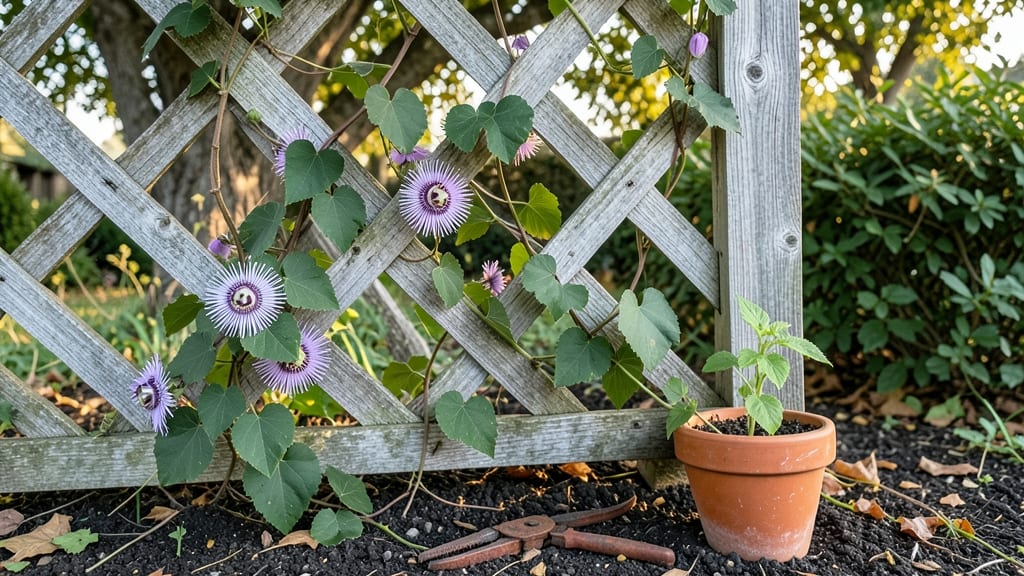
Growing passion flower climbing vines feels like bringing a slice of the Amazon to your balcony—just with less humidity and more blooms. 🌿 These tropical vines (Passiflora spp.) transform containers into lush vertical gardens, their intricate flowers unfurling like nature’s own stained glass.
The key? Mimicking their native conditions without overcomplicating things.
You’ll need a sturdy trellis or obelisk (metal or wood works), a container with drainage at least 12 inches deep, and well-draining soil mixed with compost. Passion vines thrive in full sun but tolerate partial shade, making them adaptable for patios or sunny windows.
Water when the top inch of soil dries out—never let them sit soggy, or root rot will cut your blooms short.
With the right care, you’ll see those exotic, velvety blooms appear by midsummer, followed by a cascade of fruit (edible in some varieties!). Prune in late winter to shape the vine and encourage new growth, and watch as your container becomes a magnet for hummingbirds and butterflies.
The payoff? A year-round display of color and texture, even in containers.
Works for both hardy varieties like Passiflora caerulea (blue passionflower) and tropical types such as P. edulis (passionfruit). Whether you’re a container gardener or a small-space enthusiast, this vine delivers drama without the fuss. Let’s get those roots climbing!
📚 In This Guide
- What you need
- Instructions
- Tips and common mistakes
- Wrapping up and next steps
What you need
- ● Passion flower seeds or young plants: Choose a variety like Passiflora edulis (passion fruit) or Passiflora caerulea (blue passion flower). Start with 2–3 seeds or 1–2 nursery plants per container for best results.
- ● Large containers: Use 5-gallon pots or larger (minimum 12–18 inches deep) with drainage holes. Terracotta or fabric grow bags work well.
- ● High-quality potting mix: A well-draining blend like 50% cactus/succulent mix + 50% peat or coconut coir. Avoid heavy garden soil.
- ● Slow-release fertilizer: Look for a balanced 10-10-10 or 14-14-14 formula to mix into the soil at planting.
- ● Support structure: A trellis, obelisk, or sturdy wire frame (at least 4–6 feet tall) for climbing.
- ● Gloves and pruning shears: For handling thorny vines and trimming.
- ● Watering can or hose with a gentle spray nozzle: Passion flowers hate soggy roots—water deeply but infrequently.
- ○ Mulch (optional): 2–3 inches of bark or straw mulch to retain moisture and regulate soil temperature.
- ● Sunlight access: A south- or west-facing spot with 6+ hours of direct sunlight daily (or a grow light for indoor setups).
- ● Patience (and a little creativity!): Passion flowers grow fast but need time to establish. Expect blooms in 6–12 months.
- ● 🌡️ Temperature matters: Keep soil temps above 50°F (10°C) for germination (seeds) or transplanting.
- ● ✨ Boost blooms: Feed with a low-nitrogen, high-phosphorus fertilizer (like 5-10-10) every 4–6 weeks during growing season.
- ● 🔥 Thorns are real: Wear gloves when pruning—these vines pack a punch!
Step-by-step guide to growing lush passion flower vines in containers
Let’s turn your patio into a tropical paradise with these bold, fragrant climbers.
🪴 Step 1: Choose the Right Container and Soil Mix
Passion vines thrive in well-draining containers with 5-6 gallons of capacity—think large pots or half barrels with drainage holes. I use terra cotta or fabric pots to prevent root rot, especially in humid climates. Avoid plastic unless it’s breathable, as passion vines hate soggy roots.
Fill the container with a lightweight, airy mix of 50% potting soil, 30% perlite, and 20% compost. This blend mimics their native tropical soil while preventing compaction. Moisten the mix until it’s damp but not dripping—passion vines need consistent moisture, but their roots must breathe.
🌱 Step 2: Plant and Support the Vine
Dig a hole twice as wide as the root ball but no deeper. Gently remove the vine from its nursery pot and loosen the roots if they’re circling. Place it in the hole, then backfill with soil, pressing lightly to eliminate air pockets. Water deeply to settle the roots—you’ll know it’s right when water runs freely from the drainage holes.
Install a strong trellis or obelisk immediately. Passion vines grow 10-20 feet annually, so the support must be at least 6 feet tall and sturdy enough to handle their weight. I use metal or wooden lattice for durability. Secure the vine loosely to the trellis with soft ties, leaving room to grow.
☀️ Step 3: Position for Sun and Humidity
Passion flowers crave full sun (6+ hours daily) but tolerate morning sun with afternoon shade in hot climates. Place your container where it gets bright, indirect light if you’re in a scorching zone—leaves will scorch otherwise. Watch for yellowing leaves or drooping vines as signs of too much heat.
Mist the vine daily in dry climates or set the pot on a tray of pebbles with water to boost humidity. These tropical beauties love moisture in the air—think 70-80% humidity if possible. If your air feels dry, group the container with other plants to create a microclimate.
💧 Step 4: Water and Feed for Nonstop Blooms
Water when the top 2 inches of soil feel dry—about once every 2-3 days in summer, less in winter. Passion vines store water in their thick stems, so deep watering once a week often suffices. Avoid wetting the leaves to prevent fungal issues, and always water at the base.
Feed with a balanced liquid fertilizer (10-10-10) every 4-6 weeks during spring and summer. I switch to a low-nitrogen, high-phosphorus formula (5-10-10) when buds form to encourage bold, vibrant blooms. Reduce feeding in fall and winter—the vine rests then.
✂️ Step 5: Prune and Train for Health and Beauty
Prune late winter or early spring before new growth starts. Cut back overly long vines by one-third to encourage bushier growth and more flowers. Remove any dead, diseased, or crossing branches—this improves airflow and prevents pests. Use clean, sharp shears to avoid tearing the stems.
Train new growth along the trellis by tying vines loosely every 2-3 feet as they climb. This prevents tangling and ensures even distribution of energy. If a vine grows too leggy, pinch back the tips to encourage branching—this leads to more blooms and a fuller look.
Tips & tricks for perfect passion flower climbing vines
Here's what I've learned from years of growing these stunning tropical climbers without a single failure.
Container Selection: Avoid plastic pots unless they're specifically labeled breathable—passion vines despise soggy roots. Terra cotta or fabric pots with drainage holes are your best bet, especially in humid climates. I've found that adding a layer of landscape fabric at the bottom of the container prevents soil from clogging the drainage holes over time.
Soil Mix Strategy: The 50-30-20 blend of potting soil, perlite, and compost is perfect, but here's the secret: mix in a handful of worm castings for extra nutrients. These tropical vines love organic matter, and worm castings provide slow-release nutrition that keeps them thriving. The key is to keep this mix loose—compacted soil will strangle those delicate roots.
Trellis Installation: When installing your trellis, position it slightly off-center from the container. This encourages the vine to grow outward first, creating a more balanced plant structure. I also recommend using soft plant ties rather than wire—wire can cut into the stems as they grow. Check the ties every few weeks to ensure they're not too tight as the vine thickens.
Humidity Hacks: If your climate is particularly dry, create a mini greenhouse effect by placing a clear plastic dome over the container for the first few weeks. This helps establish the vine while you work on creating the ideal humidity environment. Once established, group your passion vine with other plants to create a natural microclimate that maintains that 70-80% humidity these tropical beauties crave.
Pro Tips for Passion Flower Climbing
- Here's what I've learned from years of growing these stunning tropical climbers without a single failure.
- Container Selection: Avoid plastic pots unless they're specifically labeled breathable—passion vines despise soggy roots.
- Soil Mix Strategy: The 50-30-20 blend of potting soil, perlite, and compost is perfect, but here's the secret: mix in a handful of worm castings for extra nutrients.
Frequently asked questions
Got questions about growing Passiflora vines in containers?
You’re not alone—these stunning climbers are full of surprises! Here are answers to the most common queries to help you cultivate lush, blooming passion flowers with confidence.
How fast do passion flower vines grow in containers?
Passion flowers are fast growers—expect 10–15 feet per season with ideal care! In containers, growth slows slightly but can still reach 6–10 feet annually. Prune regularly to manage size and encourage bushier blooms. Pro tip: Use a trellis early to guide vines and prevent tangling.
When is the best time to plant passion flowers in pots?
Plant after the last frost in spring (USDA Zones 8–11) or start indoors 8–10 weeks before your last frost date. If you’re in cooler climates, treat them as annuals or overwinter them indoors. Passiflora thrives in warmth—avoid planting when night temps dip below 50°F (10°C).
Can I grow passion flowers in small containers?
Yes, but size matters! Aim for at least a 5-gallon pot (18+ inches deep) for mature vines. Smaller pots (1–3 gallons) work for young plants or dwarf varieties like Passiflora caerulea, but they’ll need frequent watering and fertilizing. Ensure drainage holes are present to prevent root rot.
Why aren’t my passion flowers blooming?
Blooms love sun + patience! Common culprits:
Choose a durable, open trellis with horizontal bars (3–4 feet tall) for climbing. Options:
Passiflora blooms best when slightly stressed—let the soil dry slightly between waterings!
What’s the best trellis for passion flower vines?
Bonus: Train vines with soft ties or twist ties until they latch on naturally.
Wrapping up and next steps
Growing passion flower climbing vines in containers is a rewarding way to bring tropical beauty to your space—without the fuss! 🌿 With the right soil, sunlight, and care, you’ll enjoy nonstop blooms and lush foliage that thrives year after year.
Whether you’re a beginner or a seasoned gardener, these vines offer a stunning, low-maintenance way to elevate your patio or balcony.
Ready to transform your outdoor area? Start small—pick a sunny spot, grab your supplies, and plant your first vine today! 🌸 For extra inspiration, explore container gardening tips or share your progress with fellow plant lovers. Happy growing!