
Flowers
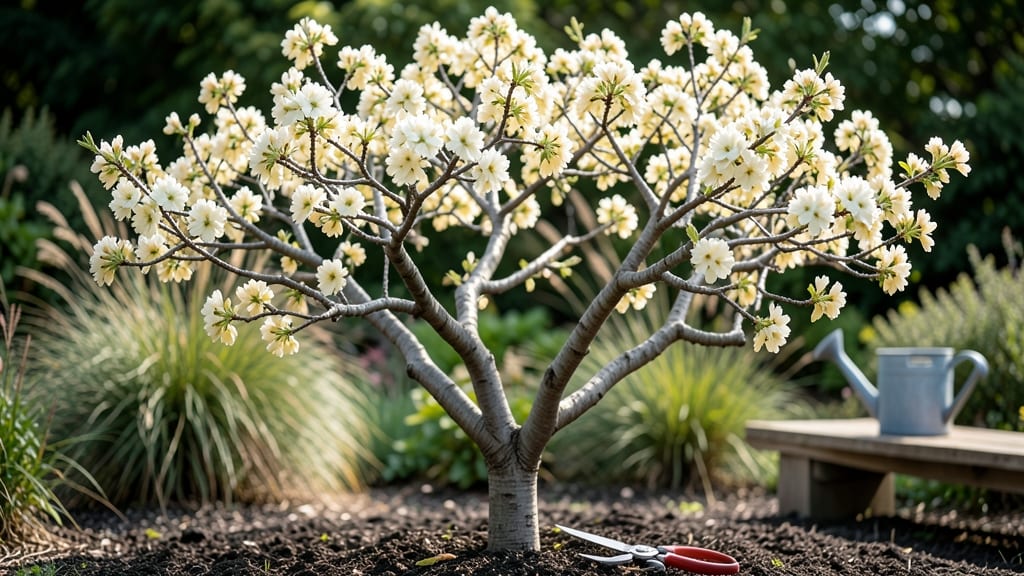
Persimmon tree flowers arrive like nature’s golden surprise—delicate and fleeting, but packed with potential for that first sweet harvest. 🌸 I’ve watched mine burst into bloom each spring, their four-petaled stars catching the morning light before the heat of the day.
The secret to seeing more of these stunning flowers—and the fruit they promise—starts with understanding their quirks, from pollination needs to the right trimming times.
American persimmons and Asian varieties have different floral personalities: one needs cold winters to flower well, while the other thrives with a little more warmth.
Both reward patience with vibrant blooms, but only if you give them the right conditions—well-draining soil, full sun, and a little extra care during their first few years. The payoff? Clusters of flowers that transform into glossy, honey-sweet fruit by fall.
Here’s where it gets interesting: three strategic trims each year can double your bloom count. Prune in late winter to shape the tree, again after flowering to encourage fruit set, and once more in summer to keep the canopy open.
Each cut sends a signal to the tree—more light, more air, more chances for those golden flowers to shine. The result? A tree that keeps blooming longer and producing heavier harvests.
Whether you’re growing American persimmons for their rust-colored leaves or Asian varieties for their sweeter fruit, the same principles apply. The key is timing: watch for those first blossoms, then work with the tree’s natural rhythm.
Before you know it, you’ll have a persimmon tree that’s not just surviving, but thriving—and filling your kitchen with homegrown goodness.
📚 In This Guide
- What you need
- Instructions
- Tips and common mistakes
- Wrapping up and next steps
What you need
- ● Persimmon tree saplings or seeds: Choose between Diospyros kaki (Asian persimmon) or Diospyros virginiana (American persimmon). For saplings, opt for 1–3-year-old grafted varieties for faster blooms.
- ● Well-draining soil mix: 60% topsoil, 30% compost, and 10% perlite or sand (pH 6.0–7.0). Pro tip: Test soil pH before planting! 🌡️
- ● Organic mulch: 2–3 inches of wood chips or straw to retain moisture and regulate temperature.
- ● Garden trowel & shovel: For planting and soil prep.
- ● Pruning shears (bypass or anvil): Sharp, sterilized blades (size #2 or #3 for branches up to 1.5 inches thick).
- ○ Grafting tools (optional): Grafting knife, grafting tape, and rooting hormone for advanced propagation.
- ● Watering can or hose with nozzle: Drip irrigation works best for consistent moisture.
- ● Gloves & safety goggles: Protect hands from thorns and eyes from debris.
- ● Sunlight: Full sun (6+ hours daily). Persimmon trees thrive in USDA Zones 4–9.
- ● Space: Mature trees need 20–30 feet of width. Dwarf varieties fit smaller yards.
- ● Patience: Seed-grown trees take 5–7 years to bloom; grafted trees may flower in 2–3 years.
- ● Local climate knowledge: Check frost dates—persimmons are sensitive to late frosts! ❄️
- ● Slow-release fertilizer (10-10-10 NPK ratio) for nutrient boosts.
- ● Tree stakes & ties for young saplings in windy areas.
- ● Pest control: Neem oil or insecticidal soap for aphids/spider mites.
- ● Flower food or liquid bloom booster (apply during spring budding).
Step-by-Step instructions for encouraging persimmon tree flowers
Here’s how to coax vibrant blooms from your persimmon tree—no fancy tricks, just smart care.
🌱 Step 1: Prune for Airflow and Light
Start by thinning out crowded branches to let sunlight reach the center of the tree. Persimmons need full sun (6+ hours daily) to set flowers, so I remove any limbs blocking light. Focus on removing dead, crossing, or weak branches first—they compete with healthy growth for energy.
Use clean, sharp pruning shears to make cuts just above a bud or branch collar. Avoid leaving stubs—this invites disease. After pruning, step back and check for gaps. If the canopy still looks dense, trim another 10% of branches. You’ll see new growth sprout within 2-3 weeks—that’s your sign the tree is responding.
☀️ Step 2: Feed for Flower Production
Persimmons thrive with balanced fertilizer (10-10-10 or similar) applied in early spring before buds swell. I scatter ½ cup per inch of trunk diameter around the drip line, then water deeply to activate the nutrients. This jumpstarts root activity, which fuels flower development.
Skip heavy nitrogen in late summer—it encourages leafy growth at the expense of blooms. Instead, switch to a low-nitrogen, high-phosphorus fertilizer (like 5-10-10) in late winter to prime the tree for spring flowering. You’ll notice buds forming by mid-March in most climates.
💧 Step 3: Water Strategically
Deep watering once a week (more in drought) keeps roots healthy without drowning them. Persimmons hate soggy soil, so I check moisture by digging 2 inches down—if it’s dry, water again. Overwatering stresses the tree and can drop buds before they open.
Mulch with 2-3 inches of organic mulch (like shredded bark) to retain moisture and regulate soil temperature. Keep mulch 6 inches away from the trunk to prevent rot. Consistent moisture ensures buds stay plump and vibrant—wilting flowers rarely recover, so monitor closely during dry spells.
✂️ Step 4: Thin Flowers for Larger Fruit
Once blooms appear, thin clusters to 3-5 flowers per stem. This may seem counterintuitive, but it prevents overcrowding and lets remaining fruit grow bigger. Use sterilized pruners to snip excess blooms at the base—never tear them off, which damages stems.
Thinning also improves air circulation, reducing fungal risks like powdery mildew. Watch for yellowing leaves or sticky residue on stems—these are early signs of stress. If you see them, prune back lightly to reduce the tree’s workload and encourage stronger blooms next season.
Tips & tricks for perfect persimmon tree blooms
Here's what nobody tells you about keeping your persimmon tree flowering beautifully year after year.
Pruning Precision: When you're thinning branches in Step 1, look for "water sprouts"—those fast-growing, vertical shoots that steal energy from flower production. These often appear at branch junctions and can be removed completely. I've seen trees go from sparse blooms to abundant flowers after just one targeted pruning session focused on these energy vampires. The key is to step back after each cut—your goal is sunlight reaching all the way to the trunk.
Fertilizer Timing: The early spring application in Step 2 is critical, but don't stop there. In Step 4 when you're thinning flowers, apply a light dose of fish emulsion (2-3-2 ratio) around the drip line. This gives the tree a quick boost of micronutrients that directly support flower development. The timing matters because it coincides with when the tree is already putting energy into blooms, not just leaves.
Watering Wisdom: That "once a week" guideline in Step 3 is a baseline, but your tree's needs change with the seasons. During bud formation (late winter to early spring), increase to twice-weekly watering if the top 2 inches of soil feel dry. The buds are particularly vulnerable to moisture stress—think of them like delicate balloons that deflate when dehydrated. A simple soil moisture meter makes this easy to track without guesswork.
Flower Thinning Strategy: When you're limiting to 3-5 flowers per stem in Step 4, prioritize keeping the largest, healthiest blooms. Look for flowers with the most vibrant color and firmest petals—they'll produce the best fruit. I've found that thinning in two stages works best: first when flowers first appear, then again after they've been open for 3-4 days. This two-step approach gives you better control over final fruit size.
Pro Tips for Persimmon Tree Flowers
- Here's what nobody tells you about keeping your persimmon tree flowering beautifully year after year.
- Pruning Precision: When you're thinning branches in Step 1, look for "water sprouts"—those fast-growing, vertical shoots that steal energy from flower production.
- Fertilizer Timing: The early spring application in Step 2 is critical, but don't stop there.
Frequently asked questions
Got questions about growing and caring for persimmon tree flowers? You’re not alone! Here are some of the most common queries—plus quick, practical answers to help you nurture stunning blooms year-round.
When do persimmon trees flower, and how long does it last?
Persimmon trees typically bloom in early spring (March–April), just before or with their leaves. The flowers last 2–3 weeks, but some varieties (like Diospyros kaki) may have sporadic blooms in late summer. For year-round interest, prune strategically to encourage reblooming.
Why aren’t my persimmon tree flowers opening, or they’re falling off?
Flower drop is often due to stress—check for underwatering, overwatering, or poor soil drainage. Other culprits:
- Late frost: Flowers are frost-sensitive; protect young blooms with frost cloth.
- Pollinator shortage: Persimmons need bees/wasps. Plant bee-friendly flowers nearby.
- Heavy fruit load last year: Trees prioritize fruit over flowers. Prune sparingly in winter to balance energy.
Can I force persimmon flowers to bloom indoors or in containers?
Persimmon trees are not ideal for indoor forcing, but dwarf varieties (like Diospyros virginiana ‘Meader’) thrive in large containers with full sun. For blooms:
- Use well-draining potting mix and keep soil consistently moist (not soggy).
- Place near a south-facing window or use grow lights for 6+ hours/day.
- Limit container size to 15–20 gallons to prevent root-bound stress.
How does pruning affect flower production?
Pruning boosts blooms if done right! For persimmons:
- Winter pruning (dormant season): Remove dead, crossing, or inward-growing branches to improve airflow.
- Avoid heavy spring pruning—it removes next year’s flower buds (which form on old wood).
- Thin dense areas to let sunlight reach inner branches, encouraging more flower clusters.
Are there persimmon tree alternatives with easier or more frequent flowers?
If persimmons seem finicky, try these low-maintenance, flower-rich alternatives:
Tree
Flower Season
Bonus Traits
Japanese Maple (Acer palmatum)
Spring (some rebloom in fall)
Stunning foliage, compact sizes, drought-tolerant.
Crabapple (Malus spp.)
Spring (heavy, fragrant blooms)
Attracts pollinators, disease-resistant varieties available.
Serviceberry (Amelanchier)
Early spring (white/pink clusters)
Edible berries, wildlife-friendly, adaptable soil.
For persimmon-like fruit + flowers, consider loquat (Eriobotrya japonica)—it blooms in fall/winter and produces edible fruit!
Wrapping up and next steps
Growing persimmon tree flowers is a rewarding journey that brings beauty and fragrance to your garden year-round—with the right care and trimming techniques! Whether you’re a seasoned gardener or just starting, these blooms are a fantastic addition, offering both aesthetic charm and practical benefits. 🌸
Now that you’re equipped with the knowledge to nurture your persimmon tree, why not take the next step? Start by observing your tree’s growth, experiment with the trimming methods shared, and enjoy the stunning results. Happy gardening—your persimmon tree’s future blooms will thank you! 🌿