
Trees
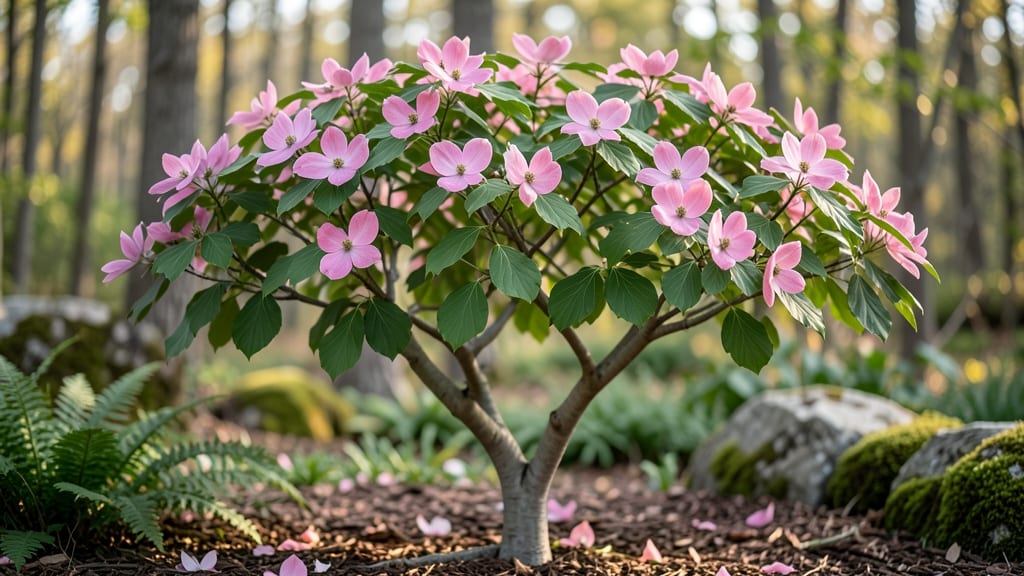
The stunning pink flowering dogwood flowering tree turns any garden into a living painting with its showstopping blooms and graceful silhouette. I’ve watched mine steal the show every spring, its delicate pink flowers standing out against the green backdrop like a masterpiece.
What makes it special isn’t just the blooms—it’s the way it holds its elegance through all four seasons, from fresh spring foliage to fiery fall colors.
This tree thrives in partial shade, making it perfect for understory planting or as a focal point near patios where dappled light creates a dreamy atmosphere. Its minimal pruning needs mean less work and more time enjoying its beauty—ideal for busy gardeners who still want a standout centerpiece.
Pair it with ferns or hostas for a lush woodland vibe, or contrast its soft pink with bold blue hydrangeas for a cottage garden charm.
Imagine your garden in late spring, when the dogwood’s blooms catch the morning light, or in autumn, when its leaves turn a stunning crimson.
It’s the kind of tree that makes neighbors pause and ask, “What is that gorgeous thing?”—and the answer is simple: a pink flowering dogwood doing its magic. The best part? It grows steadily without fuss, becoming a natural anchor for your landscape over time.
Whether you’re designing a formal garden, a relaxed cottage retreat, or a modern minimalist space, this tree adapts beautifully. Its versatility is its secret weapon—it works as a single specimen, in small groupings, or even as a natural border.
Let’s talk about how to make it the star of your outdoor space.
📚 In This Guide
- What you need
- Instructions
- Tips and common mistakes
- Wrapping up and next steps
What you need
- ● Pink flowering dogwood tree: Choose a healthy 1-3 gallon container-grown sapling (or a bare-root option for fall planting). Look for vibrant pink buds and sturdy branches!
- ● High-quality soil: 2-3 cubic yards of well-draining, slightly acidic soil (pH 4.5–6.0). Mix in 20% compost or peat moss for optimal nutrients.
- ● Mulch: 3–4 inches of organic mulch (pine bark or shredded leaves) to retain moisture and suppress weeds.
- ● Fertilizer: Slow-release, acidic fertilizer (e.g., 10-10-10 or a tree-specific blend) for spring/fall feedings.
- ● Watering supplies: Garden hose with adjustable nozzle (for deep watering).
- ● 5-gallon watering can (for young seedlings).
- ● Pruning tools: Bypass pruners (for small branches).
- ● Loppers (for thicker stems).
- ● Sterilizing solution (rubbing alcohol or bleach water) to prevent disease.
- ○ Support stakes (optional): 2–3 wooden or metal stakes + soft tree ties if planting in windy areas.
- ● Soil pH test kit to monitor acidity levels.
- ● Tree guard or protective barrier to deter pests (e.g., deer or rabbits).
- ● Slow-release watering granules for drought-prone areas.
- ● Decorative rocks or edging for a polished garden bed.
Step-by-Step instructions for planting and caring for pink flowering dogwood
Here’s how to give your dogwood the perfect start for years of stunning pink blooms.
🌱 Step 1: Choose the Right Planting Spot
Pink flowering dogwood thrives in partial shade, with 4-6 hours of morning sun and afternoon shade to protect its delicate blooms. Avoid full sun, which can scorch the leaves, or deep shade, which weakens flowering. Look for a spot with well-draining soil—dogwoods hate soggy roots, so test your soil by digging a hole and checking for water pooling.
I always plant mine near a patio or walkway where I can enjoy the spring display up close. The tree’s layered branches create natural shade, making it a great companion for other shade-loving plants like hostas or ferns. If your yard has heavy clay soil, amend it with 2-3 inches of compost to improve drainage before planting.
🪴 Step 2: Dig and Plant with Care
Dig a hole twice as wide as the root ball but no deeper—dogwoods dislike being buried too deeply, which can suffocate the roots. Gently loosen the roots if they’re circling tightly in the container. Place the tree in the hole so the top of the root ball sits 1-2 inches above ground level—this prevents water from pooling at the base.
Backfill with the original soil, tamping lightly to remove air pockets. Water deeply right after planting to settle the soil and encourage root spread. Mulch around the base with 2-3 inches of organic mulch, keeping it 6 inches away from the trunk to prevent rot. This helps retain moisture and regulates soil temperature, which is especially important in hot climates.
☀️ Step 3: Water and Fertilize for Strong Growth
Water your dogwood deeply once a week during the first growing season, ensuring the soil stays evenly moist but not soggy. After the first year, it becomes more drought-tolerant, but consistent moisture still supports vibrant blooms. You’ll know it’s getting enough water when the top 2-3 inches of soil feel damp—stick your finger in to check.
Fertilize lightly in early spring with a balanced, slow-release fertilizer (10-10-10 ratio). Avoid heavy feeding, which can lead to excessive leaf growth at the expense of flowers. Dogwoods are low-maintenance—over-fertilizing stresses them out. If your tree looks healthy but isn’t flowering, it might need more sunlight or less fertilizer.
✂️ Step 4: Prune Strategically for Health and Beauty
Dogwoods need minimal pruning—just remove dead, diseased, or crossing branches in late winter or early spring before new growth starts. Never prune in summer, as it can stimulate weak, late-season growth that won’t harden off before frost. If you notice leggy branches, prune them back to a strong lateral branch to encourage a fuller shape.
Here’s the thing—dogwoods bloom on old wood, so avoid heavy pruning. If you accidentally cut back too much, don’t worry; the tree will recover, but it may take a year or two to rebound fully. Focus on shaping rather than size reduction, and you’ll keep your dogwood looking elegant for decades.
Tips & tricks for perfect pink flowering dogwood care
These simple strategies will help you avoid common mistakes and keep your dogwood thriving for decades.
Site Selection Secret: When evaluating morning sun exposure in Step 1, pay special attention to how shadows change throughout the day. The ideal spot should receive sun until around 11 AM, then transition to shade. I've seen dogwoods struggle in spots that get intense afternoon sun—even if they're labeled "partial shade." If your yard only offers full sun options, consider planting near a north-facing wall or under a larger tree that provides afternoon shade.
Planting Depth Matters: The 1-2 inches above ground level recommendation in Step 2 is critical—this prevents root rot from water pooling. I learned this the hard way when my first dogwood developed yellow leaves after heavy rains. To check depth after planting, gently press the soil around the base and look for a slight mound that slopes away from the trunk. This helps water drain efficiently while keeping roots stable.
Watering Wisdom: The "deeply once a week" guideline in Step 3 works for most climates, but adjust based on your soil type. Sandy soils may need more frequent watering, while clay soils can hold moisture longer. I test soil moisture by pushing a screwdriver into the ground—if it goes in easily, your dogwood has enough water. For newly planted trees, consider using a soaker hose to deliver water directly to the root zone without disturbing the soil.
Pruning Precision: When pruning in late winter (Step 4), focus on removing branches that are thinner than a pencil—these are more likely to be dead or diseased. I always make cuts just outside the branch collar (the swollen area where the branch meets the trunk) to promote faster healing. For shaping, aim to maintain the tree's natural vase shape rather than creating a perfectly round canopy, as this encourages more abundant flowering.
Pro Tips for Pink Flowering Dogwood Flowering Tree
- These simple strategies will help you avoid common mistakes and keep your dogwood thriving for decades.
- Site Selection Secret: When evaluating morning sun exposure in Step 1, pay special attention to how shadows change throughout the day.
- Planting Depth Matters: The 1-2 inches above ground level recommendation in Step 2 is critical—this prevents root rot from water pooling.
Frequently asked questions
Got questions about your pink flowering dogwood? You’re not alone! Whether you’re a first-time grower or a seasoned gardener, these answers will help you keep your tree thriving with ease. Here’s what we hear most often:
When is the best time to plant a pink flowering dogwood?
The ideal time to plant your dogwood is in early spring or fall, when temperatures are mild (50–70°F). This gives roots time to establish before extreme heat or cold. Avoid planting in summer—drought stress can stunt growth. Pro tip: Amend the soil with compost for better drainage!
How long does it take for a dogwood to flower after planting?
Patience is key! Most dogwoods take 3–5 years to flower after planting, depending on climate and care. Young trees focus on root and branch growth first. Healthy soil, consistent watering, and minimal stress speed up the process. If yours isn’t blooming after 5 years, check for over-fertilizing or poor drainage.
Can I prune my dogwood in spring? Why do some sources say not to?
Yes, but timing matters! Prune in late winter or early spring (before buds swell) to avoid promoting new growth that could be damaged by late frosts. Avoid heavy pruning in summer—it stresses the tree. Focus on:
- Removing dead/diseased branches
- Thinning crowded branches for airflow
- Avoiding “heading back” (cutting back stems)
What are the best alternatives if my dogwood isn’t thriving?
If your dogwood struggles with pests, disease, or climate, consider these low-maintenance, flowering alternatives:
Tree
Key Traits
Care Level
Serviceberry (Amelanchier)
White/pink flowers, edible berries, fall color
Moderate (drought-tolerant once established)
Kousa Dogwood (Cornus kousa)
Pink flowers, larger fruit, resistant to borers
Low (great for humid climates)
Fothergilla
Wavy white flowers, vibrant fall foliage
Easy (thrives in partial shade)
Why are my dogwood leaves yellowing or curling?
Yellowing leaves often signal overwatering, nutrient deficiency, or pests. Check these fixes:
- Overwatering: Let soil dry between waterings; dogwoods hate soggy roots.
- Nutrients: Test soil—low iron (yellow leaves) or nitrogen (pale green) may need fertilizer.
- Pests: Curling leaves? Look for dogwood borers or spider mites. Prune infected branches and treat with neem oil.
- Disease: Fungal spots? Improve airflow and avoid overhead watering.
Wrapping up and next steps
The pink flowering dogwood isn’t just a stunning addition to your landscape—it’s a low-maintenance star that brings year-round elegance with minimal effort. Whether you’re drawn to its breathtaking blooms, vibrant fall foliage, or even its winter interest, this tree proves that beauty and simplicity go hand in hand. 🌸
Ready to transform your outdoor space? Start by choosing the perfect spot, gathering your tools, and giving your dogwood the care it deserves. With just a little attention, you’ll enjoy its magic for seasons to come—what’s not to love? 🌿