
Flowers
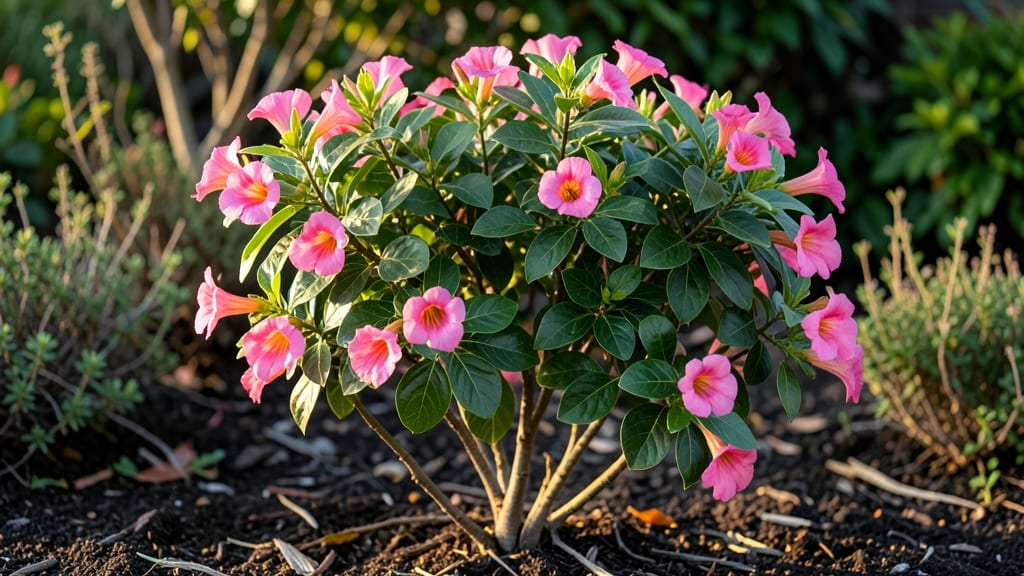
Growing a pink trumpet flower shrub in containers is like having a tropical vacation on your patio—those velvety blooms practically glow in summer. 🌸 I learned the hard way that these beauties need warmth, humidity, and just the right balance of sunlight to keep them flowering nonstop.
The key? Matching their jungle roots to your container setup without overcomplicating things.
You’ll need a 10-15 gallon container with drainage holes, a well-draining potting mix, and a spot that gets 6-8 hours of morning sun (afternoons can be too harsh).
These shrubs love warmth—Zone 10-12 is ideal, but they’ll thrive in pots even in cooler climates if you bring them indoors before frost. The secret to their bold blooms? Regular feeding with a balanced fertilizer every 4-6 weeks during growing season.
Once established, your shrub will reward you with trumpet-shaped blooms that last all summer, and with gentle pruning after each flush, you’ll encourage even more flowers. The foliage stays glossy and lush, making it a standout in any container garden. Just watch for mealybugs—their favorite snack—and you’re golden.
Perfect for small spaces, balconies, or even as a striking patio centerpiece. With the right care, your pink trumpet shrub will be the talk of the neighborhood—no greenhouse required.
📚 In This Guide
- What you need
- Instructions
- Tips and common mistakes
- Wrapping up and next steps
What you need
- ○ Pink trumpet flower shrub (Allamanda cathartica) – Choose a healthy, well-established plant (nursery-grown is easiest for containers). Optional: Seeds or cuttings if propagating from scratch.
- ● Container – A 5-gallon or larger pot (minimum 12–18 inches deep) with drainage holes. Pro tip: Terracotta or fabric pots work best for airflow!
- ● Well-draining potting mix – A blend of 60% potting soil, 30% perlite or pumice, and 10% compost to prevent root rot.
- ● Slow-release fertilizer – Look for a balanced 10-10-10 or 20-20-20 formula to nourish your shrub over 3–6 months.
- ● Support structure – A small trellis, bamboo stakes, or tomato cage (since trumpet vines can grow 6–10 feet in containers!).
- ● Garden gloves – Protect your hands from thorns (yes, they’ve got ‘em!).
- ● Trowel or small shovel – For planting and repotting.
- ● Watering can with a rose nozzle – Ensures gentle, deep watering without disturbing roots.
- ● Pruning shears – For shaping and encouraging bushier growth.
- ○ Optional but helpful: Mulch (orchid bark or pine fines) to retain moisture.
- ● Time-release fertilizer spikes for convenience.
- ● A sunny spot with 6+ hours of direct sunlight daily.
How to grow stunning pink trumpet flower shrubs in containers
Here's the foolproof method I use to keep these vibrant shrubs blooming all season long.
🪴 Step 1: Choose the Right Container and Soil Mix
Select a container that's at least 18 inches wide and deep with drainage holes—pink trumpet flowers (Datura) need room to spread their roots and won't tolerate soggy feet. I prefer terracotta pots because they wick away excess moisture and prevent root rot, which is the #1 killer of container-grown daturas.
Fill the bottom third with gravel or expanded clay pebbles to create a proper drainage layer. This prevents water from pooling at the roots, which these tropical beauties despise. Then add a high-quality well-draining potting mix enriched with 20% perlite or pumice to improve aeration. The mix should feel like a damp sponge—not wet or dry.
☀️ Step 2: Position for Maximum Sun Exposure
Pink trumpet flowers crave full sun (6-8 hours daily), so place your container in the sunniest spot available. A south-facing patio or balcony works best, but even west-facing locations will produce abundant blooms. I've found that these plants tolerate light shade better than most tropicals, but the more sun they get, the bigger and more vibrant their trumpet-shaped flowers become.
Here's the thing—if you notice the leaves turning yellow or the plant wilting despite regular watering, it's getting too much direct afternoon sun. Move it to a spot with morning sun and afternoon shade. The ideal temperature range for these shrubs is 70-85°F, so they'll struggle in extreme heat or cold snaps below 50°F.
💧 Step 3: Water Deeply but Infrequently
Water only when the top 2-3 inches of soil feel completely dry—stick your finger in to check. These plants store water in their thick stems, so they prefer dry spells between waterings. Overwatering causes root rot faster than anything else, so I always err on the side of underwatering until I see the leaves start to droop slightly.
When you do water, soak the soil until it runs freely from the drainage holes. Empty the saucer immediately after watering to prevent the roots from sitting in standing water. During the hottest summer months, you might need to water every 2-3 days, but in cooler weather, once a week is often enough.
✂️ Step 4: Prune for Bushier Growth and Continuous Blooms
Pinch back the tips of new growth when stems reach 6-8 inches tall to encourage bushier, fuller plants. This is where it gets fun—watch how the plant branches out instead of growing tall and leggy. I also remove spent blooms regularly to prevent seed pods from forming, which redirects the plant's energy into producing more flowers.
In late winter or early spring, give your pink trumpet flower shrub a hard pruning—cut back all stems to about 12 inches tall. This might seem drastic, but it stimulates fresh, vigorous growth and keeps the plant from becoming too woody. Just don't prune into the cold of winter, as new growth won't survive frost.
🌿 Step 5: Feed for Vibrant Blooms and Healthy Foliage
Start fertilizing in early spring with a balanced, water-soluble fertilizer (10-10-10) diluted to half strength. Feed every 4-6 weeks during the growing season to support continuous blooming. I've found that these plants respond beautifully to occasional feedings but don't need heavy fertilization—they're not particularly hungry.
In late summer, switch to a low-nitrogen, high-phosphorus fertilizer (5-10-10) to encourage more blooms. The key is to fertilize after watering, so the roots have time to absorb the nutrients before the soil dries out. Always follow the package instructions for application rates—over-fertilizing can burn the roots and cause more harm than good.
Tips & tricks for perfect pink trumpet flower shrubs
Here's what I've learned after years of growing these dramatic beauties—little details that make all the difference between a struggling plant and one that bursts with color.
Container Selection: While terracotta is my favorite, fiberglass or plastic containers work too—as long as they have drainage holes. The key is size: anything smaller than 18 inches will restrict root growth and limit blooms. I've seen daturas in 24-inch containers produce twice as many flowers as those in 12-inch pots.
Soil Mix Secrets: The 20% perlite or pumice recommendation isn't just about drainage—it also prevents soil compaction. I like to add a handful of orchid bark to the mix for extra aeration. This helps prevent that dreaded "soggy bottom" syndrome where roots suffocate from poor air circulation.
Sunlight Strategy: That 6-8 hours of full sun is non-negotiable, but here's the trick: rotate your container every few weeks. This ensures even sun exposure all around the plant, preventing lopsided growth. I notice the most vibrant blooms develop on the sides that get morning sunlight.
Pruning Timing: The 6-8 inch pinch-back rule works, but I've found that doing this in late spring—when new growth is most vigorous—gives the best results. For hard pruning in winter, wait until you see fresh green growth appearing before cutting back to 12 inches. This tells me the plant has survived winter dormancy.
Pro Tips for Pink Trumpet Flower Shrub
- Here's what I've learned after years of growing these dramatic beauties—little details that make all the difference between a struggling plant and one that bursts with color.
- Container Selection: While terracotta is my favorite, fiberglass or plastic containers work too—as long as they have drainage holes.
- Soil Mix Secrets: The 20% perlite or pumice recommendation isn't just about drainage—it also prevents soil compaction.
Frequently asked questions
Got questions about growing and caring for your pink trumpet flower shrub? You’re not alone! Here are some of the most common queries—and their answers—to help you keep those stunning blooms thriving, especially in containers.
How do I keep my pink trumpet flower shrub blooming all season?
Prune lightly after each flowering cycle to encourage new growth. Deadhead spent blooms regularly, and feed with a balanced low-phosphorus fertilizer (like 10-10-10) every 4-6 weeks during spring and summer. Pro tip: These shrubs love full sun—at least 6-8 hours daily—to fuel those bold blooms!
Can pink trumpet flower shrubs survive winter in containers?
In colder climates (below 10°F/-12°C), move potted shrubs to a sheltered spot or wrap them in burlap and mulch the roots. If temps drop below freezing, consider overwintering indoors near bright light. Pro tip: Reduce watering in winter—they’re semi-dormant!
What’s the best alternative if my pink trumpet flower shrub isn’t thriving?
Try coral bells (Heuchera) for vibrant foliage, abutilon (Chinese lantern) for similar trumpet-shaped flowers, or pentas for long-lasting blooms. All three are container-friendly and handle partial shade better than some pink trumpet varieties. Pro tip: Check soil drainage first—these shrubs hate soggy roots!
Why are my pink trumpet flowers dropping buds before they open?
Bud drop is often caused by temperature stress (too hot/cold) or irregular watering. Ensure consistent moisture (but not waterlogged soil) and protect from sudden drafts or extreme heat. Pro tip: A light Epsom salt spray (1 tsp/gallon) can boost magnesium and reduce stress.
How often should I repot my pink trumpet flower shrub?
Repot every 2-3 years or when roots circle the pot. Choose a container 1-2 inches larger with drainage holes and fresh, well-draining potting mix. Pro tip: Spring is the best time to repot—give it 2-3 weeks to adjust before heavy feeding!
Wrapping up and next steps
The pink trumpet flower shrub is a stunning, low-maintenance addition to your garden or patio, bringing vibrant color and easy care to any space. Whether you’re a seasoned gardener or just starting out, its adaptability to containers makes it a perfect choice for adding bold blooms with minimal fuss.
Ready to transform your outdoor space? Start by choosing your container and soil mix, then plant your pink trumpet shrub with confidence—you’ll be rewarded with breathtaking flowers in no time! 🌸