
Pruning
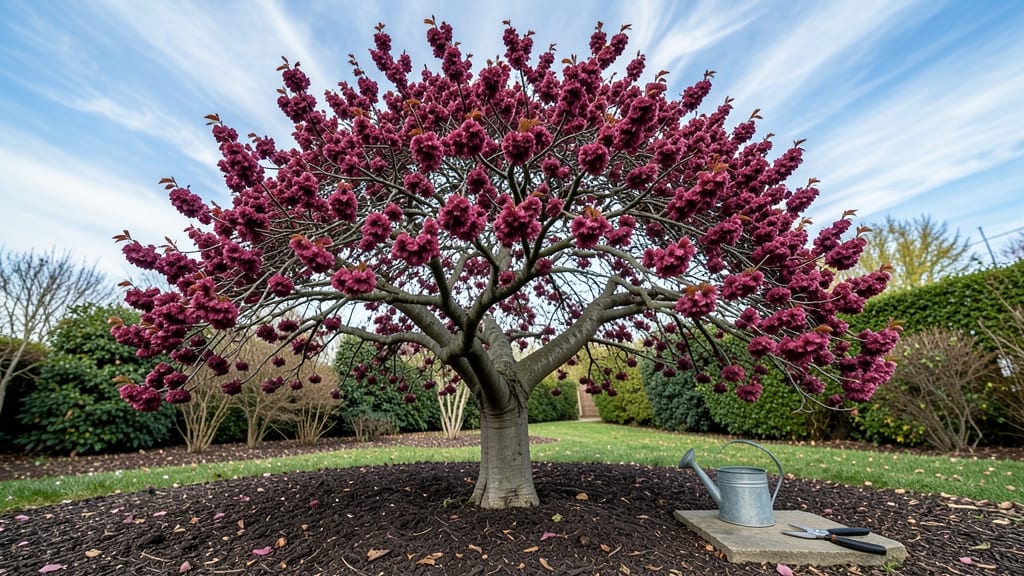
The Royal Burgundy flowering cherry tree transforms your garden into a living painting with its dramatic pink blooms that steal the show every spring. 🌸 I remember the first time I saw one in full bloom—it felt like a burst of confetti against the bare branches of winter, and I knew I had to have one in my own yard.
This isn’t just a tree; it’s a statement piece that turns heads and fills the air with a sweet, intoxicating fragrance that lingers for weeks.
What makes this tree a garden designer’s dream is its versatility. Plant it as a focal point near your patio where you can enjoy the show up close, or use it as a border accent along a driveway to create a dramatic entrance.
The deep burgundy foliage in summer and fiery red fall colors mean it’s four-season eye candy, not just a spring spectacle. Pair it with evergreens like boxwood or perennials with soft textures—like hostas or astilbes—to let its bold personality shine without competing for attention.
You’ll love how effortlessly it blends into both formal landscapes and cottage-style gardens. A single specimen makes a showstopping centerpiece, while multiple trees create a romantic, old-world alleyway effect.
Just be mindful of its mature size—25 to 30 feet tall and wide—so give it room to spread its branches without crowding other plants. The trade-off? Minimal maintenance once established, with just an occasional prune to shape it and keep those branches from becoming a bird’s nest.
Here’s the secret: plant it where you’ll see it daily—whether that’s from your kitchen window, a garden bench, or the sidewalk as you leave for work. That’s where the magic happens.
The blooms arrive earlier than most cherries, and the scent? Unbeatable. Let’s talk about how to make it the star of your outdoor space without the fuss.
📚 In This Guide
- What you need
- Instructions
- Tips and common mistakes
- Wrapping up and next steps
What you need
- ● Pruning shears: Sharp, bypass-style shears (for clean cuts on small branches). Recommended: Felco F-2 or similar (5–7" blade).
- ○ Loppers: For thicker branches (up to 2" diameter). Optional: Ratcheting loppers for extra leverage.
- ● Pruning saw: Curved-tooth saw for branches over 2" thick (e.g., Fiskars X27).
- ● Gloves: Heavy-duty, cut-resistant gloves (e.g., Mechanix Wear or gardening-specific brands).
- ● Disinfectant: 70% isopropyl alcohol or rubbing alcohol to sterilize tools between cuts.
- ○ Pruning sealant: Optional but helpful for large cuts (e.g., Tanglefoot Tree Wound Pruning Seal).
- ● Ladder or step stool: Sturdy, non-slip (e.g., 12–16' extendable ladder for tall trees).
- ● Trash bags: Heavy-duty for debris (10–20 gallon size).
- ● Safety gear: Safety glasses and long sleeves/pants to protect from thorns and debris.
- ● Tree pruning guide: Printed or digital reference for Royal Burgundy specifics (e.g., University of Minnesota Extension resources).
- ● Hose or bucket: For rinsing tools post-pruning.
- ● Marking spray: Non-toxic paint (e.g., white spray) to mark cuts before pruning.
- ● Mulch: Organic mulch (e.g., shredded bark) to protect the base after pruning.
Step-by-step guide for planting and cultivating a Royal Burgundy flowering cherry tree
This stunning tree thrives with proper placement and care—here's how to set it up for decades of vibrant color.
🪴 Step 1: Choose the Perfect Planting Location
The Royal Burgundy's dramatic foliage demands full sun exposure—at least 6 hours of direct sunlight daily. I always scout the site first, looking for an area where the tree will receive morning sun and afternoon shade if summers run hot in your zone. The tree's rich burgundy leaves burn in intense afternoon heat, so partial afternoon shade extends its color season.
Dig a hole twice as wide as the tree's root ball but no deeper. The top of the root ball should sit 2 inches above ground level—this prevents waterlogging and encourages strong root growth. Amend the native soil with 3-4 inches of compost mixed into the bottom of the hole to improve drainage and nutrient availability.
🌱 Step 2: Plant with Care to Ensure Strong Establishment
Gently remove the tree from its container and loosen any circling roots with your fingers. Place it in the hole so the root flare (where roots meet trunk) sits at ground level. Backfill with native soil mixed with 1 part compost, tamping lightly every 6 inches to eliminate air pockets. Water deeply to settle the soil around roots.
Here's the thing—Royal Burgundy cherries are sensitive to transplant shock. I always water immediately after planting, then again every 2-3 days until new growth appears. Mulch the base with 2-3 inches of organic mulch, keeping it 6 inches away from the trunk to prevent rot. This mulch layer locks in moisture and regulates soil temperature.
☀️ Step 3: Provide Seasonal Care for Year-Round Color
Spring is when this tree truly shines. Apply a balanced, slow-release fertilizer in early spring as buds swell, following package rates. The Royal Burgundy's pink blossoms appear before leaves in early spring—this is the moment that matters. Prune immediately after flowering to shape the tree and remove any crossing branches that rub together.
Summer care focuses on watering. Deep water once weekly during dry spells, aiming for 1-1.5 inches of water per week. The tree's dark foliage makes it look thirsty, but overwatering causes more problems than drought. You'll notice healthy leaves maintain their deep burgundy color—wilting or yellowing indicates either underwatering or poor drainage.
✂️ Step 4: Prune Strategically for Health and Beauty
Prune in late winter or early spring before new growth begins. Remove dead, diseased, or crossing branches first. Then thin the canopy to improve airflow—this prevents fungal diseases that can discolor leaves. I always step back after pruning to check for balanced shape, aiming for an open center that lets light penetrate to lower branches.
Never remove more than 25% of the tree's foliage in one season. The Royal Burgundy responds poorly to heavy pruning, and aggressive cuts stimulate excessive water sprouts that detract from its elegant form. Use sterilized pruners to make clean cuts just outside the branch collar.
⏰ Step 5: Prepare for Winter Dormancy
Fall is when this tree stores energy for next year's spectacular display. Stop fertilizing by mid-summer to allow roots to harden off. Water deeply until the ground freezes, keeping soil moist but not soggy. The tree's burgundy leaves provide natural winter interest, but if heavy snow loads branches, gently brush off accumulation to prevent breakage.
Mulch again in late fall with 3-4 inches of organic mulch, extending the circle to the tree's drip line. This protects roots from freeze-thaw cycles. I've seen Royal Burgundy cherries thrive in USDA zones 5-8 with proper winter care—just avoid planting in low-lying areas where cold air settles.
Tips & tricks for perfect Royal Burgundy flowering cherry tree cultivation
Between us, these small details make all the difference for a Royal Burgundy that thrives for decades. I learned this the hard way after watching three young trees struggle—here's what I wish I knew sooner.
Sunlight Strategy: That 6 hours of direct sunlight isn't just about quantity—it's about timing. Position your tree to catch morning sun first, then transition to afternoon shade if your summers hit 90°F+. I've seen Royal Burgundies in full afternoon sun develop brown patches by late July, while those with afternoon shade maintain their dramatic burgundy hue all season. Use a simple shade cloth during peak heat if needed.
Root Ball Positioning: The 2 inches above ground level rule isn't just about drainage—it's about preventing girdling. When you plant, make sure the root flare (where roots meet trunk) sits exactly at soil level. I've seen trees planted too deep develop root stress that shows up as yellowing leaves by spring. Take your time here—this is the foundation for everything that follows.
Watering Wisdom: Those every 2-3 days waterings in the first year are critical, but timing matters just as much. Water deeply in the morning so the soil has all day to dry slightly before evening. Wet foliage at night invites fungal diseases that can discolor those prized burgundy leaves. I use a rain gauge to track my 1-1.5 inches per week—it's easy to overestimate how much water your tree actually gets.
Pruning Precision: When you're pruning those 25% or less of branches in late winter, focus on creating an open center. This isn't just about looks—it's about airflow. I make it a point to step back after pruning and imagine sunlight filtering through the canopy. The goal is to let that light reach all the way to the lower branches, which is where the most vibrant color develops. Use sterilized pruners and make cuts just outside the branch collar for the cleanest results.
Pro Tips for Royal Burgundy Flowering Cherry Tree
- Between us, these small details make all the difference for a Royal Burgundy that thrives for decades.
- Sunlight Strategy: That 6 hours of direct sunlight isn't just about quantity—it's about timing.
- Root Ball Positioning: The 2 inches above ground level rule isn't just about drainage—it's about preventing girdling.
Frequently asked questions
Got questions about the stunning Royal Burgundy flowering cherry tree? You’re not alone! Here are answers to the most common queries—from planting to pruning—so you can keep your tree thriving and stunning year-round.
When is the best time to plant a Royal Burgundy flowering cherry tree?
The ideal time to plant is early spring or fall, when temperatures are mild and the tree can establish roots without stress. Avoid extreme heat or frost—these trees are sensitive to transplant shock. If you’re in a warmer climate, opt for late fall to allow roots to settle before summer.
How much sunlight does this tree need to bloom beautifully?
Full sun (6+ hours daily) is a must for vibrant pink blooms and lush foliage. Plant in a spot with unfiltered sunlight, like an open yard or near a south-facing wall. Partial shade may reduce flowering, but the tree will still grow—just expect fewer dramatic blossoms.
Can I prune my Royal Burgundy cherry tree at any time?
Prune in late winter or early spring (before buds swell) to avoid removing next year’s flowers. Avoid heavy pruning in fall—it can stimulate weak growth susceptible to winter damage. Light shaping after blooming is fine, but skip major cuts during the growing season.
What pests or diseases should I watch for with this tree?
Common issues include cherry leaf spot (fungus causing brown spots) and borers (insects tunneling into bark). Prevent fungal issues with proper spacing for airflow and watering at the base. Treat borers early with beneficial nematodes or prune infested branches.
Is the Royal Burgundy cherry tree suitable for small yards or containers?
While it matures at 20–30 feet tall, its narrow shape makes it a great fit for small to medium yards. For containers, choose a large pot (2+ feet deep) and prune regularly to control height. Just know it’ll need yearly repotting as it grows—root-bound trees suffer!
Wrapping up and next steps
The Royal Burgundy flowering cherry tree is a stunning addition to any landscape, offering year-round visual interest with its dramatic pink blooms and rich burgundy foliage.
Whether you're a seasoned gardener or just starting, pruning and care will help this beauty thrive for decades—so grab those shears and get to work!
Ready to transform your outdoor space? Start by assessing your tree’s needs—then dive into pruning with confidence. Your future garden (and neighbors!) will thank you. 🌸✂️