
Flowers
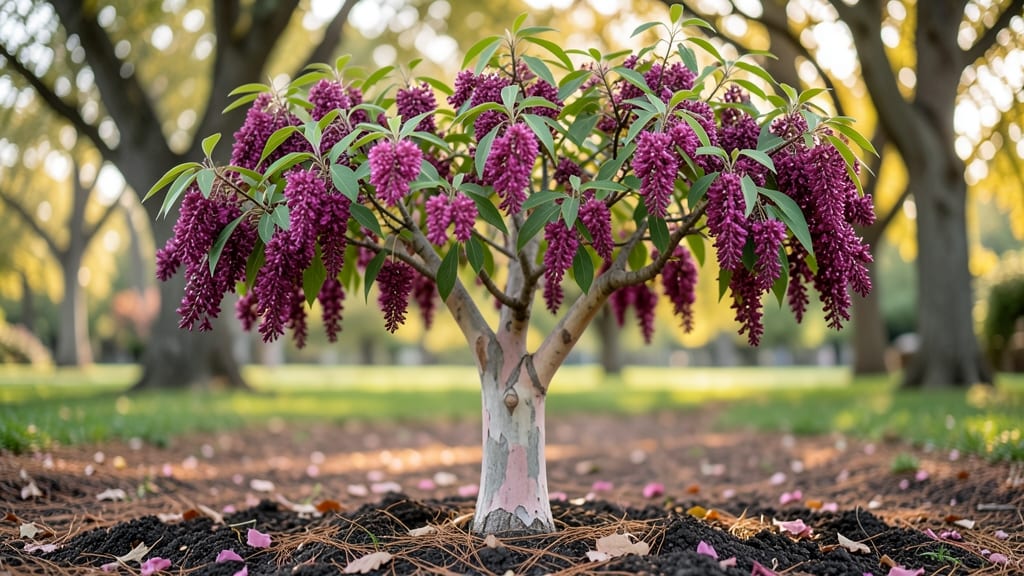
There’s nothing quite like a tree with purple cluster flowers transforming your yard into a dreamy, pollinator paradise. 🌿 Jacaranda, wisteria, and lilac aren’t just trees—they’re living art installations that steal the show in spring and summer.
Their cascading blooms attract bees, butterflies, and hummingbirds while adding vertical drama to any landscape.
The secret to their success? Plant them where they’ll get full sun and well-draining soil—most thrive in zones 5-9, though some varieties stretch beyond. A mature jacaranda can reach 30 feet tall, while wisteria’s vines climb trellises or fences, creating a romantic canopy.
Pair them with lavender, roses, or ornamental grasses to extend the color show and keep the garden buzzing with life.
Imagine your patio shaded by fragrant lilacs in May or your driveway framed by wisteria’s lavender cascades in June. These trees don’t just grow—they perform, turning ordinary spaces into Instagram-worthy backdrops. With the right placement, they’ll be the star of your garden for decades.
Whether you’re planting a single specimen or designing a full border, these purple powerhouses work in small urban yards or sprawling estates. Just give them room to shine—and watch your garden become the neighborhood’s most talked-about feature.
📚 In This Guide
- What you need
- Instructions
- Tips and common mistakes
- Wrapping up and next steps
What you need
- ● Tree variety: Choose a native or well-adapted species like Cercis canadensis (Eastern Redbud), Lagerstroemia (Crape Myrtle), or Wisteria (for climbing vines with clusters).
- ● Planting site: Full sun to partial shade (6+ hours of sunlight for most varieties).
- ● Well-draining soil (amend with compost if needed).
- ● Planting materials: 1–3 saplings (3–5 feet tall for faster blooms) or
- ● Seeds (if starting from scratch—germination can take 2–4 weeks).
- ● Garden tools: Trowel or spade (for digging).
- ● Pruning shears (for shaping or propagation).
- ● Gloves (to protect your hands).
- ○ Optional but helpful: Mulch (2–3 inches of organic mulch like wood chips).
- ● Fertilizer (balanced 10-10-10 or slow-release granules).
- ● Stakes & ties (if planting in windy areas).
- ● pH testing kit (to check soil acidity, ideal range: 6.0–7.0).
- ● Check local planting zones (most purple-cluster trees thrive in zones 5–9).
- ● Verify local regulations (some areas restrict invasive species like Wisteria).
- ● Plan for long-term care—these trees can grow 15–30 feet tall!
Step-by-step guide to planting a stunning purple-blooming tree
Here's how to select, prepare, and establish a showstopping tree that thrives for decades.
🌱 Step 1: Choose the Right Species for Your Climate and Space
Not all purple-cluster trees suit every yard. I recommend purple lilac (Syringa oblata) or purple smoke tree (Cotinus coggygria) for most regions—they're hardy, fast-growing, and handle both sun and partial shade. Check your hardiness zone (most need zones 3-8) and measure your space: mature purple lilacs reach 12-15 feet tall, while smoke trees stay 8-12 feet with dramatic foliage.
Here's the thing—avoid planting near foundations or power lines. These trees develop aggressive root systems that can crack sidewalks or interfere with underground utilities. If your yard is tight, opt for the dwarf purple lilac variety, which maxes out at 6-8 feet. Always verify your chosen species' mature height against available space.
🪴 Step 2: Prepare the Planting Site for Optimal Growth
Dig a hole twice as wide as the root ball but no deeper—this prevents root suffocation. The 1 gallon of compost you mixed into the native soil will improve drainage while retaining moisture. Work the compost into the bottom and sides of the hole, then set the tree in place so the top of the root ball sits 1-2 inches above ground level (this prevents water pooling at the base).
I always tap the sides of the hole gently after planting to eliminate air pockets. Fill the hole with the amended soil, pressing lightly as you go. Water deeply until the soil settles—this helps eliminate gaps between roots and surrounding earth. The first year is critical: proper soil prep now means fewer headaches later with root rot or poor nutrient uptake.
☀️ Step 3: Plant at the Right Time for Best Establishment
Spring or early fall are the ideal windows—avoid planting in summer heat or winter frost. Choose a day when temperatures stay between 50-75°F and there's no rain forecast for 24 hours. Purple lilacs and smoke trees establish best when they can focus energy on root growth rather than flowering or stress responses. If you must plant in summer, do it in the late afternoon to reduce transplant shock.
After planting, create a 4-inch deep mulch ring around the base (but keep it 6 inches away from the trunk). Use the 2 inches of shredded bark mulch you have—it conserves moisture and regulates soil temperature. Water immediately after mulching to help the mulch settle and make contact with the soil. This isn't just decoration: proper mulching reduces watering needs by 30-50% during the first growing season.
💧 Step 4: Water and Fertilize for Strong Early Growth
Water deeply 2-3 times per week for the first month, then taper to once weekly once established. You'll know it's enough when water drains 6-8 inches deep—use a trowel to check. Overwatering suffocates roots, while underwatering stresses new plants. I always water in the early morning to prevent fungal issues from evening moisture.
Skip fertilizer the first year—your tree has enough nutrients from the compost. In year two, apply a balanced 10-10-10 fertilizer in early spring (follow package rates). Purple lilacs and smoke trees are relatively low-maintenance, but a light feeding in late winter encourages vibrant blooms. Watch for yellowing leaves—this usually means overwatering or nutrient imbalance, not under-fertilizing.
✂️ Step 5: Prune for Shape and Health After First Year
Wait until late winter or early spring (before buds swell) to prune. Remove dead, crossing, or inward-growing branches first—these compete for energy and create weak branch structures. Use clean, sharp pruners and cut at a 45-degree angle just above an outward-facing bud. Never remove more than 25% of the canopy in one year, or you'll shock the tree.
Here's where it gets fun—shape your tree's natural form. Purple lilacs bloom on old wood, so prune right after flowering to maintain shape without sacrificing next year's blooms. Smoke trees are more forgiving: you can prune anytime except during bloom. Step back often to visualize the tree's silhouette—this prevents over-pruning and maintains that dramatic height you're after.
Tips & tricks for planting a stunning purple-blooming tree
Between us, planting the perfect purple-blooming tree isn't just about digging a hole—it's about setting your tree up for decades of dramatic beauty. Here's what nobody tells you about making this work right.
Species Selection Matters: Purple lilacs and smoke trees both thrive in zones 3-8, but their growth habits differ dramatically. Purple lilacs reach 12-15 feet tall with classic vertical structure, while smoke trees max out at 8-12 feet with their signature feathery foliage. If your yard has limited space, the dwarf purple lilac variety (6-8 feet) is a game-changer for small landscapes. I've seen firsthand how aggressive roots can damage foundations—always measure your space and verify mature heights before purchasing.
Soil Prep is Non-Negotiable: That 1 gallon of compost you mixed into the native soil isn't just filler—it's the foundation for healthy root development. The key is working it into the bottom and sides of the hole, then positioning the root ball so its top sits 1-2 inches above ground level. This prevents water from pooling at the base, which can lead to root rot. I learned this the hard way after losing two young trees to improper soil prep—don't make my mistake!
Timing is Everything: The 24-hour rain-free window before planting and the 50-75°F temperature range aren't arbitrary—they create optimal conditions for root establishment. Summer heat or winter frost stresses young trees, while afternoon planting in summer reduces transplant shock. Pro tip: Check your local weather forecast for the next 48 hours before scheduling your planting day. Even a light rain can wash away newly placed soil and expose roots.
Mulching Strategy Makes All the Difference: That 4-inch deep mulch ring you create isn't just decoration—it's a moisture regulator and temperature stabilizer. The critical detail is keeping it 6 inches away from the trunk to prevent rot. I've seen gardeners accidentally smother trees by piling mulch too close, creating the perfect conditions for fungal growth. Water immediately after mulching to help it settle and make full contact with the soil—this single step can reduce your watering needs by 30-50% during the first growing season.
Pro Tips for Tree With Purple Cluster Flowers
- Between us, planting the perfect purple-blooming tree isn't just about digging a hole—it's about setting your tree up for decades of dramatic beauty.
- Species Selection Matters: Purple lilacs and smoke trees both thrive in zones 3-8, but their growth habits differ dramatically.
- Soil Prep is Non-Negotiable: That 1 gallon of compost you mixed into the native soil isn't just filler—it's the foundation for healthy root development.
Frequently asked questions
Got questions about trees with stunning purple cluster flowers? You’re not alone! Here are the answers to common queries to help you grow, care for, or simply admire these eye-catching beauties.
What are the most popular trees with purple cluster flowers?
Top picks include Lagerstroemia (Crape Myrtle), Wisteria, Jacaranda, and Catalpa. Each offers unique blooms, heights, and care needs—perfect for gardens, urban landscapes, or pollinator-friendly yards. Check their mature sizes before planting!
When do these trees typically bloom?
Blooming times vary by species:
- Jacaranda: Late spring (April–June)
- Wisteria: Early to mid-spring (March–May)
- Crape Myrtle: Summer (June–August)
- Catalpa: Early summer (June–July)
Climate and local conditions can shift timing by a few weeks—observe your region’s last frost date for best results.
Do these trees attract bees or other pollinators?
Purple cluster flowers are a magnet for bees, butterflies, and hummingbirds. Trees like Wisteria and Catalpa are especially prized by pollinators. For maximum impact, plant them near herb or veggie gardens to boost biodiversity.
How do I encourage more (or bigger) purple flowers?
Prune lightly after blooming to shape growth, and fertilize in early spring with phosphorus-rich food (like 10-10-10). Ensure full sun (6+ hours/day) and well-draining soil. Overwatering or crowded roots can reduce flowering—space saplings 15–25 feet apart for airflow.
Are any of these trees invasive or difficult to grow?
Most are non-invasive, but Wisteria can spread aggressively if unchecked—plant it in containers or train it on a trellis. Jacaranda thrives in warm climates (Zones 7–10) and may struggle in colder regions. Research your local regulations, as some areas restrict invasive species.
Pro Tip:
For longer-lasting blooms, deadhead spent flowers (gently pinch off faded clusters) on trees like Catalpa. This redirects energy to new growth and extends the flowering season!
Wrapping up and next steps
From the vibrant purple cluster flowers of the Callistemon to the striking beauty of the Wisteria, these trees don’t just add drama—they transform your garden into a buzzing hub for pollinators.
Whether you’re drawn to their height, color, or ecological benefits, these trees are a game-changer for both aesthetics and biodiversity.
Ready to bring some purple magic to your space? Start by researching the best variety for your climate and soil, then grab your gardening gloves—your future pollinator paradise awaits! 🌸🌿