
Flowers
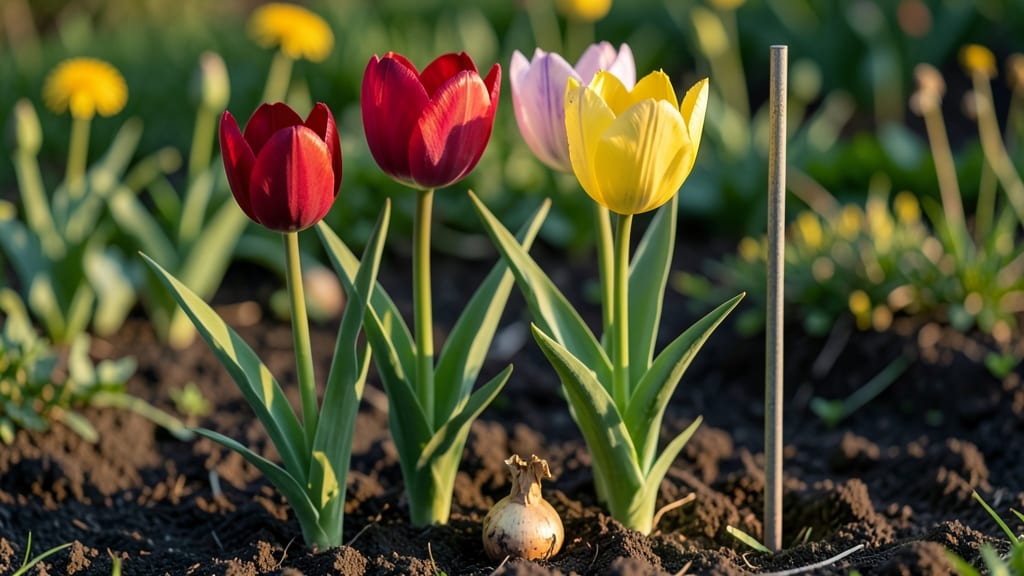
Beyond their dazzling petals, the tulip flower facts most gardeners overlook reveal a hidden year-round story—starting with their chilly Central Asian roots and viral parrot varieties. 🌷 These bulbs pack layers of surprises, from their striking leaves to the surprising ways they thrive. fuel next year’s blooms.
The secret to their drama? A simple pruning routine that keeps them flowering for decades.
Here’s the twist: tulips aren’t just one plant. You’ve got classic Darwin hybrids, frilly fringed varieties, and even double-layered blooms that look like peonies. Their lifecycle is equally fascinating—bulbs store energy underground for years, then burst into color when days lengthen.
And contrary to myth, they do return if you handle them right (more on that pruning in a minute).
What makes tulips special isn’t just their blooms—it’s how they outsmart winter. Their hardiness zones span 3-8, and with the right care, they’ll reward you with earlier, bigger flowers each season.
The key? Understanding their quirks, like why some varieties flop in heat or how to spot the rarest hybrids at nurseries.
We’ll cover the three pruning secrets that keep tulips thriving, debunk the “dig up bulbs every year” myth, and show you how to turn a single bulb into a decades-long garden investment. Ready to grow tulips that steal the show—year after year?
📚 In This Guide
- What you need
- Instructions
- Tips and common mistakes
- Wrapping up and next steps
What you need
- ● Pruning shears or sharp garden scissors – Look for bypass pruners (clean cuts) or anvil pruners (for tougher stems).
- ● Gloves – Garden gloves (nitrile or leather) to protect your hands from thorns or dirt.
- ● Disinfectant (rubbing alcohol or bleach solution) – 1 part bleach to 9 parts water for sterilizing tools.
- ○ Pruning saw (optional) – For thicker stems or branches that pruners can’t handle.
- ● Buckets or containers – 2-3 medium-sized buckets for collecting clippings or storing bulbs.
- ● Newspaper or cardboard – For layering around bulbs during storage.
- ● Plastic bags or breathable fabric bags – For storing bulbs in a cool, dry place.
- ● Knowledge of tulip varieties – Some tulips (like Darwin hybrids) thrive better with specific pruning techniques.
- ● Access to sunlight – At least 6 hours of sunlight daily for growing tulips (or a well-lit indoor space for propagation).
- ● Well-draining soil – Mix in perlite or sand if your soil is heavy clay.
- ● Patience – Tulip bulbs need time to regenerate and bloom again!
- ● Compost or fertilizer – Balanced 10-10-10 or bulb-specific fertilizer for replanting.
- ● Mulch – Straw or shredded leaves to protect bulbs in winter.
- ● Grow lights (for indoor propagation) – LED grow lights for 12-14 hours/day if natural light is limited.
- ● Humidity tray – For maintaining moisture around cuttings during propagation.
How to extend tulip blooms with strategic pruning
Here's how to turn seasonal tulips into year-round stars using simple but powerful pruning techniques.
✂️ Step 1: Deadhead Immediately After Flowering
As soon as your tulips finish blooming and petals begin to wilt, snip the spent flower head cleanly with sharp pruners. Cut just above the first set of leaves—this prevents seed production while keeping the plant's energy focused on root and foliage development. I always do this within 24 hours of petal drop to maximize bulb storage for next season.
The reason this works is that tulip bulbs store energy in their leaves after flowering. If you leave the seed pod, the plant diverts precious nutrients to seed production instead of replenishing the bulb. You'll notice the remaining foliage turn yellow faster if you skip this step—don't panic, but do cut it back only when it's completely brown and crisp.
🌱 Step 2: Cut Back Foliage Gradually After Yellowing
Wait until the leaves turn completely yellow and begin to wither before cutting them back. This is your signal that the bulb has finished absorbing nutrients. Once yellow, trim the foliage to 2-3 inches above ground level using clean pruners. I never cut earlier—letting leaves photosynthesize until they're fully yellow ensures the bulb stores maximum energy for next year's blooms.
Here's the thing—many gardeners make the mistake of cutting back too soon. If you remove green leaves prematurely, you starve the bulb of the nutrients it needs to produce next year's flowers. Watch for the leaves to turn uniformly yellow before making your cut. This process typically takes 4-6 weeks after flowering, depending on your climate.
⏰ Step 3: Time Your Summer Pruning for Bulb Revival
In late summer, after the foliage has completely died back, give your tulip bed a light trim. Remove any remaining dead leaves or stems, but leave the soil undisturbed. This is when tulip bulbs are actively replenishing their energy stores for next spring. I always do this pruning in late August or early September, just before the first frost in cooler climates.
This step is crucial because it prevents disease and pests from overwintering in dead plant material. A light raking with a stiff brush clears away debris while leaving the bulbs undisturbed in the soil. You'll see fresh green shoots emerge next spring with far more vigor if you've maintained this clean-up routine. Don't skip this—it's the secret to consistently stunning tulip displays year after year.
🌿 Step 4: Mulch Strategically for Winter Protection
After your final summer pruning, apply a 2-3 inch layer of organic mulch around your tulip beds. I use shredded bark or straw because these materials break down slowly while insulating the bulbs. The mulch should cover the soil surface but not pile directly against the stems—this prevents rot while protecting against winter temperature swings.
This layer acts like a blanket, keeping soil temperatures stable and preventing freeze-thaw cycles that can damage bulbs. In particularly cold climates, you might need to increase this to 4 inches during the harshest winter months. Remove the mulch in early spring once the ground begins to thaw, but leave it in place until the soil warms to 50°F to prevent premature sprouting.
Tips & tricks for perfect tulip pruning
Here's what nobody tells you about keeping tulips thriving year after year.
Timing is Everything: The 24-hour window for deadheading after flowering is non-negotiable. Tulip bulbs need this full day to redirect energy from the spent bloom to their leaves. I've seen gardeners wait days, and their tulips never rebloom as vigorously. Set a reminder on your phone right when petals start wilting—this small act makes all the difference for next season's blooms.
Visual Cues Matter: When cutting back foliage in Step 2, look for leaves that are completely yellow and crispy—not just slightly wilted. The 2-3 inches above ground level guideline is perfect, but what really matters is that the leaves have finished their job. I always test by gently tugging—if they pull away easily, it's time to trim. This ensures the bulb gets all the nutrients it needs before dormancy.
Climate Considerations: The late August to early September timing for summer pruning works perfectly in most temperate zones, but watch for frost dates in your specific area. In colder regions, aim for just before your first expected frost—this gives bulbs time to fully recharge. I've had tulips that bloomed spectacularly the next spring after I adjusted this timing based on my local weather patterns.
Mulch Depth Strategy: That 2-3 inch mulch layer is your tulip's winter blanket, but don't overdo it. In my zone 5 garden, I've found that adding an extra inch during particularly harsh winters (bringing it to 4 inches) makes a noticeable difference in bulb survival. The key is to keep it loose—packed mulch can suffocate the bulbs rather than protect them.
Pro Tips for Tulip Flower Facts
- Here's what nobody tells you about keeping tulips thriving year after year.
- Timing is Everything: The 24-hour window for deadheading after flowering is non-negotiable.
- Visual Cues Matter: When cutting back foliage in Step 2, look for leaves that are completely yellow and crispy—not just slightly wilted.
Frequently asked questions
Got questions about tulips? You’re not alone! Here are some of the most common queries—plus quick, expert-friendly answers to keep your tulips thriving.
When is the best time to plant tulip bulbs?
Plant tulip bulbs in fall (6–8 weeks before the first hard frost), ideally between October and December in most U.S. zones. This gives roots time to establish before winter dormancy. For warmer climates (zones 8–10), plant in late fall or early winter—just avoid soggy soil!
Can tulips survive winter? What if I live in a warm climate?
Most tulips (especially hardy varieties) tolerate freezing temps, but mulch helps insulate bulbs. In warm zones (like Southern California or Florida), opt for species tulips (e.g., Tulipa clusiana) or plant bulbs in shade to mimic cooler conditions. A cool greenhouse or container garden can also work!
Why did my tulips bloom, then flop over?
This is normal! Tulips nod off after blooming to conserve energy for next year’s flowers. Cut spent blooms (but leave foliage!) to redirect nutrients to the bulb. If stems collapse before leaves yellow, your tulip may be overcrowded—dig up and divide bulbs every 3–4 years for better airflow.
Can I grow tulips in containers? What’s the secret?
Use a well-draining pot (minimum 6 inches deep) with a mix of potting soil and sand. Plant bulbs close together (like a bouquet) and place in a sunny spot. After blooming, keep containers outside over winter—they’ll rebloom if given consistent care. Pro tip: Fertilize lightly in spring!
Are tulips toxic to pets? What about kids?
Yes, tulip bulbs and leaves contain tulipalin, a mild toxin that can cause drooling, vomiting, or skin irritation in pets (especially cats/dogs) and kids. Keep them out of reach! The flowers themselves are less toxic, but it’s best to supervise curious hands or paws. Opt for pet-safe alternatives like daffodils if safety is a concern.
Bonus Tip:
Struggling with tulips? Try “naturalizing” them—plant bulbs in grassy areas where they’ll return year after year with minimal effort. Just avoid heavy foot traffic!
Wrapping up and next steps
From their stunning symbolism to their practical pruning secrets, tulips prove that beauty—and simplicity—are timeless. Whether you’re a seasoned gardener or a curious beginner, these vibrant blooms offer joy year-round with just a little care. 🌸
Ready to bring tulip magic to your garden? Start small—pick one pruning tip, gather your tools, and watch your flowers thrive! Your green thumb is closer than you think.