
Flowers
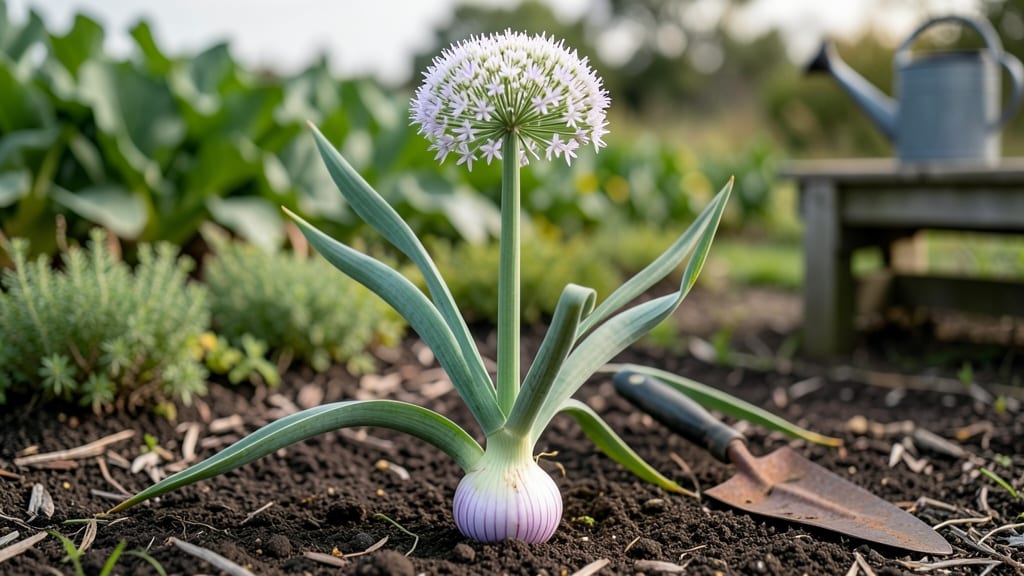
Growing yellow onion flowers transforms your garden into a fragrant, edible paradise—though it might surprise you how quickly those lush green tops turn into delicate blooms. 🌸 The moment you notice the first flower stalk, you're staring at both a potential seed source and a culinary treasure, if you know how to manage it.
These blooms aren't just pretty; they're packed with mild onion flavor and can be used like chives in cooking.
Here's the thing—letting onions flower doesn't ruin your harvest if you time it right. In fact, many gardeners intentionally grow onions for seed, but you can still get edible bulbs if you harvest the smaller ones before the flowers fully open.
The key is watching for that first flower stalk and deciding whether you want seeds or bulbs—or both. I've grown onions this way for three seasons now, and the trade-offs are worth knowing.
📚 In This Guide
- What you need
- Instructions
- Tips and common mistakes
- Wrapping up and next steps
What you need
- ● Yellow onion sets or seeds: Choose certified organic or heirloom varieties like Texas Super Sweet or Red Creole (3–5 bulbs or 1 packet of seeds per 10 sq ft).
- ● Well-draining potting soil: A mix of 50% garden soil, 30% compost, and 20% perlite/sand (1–2 bags, ~2–3 cubic feet per 10 sq ft).
- ● Containers or garden bed: Containers: 12–18" deep pots with drainage holes (1–2 per bulb).
- ● Garden bed: Full sun (6+ hours/day) with loose, fertile soil (amend with compost if needed).
- ● Balanced fertilizer: 10-10-10 or organic options like fish emulsion (1 tbsp per bulb at planting).
- ● Mulch: Straw or shredded leaves (1–2 inches) to retain moisture and suppress weeds.
- ● Garden trowel or small shovel for planting.
- ● Watering can or hose with gentle spray nozzle (avoid soaking the soil).
- ● Pruners or scissors (for harvesting flowers or thinning seedlings).
- ○ Gloves (optional but recommended for handling soil and bulbs).
- ○ Sunlight tracker or timer (optional, to monitor 6+ hours of direct sun).
- ● Epsom salt (1 tbsp dissolved in water) for magnesium boost during flowering.
- ● Coffee grounds (mixed into soil) to deter pests naturally.
- ● Plant markers to label varieties and track growth stages.
- ● Row cover or shade cloth (for early planting in cooler climates).
How to grow edible yellow onion flowers from seed
Here's how to coax both vibrant blooms and harvestable bulbs from a single plant—no fancy tricks needed.
🌱 Step 1: Start Seeds Indoors for Early Growth
Plant your seeds in a 4-inch pot filled with sterile seed-starting mix about 6-8 weeks before your last frost date. Yellow onion seeds are tiny, so I use a toothpick to place just 1-2 seeds per cell, covering them with ¼ inch of mix. Press gently—you don't want to bury them too deep.
Keep the soil consistently moist but not soggy. I place the tray in a humidity dome or cover it with plastic wrap to retain warmth. Germination takes 10-14 days at 65-75°F, so place the pot on a seedling heat mat if your home runs cooler. You'll know it's working when green shoots poke through the soil—don't disturb them yet.
☀️ Step 2: Harden Off and Transplant for Bulb Development
Once seedlings have 2-3 true leaves (the second set after the initial seed leaves), it's time to move them outside. Start by placing them in a shaded, sheltered spot for 1-2 hours the first day. Gradually increase exposure over 7-10 days until they're out all day. This process, called hardening off, prevents shock when they hit the garden.
Transplant seedlings 4-6 inches apart in well-draining soil enriched with compost. Yellow onions need full sun (6+ hours daily) to develop both bulbs and flowers. Water deeply after planting to settle the soil around roots. You'll see stronger stems and deeper green leaves within a week—that's your sign they're adapting well.
💧 Step 3: Fertilize and Water for Dual Harvest Success
Feed plants with a balanced, low-nitrogen fertilizer (like 10-10-10) when they're 4-6 inches tall. Too much nitrogen promotes leafy growth at the expense of bulbs and flowers. I use ½ teaspoon per plant, working it into the soil around the base. Water at the soil line—never overhead—to prevent fungal diseases that can rot bulbs.
Keep the soil evenly moist but not waterlogged. Yellow onions are drought-tolerant once established, but consistent moisture encourages both bulb and flower development. You'll notice thicker stems and sturdier leaves when moisture is just right. If leaves yellow or wilt, it's time to water again.
✂️ Step 4: Encourage Blooms and Harvest Bulbs
When plants reach 12-18 inches tall, you'll see flower stalks emerge. To promote blooms, I snip off any side shoots that form at the base—this redirects energy to the main stalk. The flowers will appear 6-8 weeks after transplanting, depending on your climate. They're edible and add a mild onion flavor to salads.
Harvest bulbs when flower stalks appear—this signals maturity. Gently loosen soil around the base and lift the bulb, leaving 1-2 inches of stem attached. Cure them in a dry, shaded spot for 2-3 weeks before storing. If you prefer larger bulbs, you can remove the flower stalk early, but you'll miss out on the edible blooms.
Tips & tricks for perfect yellow onion flower cultivation
Here's what I learned after growing these edible blooms for years—small details make all the difference.
Seedling Care: Those first 10-14 days of germination are critical. I've found that using a heating mat set to 75°F makes all the difference—especially in cooler homes. Place a small piece of clear tape over the pot to mark where you planted seeds; this helps you avoid disturbing them when checking for those first green shoots. Remember, they're tiny—don't be tempted to peek too often!
Harden Off Gradually: The 1-2 hour incremental exposure in Step 2 prevents transplant shock. I start with just 30 minutes on day one if your climate is particularly harsh, then add 30 minutes each subsequent day. Watch for wilting—this is your plant's way of saying "slow down!" If you see this, move them back to shade for another day.
Sunlight Secret: Yellow onions need that full 6+ hours of sun daily, but here's the thing: morning sun is gentler than afternoon heat. If you're in a hot climate, I recommend planting them where they get morning sun and afternoon shade. This prevents stress that can lead to bolting (premature flowering) before bulbs are ready.
Fertilizer Timing: That ½ teaspoon of 10-10-10 fertilizer when plants reach 4-6 inches is your golden opportunity. I mix it with a bit of water first to create a slurry—this helps distribute it evenly without burning the roots. Too much nitrogen later in the season will give you leaves instead of bulbs and flowers, so hold off on heavy feeding after this initial boost.
Pro Tips for Yellow Onion Flower
- Here's what I learned after growing these edible blooms for years—small details make all the difference.
- Seedling Care: Those first 10-14 days of germination are critical.
- Harden Off Gradually: The 1-2 hour incremental exposure in Step 2 prevents transplant shock.
Frequently asked questions
Got questions about growing yellow onion flowers? We’ve got answers!
Whether you’re curious about timing, care, or edible uses, this FAQ covers the basics to help your Allium cepa thrive—from bulb to bloom.
Can I eat yellow onion flowers?
Yellow onion flowers (and their blooms) are edible and add a mild, sweet-onion flavor to dishes. Use them fresh in salads, garnishes, or as a decorative (and tasty!) garnish for soups. Just avoid flowers sprayed with pesticides if growing outdoors. Pro tip: Harvest blooms in the morning for peak flavor!
How long does it take for yellow onion flowers to bloom?
Timing depends on your climate, but most yellow onion varieties bloom 60–90 days after planting from seed (or 45–60 days from sets/transplants). In cooler regions, expect blooms in late spring to early summer. Note: If you’re growing for bulbs and flowers, prioritize bulb harvest first—flowers signal the bulb’s energy shift!
What if my yellow onion flowers won’t bloom?
No blooms? Check these fixes:
- Light: Onions need 6+ hours of sun daily—move to a sunnier spot if needed.
- Water: Overwatering can rot bulbs; aim for 1 inch/week (less in rain).
- Nutrients: Add compost or a balanced fertilizer (like 10-10-10) at planting and mid-season.
- Variety: Some onions (like ‘Texas Early White’) bloom more reliably than others.
If all else fails, try short-day onions (like ‘Red Creole’) for better flowering in warm climates.
Are yellow onion flowers perennial?
Nope! Yellow onion plants are annuals—they complete their lifecycle in one season (bulb + flower). However, their seeds can self-sow, and you might spot volunteer plants the next year. For a guaranteed return, save seeds or replant sets annually.
What can I substitute if I can’t grow yellow onion flowers?
Need a similar edible bloom? Try these substitutes:
- Chives (Allium schoenoprasum): Mild onion flavor, perennial, and easy to grow.
- Garlic chives (Allium tuberosum): Garlicky taste, great for garnishes.
- Shallots (Allium cepa var. aggregatum): Delicate onion flavor; flowers are edible too!
- Nasturtiums: Peppery taste (not onion-like but colorful and edible).
Bonus: Dried onion flowers make a stunning (and fragrant!) potpourri!
Wrapping up and next steps
Growing yellow onion flowers is a rewarding journey that blends beauty, edible delights, and practical harvests—all in one season! 🌱 Whether you’re drawn to their vibrant blooms, culinary potential, or the satisfaction of a homegrown harvest, these versatile plants prove that gardening can be both functional and fabulous.
Start small, experiment with varieties, and don’t hesitate to share your blooms or bulbs with fellow gardeners.
Ready to dive in? Plant your first seeds or sets this spring—your garden (and taste buds!) will thank you. Happy growing! 🌼