
Flowers
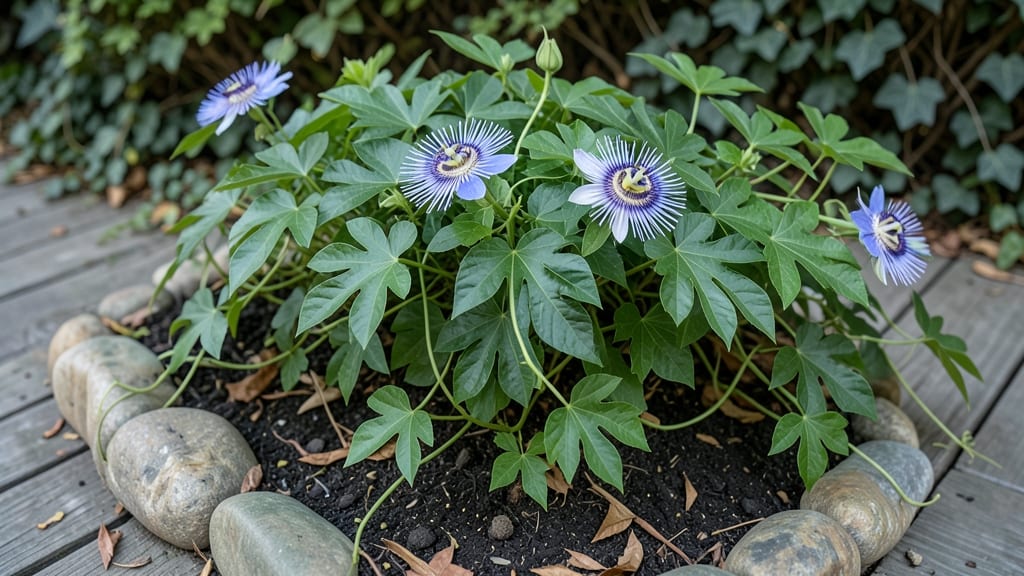
The fast-climbing Blue Crown Passion Flower transforms any garden into a tropical oasis with its velvety blue-violet blooms and fragrant, edible flowers. 🌿 I still remember the first time I saw one in full bloom—it looked like a piece of the Amazon had landed in my backyard.
This hardy vine thrives in zones 5-10, making it surprisingly adaptable for cooler climates too, as long as you give it a little winter protection.
Growing this passion flower is easier than you think, especially if you start with a cutting from a local nursery. It loves bright, indirect light but handles morning sun beautifully—just avoid scorching afternoon rays in hotter zones.
The soil should drain well, and a trellis or sturdy fence is a must since these vines can grow 10-20 feet in a single season. Feed it lightly with compost or a balanced fertilizer in spring, and watch it reward you with blooms from late spring through fall.
What makes this plant special is its dual purpose: the flowers are stunning, but they’re also edible, adding a unique flavor to salads or garnishes. The vines are vigorous but manageable with regular pruning, and they’ll even survive light frosts if you mulch well.
By late summer, you’ll have a living canopy of fragrant blossoms that hummingbirds and butterflies can’t resist.
Ready to grow yours? We’ll cover everything from propagation to troubleshooting common issues like yellowing leaves or slow growth. With the right care, your Blue Crown Passion Flower could become the star of your garden—fast.
📚 In This Guide
- What you need
- Instructions
- Tips and common mistakes
- Wrapping up and next steps
What you need
- ● Seeds or young plants: 1–3 Passiflora vitifolia seeds (or a nursery-grown cutting for faster results).
- ● Well-draining potting mix: 5–10 gallons (for containers) or amended garden soil (for in-ground planting). Mix with perlite or sand (20% ratio) to prevent root rot.
- ○ Container (optional but recommended): 15–20 gallon pot (if growing in containers) with drainage holes.
- ● Trellis or sturdy support: 6–10 ft tall (bamboo stakes, wire cages, or A-frame trellises work great!).
- ● Slow-release fertilizer: 10–20–10 NPK blend (follow label for dosage).
- ● Organic mulch: Straw or wood chips (2–3 inches) to retain moisture.
- ● Gloves and pruners: Sharp, sterilized pruners for trimming vines and deadheading spent blooms.
- ● Watering can or hose with a gentle spray nozzle: Passion vines hate soggy roots!
- ○ pH test kit (optional): Ideal soil pH: 6.0–7.5. Adjust with lime (to raise pH) or sulfur (to lower) if needed.
- ● Sunlight access: Full sun (6+ hours/day) or bright indirect light (for indoor growing).
- ● Climate consideration: Hardy in USDA Zones 8–11. Use a greenhouse or overwinter indoors in colder climates.
- ● Compost or worm castings: Boosts soil fertility for vibrant blooms.
- ● Epsom salt (magnesium sulfate): 1 tbsp/month in water to prevent yellowing leaves.
- ● Hummingbird feeder: Attracts pollinators (and adds charm to your garden!).
- ● Photographs of mature vines: Helps visualize your trellis setup—these vines can grow 20+ feet in a season!
Step-by-step instructions for growing blue crown passion flower
Fast-growing vines with stunning blooms—here's how to cultivate this tropical beauty.
🌱 Step 1: Choose the Perfect Planting Spot
Blue Crown Passion Flower thrives in full sun to partial shade, but it needs at least 6 hours of direct sunlight daily for best flowering. I always pick a location with a sturdy trellis or fence nearby—this vine grows 15-20 feet per year and needs something strong to climb. If your climate gets harsh winters, plant near a south-facing wall where it can catch reflected warmth.
Here's the thing—this plant hates soggy roots. Make sure the soil drains well, even if it's heavy clay. Amending with 2-3 inches of compost before planting improves drainage and gives those hungry vines a nutrient boost. Test the soil pH—it prefers slightly acidic to neutral (6.0-7.0). If yours runs alkaline, mix in some peat moss to adjust.
🪴 Step 2: Plant Your Vine at the Right Time
Spring is the best time to plant, after the last frost when soil temperatures reach at least 60°F. I always wait until nighttime temperatures stay consistently above 55°F—cold snaps will stunt young growth. Dig a hole twice as wide as the root ball but only as deep as it was in its container. This prevents burying the stem too deeply, which can cause rot.
Place the plant in the hole and backfill with native soil mixed with 1 cup of bone meal for phosphorus—this encourages strong root development and more vigorous vines. Water deeply right after planting to settle the soil around the roots. You'll see new growth within 2-3 weeks if conditions are right. If growth stalls, check for root rot by gently pulling back the mulch—healthy roots should be white or light tan, not brown and mushy.
☀️ Step 3: Provide Support and Prune for Growth
Install your trellis or support structure immediately after planting. Blue Crown Passion Flower uses tendrils to climb, so give it 3-4 feet of vertical space in the first year alone. I like to use a strong wooden trellis or metal cage—this vine can get heavy with flowers and fruit. Train the main vine along the structure, and it'll naturally guide side shoots upward.
Prune in early spring before new growth begins. Cut back any dead or weak stems to just above a leaf node, and remove any crossing branches that rub together. This prevents disease and encourages stronger growth. Here's what I do: I look for the healthiest, most vigorous stems and let those take priority. You'll see new shoots emerging within 2 weeks of pruning—this is your signal that the plant is recovering well.
💧 Step 4: Water and Fertilize for Maximum Blooms
Water deeply once a week during the first growing season, allowing the top 2-3 inches of soil to dry out between waterings. This plant is drought-tolerant once established, but young vines need consistent moisture. I always water in the early morning to reduce evaporation and fungal risks. You'll know you're doing it right when the soil feels damp but not soggy 2 inches below the surface.
Fertilize twice a year: once in early spring with a balanced 10-10-10 fertilizer and again in mid-summer with a low-nitrogen, high-phosphorus formula like 5-10-10 to encourage blooming. I avoid high-nitrogen fertilizers—they promote leafy growth at the expense of flowers. Watch for dark green, healthy leaves and plentiful blooms as signs you're on the right track. If you see mostly leaves and few flowers, it's time to switch to a phosphorus-heavy feed.
✂️ Step 5: Harvest and Maintain for Long-Term Success
Harvest flowers and fruits in late summer to early fall when they're fully mature. The flowers are edible and delicious—pick them in the morning when they're fully open. I always leave a few fruits on the vine to reseed if I want more plants. To harvest, simply twist the flower or fruit gently until it releases from the stem. You'll see new buds forming within a week if the plant is healthy.
In fall, cut back any dead or damaged growth, but leave the healthy stems intact—they'll provide energy for next year's growth. Mulch around the base with 2-3 inches of organic mulch like wood chips to protect roots from winter cold. If you're in a cold climate, consider wrapping the base with burlap or frost cloth for extra protection. With proper care, your Blue Crown Passion Flower will reward you with years of stunning blooms and fast-climbing vines.
Tips & tricks for growing blue crown passion flower
Real talk: These are the secrets that turned my first struggling vine into a lush, blooming tropical canopy within a single season.
Sunlight Strategy: While the instructions mention 6 hours of direct sunlight daily, I've found that morning sun (6 AM–12 PM) paired with afternoon shade after 3 PM actually produces more vibrant blooms. The intense afternoon heat can scorch leaves, especially in hot climates. If you're in a region with brutal summers, consider a 50% shade cloth during peak heat hours—it keeps the plant thriving without sacrificing growth speed. The 15-20 feet per year growth rate stays impressive even with this adjustment.
Root Health Check: That 2-3 inches of compost recommendation is non-negotiable, but here's what nobody tells you—mix in 1 part perlite to 3 parts compost if your soil is naturally dense. I learned this the hard way after seeing my first plant develop root rot despite proper watering. The perlite creates tiny air pockets that prevent compaction while still providing nutrients. And yes, you can use vermiculite instead if you prefer—just match the 1:3 ratio.
Pruning Payoff: The instructions say to prune in early spring, but I've discovered that giving your vine a light trim in late summer (after the first flush of flowers) encourages a second bloom cycle. Simply cut back any leggy growth by one-third and watch for new buds forming within 7-10 days. This works especially well if you're in a warm climate where the growing season extends past September. The key is to never remove more than one-third of the foliage at once—this keeps the plant's energy balanced.
Fertilizer Timing: Those twice-yearly feedings are perfect, but I've found that adding a third feeding in early fall (around late August) gives my vines a growth boost for next year. Use the same 5-10-10 formula, but cut the amount in half. This helps the roots store energy for spring without promoting tender new growth that might get damaged by early frosts. Think of it as a "winter prep" feeding—your plant will thank you with bigger blooms the following season.
Pro Tips for Blue Crown Passion Flower
- Real talk: These are the secrets that turned my first struggling vine into a lush, blooming tropical canopy within a single season.
- Sunlight Strategy: While the instructions mention 6 hours of direct sunlight daily, I've found that morning sun (6 AM–12 PM) paired with afternoon shade after 3 PM actually produces more vibrant blooms.
- Root Health Check: That 2-3 inches of compost recommendation is non-negotiable, but here's what nobody tells you—mix in 1 part perlite to 3 parts compost if your soil is naturally dense.
Frequently asked questions
Got questions about growing blue crown passion flower? You’re not alone—this fast-climbing beauty has a few quirks! Here are answers to the most common queries to help you cultivate a thriving tropical vine.
How fast does blue crown passion flower grow, and how tall can it get?
This vine is a speedster! With ideal conditions (warmth, humidity, and support), it can grow 6–10 feet in a single season. In tropical climates, mature vines often reach 20–30 feet, while in cooler areas, they may stay shorter (10–15 feet) without winter protection.
When is the best time to plant blue crown passion flower?
For tropical or subtropical zones (USDA 9–11), plant after the last frost when soil temps hit 60°F+ (spring or early summer). In cooler climates, start seeds indoors 8–10 weeks before the last frost or grow it as an annual. Pro tip: Use black plastic mulch to warm the soil faster!
What’s the easiest way to support a climbing passion flower vine?
This vine needs strong, sturdy support—think trellises, pergolas, or arbors made of metal, wood, or thick bamboo. Avoid flimsy structures; its thorny tendrils can rip through weak materials. For a fast start, train young vines with soft ties or twine until they latch on naturally.
Why aren’t my blue crown passion flower leaves turning purple, and is that a problem?
Purple foliage is normal but depends on sunlight and variety. If leaves stay green, it’s likely not enough light (they thrive in full sun to partial shade). No purple? No worries—focus on healthy growth and vibrant flowers. Fun fact: The flowers themselves are the star show!
Can I grow blue crown passion flower in containers, and what’s the best soil mix?
Yes! Use a large container (15+ gallons) with drainage holes. A well-draining mix of potting soil + perlite + compost (60:20:20 ratio) works best. Add a time-release fertilizer in spring to boost growth. Warning: Containers dry out faster—water deeply when the top inch of soil feels dry!
How do I overwinter blue crown passion flower in cold climates?
If you love this vine but live in USDA zones 7–8, dig up the roots in fall, trim back vines, and pot it. Store in a cool, dark place (40–50°F) until spring. Alternatively, mulch heavily and wrap the base with burlap for outdoor protection. Note: Most growers treat it as an annual in colder areas.
Wrapping up and next steps
Growing blue crown passion flower is a rewarding adventure that brings vibrant beauty and edible delights to your garden! 🌿 With its fast-climbing vines and stunning blooms, it’s perfect for adding tropical flair to trellises, fences, or even containers.
Whether you’re drawn to its ornamental charm or its culinary potential, this plant offers both wow factor and practicality.
Ready to dive in? Start by gathering your supplies, choosing the right spot, and giving your passion flower the care it craves. Plant it, nurture it, and watch it thrive! Happy gardening! 🌸