
Flowers
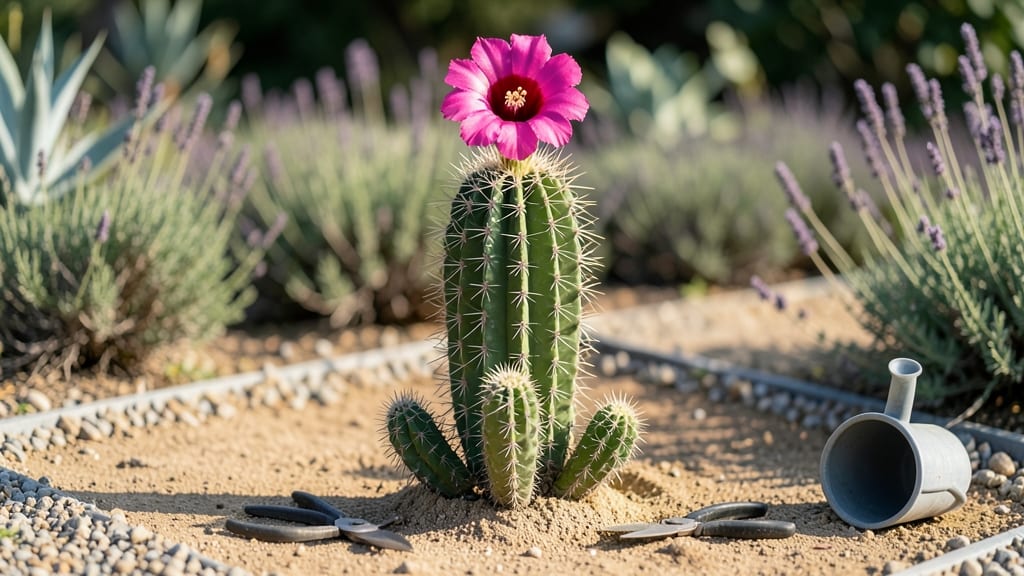
A cactus flower bed transforms barren desert spaces into vibrant, low-maintenance showstops—just look at how my Echinopsis blooms turn the evening sky pink every spring. The secret lies in pairing striking cacti with drought-tolerant companions like agave and ornamental grasses, creating a palette that thrives on neglect.
No more watering marathons or weeding wars—this bed stays lush with almost no effort once established.
Start with well-draining soil mixed with coarse sand or gravel to prevent rot, then group plants by water needs—flowering cacti like Lobivia love deep but infrequent watering, while succulents can handle even drier conditions.
Containers work beautifully for small spaces, letting you control drainage and even move the display if needed. The key is spacing: give cacti at least 12 inches between them to prevent overcrowding as they grow.
By midsummer, your bed will burst with color—deep magentas, sunny yellows, and soft whites—while the agave’s spiky silhouettes add architectural contrast. Even in winter, the textures keep it interesting, and the minimal care means you’ll spend more time admiring than tending. Ready to create this desert oasis?
Works in full sun or partial shade, from containers to sprawling in-ground beds—adjust plant choices based on your local climate. The only rule? Never overwater. Let’s make your yard the talk of the neighborhood without the fuss.
📚 In This Guide
- What you need
- Instructions
- Tips and common mistakes
- Wrapping up and next steps
What you need
- ● Cacti & Succulents: 10–20 plants (mix of blooming varieties like Echinocactus, Lobivia, or Notocactus for color). Aim for 1–3 per square foot.
- ● Soil: 3–5 bags (1–2 cubic feet each) of cactus/succulent mix (or 50% potting soil + 50% perlite/pumice). Avoid regular garden soil—it’s too dense!
- ● Drainage Layer: 1 bag (20 lbs) of gravel or coarse sand (for pots or in-ground beds).
- ● Mulch: 1–2 bags of pebbles, decomposed granite, or bark chips (for moisture retention and aesthetics).
- ● Garden Gloves (1 pair) – Cactus spines are no joke! 😅
- ● Trowel or Hand Shovel (1) – For planting and soil prep.
- ● Wheelbarrow or Bucket (1) – For mixing soil and hauling materials.
- ○ Watering Can or Drip Irrigation Kit (optional but highly recommended for precision).
- ● Pruning Shears (1) – For trimming dead blooms or overgrown plants.
- ● Measuring Tape (1) – To plan spacing and bed dimensions.
- ● Sunlight: A spot with 6+ hours of direct sun daily (desert plants love baking!).
- ● Drainage: Ensure your bed has no standing water (elevate pots or amend soil if needed).
- ● Climate Check: Verify your USDA Hardiness Zone (most cacti thrive in Zones 9–11; others need containers for colder climates).
- ● Local Regulations: Check if your area requires permits for native vs. invasive species (some succulents spread aggressively!).
- ● Decorative Rocks – For a polished, high-end look.
- ● Solar-Powered Lights – To highlight your bed at night.
- ● Companion Plants – Like agave or sedum for texture.
- ● Self-Watering Planters – If you’re really busy (no judgment!).
Step-by-Step guide for designing a low-maintenance cactus flower bed
Here’s how to create a striking desert-inspired garden that thrives with sunlight and minimal fuss.
Select the Right Cactus and Flower Pairings
Choose drought-tolerant cacti like prickly pear or barrel cactus for structure, paired with desert-adapted flowers such as desert marigold or blanket flower. These combinations require less than 1 inch of water per week once established. I always opt for native species—they’ve evolved to handle your local climate without extra effort.
Arrange plants in odd-numbered groupings (3, 5, or 7) for visual balance. Space cacti 12-18 inches apart to allow airflow, which prevents rot. The key is mimicking their natural habitat: full sun exposure and well-draining soil. If your area gets heavy rain, elevate the bed slightly to avoid waterlogging.
Prepare the Soil for Optimal Drainage
Start with a sandy loam base mixed with 20% perlite or coarse sand to replicate desert conditions. Avoid garden soil—it compacts and traps moisture, leading to root rot. I like to add a 1-inch layer of small gravel at the bottom of the bed to further improve drainage.
Test your mix by squeezing a handful: it should crumble easily when dry but hold its shape when damp. If it sticks together, add more perlite. The goal is soil that drains so quickly it barely stays moist—cacti hate soggy roots. A 5-gallon bucket of this blend covers about 4 square feet of bed.
Plant with Precision for Long-Term Health
Dig holes twice as wide as the root ball but only as deep as the container. Gently remove plants from their pots and loosen tangled roots with your fingers—never force them. Place each cactus or flower in its hole, then fill around it with your prepared mix, pressing lightly to eliminate air pockets.
Water deeply once after planting to settle the soil, but avoid creating a muddy mess. Let the water drain completely before adding mulch. I use 1 inch of decomposed granite (not organic mulch) to retain heat and suppress weeds while keeping moisture low. This layer also prevents soil from splashing onto cactus stems during rain.
Establish a Watering Routine That Mimics Nature
For the first two weeks, water every 3-4 days to help roots establish, using ½ gallon per plant in the morning. After that, shift to deep watering every 7-10 days, depending on rainfall. The rule is simple: water when the top 2 inches of soil feel dry. Overwatering is the fastest way to kill desert plants.
Use a soaker hose or drip irrigation to deliver water directly to the roots. Avoid overhead sprinklers—they encourage fungal growth. In summer, you might water once every 2 weeks if your area gets consistent heat. Always check soil moisture before watering; wilting in cacti often means thirst, not distress.
Maintain with Minimal Effort for Year-Round Beauty
Fertilize once in early spring with a low-nitrogen, high-phosphorus formula (like 5-10-10) to encourage blooming. Skip fertilizer in summer—it stresses plants in heat. Deadhead spent flowers by pinching them off at the base, but leave seed pods on cacti if you want new growth next season.
Watch for pests like mealybugs or scale—they love stressed cacti. Wipe them off with a 70% isopropyl alcohol-soaked cotton swab. Prune leggy stems in late winter to encourage bushier growth. With this approach, your bed will stay vibrant with minimal care, just like a true desert landscape.
Tips & tricks for perfecting your desert chic cactus flower bed
Creating a thriving cactus flower bed isn't just about planting—it's about understanding the subtle art of desert landscaping. Here's how to elevate your design from good to exceptional with these proven strategies.
Plant Placement for Visual Impact: In Step 1, when arranging your plants, consider the mature size of each species. Place taller cacti like prickly pear at the back of the bed and shorter varieties like barrel cactus toward the front. For flowers, position desert marigolds near the edges where their bright blooms will catch the eye first. This creates natural depth and draws attention to your most striking plants. The odd-numbered groupings mentioned in the instructions work best when you alternate plant heights within each cluster.
Soil Mixing Secrets: When preparing your soil blend in Step 2, I recommend adding a handful of coarse horticultural charcoal to your sandy loam mixture. This natural amendment helps prevent bacterial growth in the soil while improving drainage even further. Think of it as the desert's version of a water filtration system—it keeps your roots healthy without any of the moisture retention that causes rot. The 20% perlite ratio is perfect, but if you're in an extremely wet climate, increase it to 25% for added insurance against waterlogging.
Watering Technique Refinement: The instructions mention watering deeply every 7-10 days, but here's the pro move: use the "finger test" to perfect your timing. Stick your finger about 2 inches into the soil—if it feels completely dry, that's your cue. For the first two weeks, I actually water every 2-3 days in the morning, giving each plant exactly ½ gallon. This establishes roots more quickly while preventing fungal issues that can come from evening watering. The key is consistency—desert plants thrive on predictability.
Pest Prevention Strategy: While the instructions cover treating mealybugs and scale, prevention is even better. In Step 5, before you see any signs of pests, apply a preventive measure: sprinkle a thin layer of diatomaceous earth around the base of each plant. This natural powder disrupts insect life cycles without harming your plants. Reapply after rain or watering. For extra protection, introduce beneficial insects like ladybugs to your garden—they're natural predators of many common cactus pests and will establish themselves if given the right environment.
Pro Tips for Cactus Flower Bed
- Creating a thriving cactus flower bed isn't just about planting—it's about understanding the subtle art of desert landscaping.
- Plant Placement for Visual Impact: In Step 1, when arranging your plants, consider the mature size of each species.
- Soil Mixing Secrets: When preparing your soil blend in Step 2, I recommend adding a handful of coarse horticultural charcoal to your sandy loam mixture.
Frequently asked questions
Got questions about creating or maintaining a stunning cactus flower bed? You’re not alone! Here are some of the most common queries—plus straightforward answers to help you rock your desert-inspired garden with confidence.
How often should I water a cactus flower bed?
Watering is key—overdoing it is the #1 mistake! Most cacti and desert flowers thrive on deep but infrequent watering. Aim for every 2–4 weeks (adjust for climate), letting soil dry completely between sessions. In extreme heat, check moisture levels with your finger—if the top 2 inches are dry, it’s time to hydrate!
When is the best time to plant a cactus flower bed?
Spring or early fall are ideal! Planting in spring (after last frost) gives roots time to establish before summer heat, while fall planting avoids scorching. Avoid winter—cold snaps can stress young plants. Pro tip: Water thoroughly after planting to settle soil and reduce transplant shock.
What are some low-maintenance cactus and flower combos?
Pair hardy cacti like prickly pear or barrel cactus with drought-tolerant bloomers such as desert marigold, lantana, or agave. These thrive together with minimal fuss. For color pops, add blanket flower or penstemon—they’re tough, vibrant, and love the sun!
How do I keep pests away from my cactus flower bed?
Most pests (like mealybugs or scale) hate neem oil or soapy water sprays. Inspect leaves regularly—early intervention is easiest! Avoid overwatering, which attracts pests. For extra protection, mulch with gravel (not organic mulch) to deter soil-dwelling bugs.
Can cactus flower beds survive winter?
It depends! Most desert plants handle light frosts (20–25°F), but tender cacti (like peruvian apple cactus) need winter protection. Group plants together, add a thick layer of mulch, or use frost cloth for sensitive varieties. In freezing zones, consider container gardening for easy relocation indoors.
Bonus Tip:
Need a quick fix? Succulents and sedum are great fillers if you’re short on cacti—they’re just as drought-resistant and add texture!
Wrapping up and next steps
A cactus flower bed isn’t just a stunning addition to your outdoor space—it’s a low-maintenance masterpiece that brings desert charm to life with minimal effort.
Whether you’re drawn to vibrant blooms like the Pereskia or the bold structure of Echinopsis, these plants prove that beauty and resilience go hand in hand. 🌵✨
Ready to transform your yard? Start small—pick one or two cacti to experiment with, then expand as you gain confidence. Before you know it, your desert-inspired oasis will be the talk of the neighborhood! Grab your gloves and get planting!