
Pruning
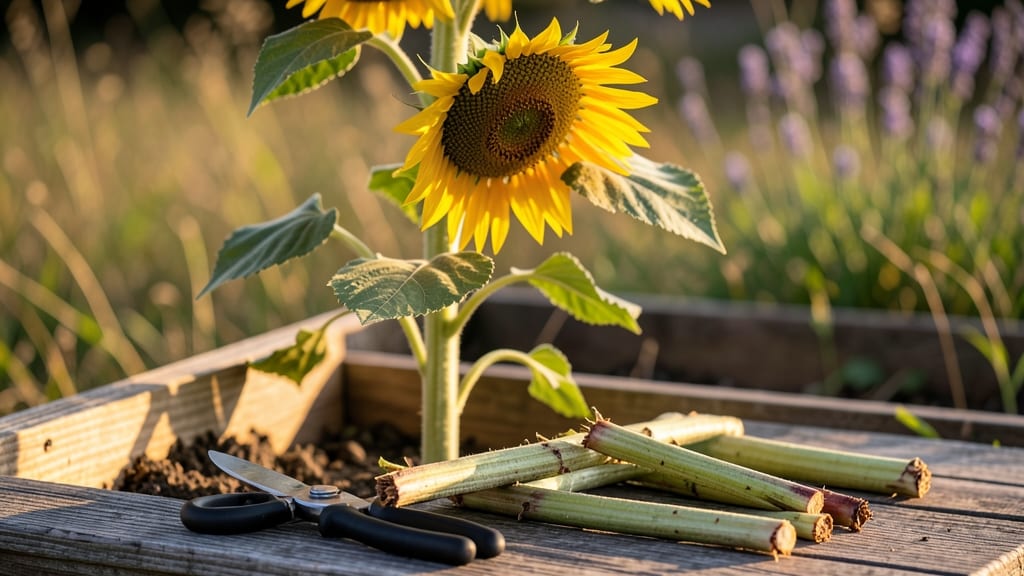
Cutting back sunflowers might seem counterintuitive, but that doesn’t mean they need to stay towering forever. Cutting back sunflowers isn’t just about tidying up; it’s about redirecting their energy for stronger stems, more blooms, or even overwintering success.
I’ve learned the hard way that skipping this step can leave you with floppy stalks or missed second flushes of flowers.
The best time to cut back sunflowers depends on your goal: prune in early summer to encourage bushier growth, deadhead spent blooms for continuous flowering, or trim back to the ground after frost to prepare for winter.
All you’ll need are clean pruners, a bucket for clippings, and about 15 minutes of focused work. This method works for most varieties, though giant sunflowers may need extra support after pruning.
After cutting, you’ll notice new side shoots emerging within 1-2 weeks, leading to a fuller plant with more blooms. For seed production, leave the tallest stem intact while trimming side branches—this ensures energy goes where you want it.
The key is to make clean cuts just above a leaf node, avoiding ragged edges that invite disease.
For overwintering, cut back to the ground in late fall and mulch heavily to protect the roots. In spring, new growth will surprise you with fresh shoots ready for another season. Whether you’re reviving a leggy plant or preparing for winter, this method keeps your sunflowers thriving year after year.
📚 In This Guide
- What you need
- Instructions
- Tips and common mistakes
- Wrapping up and next steps
What you need
- ● Pruning shears or sharp bypass pruners – Choose sterilized, sharp tools (size: 5–7 inches) to avoid crushing stems or spreading disease. ⚠️ Never use dull shears!
- ○ Clean, sharp garden knife or razor blade – For precise cuts on thicker stems (optional backup if shears aren’t available).
- ● Disinfectant (70% isopropyl alcohol or bleach solution) – 1 part bleach to 9 parts water to sterilize tools before and after use.
- ○ Gloves (optional but recommended) – Nitrile or leather gloves to protect hands from thorns and sap.
- ● Bucket or trash bag – For collecting pruned stems and debris.
- ● Water spray bottle (with clean water) – To rinse tools and stems post-pruning.
- ● Choose the right time – Prune in the early morning or late afternoon to avoid stressing the plant in peak sunlight.
- ● Identify healthy vs. diseased stems – Look for yellowing leaves, mold, or soft spots—these should be removed last and disposed of separately.
- ● Check weather forecast – Avoid pruning before rain or extreme heat (wait 24–48 hours after rain).
- ● Have a compost bin ready – Healthy pruned stems can be composted (unless diseased).
- ● Plant food or fertilizer – A balanced 10-10-10 or compost tea to give your sunflowers a post-pruning boost.
- ● Stake or support ties – If your sunflowers are tall and wobbly, bamboo stakes or soft garden twine can help stabilize them.
- ● Petroleum jelly (Vaseline) – Rub on cuts to prevent sap from oozing and speed up healing.
- ● Camera or sketchbook – Document your pruning progress for future reference!
How to Prune sunflowers for stronger, healthier growth
Here's the straightforward method I use to keep sunflowers sturdy and productive all season.
Identify and Remove Weak or Damaged Stalks
Start by examining your sunflower patch for any stalks that look weak, leaning heavily, or showing signs of disease like brown spots or wilting. These plants won't recover their strength and will compete with healthier ones for nutrients. I always begin pruning in early summer, around 6-8 weeks after germination, when plants are about 3-4 feet tall.
Grasp the base of each problematic stalk firmly and give it a clean cut with sharp pruning shears or a knife. Cut at a 45-degree angle about ½ inch above the soil line—this helps prevent water from pooling on the cut and causing rot. Remove any leaves or stems that are yellowing or diseased at the same time, as these can harbor pests or fungal spores.
Thin Multiple Stalks to Strengthen Remaining Plants
If you have multiple sunflower stalks growing close together, thin them out to leave only the strongest 2-3 plants per square yard. This might sound harsh, but crowded sunflowers grow leggy and produce fewer blooms. Look for stalks with the thickest stems, darkest green leaves, and upright growth habit—these are your winners.
Use your pruning shears to cut the weaker stalks at the base, leaving the strongest ones to continue growing. Here's the thing—sunflowers are surprisingly resilient. Even if you thin too late, the remaining plants will often compensate and produce larger blooms. Just avoid thinning after the plants reach 5 feet tall, as this can stress them before they've fully developed.
Prune Side Shoots for Better Bloom Production
Once your sunflowers reach about 5-6 feet tall, you'll notice small side shoots forming in the leaf axils. These side shoots divert energy away from the main flower head. To encourage a single, larger bloom, remove these side shoots by pinching them off with your fingers or cutting them just above the leaf node with pruning shears.
Focus on the lower side shoots first, as these compete most directly with the main flower. Leave the very top few side shoots if you want multiple smaller blooms, but for a dramatic single bloom, remove them all. The key is to do this regularly—every 2-3 weeks—as new side shoots will keep appearing throughout the growing season.
Tips & tricks for towering sunflower growth
Here's what I've learned after years of growing sunflowers—these little details make all the difference between average blooms and showstopping stalks.
Timing is Everything: The 6-8 week mark after germination is your perfect window for Step 1 because that's when sunflowers have enough energy stored to recover from pruning. I've found that plants pruned at this stage bounce back faster than those pruned earlier or later. If you miss this window, don't stress—just be extra gentle with your cuts and water well afterward.
Cutting Technique Matters: That 45-degree angle and ½-inch clearance in Step 1 isn't just for looks—it's about preventing rot. I learned this the hard way after losing several plants to fungal infections from improper cuts. Always use sterilized shears or a clean knife, and make sure to cut at the base where the stalk meets the soil, not higher up where it might leave a stub that collects moisture.
Visual Selection Tips: When thinning in Step 2, look beyond just the stem thickness. The darkest green leaves indicate healthy chlorophyll production, while upright growth shows good structural support. I've seen many gardeners pick the tallest plants, only to have them flop over later. Choose plants that grow straight up naturally—they'll handle the weight of their blooms much better.
Ongoing Maintenance Strategy: The 2-3 week interval for side shoot pruning in Step 3 is crucial because that's how often new shoots typically appear. I set a reminder on my phone for every 21 days to check my sunflowers. If you notice new shoots forming faster than that, you might be in a particularly warm climate—just adjust your schedule accordingly. The goal is to keep your plants focused on that main bloom.
Pro Tips for Cutting Back Sunflowers
- Here's what I've learned after years of growing sunflowers—these little details make all the difference between average blooms and showstopping stalks.
- Timing is Everything: The 6-8 week mark after germination is your perfect window for Step 1 because that's when sunflowers have enough energy stored to recover from pruning.
- Cutting Technique Matters: That 45-degree angle and ½-inch clearance in Step 1 isn't just for looks—it's about preventing rot.
Frequently asked questions
Got questions about cutting back sunflowers? You’re not alone—here are the most common ones answered in a flash! Whether you’re pruning for aesthetics, health, or harvest, we’ve got you covered.
When is the best time to cut back sunflowers?
Prune sunflowers after they’ve bloomed and produced seeds (or if they’re leggy and overgrown). For annuals, cut back in late fall or early spring. For perennials, trim dead stalks in early spring before new growth starts. Avoid cutting during peak bloom unless removing spent flowers—this encourages more blooms in some varieties!
Should I cut sunflowers down to the ground?
Not always! For annuals, cutting to the ground is fine, but for perennials (like Helianthus species), leave 6–12 inches of stalk. This protects the crown and encourages stronger regrowth. If you’re composting or mulching, shorter is better—but leave a few stalks standing for wildlife or winter interest!
What if my sunflowers are still green but not blooming?
Sunflowers may stay green if they’re not getting enough sunlight, water, or nutrients. Check their location—they need 6+ hours of sun daily. If they’re tall but not flowering, they might be overcrowded or nitrogen-heavy. Prune leggy stems to encourage bushier growth and redirect energy to blooms. A balanced fertilizer can also help!
Will cutting back sunflowers hurt bees or wildlife?
Not if you time it right! Wait until flowers are fully spent (brown or wilted) before pruning to avoid disrupting pollinators. Leave some seed heads for birds and insects—sunflower seeds are a vital food source. If you must cut early, do it in the late afternoon when bees are less active. Plus, leaving a few stalks adds winter structure for wildlife!
Can I reuse cut sunflower stalks?
Dry the stalks and use them for eco-friendly crafts like centerpieces, bird feeders (drill holes and fill with seeds), or even natural brushes. For compost, chop stalks into smaller pieces to speed up decomposition. Just avoid diseased plants—dispose of those separately to prevent spreading issues.
Wrapping up and next steps
Cutting back sunflowers isn’t just about aesthetics—it’s a simple way to boost growth, prolong blooms, and keep your garden thriving. Whether you’re pruning for health, harvest, or just to enjoy those golden faces a little longer, the three-step method makes it easy.
Now that you’re armed with the right tools and techniques, there’s no better time to grab your shears and get growing!
Ready to transform your sunflowers? Start with just one stalk today—experiment, observe, and watch your garden flourish. Happy pruning! 🌻✂️