
Flowers
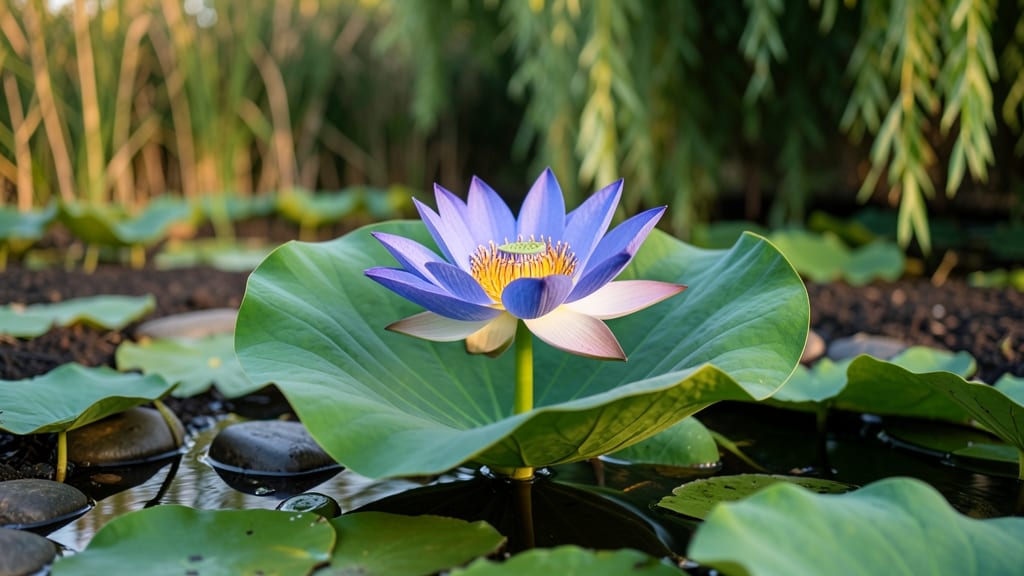
The Egyptian blue lotus flower (Nymphaea caerulea) blooms like a desert mirage—deep cobalt petals unfurling even in heat that would scorch most plants. 🌿 I first saw one in a Mediterranean greenhouse, its waxy blooms floating above the water like celestial lanterns, and I knew this wasn’t just another water lily.
This ancient flower thrives where others fail, demanding only sunlight, still water, and a touch of patience to reward you with blooms that last weeks instead of days.
Unlike fussy tropical lotuses, this desert-adapted beauty prefers warmth over humidity—think 70°F to 90°F days and no cooler than 60°F at night. Plant it in 12–18 inches of still water (no currents!) with sandy, nutrient-poor soil beneath, and watch it spread via tubers instead of seeds.
The key? Mimic its native Nile habitat: bright light, minimal fertilizer, and a container with drainage holes to prevent root rot. Overwintering? Simply keep it in a sunny indoor tub or greenhouse—it won’t bloom but stays alive.
What makes this lotus special isn’t just its vibrant blue hue (a rare trait in nature) but its symbolic power. Ancient Egyptians used its sap for dyes, burned its seeds as incense, and even depicted it in tomb paintings as a symbol of rebirth.
In your garden, it’ll attract bees, repel mosquitoes, and create a serene focal point—whether in a koi pond, large pot, or even a shallow bog garden. The first bloom feels like uncovering an ancient secret.
Here’s the catch: it’s not for impatient gardeners. Tubers take 2–3 years to establish fully, and blooms appear only when conditions are just right. But once it’s happy?
You’ll have year-round interest—even in winter, its glossy leaves stay lush. Start with a single tuber, and let the magic unfold. The rest is history.
📚 In This Guide
- What you need
- Instructions
- Tips and common mistakes
- Wrapping up and next steps
What you need
- ● Egyptian Blue Lotus (Nymphaea caerulea) – Seeds, tubers, or a young plant (check for disease-free, vibrant foliage).
- ● Large container or pond – Minimum 12 inches deep (for containers) or 18+ inches (for ponds) with a drainage system.
- ● High-quality pond soil or aquatic substrate – 20-30 lbs (for containers) or 3-4 inches deep (for ponds).
- ● Slow-release aquatic fertilizer – 1-2 pellets (for containers) or per manufacturer’s instructions (for ponds).
- ● Water – Dechlorinated (use a water conditioner if tap water is used).
- ● Pebbles or gravel – 1-2 inches deep (for root coverage and aeration).
- ● Garden trowel or transplant spade – For planting and soil handling.
- ● Pond thermometer – To monitor water temps (68-80°F ideal).
- ○ Water pump (optional) – For circulation and oxygenation (if no natural pond).
- ○ Floating pond plants (optional) – Like water hyacinths to provide shade and reduce algae.
- ● Gloves & knee pads – For comfort during planting.
- ● Sunlight access – Full sun (6+ hours daily) or partial shade (for warmer climates).
- ● Temperature control – Avoid freezing temps (below 50°F); use a pond heater in winter if needed.
- ● Patience – Seeds can take 3-6 months to sprout; tubers may bloom faster (1-2 years).
Step-by-step guide to cultivating the Egyptian blue lotus flower
Here's how to nurture this ancient beauty using desert-adapted techniques.
🌱 Step 1: Select the Right Container and Prepare the Soil Mix
The Egyptian blue lotus (Nymphaea caerulea) thrives in shallow, wide containers with plenty of room for its sprawling rhizomes. Choose a 12-inch diameter pot or larger for each plant, ensuring it has multiple drainage holes—waterlogged roots will rot these desert-adapted beauties. I use unglazed terra cotta because it mimics the porous, mineral-rich soils of its native Nile floodplains.
Fill the container with a lightweight, sandy loam mix that mimics its natural habitat. Combine 60% high-quality potting soil, 30% coarse perlite, and 10% coarse sand to create a well-draining, airy medium. The goal is to replicate the silt and sand deposits of the Nile River, where these lotuses evolved. Avoid dense garden soil—it compacts and suffocates the roots.
☀️ Step 2: Position for Maximum Sunlight and Temperature Stability
Egyptian blue lotuses demand full sun exposure—at least 8 hours of direct sunlight daily. Place your containers in a south-facing location or under grow lights if natural light is insufficient. I've found that LED grow lights with a 12-hour photoperiod work best during winter months when daylight shortens. The leaves should be deep green and crisp, never yellow or wilted—a sign of insufficient light.
These plants also need consistent warmth. Ideal temperatures range between 70-85°F during the day and 60-70°F at night. If your climate dips below 55°F, move the pot indoors near a bright window or use a heating mat to maintain root warmth. Cold stress causes buds to drop before opening, and that's a heartbreaking waste of effort.
💧 Step 3: Water with Precision—Never Let Roots Sit Wet
Watering is where most gardeners go wrong with lotuses. These plants hate soggy conditions but also won’t tolerate dry soil. The key is consistent moisture at the root level—never let the soil surface dry out completely, but avoid standing water. I water every 2-3 days in summer, checking that the top 2 inches of soil feel damp but not saturated. In winter, reduce to once every 4-5 days when the plant is dormant.
Here's the trick: water from below. Place the pot in a saucer filled with 1-2 inches of water and let the roots absorb moisture through the drainage holes. This mimics the seasonal flooding of the Nile while preventing the rot that comes from overhead watering. Empty the saucer after 30 minutes to avoid root suffocation.
✂️ Step 4: Prune and Fertilize for Continuous Blooms
After each flowering cycle, prune spent blooms at the base to encourage new growth. I use clean, sharp scissors to avoid tearing the stems, and I always sterilize them with rubbing alcohol between cuts. This prevents fungal infections that can spread through open wounds. Remove any yellowing or damaged leaves immediately—they harbor pests and diseases.
Feed your lotus monthly during the growing season (spring through fall) with a balanced, water-soluble fertilizer diluted to half-strength. I prefer a 10-10-10 NPK ratio because it supports both leafy growth and flowering. In winter, reduce feeding to every 6-8 weeks as the plant enters dormancy. Over-fertilizing causes leaf burn and excessive foliage at the expense of blooms—something you definitely don’t want.
🌿 Step 5: Encourage Year-Round Blooms with Strategic Care
To keep your Egyptian blue lotus flowering continuously, you’ll need to mimic its natural seasonal cues. In late summer, when the plant naturally slows down, reduce water slightly and stop fertilizing for 4-6 weeks. This triggers a dormancy-like state, after which you’ll see a flush of new buds in early fall. Repeat this cycle in winter if growing indoors under lights.
Watch for buds forming at the base of the leaves—this is your signal that the plant is ready to bloom. Once buds appear, increase humidity slightly by placing the pot on a pebble tray with water (but keep the pot elevated to avoid root rot). The blooms open in the early morning, so time your watering for late afternoon to avoid disturbing them. A single bloom lasts 3-5 days, but with proper care, you’ll have new buds ready to replace them.
Tips & tricks for cultivating Egyptian blue lotus flowers
These desert-adapted techniques will help you coax stunning blooms from your Egyptian blue lotus all year long.
Container Selection: When choosing your 12-inch diameter pot, look for ones with three or more drainage holes—this prevents the root rot that plagues so many lotus growers. Unglazed terra cotta is ideal because it mimics the porous mineral soils of the Nile, but plastic pots with adequate drainage work too. If using plastic, elevate the pot on feet to improve airflow around the base. The wider the container, the better—these plants spread aggressively!
Lighting Strategy: For that critical 8 hours of direct sunlight, position your lotus near a south-facing window or use LED grow lights with a 12-hour photoperiod during winter. I've found that full-spectrum LED bulbs work best because they replicate natural sunlight's spectrum. If using lights, maintain them 12-18 inches above the plant to prevent overheating. Watch for leaves that yellow at the edges—this is your first sign of insufficient light.
Watering Precision: The 30-minute saucer method is non-negotiable for these desert-adapted plants. After placing your pot in the saucer with 1-2 inches of water, check the soil after 30 minutes—if water remains in the saucer, your pot isn't draining properly. For winter care, reduce watering to every 4-5 days and let the top 2 inches of soil dry slightly between waterings. The key is maintaining consistent moisture at the root level without ever letting roots sit in standing water.
Fertilizer Timing: That monthly feeding schedule during growing season is crucial, but timing matters just as much as frequency. Always fertilize in the morning so the plant has time to absorb nutrients before evening. I've learned the hard way that fertilizing in the evening can lead to leaf burn from concentrated salts. When using the 10-10-10 ratio, dilute it to exactly half-strength—stronger concentrations will scorch your delicate lotus leaves. In winter, switch to a low-phosphorus fertilizer (like 5-5-5) to support dormancy without encouraging new growth.
Pro Tips for Egyptian Blue Lotus Flower
- These desert-adapted techniques will help you coax stunning blooms from your Egyptian blue lotus all year long.
- Container Selection: When choosing your 12-inch diameter pot, look for ones with three or more drainage holes—this prevents the root rot that plagues so many lotus growers.
- Lighting Strategy: For that critical 8 hours of direct sunlight, position your lotus near a south-facing window or use LED grow lights with a 12-hour photoperiod during winter.
Frequently asked questions
How long does it take for an Egyptian Blue Lotus to bloom?
The first blooms typically appear 2–3 years after planting from seed, but established plants (especially those grown from cuttings) can flower within 1–2 years. Patience pays off—once mature, they reward you with vibrant Nymphaea caerulea blooms from late spring to early fall (and sometimes year-round in warm climates!).
Can Egyptian Blue Lotus survive winter outdoors?
In USDA Zones 9–11, these lotuses thrive year-round outdoors. For colder climates (Zones 7–8), overwinter them in containers and move them to a cool, dark spot (like a garage) before temps drop below 40°F (4°C). In frost-prone areas (Zones 6 or lower), grow them as annuals in pots or bring them indoors as houseplants.
Why isn’t my Egyptian Blue Lotus flowering?
No blooms? Check these fixes:
- Light: Needs 6+ hours of direct sun daily—move it to a sunnier spot.
- Water: Keep roots consistently moist (but not soggy) in summer. Dormancy in winter (less water) triggers blooms!
- Age: Young plants (<2 years) focus on growth. Be patient!
- Fertilizer: Use a balanced aquatic plant food (like 10-10-10) in spring/summer.
Pro tip: If grown in containers, ensure the pot is large enough (10+ gallons for mature plants) to support root growth.
Are there non-toxic alternatives to Egyptian Blue Lotus?
Yes! If you’re concerned about toxicity (the roots contain mild alkaloids), try these low-maintenance, pet-safe blue bloomers:
- Water Hyacinth (Eichhornia crassipes) – Fast-growing, but invasive in some areas.
- Blue Pickerelweed (Pontederia cordata) – Hardy and drought-tolerant.
- Blue Potato Vine (Solanum rantonnetii) – Non-invasive and great for hanging baskets.
- Blue Salvia (Salvia uliginosa) – Drought-resistant and bee-friendly.
For a true lotus vibe without the fuss, Blue Water Lily (Nymphaea 'Blue Hawaii') is a stunning (and non-toxic) cousin!
Where can I buy Egyptian Blue Lotus seeds or plants?
Start your search with these trusted sources:
- Specialty nurseries: Look for aquatic plant suppliers like Aquatic Nursery or Pond Plant.
- Online marketplaces: Check eBay or Etsy for seeds (verify seller reviews!).
- Local options: Ask at pond supply stores or water garden clubs—they often have cuttings or divisions.
- Facebook groups: Join aquatic plant enthusiast communities for rare finds!
Warning: Avoid untested sources—some "lotus" seeds sold online may be mislabeled. When in doubt, start with a reputable seller offering guaranteed Nymphaea caerulea.
Wrapping up and next steps
The Egyptian Blue Lotus isn’t just a stunning desert beauty—it’s a symbol of resilience and elegance that thrives with the right care. Whether you’re drawn to its striking petals or its low-maintenance charm, this flower proves that stunning blooms can flourish even in arid conditions.
Now that you’re armed with the perfect growing tips and answers to common questions, why not take the next step?
🌱 Ready to bring a piece of ancient Egypt into your garden? Start by gathering your supplies, finding the ideal spot, and giving your blue lotus the love it deserves. With patience and a little know-how, you’ll be rewarded with breathtaking blooms that last all year long!