
Planting
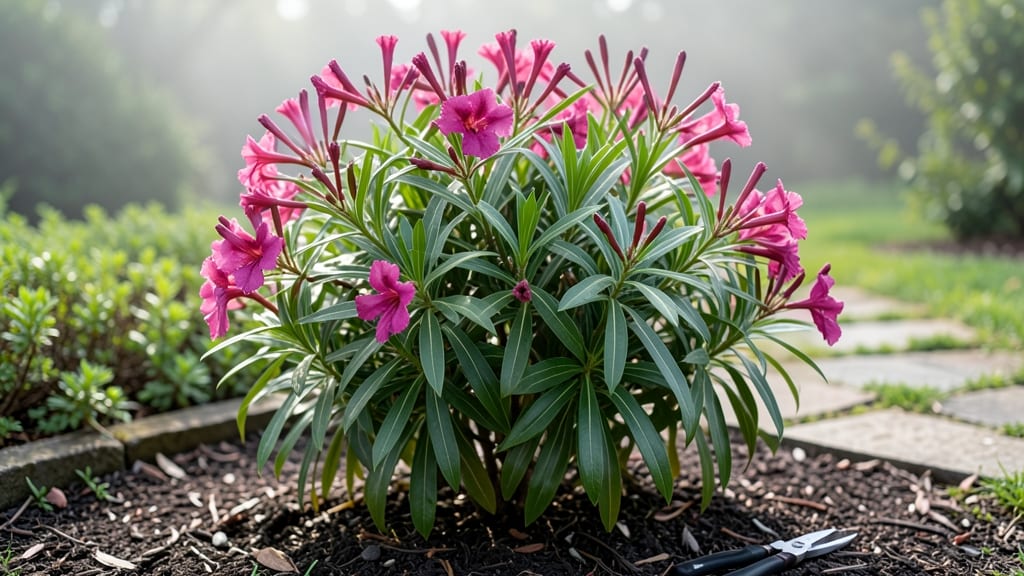
Growing flower oleander plants means embracing a striking yet dangerous beauty that demands respect. 🌸 These glossy-leaved shrubs burst with vibrant blooms in pink, red, or white—but their sap contains deadly cardiac glycosides that can poison pets and children.
The trade-off? Their drought tolerance and year-round color make them a landscaper’s secret weapon in warm climates.
Your oleander thrives in full sun and well-draining soil, whether planted in the ground or containers. I’ve seen them survive on once-weekly watering once established, though they’ll tolerate occasional drought better than soggy roots.
The key is matching their Mediterranean roots to your climate—too much shade or moisture, and you’ll fight leaf drop or fungal issues.
Pruning after flowering keeps them compact and bushy, while deadheading spent blooms encourages nonstop summer-to-fall color. Just wear gloves—those milky sap droplets are no joke. With proper care, your oleander will reward you with fragrant clusters that hummingbirds can’t resist, all while warning curious hands to stay back.
Perfect for Mediterranean-style gardens, coastal landscapes, or large containers on patios. We’ll cover everything from planting depth to toxicity management so you can enjoy their beauty without the risks. Let’s get those roots settled safely!
📚 In This Guide
- What you need
- Instructions
- Tips and common mistakes
- Wrapping up and next steps
What you need
- ● Oleander seeds or cuttings: 3–5 healthy seeds (or 1–2 sturdy cuttings, 4–6 inches long, from a mature plant).
- ● Well-draining potting mix: 1–2 gallons of a blend with perlite or sand (e.g., 60% cactus/succulent mix + 40% coarse sand).
- ● Pot or garden bed: Container: 1–2 gallon pot with drainage holes (terracotta or plastic).
- ● Garden bed: Full sun spot (6+ hours/day) with loose, rocky soil (amend with gravel if clay-heavy).
- ○ Rooting hormone (for cuttings): 1 small bottle (optional but boosts success by 30%).
- ● Watering can or hose with nozzle: Fine mist setting for seedlings.
- ● Pruning shears: Sharp, sterilized shears (for cuttings or trimming).
- ● Gloves (nitrile or garden): Oleander sap can irritate skin—always wear gloves!
- ○ Spray bottle (optional): For humidity trays (misting cuttings 2x/day).
- ● Slow-release fertilizer: Balanced 10-10-10 (1 tbsp per gallon of soil, applied monthly).
- ○ Mulch (optional): Gravel or pebbles to retain heat and deter weeds.
Step-by-Step guide for planting and caring for oleander flowers
Oleander thrives with the right balance of sun, soil, and caution—here's how to grow it safely.
🪴 Step 1: Choose the Perfect Planting Location
Oleander demands full sun exposure—at least 6-8 hours daily—to bloom vigorously. I always pick a spot with southern or western exposure, where it gets unfiltered afternoon light. If you're in a hot climate, afternoon shade helps prevent leaf scorch, but morning sun is non-negotiable.
Check your site's drainage first. Oleander hates soggy roots—plant where water runs away quickly, like a sloped area or raised bed. If your soil drains poorly, amend it with 2-3 inches of coarse sand or gravel mixed into the top 12 inches of soil before planting. You'll see the difference in root health within weeks.
🌱 Step 2: Plant with Proper Spacing and Soil Prep
Dig a hole twice as wide as the oleander's root ball but only as deep as its container. Gently remove the plant, loosen tangled roots, and place it so the top of the root ball sits 1 inch above ground level. Oleander roots need air circulation to prevent rot.
Fill the hole with a mix of native soil and 50% coarse sand or perlite—this ensures fast drainage. Space plants 6-10 feet apart for mature size (oleander grows 8-15 feet tall and 5-10 feet wide). If planting near a driveway or walkway, allow 12 feet of clearance—this plant spreads aggressively.
☀️ Step 3: Water Deeply and Establish a Routine
Water deeply once a week during the first 30 days after planting, soaking the soil to 12 inches deep. You'll know it's enough when water runs out the drainage holes. After that, oleander is drought-tolerant—water only when the top 2-3 inches of soil feel dry to the touch.
Here's the thing—oleander roots extend deep, so shallow watering encourages weak growth. Use a soaker hose or drip irrigation to deliver moisture slowly. Avoid overhead watering, which can promote fungal diseases on the glossy leaves. Mulch with 2-3 inches of wood chips around the base to retain moisture and suppress weeds.
✂️ Step 4: Prune for Health and Blooms
Prune oleander right after flowering in late spring or early summer. Cut back leggy stems by one-third to encourage bushier growth and more blooms. Always use clean, sharp pruners and make cuts just above a leaf node or outward-facing bud.
Remove any dead, diseased, or crossing branches immediately. Oleander responds well to pruning but can get messy if left unchecked. If your plant grows too tall for your space, you can top it at 6 feet—just be prepared for a denser, bushier shape. Wear gloves when pruning; the sap is toxic.
💧 Step 5: Fertilize Lightly for Vibrant Blooms
Feed oleander once in early spring with a balanced, slow-release fertilizer (10-10-10 or 8-3-9). Apply half the recommended rate—oleander grows fast but doesn't need heavy feeding. Over-fertilizing leads to leafy growth at the expense of flowers.
I like to use a low-nitrogen, high-phosphorus fertilizer (like 5-10-10) in late summer to encourage fall blooms. Water the soil thoroughly before and after applying fertilizer. Avoid fertilizing in winter—oleander goes semi-dormant and doesn't need extra nutrients.
Tips & tricks for perfect oleander plant care
Between us, growing oleander successfully comes down to mastering a few key details that most guides skip. These are the insights I wish I'd known before planting my first one.
Sunlight Strategy: The 6-8 hours of daily sun in Step 1 isn't just about blooms—it's about preventing stress. I've seen oleander leaves develop brown edges when exposed to afternoon shade after morning sun, so if you're in a hot climate, gradually acclimate plants to full sun over 7-10 days by moving them incrementally closer to direct light each morning. This toughens the leaves without shocking the plant.
Root Health Secret: When amending soil with 2-3 inches of coarse sand in Step 1, don't just dump it in—mix it thoroughly with the native soil. I learned this the hard way after seeing roots grow around sand pockets instead of through them. Use a garden fork to create a 12-inch-deep well where roots can spread freely through the amended soil.
Watering Wisdom: The deep watering routine in Step 3 works best with a simple test: Stick your finger 2-3 inches into the soil. If it feels dry at this depth, that's your cue to water. I've found that using a moisture meter near the plant helps track this pattern—oleander's deep roots mean surface soil can stay moist while deeper layers remain dry, tricking you into overwatering.
Pruning Precision: When cutting back leggy stems by one-third in Step 4, always make your cuts at a 45-degree angle just above a leaf node. This creates a larger surface for water absorption and prevents the telltale "stub" that collects water and promotes rot. I mark these nodes with a pencil before cutting to ensure clean, professional-looking prunes that heal faster.
Pro Tips for Flower Oleander Plant
- Between us, growing oleander successfully comes down to mastering a few key details that most guides skip.
- Sunlight Strategy: The 6-8 hours of daily sun in Step 1 isn't just about blooms—it's about preventing stress.
- Root Health Secret: When amending soil with 2-3 inches of coarse sand in Step 1, don't just dump it in—mix it thoroughly with the native soil.
Frequently asked questions
Got questions about growing flower oleander plants safely? Here are some common ones—and their answers—to help you navigate this stunning yet toxic beauty with confidence!
Is oleander poisonous to pets and kids?
Yes!
Every part of the oleander plant—leaves, flowers, stems, and seeds—contains toxic cardiac glycosides. Ingestion can cause severe symptoms like vomiting, diarrhea, or even heart failure. Keep it out of reach of curious pets and children.
How fast does oleander grow, and when will it bloom?
Oleander grows moderately fast (12–24 inches per year) and thrives in warm climates. With proper care, it may bloom in its first or second year, producing vibrant flowers in spring, summer, or fall, depending on your region. Patience is key!
Can I grow oleander in containers?
Oleander adapts well to containers as long as the pot has drainage holes and you use well-draining soil. Choose a pot at least 12–18 inches wide and move it indoors when temperatures drop below 30°F to protect it from frost.
Are oleander flowers safe for bees and butterflies?
Yes! While toxic to humans and pets, oleander flowers are a magnet for pollinators like bees and butterflies. Their nectar-rich blooms support local ecosystems—just admire them from a safe distance!
What do I do if someone or a pet ingests oleander?
Act immediately! Contact a poison control center (or vet for pets) right away. Do not induce vomiting unless instructed. Keep the plant out of reach to prevent accidents. Safety first!
Pro Tip: Non-toxic alternatives?
If you love oleander’s look but want safer options, try plumbago, bougainvillea, or hibiscus. They’re equally beautiful and pet-friendly!
Wrapping up and next steps
The oleander flower plant is a stunning yet powerful addition to your garden—but its beauty comes with caution. Remember, every part of this plant is toxic, so prioritize safety by wearing gloves, keeping it away from pets and kids, and handling it with care.
With the right precautions, you can enjoy its vibrant blooms and create a thriving, low-maintenance landscape!
Ready to grow? Start small—plant one oleander in a pot or a safe corner of your yard, and watch it transform your space with color and drama. Happy (and safe) gardening! 🌸🌿