
Shrubs
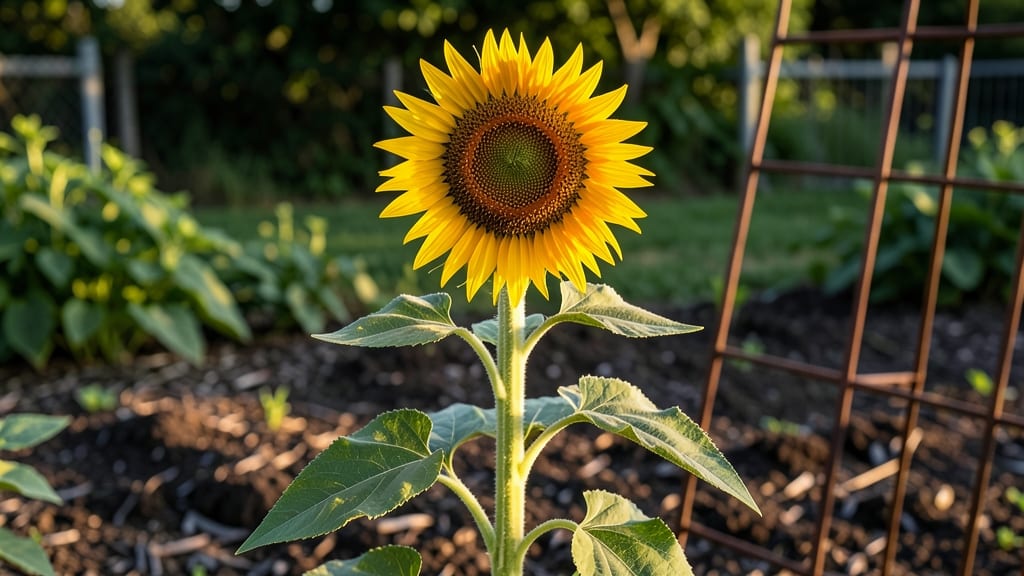
Identifying a sunflower starts with its bold, rough-textured stems and deeply lobed leaves—features that set it apart from daisies or thistles. 🌻 I’ve spent years watching these plants grow, and the first thing that catches my eye is how their leaves feel: jagged, almost like a maple’s, with a slightly fuzzy edge.
These aren’t the smooth, rounded leaves of a dandelion or the spiky stems of a thistle.
The flower head itself is another dead giveaway—4-6 inches wide, with a brown center that’s packed with tiny florets. Unlike daisies, which have white petals radiating from a yellow center, sunflowers have bright yellow petals that all point outward, like rays of sunshine.
And if you’re still unsure, check the height: most sunflowers tower 5-12 feet tall, depending on the variety, while their look-alikes stay much shorter.
Once you spot these clues, you’ll notice how sunflowers thrive in full sun and grow quickly, often reaching maturity in just 80-120 days. This makes them a gardener’s dream for quick color and wildlife attraction—bees and birds flock to them like a buffet.
Knowing these details helps you give them the right care, from watering to pest control, so they keep blooming all season.
Confusion often comes from similar plants like Jerusalem artichokes or false sunflowers, but their leaves and stems don’t match up. Sunflowers are sturdy, upright, and covered in fine hairs, while imposters have smoother stems or narrower leaves.
Keep an eye out for these traits, and you’ll never mistake them again—your garden (and your sunflower bouquets) will thank you.
📚 In This Guide
- What you need
- Instructions
- Tips and common mistakes
- Wrapping up and next steps
What you need
- ● Field Guide or Smartphone: A sunflower identification app (like iNaturalist or PlantNet) or a printed guidebook for quick reference.
- ○ Magnifying Glass (optional but helpful): A 2x–4x magnification lens to inspect leaf veins, stem texture, and flower details up close.
- ● Notebook & Pen: To jot down observations like leaf shape, stem hairiness, or flower size.
- ○ Camera (optional): A smartphone with a macro mode or a basic digital camera to capture close-ups of key features.
- ● Ruler or Measuring Tape: To measure leaf length (6–12 inches for mature sunflowers) and stem diameter (thick, woody, and ridged).
- ● Gloves (recommended): Lightweight gardening gloves to protect your hands while handling prickly stems or thistly leaves.
- ● Pruning Shears: For safely snipping leaves or stems to examine their cross-sections.
- ● UV Flashlight (blacklight): Some sunflower varieties fluoresce under UV light—fun for nighttime ID!
- ● Field Journal: A dedicated notebook to track sunflower sightings, locations, and unique traits.
- ● Weather-Resistant Bag: A small mesh bag to collect seed heads for further study (if legal in your area).
Step-by-step Guide to recognizing sunflowers by key features
Sunflowers stand out in any garden—but not all towering yellow blooms are what they seem. Here's how to spot the real deal.
🌱 Step 1: Examine the Leaf Arrangement and Shape
True sunflowers (Helianthus annuus) have alternate leaves arranged in a spiral pattern along the stem. Each leaf is lance-shaped, with a rough, slightly hairy texture when young. The edges are typically slightly serrated but not deeply lobed—think of a willow leaf's elongated cousin.
Here's the thing—you'll often see imposters like Jerusalem artichokes or false sunflowers (Heliopsis) with similar blooms but opposite leaves (paired directly across the stem). Run your fingers along the stem: real sunflowers grow leaves in a consistent spiral, never in matching pairs.
🌿 Step 2: Inspect the Stem Texture and Growth Pattern
A sunflower's stem is sturdy and slightly ribbed, often covered in short, stiff hairs when young. The ribs become more pronounced as the plant matures. Unlike delicate stems of black-eyed Susans, sunflower stalks feel thick and woody even before flowering.
Watch for branching: authentic sunflowers typically produce one main stem with a single flower head. If you see multiple flower heads on a single plant, you're likely dealing with a hybrid variety or a different species like Helianthus debilis. The stem should also have no milky sap—that's a dead giveaway for milkweed lookalikes.
☀️ Step 3: Analyze the Flower Head Structure
The disk flowers at the center of a true sunflower are dark brown to reddish-brown, tightly packed, and transition smoothly into the bright yellow ray flowers (the petals). The disk should measure at least 1 inch in diameter at maturity. When you gently pull back a ray flower, you'll see the receptacle (the base where disk flowers attach) is convex, not flat.
Real talk: if the "petals" are white, orange, or bi-color, you're probably looking at a cultivar (like 'Lemon Queen') rather than the classic wild type. But the structural rules remain the same—disk flowers must still be dark, and the transition to ray flowers must be gradual. Look for no gaps between the two types.
✂️ Step 4: Check the Seed Head After Flowering
Once the flower fades, a true sunflower develops a large, rounded seed head covered in spiky, papery bracts that dry to a straw-like color. The seeds themselves are striped (black and white) and embedded in a thick, fleshy base that dries into a hard, woody casing. Snap a dried head open—you should hear a crunchy, papery sound from the bracts.
This is the moment that matters: if the seed head is small, flat, or lacks bracts, it's not a sunflower. Imposters like goldenrod produce tiny, clustered seeds with no protective casing. Even after flowering, sunflower stems remain upright and sturdy, while lookalikes often flop or branch excessively.
Tips & tricks for perfect sunflower identification
These practical insights will help you confidently distinguish authentic sunflowers from their deceptive lookalikes in your garden or wild landscapes.
Leaf Arrangement Test: The spiral pattern of alternate leaves is your first clue—run your fingers along the stem from bottom to top. True sunflowers grow leaves in a consistent, overlapping spiral, never in symmetrical pairs. This pattern is especially noticeable when comparing with false sunflowers (Heliopsis) which display opposite leaves that pair directly across the stem. For extra confirmation, examine the leaf edges: authentic sunflowers have slight serrations that resemble a willow leaf's elongated cousin.
Stem Texture Inspection: Grip the stem firmly—it should feel sturdy and slightly ribbed with a woody texture even when young. Look for short, stiff hairs along the stem rather than smooth or fuzzy surfaces. This robust structure helps distinguish sunflowers from delicate stems of black-eyed Susans or milkweed plants, which often contain milky sap when cut. The absence of branching (except in hybrid varieties) is another key indicator of an authentic sunflower.
Flower Structure Analysis: When examining the flower head, gently pull back a ray flower to reveal the disk flowers beneath. The disk should be dark brown to reddish-brown and measure at least 1 inch in diameter, with no gaps between the disk and ray flowers. This convex structure is a definitive characteristic—lookalikes often show flat receptacles or irregular color transitions. Remember that while cultivars like 'Lemon Queen' may have different petal colors, the structural rules remain consistent.
Seed Head Verification: After flowering, examine the seed head's structure. Authentic sunflowers develop large, rounded seed heads covered in spiky, papery bracts that produce a distinctive crunchy sound when snapped open. The seeds should be striped (black and white) with a hard, woody casing. This is your final verification step—imposters like goldenrod produce tiny, clustered seeds without protective bracts and often exhibit floppy stems after flowering.
Pro Tips for Identify A Sunflower
- These practical insights will help you confidently distinguish authentic sunflowers from their deceptive lookalikes in your garden or wild landscapes.
- Leaf Arrangement Test: The spiral pattern of alternate leaves is your first clue—run your fingers along the stem from bottom to top.
- Stem Texture Inspection: Grip the stem firmly—it should feel sturdy and slightly ribbed with a woody texture even when young.
Frequently asked questions
How do I tell the difference between a sunflower and a daisy?
A sunflower has a large, rounded composite flower head with a textured, dome-shaped center (the "disk"), while daisies have a flat or slightly curved center with a distinct ring of petals. Sunflowers also have coarse, rough leaves and a tall, sturdy stem—daisies are usually smaller with smoother stems and finely serrated leaves.
When is the best time to identify sunflowers in the wild?
Sunflowers are easiest to spot from late summer to early fall (July–September in most U.S. regions), when their bright yellow blooms are fully open. Early morning or late afternoon is ideal—dew or sunlight enhances leaf texture and stem details for closer inspection. Avoid rainy days, as moisture can obscure key features.
Can I identify a sunflower by its leaves alone?
Yes! Sunflower leaves are large, coarse, and ovate with rough, hairy edges and prominent veins. They grow alternately along the stem (not in whorls like some wildflowers). If you see broad, toothy leaves with a slightly wrinkled texture, it’s likely a sunflower—just confirm with the flower head for certainty.
What if my "sunflower" looks different but has yellow petals?
Some lookalikes include Jerusalem artichokes (tuberous stems, no petals) or false sunflowers (e.g., Heliopsis, with smaller, drooping petals). Check the stem texture (sunflowers are woody and ridged) and leaf arrangement. If unsure, snap a photo and compare it to a sunflower ID guide.
Are there dwarf or small sunflowers I might miss?
Yes! Some varieties, like Helianthus debilis (dwarf sunflower), grow only 1–3 feet tall with tiny, 1-inch-wide blooms. Look for proportional features: even small sunflowers have the same rough leaves, sturdy stems, and textured disk centers. If it’s under 1 foot tall, it’s likely not a true sunflower—consider black-eyed Susans or goldenrod instead.
Wrapping up and next steps
Identifying a sunflower is easier than you think—just look for those bold, jagged leaves, rough, hairy stems, and that iconic bright yellow bloom! Whether you’re gardening, foraging, or simply admiring nature, these key traits will help you spot one with confidence. 🌻
Now that you’re a sunflower pro, why not plant one of your own? Grab seeds, find a sunny spot, and watch your garden bloom with joy (and maybe even some edible surprises!). Happy identifying—and growing!